
The characteristics of health massage are self-massage of the whole body, especially the massage of the five senses; The manipulation is appropriate to the massage position; Self-massage is more convenient and effective than having someone else massage.
3. PRACTICE MEDICAL EXERCISES TO PREVENT SCLEROSIS
3.1. Old age is a process of hardening.
We look at a child's body and see it move, it rides a bicycle, what a flexible, supple, agile, beautiful image. Its whole body is very flexible, no place is stiff. Let's look at an old man who has difficulty walking, taking small steps, a hunched back, deaf ears, dim eyes, and a senile mind. If we look closely for a long time in that body, everything is stiff or starting to stiffen, because old age is a process of fibrosis, the spine is stiff, calcified, grows thorns... sclerotic blood vessels hinder the circulation of blood, do not fully nourish the cells, so many diseases arise, heart disease, lung disease, kidney disease, neurological disease, diseases of the five senses... Connective tissue acts as a cushion in the organs, has the task of protecting and nourishing the functional cells of those organs; if the connective tissue is also stiff, it will compress the functional cells.
Maybe you are interested!
-
 Medical Service Projects, Health Care
 -
 Physical Health Care for Workers
 -
 Health care for the elderly in Duc Hue district, Long An province - 1
 -
 Criteria for Evaluating Public Investment Management for Health Care
 -
 Improving the quality of customer care services at Saigon Thuong Tin Commercial Joint Stock Bank - Hue Branch - 11
3.2. Exercise to prevent sclerosis.
So anti-sclerosis exercise is very necessary to delay old age. Sclerosis causes contraction and stiffness of joints, making blood circulation poor. We must exercise to make the joints work to their maximum range, the parts do not contract, and the blood circulates. If we do not exercise, the process of stiffness will gradually take over the body and old age will come faster.
Regarding anti-sclerosis exercises, the method of physical exercise is a method with many advantages against sclerosis, making the body flexible with difficult postures. Those postures force blood to circulate to the cells in the most dangerous places, all the way to the brain, all the way to the endocrine glands, the internal organs, the joints, at the same time practicing breathing and practicing the spirit, to reach the goal of harmony between the body and the spirit, achieving comprehensive health for the person, to act according to reason.
Here, we practice some health care movements suitable for the elderly, not dangerous, with the purpose of preventing sclerosis to improve health, prolong life, to work well, not with the purpose of doing movements beyond the strength of ordinary people, to become a Yoga performer. In this section, we will combine massage movements according to Coc Dai Phong and selective health care movements to prevent sclerosis.
All physical exercises have some effect in preventing stiffening of joints; however, it is found that physical exercises have a great effect in preventing stiffening, especially in the joints of the spine, the joints of the limbs, and the joints of the chest.
Old people are less flexible than when they were young because their whole body is stiff, especially in the joints.
Yoga exercises have a great effect in preventing atherosclerosis and prolonging life.
3.3. When practicing each exercise, you must combine 3 elements:
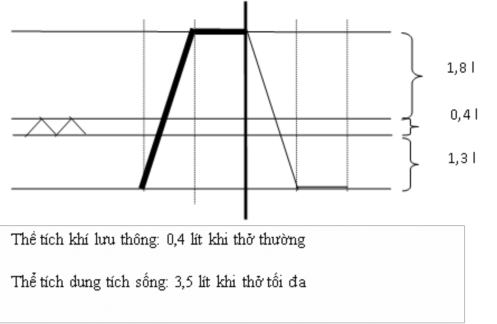
- Breathing factor: Breathe deeply and evenly in 4 periods, inhale to the maximum, keep the breath open by trying to inhale more, at the same time swing the body back and forth (or back and forth) 4-6 times, then exhale thoroughly with abdominal compression, rest; While resting, the abdominal muscles still contract to prepare for the second breath. Therefore, the 4 periods are all yang; Sometimes skip the 4 periods; The purpose of this 4 periods of breathing, evenly yang and evenly to the maximum, is to increase blood circulation; at the same time, it also has the effect of stimulating the nerves.
- Movement factor: practice flexibility to the maximum extent that the joint can tolerate.
- Neurological factors: focus on practicing, control breathing correctly, correct movements, do not be distracted by thinking about other things.
When practicing a Yoga movement, you must combine 3 elements: Breath, Movement and mental concentration.
Characteristics of breathing while practicing a health exercise:
- Also breathe in 4 periods, but all four periods are yang, also inhale to the maximum, hold the breath and open the larynx; exhale completely. The purpose is to promote circulation, increase ventilation and gas exchange, bring blood to dangerous places of the body.
The characteristic of breathing while practicing Yoga movements is that all four periods are positive and maximal; the purpose is to increase blood circulation throughout the body; at the same time, practice nervous excitement.
3.4. Key points to note when practicing health exercises:
3.4.1. Spinal exercises
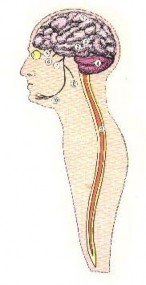
The spine contains the spinal cord, which transmits sensations to the brain and transmits the brain's commands to the body's muscles and organs to make them function. From the spinal cord, the nerves must pass through very small connecting holes, so they are easily compressed, causing all kinds of diseases if the holes are inflamed, calcified, have bone branches, blood stasis, spinal dislocation...
So spinal exercises are very necessary to prevent back pain, sciatica, arm pain, shoulder joint pain, and visceral pain.
The spine can move like a snake, it can stretch out, tilt back and forth, bend forward, arch back, twist and turn in all sorts of ways. We must make it not stiff, not stuck, let it move freely so that nerve impulses can run through the nerves well, blood can circulate and people will not be sick. When the spine is stuck, we must make it unstuck, stiff, less stiff, become flexible again, not yet working at its maximum, make it work in the widest range possible. The joints are also trained in the same way.
3.4.2. Exercise the muscles behind the body to fight aging.
It took 2 million years of evolution for humans to move from the four-legged standing posture of animals to the bipedal stage of humans. This was the decisive stage for human development.
To maintain a straight posture on two legs, the muscles behind the body must be constantly tense. Young people with a lot of willpower will tense the muscles behind to lift their heads up and puff out their chests. Old people have muscles behind the body that have degenerated, the muscles in the front of the body and the weight pull the person into a hunched back as if to pull them down to the "hole". So we must practice movements that awaken the muscles behind the body as much as possible. For example, the boat movement, the cobra movement, the sun salutation, the neck arching, the butt arching, the bridge building... are very valuable movements for old age.
Source: Department of Anatomy, University of Medicine and Pharmacy, Ho Chi Minh City
Standing posture: use the vertical line of the wall as a standard, head upright, looking straight ahead, shoulders touching the wall to expand chest; back, buttocks, heels close to the wall, stomach firm, slim, not fat, arms hanging down, hands facing the thighs.
Must correct deformities such as scoliosis, kyphosis, lordosis.
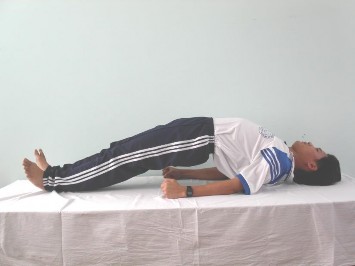
3.4.3. Exercise the abdominal muscles, hip muscles, and pelvic floor muscles to keep the internal organs from sagging and the abdomen from sagging.
Visceral prolapse is a manifestation of degeneration, loss of vitality, the visceral ligaments become loose, stretched, causing the visceral organs to prolapse, losing part of their function (stomach prolapse, liver prolapse, kidney prolapse, intestine prolapse down to the testicles, uterus prolapse, bladder prolapse...).
So it is essential to exercise the abdominal muscles, hip muscles, and pelvic floor muscles to maintain tone.
The best position to exercise these muscles is to raise your buttocks to pull your internal organs up, then practice raising both legs and doing leg exercises, moving your legs back and forth, moving your legs up and down, pedaling your legs... Practicing like that, the abdominal muscles, hip muscles, and pelvic floor muscles will become stronger, larger, and close the prolapsed holes of the abdomen and pelvic floor. If the internal organs still prolapse while in the position of raising your buttocks, you must squeeze them up and cover the prolapsed holes with a belt or cover them with your hands and continue practicing. Practice for many months, and gradually the prolapsed holes will close and the muscles will be strong enough to keep the internal organs from prolapsed. If there is no result, surgery will be required.
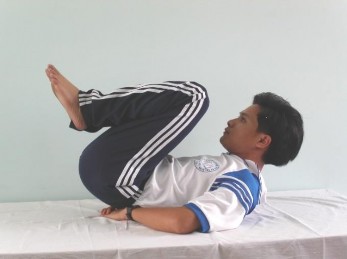
3.4.4. Head pressure position.
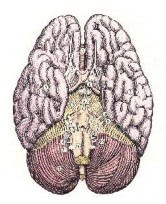
3.4.4. When people stand upright on two legs , blood usually flows down, so there is often a lack of blood in the head. There must be a way to exercise to increase blood flow to the head.
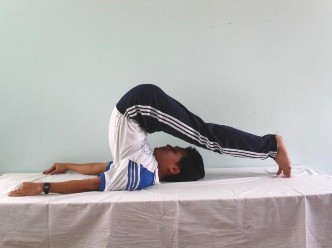
Increases circulation to the brain, thus improving brain function. The butt-raising, butt-raising, plow, and banana pose are poses that increase blood flow to the brain during exercise and blood pressure is also raised from low to high in the brain. In the above movements, the highest peak is in the banana pose.
So depending on whether the patient has low or high blood pressure, depending on whether the blood vessels are brittle or tough, adjust the buttock raising, butt lifting, plowing or banana planting to suit the patient's strength, to avoid accidents such as ruptured cerebral blood vessels, dizziness... Be careful with banana planting: the blood column is very high, the pressure on the cerebral blood vessels is very high, people over 60 years old should only plant half a banana tree.
Key points to practice:
- Spine.
- Posterior body muscle group.
- Hip abdominal muscle group.
- Positions that cause blood to rush to the head (contraindicated for people with high blood pressure)
4. PRINCIPLES FOR SUCCESSFUL PRACTICE OF HEALTH PRESERVATION:
4.1. Must practice within one's capacity, not too much, not too little.
a/ Overtraining makes us tired, unable to eat well, sleep poorly, body aches and pains, rest for 1, 2, 3 days but not gone, pulse faster than normal, weight loss, sometimes a slight fever.
b/ Exercise at a moderate level, still eat well, sleep well, moderate pain and aches, rest for 24 hours and it's gone, can exercise again the next day, weight doesn't change or if thin, gain weight, if fat, lose weight to a reasonable level, feel healthy.
Normal pulse is 60-80 times per minute. During exercise, it should not exceed 100-110 for the elderly, and not exceed 120-130 for young people. After exercise, the pulse should return to normal after 2', 3', 4', and if it lasts longer than 5', 6', or 7', it is too much.
Maximum pulse (Mm) allowed for a person of age during physical activity = (220 – age – Resting pulse) x 0.6 + Resting M.
For example, a 70-year-old person with a resting pulse of 80, the maximum pulse that the person should not exceed during physical activity:
(220 – 70 – 80) x 0.6 + 80 = 122 times / minute
Breathing rate should not exceed 24-26 times per minute for the elderly and 28-30 for young people during exercise; when resting, return to normal 10, 15, 18, 20 breaths per minute.
c/ If you don't exercise at the right strength, there will be no reaction, the body won't move, and there will be no results.
Each person must listen to themselves and determine the amount of exercise. The elderly must pay attention to exercising within their capacity. Do not overdo it, or you will have an accident. However, you must exercise enough to fight aging and slow it down. You should follow the following advice.
"Practice with effort, then try harder, but never too hard"
4.2. Must practice according to individual characteristics.
Must examine each person's illness, clearly see individual characteristics to prescribe appropriate exercise.
a/ Each person has a different type of nerve that determines the body's reaction. In ancient times, Hippocrates and today, Pavlov unified the division into 4 types of nerves based on 3 factors: strong or weak, balanced or unbalanced, flexible or slow.
Type I: Strong, balanced and agile (quick). Hippocrates called it sanguine temper.
Type II: Strong, balanced but slow (inflexible) type. Hippocrates called it the calm type (tempérament flegmatique)
Type III: Strong, unbalanced type (poor inhibition, hot-tempered, uncontrollable). Hippocrates called it the chyle type (tempérament bilieux).
Type IV: Weak type. Hippocrates called it melancholic type (melancholic temper)
These four types are very different and respond to different health treatments.
Type I learns very quickly, mistakes made before learning are corrected very quickly and easily, but in terms of perseverance, they are somewhat inferior to type II.
Type II is a bit slower, but each step is done with confidence.
Type III has difficulty in relaxing because of poor inhibition, but we can practice to make the inhibition stronger and stronger to become balanced. This type must practice relaxation and 4-period breathing a lot. In 4-period breathing, pay attention to the 2 negative periods, must be very relaxed and pay attention to the self-suggestion "heavy and warm".
Type IV is the weakest type. For this type, you have to practice step by step, it takes a lot of time, especially practicing 4-period breathing with 2 positive and 2 negative to make excitement and inhibition even. During the exercise, you have to breathe thoroughly to bring in oxygen to make the body rise.
b/ Each person's age is different: therefore, we must remember the rule "Birth - Growth - Aging - Illness"
- Tu" to see all the difficulties and illnesses of the elderly.
c/ Gender: Women are weaker than men - Biological constants are also different, there are menstrual cycles, child rearing, breastfeeding, during those special periods must be careful not to overexert themselves.
4.3. The amount of exercise depends on the condition of the disease.
Depending on the severity of the disease, whether it is mild or severe, and whether there is superficial or deep damage, we will have different results. If it is only due to functional disorders, we will have surprising and very optimistic results. If there is physical damage such as: calcification, branches, spurs on the spine causing back pain, sciatica... then we have to practice a lot, practice for a long time to correct it. But if it is due to old age, poor metabolism or abnormal metabolism, high cholesterol, diabetes, atherosclerosis, cell tissues lose elasticity, high blood pressure, brain cells harden, we must see that breaking that disease bunker is not easy. We must make the blood and energy go into the hidden places to gradually grind and chisel the damage to solve the disease, such as deformed rheumatism, in addition to practicing normal movements for the joints to function at maximum, we must also apply the "oscillation principle" to change the damage. This principle will increase the effectiveness of the exercise to gradually break down the deformities, helping the joints gradually restore their functions.
In short, due to the very different personal characteristics, a different exercise plan must be developed for each person. Each person must practice independently to build their own health. General exercises for teaching are necessary, but once they are familiar, each person can practice separately to suit their own characteristics.
4.4. Must be done step by step, from light to heavy, from easy to difficult, from simple to complex.
This is a human physiological law, Pavlov's conditioned reflex, building the body's adaptation process, which requires time and cannot be rushed.
For example: if you want to practice jumping over a high fence, you have to plant the fence from low, practice jumping over it every day, until the fence is higher, you will still have enough strength to jump over it. If you want to hold a big pig and jump over a ditch, you have to hold a little pig, practice jumping over the ditch every day, when the pig is big, you will also have enough strength to hold that pig and jump over the ditch without any difficulty. This way of practicing shows us that the issue of time is extremely important, do not be impatient, then you will succeed.
Here are some examples from easy to difficult, from light to heavy, from simple to complex.
In the exercises to prevent stiffness, there are many very difficult exercises, because our joints have not been exercised for a long time, so they have become stiff; blood circulation is difficult, and we often ache. Now we must try to practice step by step, each part to push back stiffness, freeing the joints from degeneration, calcification, branching, fibrosis...
Example 1: Sitting in the lotus position in the Buddha style (Kiệt lão). Except for small children, most elderly people cannot sit. Instead of doing both legs at once, let's divide it into each leg: bend one leg and put it on the calf, then gradually press the knee of the bent leg until it touches the bed; then practice with the other leg. This will make it less stiff and more flexible. Practicing like this, we can sit in the lotus position with both legs placed on top of each other. At first it is very painful because the two shin bones are pressed together, we can use a folded towel to put in the middle to reduce the pain. At first, sit for a few minutes, then longer, and finally, we sit for the entire practice session.