
Assurance or Competence
• The behavior of xyz employees inspires your confidence.
• You feel safe while dealing with xyz supplier.
Maybe you are interested!
-

 Testing Factors Affecting Customer Satisfaction With Savings Deposit Services At Dong A Bank
 -
 Factors affecting customer satisfaction with the quality of international money transfer services at Dong A Commercial Joint Stock Bank - 1
 -
 Exploratory Factor Analysis (EFA) Results for Factors Affecting Customer Satisfaction
 -
 Proposing Factors Affecting Customer Satisfaction With Savings Deposit Services At Dong A Bank
 -
 Research on factors affecting customer satisfaction when purchasing hair care cosmetics - 12
• The staff of xyz supplier are always friendly to you.
• The staff of xyz company has the knowledge and understanding to answer your questions.
Empathy/Sympathy
• The xyz supplier always pays special attention to you.
• The company that provides xyz has staff who care about you.
• The xyz supplier has your best interests at heart.
• The staff of xyz supplier understands your needs.
• Company xyz operates during convenient hours.
Tangibility
• The xyz supplier has very modern equipment.
• The facilities of xyz supplier company look very attractive.
• The staff of xyz company are well dressed and work professionally.
• The images and brochures of xyz company related to the services look very nice.
The contribution of Parasuraman et al. has been widely developed in the use of SERVQUAL. The significance of this study is also used as the gap is measured directly by asking customers to provide a score for each observed variable in the SERVQUAL scale that is related to their perception rather than asking separately and then calculating the gap. This both preserves the concept of service quality and develops
statistical reliability and reducing the length of the questionnaire.
2.1.3. Definition of satisfaction
There are many definitions of customer satisfaction. According to Oliver (1999) and Zineldin (2000), customer satisfaction is the emotional response, the total feeling of the customer towards the service provider based on comparing the difference between what they received and their previous expectations. Simply put, customer satisfaction is the state, the feeling of the customer towards the service provider after using that service (Levesque and McDougall, 1996). Or according to Kotler (2003), satisfaction is the level of human perception state originating from comparing the results obtained from the product or service with that person's expectations. Meanwhile, Oliva et al. (1995) argued that customer satisfaction is a business task expressed through the relationship between the values of products and services compared to customers' previous expectations of them. And also based on research, Churchill and Peter (1993) concluded that satisfaction is also a state in which what customers need, want and expect from products and service packages are satisfied or exceed satisfaction, resulting in repeated use of services, trust and value of word of mouth in a pleasant way.
There are many different views on customer satisfaction: (Oliver, 1997). One difficulty in examining the causes and consequences of customer satisfaction is the lack of consensus on what constitutes satisfaction (Caruana, 2000). Customer satisfaction is viewed as a comparison between expectations before and after purchasing a product or service. Bachelet (1995) views customer satisfaction as an emotional response of customers to their experience with a product or service.
Some authors argue that there is a overlap between service quality and customer satisfaction, so the two concepts can be used interchangeably. Other studies argue that customer satisfaction and service quality are two different concepts; customer satisfaction is seen as the result, while service quality is seen as the result.
service as a cause; satisfaction as a predictor of expectations, service quality as an ideal standard. According to Zeithaml and Bitner (2000), service quality and customer satisfaction are two different concepts, while service quality focuses specifically on service components, customer satisfaction is a general concept. There is still no consensus among researchers on the concepts, but most researchers believe that there is a relationship between service quality and customer satisfaction (Cronin and Taylor, 1992; spereng, 1996; cited in Bexley, 2005). However, very few studies have focused on examining the extent to which service quality components explain customer satisfaction, especially in specific service industries (Lassar et al, 2000).
Giese and Cote (2000) define customers as end-users of products. Their study suggests three general components that constitute the latent variable of customer satisfaction; (1) Customer satisfaction is an overall emotional response, that is, variations in emotional intensity; (2) The emotional response is associated with a specific goal, that is, product choice, purchase, or consumption; (3) Finally, the emotional response occupies a specific point in time, that is, variations in state, but is generally limited to the time period in which the event exists. The authors note that these three dimensions provide a structural framework for the operational definition in each specific context (cited in Caruana, 2000). As such, this definition can be used to develop relevant definitions according to the specific context of the study.
2.2. Factors affecting satisfaction
Previous studies have shown that service quality is the cause of satisfaction (Cronin & Taylor, 1992). The reason is that quality is related to service delivery, while satisfaction can only be assessed after using the service. If quality is improved but not based on customer needs, customers will never be satisfied with that service. Therefore, when using the service, if customers feel that the service is of high quality, they will be satisfied with that service. Conversely
Conversely, if the customer perceives the service to be of low quality, dissatisfaction will result.
Zeithaml and Bitner (2000) also argued that service quality and customer satisfaction are two different concepts. While service quality focuses specifically on service components, customer satisfaction is a general concept. More specifically, according to this perspective, customer satisfaction is influenced by many factors such as: product quality, service quality, price, situational factors, and personal factors.
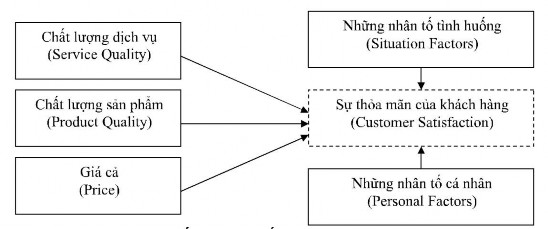
Figure 2.1. Factors affecting customer satisfaction
(Source: Zeithaml and Bitner (2000), Service Marketing, McGraw-Hill)
This study focuses on customer satisfaction with supermarket services, so based on the above studies, we draw a model of service quality and price affecting customer satisfaction as a basis for our study. These two factors will be discussed more specifically in the next two sections.
The relationship between service quality and customer satisfaction has been a topic of constant discussion among researchers over the past decades. Many studies on customer satisfaction in the service industry have been conducted and it is generally concluded that service quality and satisfaction are two distinct concepts. Satisfaction
Customer satisfaction is a general concept that expresses their satisfaction when consuming a service, while service quality is concerned with specific components of the service (Zeithaml & Bitner, 2000). According to Oliver (1993), service quality affects the level of customer satisfaction. That is, service quality is determined by many different factors, which are part of the determinants of satisfaction. Therefore, to improve customer satisfaction, service providers must improve service quality. In other words, service quality and customer satisfaction have a close mutual relationship, in which service quality is what is created first and then determines customer satisfaction. The causal relationship between these two factors is a key issue in most studies on customer satisfaction.
2.3. Satisfaction measurement models
2.3.1. SERVQUAL model (Service quality)
Parasuraman & colleagues (1988) initiated and used qualitative and quantitative research to build and test a scale to measure the components of service quality (called the SERVQUAL scale). The SERVQUAL scale has been adjusted and tested in many different types of services. The SERQUAL scale measures service quality and any service, service quality perceived by customers can be modeled into 10 components: Reliability, Responsiveness, Competence, Access, Courtesy, Communication, Credibility, Security, Understanding customer, Tangibles,
Finally, the SERVQUAL scale includes 22 variables to measure five components of service quality, which are: Reliability, Responsiveness, Assurance, Tangibles and Empathy. Specifically, according to the SERVQUAL model, service quality is defined as follows:
Service Quality = Perceived Level – Expected Value
Parasuraman et al. (1991) asserted that SERVQUAL is a complete scale of service quality, with value and reliability, and can be applied to all different types of services. However, each specific service industry has its own characteristics. Many other researchers have also tested this scale with many types of services as well as in many different countries. The results show that the components of service quality are not consistent with each other in each service industry and each different market. Specifically, Mehta et al. (2000), in a study in Singapore, concluded that supermarket service quality includes only two components: tangible facilities and service staff. Nguyen & ctg (2003) tested SERVQUAL for the outdoor entertainment market in Ho Chi Minh City and found that service quality includes four components: Reliability, staff service ability, empathy, and tangibles. Therefore, due to the characteristics of each type of service, researchers need to adjust the SERVQUAL scale to suit each specific study.
2.3.2. SERVPERF (Service Performance) model
Cronin and Taylor (1992) with the SERVPERF model, argued that the level of customer perception of the service performance of the business best reflects the quality of service. According to the SERVPERF model:
Service Quality = Perceived Level
This scale was introduced by Cronin & Taylor (1992), determining service quality by measuring only perceived service quality (instead of measuring both perceived and expected quality like SERVQUAL). They argued that service quality is best reflected by perceived quality without the need for expected quality as well as the weighting of the five components. This conclusion is also agreed by many other authors. The SERVPERF scale also uses 22 statements similar to the customer perception question in the SERVQUAL model, omitting the question about expectations.
2.3.3. Dabholka's Retail Service Quality Assessment Model (RSQS)
According to RSQS, the five basic components of retail store service quality include: (1) Tangibles – store layout and displays; (2) Reliability – the store keeps and delivers on its promises; (3) Service staff – Service staff are polite, helpful and instill confidence in customers; (4) Complaint handling – Store staff are competent in handling returns, customer problems and complaints; and (5) Store policies – Policies on merchandise quality, parking, opening hours, payment cards.
RSQS has been used in many studies to measure the quality of different types of retail services such as grocery stores and supermarkets in Western and Eastern European countries. Kim (2001) conducted a study with American and Korean customers of discount stores. The results showed that customer perceptions of service quality were different in these two countries. Another study by Mehta (2000) on service quality of supermarkets and electronics retail stores. The study showed that RSQS is more suitable in retail environments where goods are more important such as supermarkets, while the SERVPERF scale is more suitable in retail environments where service factors become more important, such as electronics retail stores. In addition, Kaul (2003) found that RSQS is not suitable in India.
2.4. Overview of empirical studies
2.4.1. Overseas research
Ali (2015) assessed service quality as a determinant of customer satisfaction and consequently behavioral intention which was demonstrated in the context of Malaysian resort hotels. Structural equation modeling (SEM) was used to analyze the collected data and the results indicated that tourists were satisfied with the quality of services provided by Malaysian resort hotels. The results suggested that tourists who perceived better about the hotel environment and staff courtesy, food and beverage products, staff availability and knowledge, reservation services and financial value were more likely to develop customer satisfaction, which was more likely to lead to
to positive behavioral intentions such as intention to revisit or intention to recommend it to others.
Qin and Prybutok (2009) studied the potential dimensions of service quality, and examined the relationships among service quality, food quality, perceived value, and customer satisfaction in fast food restaurants. Reliability and construct validity were assessed using exploratory factor analysis (EFA) and confirmatory factor analysis (CFA). Structural equation modeling (SEM) was used to estimate the relationships among service quality and customer satisfaction. The results showed that five factors were significant: tangibles, reliability, responsiveness, recovery, assurance, and empathy. Service quality and food quality were the two main determinants of customer satisfaction.
Su, Swanson, and Chen (2015) tested an integrative model that considered two relationship quality constructs (overall customer satisfaction, corporate customer identification) as mediators between Chinese tourists' perceived service quality beliefs and two outcomes (repurchase intention, subjective well-being). The results of a study with Chinese domestic hotels (n = 451) provided support for the proposed model. Specifically, the results showed that overall customer satisfaction fully mediated the relationships between perceived service quality and repurchase intention and subjective well-being. Corporate customer identification mediated the relationships between perceived service quality and repurchase intention and subjective well-being.
Olorunniwo (2006) this study sought to investigate, through the development of an operational service quality construct in the context of the service industry, the nature of service quality (SQ), its relationship with customer satisfaction (SAT), an exploratory factor analysis using a sample of university students. Subsequently, a more representative sample of hotels was used, for confirmatory factor analysis. The factors measuring service quality were found to be: tangibles, recovery, responsiveness, and knowledge. The results further indicated that, although the direct effect of service quality (SQ) on trust is significant, the indirect effect