
entertainment... to help students have the opportunity to be creative, form and develop their personality. This is an activity that takes place in parallel with students' classroom learning.
According to author Dinh Thi Kim Thoa: "Active learning is an educational activity for students to directly participate in various activities of the school as well as in society as the subject of the activity through the guidance of educators, thereby developing capacity and qualities to promote creativity for the students themselves". [12]
Experiential activities are practical educational activities that take place in parallel with learning activities at school. Experiential activities are a part of the educational process, helping students consolidate practical knowledge through practice sessions and doing specific work for students. With experiential activities, students are proactive, free to create, and learn independently, thereby stimulating the development of skills and qualities according to age characteristics. Students participate in stages of the experiential learning process according to topics oriented by the school. Thus, to develop personal experiential activities, the process of connecting school and practice has a very close bond, helping students themselves transform and accumulate knowledge and capacity.
According to the approach of the thesis, the author believes that: Experiential activities are practical educational activities outside of school hours, organized with a purpose and plan to help students apply or expand the knowledge and skills they have learned; form positive emotions and feelings, thereby developing the ability to meet social requirements. [8] achieve high efficiency
1.2.2. Experience activity management
Maybe you are interested!
-
 Factors Influencing the Management of Rights and Duties Education Through Experiential Activities for Middle School Students
 -
 Participants in Experiential Activities for Students at Middle School
 -
 Managing experiential activities of students at Nam Son Secondary School, Bac Ninh City according to the orientation of the new general education program - 2
 -
 Theoretical Basis of Managing Experiential Activities for Secondary School Students According to the New General Education Program.
 -
 Current Status of Life Skills Education for Primary School Students Through Experiential Activities in Lao Cai City Primary Schools
* Distinguish between administration and management
-The difference between manager and administrator:
Manager: implements strategic, visionary measures, conducts motivational activities and inspires employees.
Managers: implement specific measures, from the organizational stage, which are more consistent and effective for the organization than implementing specific measures, with a broader scope than administration.
- About the subject:
Management implements work management measures. Administration implements people management measures.
- In essence:
Management makes decisions, achieves specific goals, and sets policies for the organization.
Management is of an operational nature, managing actions to implement specific policies.
- About the process:
Who and how does management decide?
Decision management answers the questions what and when?
-About function
Management has the function of implementing, motivating and controlling employees.
Management is a thinking function. Plans and policies are decided based on thinking based on planning.[5][6,][7]
*Concept of HR management
“Management of extracurricular activities is the process of intentional influence of school administrators on teachers, students and educational forces in organizing and implementing extracurricular activities to achieve comprehensive educational goals. In other words: Management of extracurricular activities is the process of oriented and systematic implementation of planning, organizing, directing and controlling functions to achieve extracurricular activities goals in accordance with the general educational goals set out”. [7]
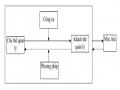
In essence, managing student activities in secondary schools includes managing goals, program content, methods and forms of organizing experiential activities, and creating conditions for
resources (people, money, time, physical facilities, etc.) to carry out these activities. The focus of experience management is the quality management of these activities.
1.3. Experiential activities in junior high schools according to the new general education program
1.3.1. New general education program and experiential activities at secondary school level
a. New general education program
According to the current new approach, education is not only to impart knowledge but also to help students complete tasks, solve problems in study and life by knowing how to effectively and creatively apply the knowledge they have learned. This viewpoint is consistently expressed in the content, methods and assessment of educational outcomes.
The new program also overcomes limitations in career orientation for students by distinguishing two stages: “basic education” (from grades 1 to 9) and “career-oriented education” (from grades 10 to 12).
For the basic education program, the program integrates related content of some current subjects to form integrated subjects, streamlining and avoiding overlapping educational content. The program also designs some subjects such as Information Technology, Technology, Physical Education or Experiential Activities according to topics, creating conditions for students to choose topics that suit their interests and abilities.
In the new program, there are two main types of educational activities: Teaching subjects and experiential educational activities outside of class hours. Through the process of approaching and learning in practice, the experiential activities have oriented learners in different approaches, the purpose of gaining knowledge and only learning combined with practice can fully cover it. [1]
16
b. Experiential activities at secondary school level
Practical activities are practical educational activities carried out in parallel with teaching and learning activities in schools. Practical activities are a part of the educational process, organized outside of cultural subjects in class and have a complementary relationship, supporting teaching and learning activities. Through practical activities, specific work and actions of students. Practical activities are educational activities with clear organization and purpose outside or inside the school, aiming to improve understanding and discover the potential of each student, making students independent, oriented and interested in their community.
Through the process of participating in the activities, students will develop their role as subjects, their positivity, initiative, creativity and innovation. Students are actively involved in all stages of the activity process: from designing activities to preparing, implementing and evaluating the results of activities suitable to their age and abilities. Students experience, express their opinions and ideas, evaluate and choose activity ideas, express and assert themselves, self-evaluate and evaluate the results of their own activities, their group's activities and those of their friends, etc.
The activities will form and develop for students the necessary values and abilities. The activities are mainly collective activities based on autonomy, with educational efforts to develop the creativity and personality of each individual.
The content of the activities is rich and diverse, synthesizing knowledge and skills from many subjects such as intellectual education, ethics, life values, life skills, physical education, labor, environment, prevention of social evils, etc. These contents are very practical and close to reality, which helps students apply knowledge better in life. The activities are organized on different scales with forms such as: groups, classes, grade levels, schools or inter-schools.
Thus, we believe that: Experiential activities in secondary schools are educational activities under the guidance of educators, thereby developing practical capacity, personal abilities of secondary school students and qualities and personalities to promote the potential and creative values of secondary school students. [6]
1.3.2. Purpose and role of secondary school experiential activities
For the new general education program, the education plan includes subjects, learning topics and experiential activities; educational activities include teaching and experiential activities.
The main goal of the practical activity is: to orient, suggest, and create opportunities for students to think, observe practical activities, encourage students to be creative, seek solutions, and find new directions based on the school's theoretical knowledge, thereby forming and developing skills and qualities.
* Help students have the opportunity to develop comprehensively
When participating in experiential activities, students can improve their knowledge, especially for those in the final years of secondary school. Career guidance activities are important in shaping their future career orientation. Because these activities help students develop comprehensively, be active, creative, adapt well to the living environment as well as prepare well for knowledge and skills when entering a new level of education.
Educators have also affirmed that creative experience activities are educational activities. Under the guidance and organization of teachers, each individual student can directly participate in family, school, and social activities as the subject of the activity, thereby developing practical capacity, personal qualities, and promoting creative values of their age.
* Help students have the opportunity to change their perceptions and behaviors
Through experiential activities, children's behavior and perception have positive changes, with more obvious impacts. Changes in perception lead to more accurate and correct behavior. For example,
History subjects help students grasp information about the history of the nation, humanity, the process of national construction and defense, students have more love for their homeland, besides, showing the spirit of patriotism, solidarity, love, and sharing with each other.
1.3.3. Content, requirements and methods of active learning at secondary school level
a. Content
The content of the Youth Union activities includes personal, social, community, labor and career development. These contents are carried out through four main types of activities: Flag salute activities, Class activities, Thematic educational activities and Club activities.
At the junior high school level, the content focuses mainly on social and community content, and at the end of the year, career guidance is taught, and work-related activities to improve health are regularly held. [quoted from 11]
b. Requirements
* Quality requirements
- Living with love: Students know how to demonstrate their readiness to participate in activities to preserve and protect the country, promote family traditions, cultural heritage values of their homeland and country; respect cultures around the world, love people, know how to be tolerant and show love for nature, life...
- Living independently: is living with self-respect, always being self-reliant, overcoming difficulties, being honest and knowing how to improve yourself.
- Living responsibly: caring about self-development, knowing how to participate in community activities, contributing to the preservation and development of the community, country, humanity, natural environment, complying with and abiding by discipline, regulations, constitution and laws, living according to social ethical standards.
* General competency requirements
- Self-study capacity: is the ability to identify learning tasks in a proactive and conscious manner; Create and implement a serious and systematic study plan; implement effective learning methods; proactively seek support when encountering difficulties in learning; correct one's own mistakes and limitations when performing learning tasks through self-assessment or comments from teachers and friends; set learning goals that require effort to achieve;
- Problem solving and creativity: is the ability to identify problems, establish problem space, identify different methods, and then select and evaluate problem solving methods as a basis for necessary adjustments.
- Aesthetic capacity: is the capacity to recognize and perceive beauty, express beauty in behavior, speech, products... and know how to create beauty.
- Physical capacity: knowing how to exercise physical health and improve mental health and having the ability to live adaptively and in harmony with the environment;.
- Communication competence: is the ability to choose content, methods, and communication attitudes to achieve goals and bring satisfaction to the parties involved in the communication.
- Collaborative capacity: is the ability to work together between two or more people to solve problems to bring benefits to all parties.
- Computational ability: is the ability to use calculations and measurements, mathematical tools to solve problems in study and life.
- Information and communication technology (ICT) capacity: is the ability to use digital devices, computers, software, etc. to search for information that actively and effectively serves learning and life; is the ability to filter and participate in communication on the network environment in a cultured manner.
The high school curriculum is clearly graded, with the middle school (JSC) emphasizing emotions and creative ideas.
Student activities depend on local conditions, school and grade levels so that they can be flexibly selected and organized to suit the students.
Extracurricular activities (outside school) are educational activities that help students gain practical experience in applying specialized knowledge to solve problems or practice life skills and moral qualities of citizens.
c. Active learning method at secondary school level
Extracurricular activities can be organized in many different locations inside or outside the school such as: classrooms, libraries, multi-purpose rooms, traditional rooms, schoolyards, school gardens, parks, flower gardens, museums, historical and cultural relics, scenic spots, public works, artisans' houses, craft villages, production facilities,... or in other locations outside the school related to the activity topic.
Extracurricular activities are organized in many forms such as: club activities, organizing games, forums, interactive stages, field trips, competitions, exchange activities, volunteer activities, community activities, public service, dramatization, organizing festivals, etc.
Club activities (culture and arts, youth association, sports...) Volunteer activities (sharing, caring for neighbors...) Orientation activities (finding information and developing the future...)
The above activities depend on local and school conditions. Grade levels can choose and organize them flexibly to suit the students.
Experiential activities and Career guidance activities contribute to the formation and development of key qualities at levels appropriate to each level of education as prescribed in the new General Education Program. [14]