
issues and is an opportunity for students to listen to opinions and learn from each other. Therefore, the forum is like a playground that creates conditions for students to express their opinions directly. The forum is often organized flexibly with many specific forms of activities, suitable for each age group of students.
Regarding the scale of organizing the "forum": it can be organized at the grade level, school level, district level, provincial level, etc.
The forum topics are also diverse, based on program content, student needs, practical student issues...
iv. Group discussion method
Discussion is a method of organizing activities in which members solve the same problem to reach the goal of finding a common conclusion. This method helps students verify their opinions, have the opportunity to get to know each other, and understand each other better.
Maybe you are interested!
-
 Managing experiential activities of students at Nam Son Secondary School, Bac Ninh City according to the orientation of the new general education program - 2
 -
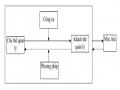 Theoretical Basis of Managing Experiential Activities for Secondary School Students According to the New General Education Program.
 -
 Current Status of Life Skills Education for Primary School Students Through Experiential Activities in Lao Cai City Primary Schools
 -
 Managing life skills education through experiential activities for secondary school students in Dak Glong district, Dak Nong province - 12
 -
 Directing the Implementation of Experiential Activities for Elementary School Students
Regarding the scale of discussion: Students can be organized to discuss in large groups (whole class) or small groups (teams or smaller).
Group discussions help students express their abilities, develop thinking skills, cooperate, exchange, share and learn from each other. Group discussions create a lively and comfortable atmosphere, so students feel free and not pressured, thereby promoting their positivity, initiative and creativity.
v. Game method
For students, games are a form of entertainment and relaxation; important and highly educational. Games are a form of organizing fun activities with knowledge content in many different fields.
* Organization method
- General orientation
a) Promote students' positivity, proactiveness and creativity; make every student ready to participate in positive experiences.
b) Create conditions for students to experience through exploration activities, apply existing knowledge and experience to life; form and develop problem-solving and decision-making skills based on new knowledge and ideas gained from experience.
c) Create opportunities for students to think, analyze, and generalize experiences to create new experiences, knowledge, and skills.
d) Flexibly and creatively select appropriate educational methods: exemplary method; collective education method; persuasion method; debate method; practice method; encouragement and motivation method; product creation method and other educational methods.
- Some main organizational methods
a) Discovery method: is a way of organizing activities that create opportunities for students to experience the natural world, real life and work, helping students discover new things, learn, discover problems from the surrounding environment, foster positive emotions and love for the homeland. This group of organization methods includes sightseeing, camping, field trips and other similar methods.
b) Experimental and interactive methods: are ways of organizing activities that create opportunities for students to interact, work and experiment with ideas such as forums, plays, seminars, competitions, games and other similar methods.
c) Contribution Method: is a way of organizing activities to create opportunities for students to bring social values through their actual contributions and dedication through humanitarian volunteer activities, public service, propaganda and other similar methods.
d) Research Method: is a way of organizing activities that create opportunities for students to participate in scientific research topics and projects inspired by practical experiences, thereby proposing scientific solutions to problems. This group of organizational forms includes research activities
observation, investigation, research project, technological and artistic creation and other similar methods.
1.3.3.4. Forces participating in experiential activities for students at junior high schools
The forces participating in experiential education activities include the participation, coordination and association of many educational forces inside and outside the school such as: homeroom teachers, subject teachers, school psychology counselors, Ho Chi Minh Communist Youth Union cadres, Vietnam Youth Union cadres, cadres in charge of Ho Chi Minh Young Pioneers, school management staff, parents, local authorities, organizations and individuals in society.
The management team must have a correct understanding of the position and role of active learning education in the comprehensive education of students towards the training goals of secondary school level, thereby building an active learning education plan and making proposals that are truly suitable to reality and feasible.
In addition, the homeroom teacher himself also clearly defines the appropriate level and the level of personality development that students in the class are expected to have after implementing experiential activities for students. From orientation activities, determining goals for students, grasping the psychology and characteristics of each group of students to be able to promote the initiative of all students in the class to participate together in the lesson or the selected experimental activity.
Educational forces inside and outside the school, especially the parents' representative committee, must be informed about the meaning and importance of HĐTN to support the school in implementing the HĐTN education orientation plan. At the same time, together with the school, review and evaluate the effectiveness of HĐTN education of students in other environments outside the school, thereby reflecting the quality and effectiveness of this activity in real life.
It can be seen that parents play an important role in
implementing activities and orienting the content of experiential activities for students. The connection between family and school contributes to evaluating the effectiveness of educational methods at school when applied by students in their daily lives. Without a close connection, school education can only help students form basic actions without assessing the frequency or training of those actions to become habits, the skills that students actually have. Accordingly, the interaction between family and school is the foundation for evaluating the effectiveness of activities applied in experiential activities for students.
1.3.3.5. Testing and evaluating experiential activities for students at junior high schools
Inspection and evaluation help the management subject to receive feedback from the management object, creating the necessary connection in the school between the teaching activities of teachers, students and management staff, between the school and the educational management levels and society. Inspection and evaluation must be based on the plan, must have specific criteria and standards for each type of activity and must be carried out daily, weekly, monthly.
Testing and evaluating educational results in the training program is to test and evaluate the level of achievement of students compared to the requirements for qualities and abilities set for each learning stage, in order to determine the position and record the progress of each student in the process of personal development, encourage and orient students to continue practicing to improve.
Testing and evaluating the results of students' activities must be based on the requirements that the activities program has determined for each class to collect information from different sources: observing students during activities; students' activities products, especially practice and application products; students' self-assessment results, student group assessments and assessments of other educational forces.
The results of testing and evaluation will be an important basis for teachers to adjust activities accordingly. In particular, evaluation needs to create motivation to promote the efforts to practice, strive, and self-improve of each student.
Along with the learning outcomes of the subjects, the results of the assessment of the HĐTN are recorded in the student's academic record (equivalent to a subject).
* Test and evaluation content
The content of testing and evaluating educational results in the HĐTN includes:
- Level of awareness of the content already included in the activity topics.
- Motivation, spirit, attitude, sense of responsibility, positivity,... of students when participating in activities.
- Students' skills in performing practical activities.
- Students' contributions to the overall performance of the class and the effective implementation of collective activities.
- Check and evaluate the number of lessons participating in the activities.
* Testing and evaluation methods
Rely on both qualitative and quantitative information.
Qualitative information is information collected from teachers' observations and from other sources (students' self-assessment, peer assessment of students in the class, comments from parents and the community), quantitative information is information about the number of hours (number of times) participating in extracurricular activities (collective activities, regular extracurricular activities, social activities and community service, career guidance activities, labor activities, etc.); the number of completed products and saved in the activity records.
Forms of testing and evaluation
- Self-assessment is a self-assessment activity carried out by each student. Self-assessment creates an opportunity for each student to review and adjust his/her own perceptions and behaviors, and at the same time provides meaningful feedback to teachers about their value concepts, training needs and training methods.
As students become independent self-monitors, teachers need to play an important role in building equal, collaborative relationships with students so that they can both accompany them and have a deeper assessment orientation.
- Peer assessment is an assessment activity between students to provide feedback for mutual learning and support. Peer assessment creates opportunities for students to develop a spirit of cooperation, critical thinking and the ability to persuade others. From peer assessment, teachers also obtain information about students' value concepts, training needs and desired training methods.
- Assessment of parents and the community is the opinion of parents and those who have a certain relationship with students (villages, residential groups, places where students participate in activities, etc.) about students' awareness and attitudes in daily life and in participating in experiential activities. Assessment of parents and the community helps students and teachers have more complete and comprehensive information about students' development during the training process. Teachers proactively plan to collect opinions of parents and the community in an appropriate form. When collecting assessment opinions of parents and the community, it is necessary to focus on educational goals, clarify what students have done well, what needs to be improved, and provide feedback and suggestions to students on how to continue training to meet educational goals.
- Teachers' testing and evaluation is the collection and processing of information about the process of students performing the tasks of the activity (through oral or written tests, practical exercises, essays, presentations, research exercises, research projects, etc.) and about the attitudes and behaviors of students during their participation in activities organized in the classroom, group, collective or community activities, as well as in daily life and communication. The homeroom teacher needs to discuss with other teachers related to the student to unify the assessment of the student.
* Synthesize test and evaluation results: the homeroom teacher is responsible for synthesizing evaluation results from teacher assessments, self-assessment and peer assessment of students, assessment of parents and assessment of the community.
1.3.3.6. Conditions for organizing experiential activities for students at junior high schools
Firstly, there must be adequate conditions and modern teaching facilities such as laboratories, audio-visual equipment, teaching aids, and libraries with full documents.
Second, the class size must be reasonable, not too crowded, ensuring that teachers can manage, monitor and support students in the best way.
Third, there needs to be a change in teachers. Each teacher must constantly study, improve their qualifications, and have the knowledge and skills to solve students' questions that arise during the actual learning process.
1.4. Content of managing experiential activities for junior high school students according to the new general education program
1.4.1. Building a plan for student activities at junior high schools according to the new general education program
The management of the student activity plan is built on the basis of the general educational plan and program of the Ministry, the Department of Education and Training, the Department of Education and the actual situation of each school. The management staff must ensure that the educational activities at the school both meet the plans and programs of the Ministry and the Department of Education and Training, have creativity in their own unit and at the same time have unity from top to bottom.
Planning for organizing experiential activities in secondary schools must begin with planning. The plan for organizing experiential activities must be included in the school's general plan and must be discussed and approved by the school community at the beginning of each school year. This plan aims to achieve the goal.
general of experiential activities while contributing to the implementation of educational goals of each school.
To achieve the above goals, depending on the current situation and conditions of secondary schools, the Principal or Vice Principal in charge of professional matters can make the following plan:
- The principal carries out decentralization in developing plans to organize experiential activities at different levels: School, Block, and Class levels. Each type of plan has an activity plan by year, by semester, and by month.
- The principal directs to ensure consistency between types of plans to avoid overlap. Class plans must be included in the general school plan and class plans must be specific to the school plan. Requirements for each type of plan must clearly define the following contents:
To plan the experience, the Principal requires the Professional Team and Teachers to research and think about the experience topic, the topic name along with the goals, content, and form must create attraction, appeal, and create excitement for students. Selecting the experience activities for students in secondary schools must be carried out according to the theme of the week, month, semester, and school year of each subject, and the method of implementation, paying attention to the content of the experience activities.
During the planning process, it is necessary to clearly state the objectives of the activity to form in students what knowledge, skills, attitudes and the level of achievement of students in terms of knowledge, skills and attitudes during the experience.
- In the plan, based on each topic, goals, specific conditions of the class, school and students' abilities, determine the appropriate experience content for each specific group of students.
Teachers and related personnel participate in developing plans to organize experiential activities, in which officers and civil servants in other departments provide information on financial resources, facilities and teaching equipment to implement the plan.