
However, the process of economic restructuring in China is facing many challenges to sustainable development, including the risk of natural resource depletion and environmental pollution; it is estimated that the damage caused by natural disasters accounts for about 3 - 6% of GDP annually; the efficiency of using natural resources is only about 34.5% (compared to advanced countries, it is 10% lower); the energy consumption of products such as cast iron, steel, oil refining, caustic soda, paper, glass, electricity, etc. is 1.2 to 2.7 times higher than that of advanced countries, the level of energy consumption is always higher than the GDP growth rate, the economy is too dependent on energy sources. The energy structure is mainly based on coal, if the method is not changed, by 2010 China's demand for coal will account for half of the world's total output, the level of environmental pollution is truly terrible. On the other hand, the transformation of the world's product structure and the rapid urbanization are huge challenges to China's sustainable development. Among the seven major river systems in the country, the Yellow River, Songhua River, and Liuhe River basins are seriously polluted. Among the four major seas, Bohai and Donghai are relatively heavily polluted. Two-thirds of rivers and more than 10 million hectares of rice fields are also polluted. The large population and limited population quality also pose a food risk to China. [48, pp. 478 - 482].
- Experience of Korea [34], [100]
Learning from Japan's experience in carrying out industrialization with state support and guidance, South Korea also combined political, financial, technical, and organizational factors to establish large conglomerates (chaebols) as the backbone or engine for economic development in the decades after the war.
South Korea's successful economic restructuring in the 1960s
- 1980. During this period, to encourage economic restructuring to increase the proportion of industry, the Korean Government applied credit support measures with preferential interest rates to expand production and investment in industries. The Korean economy achieved a rapid growth rate, averaging 8.5% in the two decades 1950 - 1960. Entering the early 1970s, Korea had emerged as a major economy in Asia and exports were increasingly expanded, focusing on automobile industries.
automobiles, shipbuilding, electronics and telecommunications. The early 1980s were South Korea's most successful years, as exports boomed, with annual growth reaching over 15%. South Korea became the 10th most important economy in the world.
However, with a development strategy that focuses too much on the export market, following the production process of developed countries to focus on the industrial processing industry with an abundant labor force and low wages; combining three proactive factors: the state, enterprises and banks to implement an outward-oriented development policy; Korea has an "external" industry, too dependent on international investment and on the export market; while local production facilities for the domestic market are neglected, sometimes oppressed. The above reasons, together with the weakness of the financial and business systems and the shortcomings in state management, led to the 1997 financial crisis in Korea and Southeast Asian countries. The change in industry structure has also created an imbalance in the domestic labor market. The number of workers looking for jobs in the service industry tends to increase, while there is a shortage of workers in difficult industries such as metallurgy and machine manufacturing. Korea's economic restructuring has left the agricultural sector with a heavy burden of labor, and the rate of rural-urban migration is among the highest in the world. The government has maintained low wages in industry to create greater profits for Korea's economic competitiveness.
After the 1997 financial crisis, Korea carried out structural reform policies in the financial sector, enterprises and government agencies. In the economic structural reform of Korea, the following measures were focused on: (i) subsidizing damaged enterprises, and reforming and enhancing the autonomy of enterprises, including chaebols (through changing the ownership structure); (ii) promulgating new regulations on financial management such as the new Bankruptcy Law, the Enterprise Management Law (1998) and strengthening compliance enforcement; (iii) receiving assistance from the International Monetary Fund (IMF); (iv) establishing internal and external control mechanisms, focusing on building institutions, building a system to monitor external factors, and making procedures transparent.
(ii) Experience of some other developing countries
Structural adjustment programs in some developing countries such as Côte d'Ivoire, Mexico and Thailand [99] in the 1980s did not transform these countries towards more sustainable development, but on the contrary made the situation worse; mainly for two reasons: the scale of production, although expanded, caused serious consequences for society and the environment; and economic structural reforms did not fully take into account social and environmental factors.
Currently in many developing countries, development plans proposed at both the macro (national), meso (industry, local) and micro (enterprise) levels all have in common the outstanding feature of high growth rates of industrial and service production compared to agriculture. Such high growth of industries has led to an increase in waste volume; increased migration from rural to urban areas, changed the way of life of residents, etc. The relationship between industrial growth, urbanization and society and environment in developing countries can be summarized as Figure 1.3. [46].
Increase employment Increase migration
from rural to urban
Increasing industrial-urban mix
Industrial growth
Increased waste volume and accumulation
environmental pollution; raises many social problems
Figure 1.3. The relationship between industrial growth and environmental pollution
Source: National Political Publishing House, 2001 [46]
Recently, the United Nations Economic and Social Commission for Asia and the Pacific (UNESCAP) proposed the "green growth initiative". [93], [94]. This concept is still new to many countries, including those in the Asia-Pacific region. In essence, this is a different way of expressing and further specifying the concept of sustainable development, emphasizing three aspects: first, improving ecological efficiency through increasing the efficiency of exploitation and use of natural resources; second, strengthening the protection work.
environmental protection through improving environmental management/governance; third, considering the promotion of environmental protection as an opportunity for economic growth and development . Thus, the above initiative focuses mainly on stimulating the growth of environmentally friendly industries and services; but this can only be appropriate when countries have a fairly high level of development. This perspective does not mention solving social problems. The implementation of "green growth" needs to be approached step by step and at different levels depending on the conditions and circumstances of each country; this approach is also quite useful for Vietnam, when our country is having a fairly high economic growth rate.
When studying Vietnam's economic restructuring, many scholars believe that Vietnam has many differences compared to many other developing countries. In the 1980s, while many developing countries began to stabilize, escape from economic recession and debt, some economies in the region (Asian tigers) were recorded to have outstanding growth, Vietnam had to go through a period of slow growth, budget deficit and agricultural economy was still the main. However, since 1986 with the implementation of the renovation policy, Vietnam's economy has been recorded to have significant growth. But economic development is also creating many environmental and social challenges. Market policies have not been supplemented or fully integrated with policies on exploitation, use of natural resources, environmental protection and social development. [99].
Economic reforms and increasing dependence on market factors have eliminated or weakened the influence of the centrally planned economy; created gaps and uncertainties, negatively affecting the resource base and environment; contained risks of social instability. Meanwhile, economic reforms and the transition to a market economy have not yet created good premises for improving social and environmental issues. [99]. The economic transition of the Southern Key Economic Zone is a typical example of the strong development of industry and services in the economic restructuring of Vietnam in recent years. The foreign-invested industrial sector and private industry are important factors contributing to growth and increasing the proportion of the industrial sector.
industry; the agricultural sector has fundamentally changed. However, not all economic restructuring is progressive and leads to the same economic development when applied in different countries, but it is necessary to choose a reasonable economic restructuring model. [34].
The above experiences show that the extremely difficult problem that cannot be avoided for developing countries, including Vietnam, is how to ensure the sustainability of economic restructuring, not focusing too much on rapid growth to the point of social instability, causing pollution and environmental degradation, and not focusing too much on maintaining social stability and environmental protection to the point of slow growth and lagging behind developed countries. The lesson for Vietnam is: it is necessary to build a structural policy suitable to its specific conditions; it is necessary to attach importance from the beginning to ensuring harmony between economic, social and environmental aspects in the process of restructuring; to focus on developing industries with higher labor productivity and greater contribution to growth; to attach importance to properly solving the problem of growth drivers, including the accumulation of physical capital and human capital, scientific and technological progress, institutional strengthening; to consolidate the financial and business systems; Tightly control internal and external factors; economic restructuring policies also need to fully consider social and environmental factors; attention must be paid to developing labor-intensive industries and services.
1.4. ASSESSING THE SUSTAINABILITY OF ECONOMIC STRUCTURAL TRANSFORMATION
1.4.1. Groups of indicators reflecting the sustainability of economic restructuring
Since the Brundtland Commission was established, many international organizations and countries have made efforts to develop sustainable development indicators, reflecting sustainability in all three aspects of economic development, social development and environmental protection. (Table 1.3). However, to date, progress has been mainly in quantifying environmental and economic sustainability. Indicators measuring social sustainability have been slow to be developed because the concept of social sustainability is still unclear and is still hotly debated. To accurately determine groups of sustainable development indicators, it is necessary to rely on statistical data and the specific characteristics of each country and region. [43].
Table 1.3. Groups of sustainable development indicators of the United Nations and some countries
International organization
country/country name
Development indicators sustainable built | Areas of reflection | |
United Nations | 58 | Economic, social, environmental, institutional |
China | 80 | Economy, society, environment, resources, population, science and technology |
Thailand | 16 | Economy, society, environment |
Philippines | 43 | Economy, society, environment |
Indonesia | 21 | Economy, society, environment |
Vietnam 8 | 69 | Economy, society, environment |
Maybe you are interested!
-
 Economic structure of the Northern key region from the perspective of sustainable development - 18
 -
 Economic structure of the Northern key region from the perspective of sustainable development - 26
 -
 Economic structure of the Northern key region from the perspective of sustainable development - 6
 -
 Economic structure of the Northern key region from the perspective of sustainable development - 11
 -
 Developing industrial zones in the Northern key economic region in a sustainable direction - 13
Source: Author's processing from the report of Le Anh Son, Nguyen Cong My, 2006 [51]

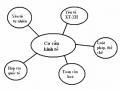
Research to develop indicators reflecting the sustainability of economic restructuring is still very limited and requires continued investment in research, especially indicators reflecting the correlation between the three components of economic, social and environmental sustainability. Based on the reference of relevant documents [82] and combining indicators reflecting the process of economic restructuring and sustainable development, the author proposes three main groups of indicators to assess the sustainability of economic restructuring (Figure 1.3).
Ensuring harmony between these groups of indicators is important; but the group of indicators reflecting economic sustainability plays a decisive role for the two groups of social indicators.
society and environment. Figure 1.3. Groups of indicators reflecting sustainability
of economic restructuring
Source: Author's processing
The 2001-2010 Socio-Economic Development Strategy sets out 21 targets; the Comprehensive Strategy for Growth and Poverty Reduction, 33 targets; and the Orientation for Sustainable Development in Vietnam, 69 targets.
(i) Economic indicators
- Economic growth rate (usually using the GDP growth rate) and GDP per capita growth rate. The pure purpose of economic growth is to achieve the highest possible GDP and sector growth rate. Annual GDP growth rate (or in a certain period of time) represents the growth rate, the increase in total social goods. This indicator also indirectly reflects the level of exploitation of natural resources, energy use, etc. GDP per capita reflects the change in the total amount of goods and services of a country or a region per person in a certain period of time.
- The proportion of value of goods and deep processing industries in GDP . This indicator reflects the level of raw material processing and post-harvest processing, thus also indirectly reflects the level of exploitation of natural resources.
- Structure of national income by industry, territory and economic sector. National income by economic sector is expressed as a percentage of national income of each industry, by territory (rural and urban) and by economic sector in total national income. This ratio also reflects the level of development of industries, territories and economic sectors in the economy, indirectly reflecting the level of exploitation of natural resources.
- The proportion of environmental protection costs in GDP. This indicator reflects efforts to compensate, restore, improve and protect the environment. However, this proportion does not indicate the absolute value of a country's investment in the environment. Environmental protection costs need to be accounted for and incurred during the production and consumption process.
- The proportion of expenditure on education and health in GDP. This indicator reflects the level of interest of a country in education as an investment for sustainable development and in human health - an important factor to ensure sustainable development. This proportion is important in the era of knowledge economy with
strong competition on a global scale. However, the absolute value of this investment depends more or less on the value of the country's total GDP.
In addition to the above indicators, to assess the sustainability of economic restructuring, we use indicators on labor productivity; electricity consumption to create a unit of GDP; average welfare per capita and the level of development gap between territories.
(ii) Social indicators
- Population. Population factors are closely related to economic and environmental factors. Controlling population and population growth is one of the goals of every country (controlling population growth and decline, migration and labor between territories).
- Poverty. Income poverty measures vary from country to country. For international comparison, the World Bank established an international poverty line of US$1/day/person at purchasing power parity (PPP) in 1985. The national poverty line is set by the Ministry of Labor, War Invalids and Social Affairs for households with an average income of less than VND80,000/person/month.
- Unemployment rate. This indicator reflects the full employment of industries and regions (urban and rural). This indicator is also related to the state of disorder, security and social safety.
- Percentage of people using clean water. This indicator reflects the social and humanistic aspects of environmental protection for the purpose of sustainable development and reflects the quality of life of urban and rural people.
- Traffic accident status. This indicator indirectly reflects the ability of sustainable development in general. In addition to showing the safety level of people participating in traffic, the level of awareness, attitude of compliance and respect for the law of the people..., this indicator also shows the status of infrastructure, urban management level, and social management of a country.