
The economic structure shifts according to requirements and in a more progressive direction in a regular manner under the conditions of globalization and regionalization, and is specifically expressed in the change in proportion and correlation between basic sectors: agriculture, industry and services; between different regions: urban and rural areas, public and private sectors, domestic sectors and export-oriented sectors. [52].
The structural shift by economic sector must be based on the functions, tasks and roles of each sector, and on actual conditions. This process will take place in the direction of reducing the proportion of the agricultural sector, increasing the proportion of the non-agricultural sector; the proportion of sectors with high labor productivity, containing high technology and intellectual content will increase, the proportion of sectors with low labor productivity will decrease in the entire picture of the social division of labor. The faster this trend takes place, the better. [34].
The shift in economic structure according to territory will develop in the direction that territories with increasingly significant development dynamics will spread out strongly, while underdeveloped territories will increasingly shrink. [5].
The structural shift by economic sector will develop in the direction of increasing the proportion of the private economic sector; the proportion of the state economy may decrease relatively, but its key and leading role in the economy will still be guaranteed. The mixed economic form, typically the joint-stock economy, will become popular. [34].
Maybe you are interested!
-
 Economic structure of the Northern key region from the perspective of sustainable development - 18
 -
 Economic structure of the Northern key region from the perspective of sustainable development - 9
 -
 Economic structure of the Northern key region from the perspective of sustainable development - 26
 -
 Economic structure of the Northern key region from the perspective of sustainable development - 11
 -
 Developing industrial zones in the Northern key economic region in a sustainable direction - 13
1.3.1.2. Requirements for economic restructuring
Economic restructuring requires modernity, high productivity and efficiency in a relatively stable and sustainable movement. Economic restructuring has both positive and negative impacts on sustainable development. Therefore, when restructuring the economy, it is necessary to pay special attention to the positive requirements for sustainable development and limit or even eliminate negative impacts on sustainable development. Economic restructuring must originate from the existing structure and aim to reform the old, outdated or unsuitable structure to build a new, more advanced, suitable and complete structure.
Reasonable and effective economic restructuring must create high accumulation capacity in industries and regions with many advantages, capable of compensating for industries and regions with disadvantages.
Areas with little or no conditions for accumulation contribute to increasing accumulation for the national economy.
Economic restructuring is a process that aims to promote the economic development of a country, an economic region or a certain locality. If the direction, viewpoint and solution to implement the proposed orientation are correctly determined, economic restructuring will bring about the highest socio-economic efficiency. On the contrary, if the direction, viewpoint and solution are not suitable for the resources and advantages of the country, economic restructuring will be a barrier and stagnate economic growth. If the economic structure is chosen incorrectly or correctly but does not meet the necessary conditions along with the poor management capacity of the state, economic restructuring will not go as expected and in a bad direction. [34].
The viewpoint on economic restructuring in our country in the recent past and in the coming years has been affirmed by the 8th, 9th, and 10th National Congresses of the Party: "Industrialization and modernization is the cause of all people, of all economic sectors, in which the state economy plays a leading role"; in the period of 2006 - 2010 "to create a breakthrough in infrastructure construction and economic restructuring, improve quality and competitiveness, increase economic growth rate, and soon bring our country out of the status of a low-income developing country". These contents can only be realized thanks to the guiding role and appropriate solutions of the state, and cannot rely on the miracle of the market mechanism. [28], [29], [30].
1.3.2. Factors affecting the formation and transformation of economic structure
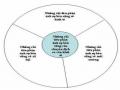
Economic restructuring is constantly affected by various factors (Diagram 1.2). The factors that form and influence economic restructuring are divided into groups in different ways; according to the origin, there are endogenous factors and exogenous factors; according to the value of the factors: factors that play a decisive role and factors that have a normal influence. The above factors form a complex system, with multi-dimensional and different levels of impact. Therefore, it is necessary to have
Systemic, comprehensive, and specific perspective when analyzing and forecasting economic structural shifts. [84].
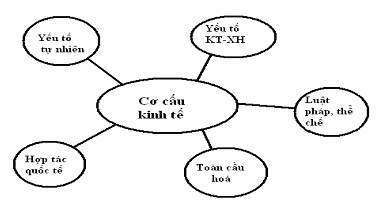
Diagram 1.2. Factors forming economic structure
Source: Ngo Doan Vinh, 2005 [84, p. 215]
1.3.2.1. Group of objective factors [84]
(i) Group of natural factors such as: geographical location, climate, natural resources. This group of factors determines the natural resource advantages of each region, each locality, they have an intertwined relationship with each other, directly and regularly affecting the economic development process of the region, locality. First of all, it is necessary to clarify these factors to see the advantages and difficulties in economic restructuring.
- Geographical location: is a factor that directly affects the development process of a region. If a region is a traffic hub, has a major seaport, an important border gate... it will have conditions to develop faster than other regions that do not have those advantages. Geographical location creates the ability for strong exchange between regions within the same country, through the exchange of goods, products, resources (labor, capital resources, science and technology, management organization level...).
- Natural resources: including land resources, climate, minerals, marine resources, forest resources... Natural resources and the environment are inputs to industrial and agricultural production processes. The scale, wealth, quality, and conditions for exploiting resources will greatly affect the economic structure. Where natural resources are poor, the economic structure there is unlikely to be diversified.
(ii) The second group includes the country's internal socio-economic factors such as: market demand, population and labor resources, and development level of the workforce.
production, management level, historical circumstances. The size and quality of the population are of great significance to the formation and development of the economic structure. The larger the population and the higher the quality of the population, the better the conditions for the formation and development of a diverse and high-quality economic structure with industries and fields that have the potential to make breakthroughs, bringing high socio-economic efficiency. The living conditions of people determine the nature and scale of consumer demand. The State can introduce consumer policies that encourage or restrict consumer demand, thereby affecting the scale of production and business.
The development of the knowledge economy has a great influence on the transformation of the economic structure and the redistribution of social labor, changing the position of industries in the national economy. Scientific and technological progress and the speed of technological innovation have a direct and dominant impact on the formation and development of the economic structure; changing the scale and quality of development of industries and leading to changes in the economic structure; bringing territories closer together and attracting them into production and business processes. Cutting-edge technologies such as biotechnology, genes and new materials; ocean technology; information technology are especially meaningful for countries with low levels of development like ours. [52].
Enterprises produce products to meet social needs, create GDP, jobs, tax revenue for the state and contribute to social welfare, contributing to social progress. Therefore, the more new enterprises appear and operate effectively, the better it is for the formation and development of the economic structure; on the contrary, if enterprises do not develop and do not operate effectively, there cannot be a good economic structure.
(iii) The third group includes external factors such as foreign economic relations and international division of labor cooperation. A favorable international environment will promote the transformation of the domestic economic structure. In international exchanges, each country promotes its comparative advantages on the basis of specializing in industries and fields with relatively low costs, thereby promoting the development of the social division of labor, resulting in changes in the economic structure. In the context of international economic integration, the economic structure of a country is also affected by the economic structures of other countries in the region. The positive and negative aspects of globalization, international cooperation and the reform of the economic structure of related countries must be carefully considered when choosing an economic structure.
for the country, for the region, for the locality. This is very meaningful when our country has become a member of the World Trade Organization (WTO). For a region, the economic structure is governed by the economic structure of the whole country and other regions, of the localities in the region. Therefore, when choosing their economic structure, regions and localities must take into account the connection with other regions and localities.
1.3.2.2. Group of subjective factors
The group of subjective factors includes the guidelines, policies and laws of the state in each period. The perfection of the state apparatus, laws and economic institutions 2 will be the decisive condition for the formation and development of an effective economic structure [84]. The stability, transparency and synchronization of economic institutions (especially investment and financial policies) will contribute to the development of the economic structure in a positive direction. Subjective factors also play an important role in reducing or increasing the positive and negative impacts on the economic restructuring. Mechanism
Management regime will affect production structure, population structure, create balance of labor force and income between regions, reduce the gap in living standards between urban and rural areas.
The economic structure is scientifically objective and socio-historical, but these characteristics of the economic structure are subject to the control of the state. The state does not directly intervene in the economic structure, but can indirectly influence it through development orientation and institutional, policy and legal regulatory tools. Economic development orientation is not only to encourage all social production forces to achieve the set goals but also to propose projects to attract all economic sectors to participate; to bring industries, fields and economic sectors to develop together; to ensure balance and synchronization between the components of the economy. The state exempts or reduces taxes or prescribes low tax rates so that producers have high profits to encourage industries and products; for industries and fields that are not encouraged, the state will adopt policies to limit production investment. The state can also encourage workers to go to places with natural resources and labor demand.
2 A strong state is demonstrated in three aspects: organization, structure, personnel and law.
through socio-economic policies, on the contrary, to limit massive migration to large cities, it is necessary to invest in developing towns, townships and rural areas. In some cases, the state must directly organize production, ensuring the balance between products, industries, fields and territories in the economy. [34], [84].
1.3.3. Main theories on economic restructuring
1.3.3.1. Marxist economic theory [26], [34]
The issue of economic restructuring was mainly mentioned by C. Marx in two theories on the division of social labor and on social reproduction (1848 - 1867). Marx pointed out the structure of transforming surplus value into average profit and commodity value into production price under conditions of free competition. That has scientific and revolutionary significance. From there, Marx solved many problems that economists before him could not overcome such as average profit, absolute rent. Competition is the driving force to adjust the economic structure. Competition within an industry encourages enterprises to adjust their structure and move resources between them to earn excess profits. Competition between industries aims to earn average profits. Through competition between industries, resources will be moved into industries according to the relationship between supply and demand. Capital will move from low-profit industries to high-profit industries. That is the process of adjusting the structure of the economy according to the law of profit maximization. Differences in growth rates of industries will lead to differences in proportions, market shares and resource use. The process of adjusting industries to the new structure determines the efficiency of resource use and the competitiveness of the industry.
The model of structural adjustment has also been considered in the diagram of the analysis of the simple reproduction mechanism and the expanded reproduction of social capital. The reproduction process is the process of movement of the economic structure in the direction that the industries producing means of production must increase faster than the industries producing means of production to produce consumer goods and the industries producing means of production to produce consumer goods must increase faster than the industries producing consumer goods. The consumption process, in turn, creates the market and the driving force for the development of production activities.
The process of changing the internal structure of the economy takes place both in terms of products and in terms of resource allocation, first of all labor. Development is expressed
This is manifested in the movement of social labor resources from areas with low labor productivity and low value-added stages (often associated with areas of production using outdated techniques, unfavorable market conditions, and low education and labor skills of workers) to areas with high labor productivity and stages with high value-added (often associated with areas of production using modern technology, favorable market conditions, and high education and labor skills of workers). 3
Marxist economic theory also emphasizes the issue of ownership in economic development; thereby, it has raised the viewpoint on the transformation of economic components. VI Lenin (1870 - 1924) continued to develop Marxist political economy with the viewpoint that the socialist economy must be based on the public ownership of the means of production with two forms of ownership: the whole people and collective. However, in the new economic policy, it proposed the requirement to develop a multi-sector commodity economy, widely use transitional economic forms, and emphasize the significance of state capitalist economic forms. The ideas on the socialist economy of Marx, Engels and Lenin were further developed by the Communist and workers' parties of socialist countries and thinkers of scientific socialism. Accordingly, in the early stages, economic ideas generally emphasized the role of the centrally planned economy and denied the market economy. This has reduced the competitiveness of the economy, reduced the dynamism of enterprises and reduced the efficiency and quality of economic restructuring. After the 1980s, especially when the Soviet Union collapsed, these economic models were transformed into indirect planned economies, through targeted programs and projects, while applying market mechanisms at different levels and scopes.
Through Marxist economic research, it is shown that the process of economic restructuring is effective when the following premises are mature: (i) The formation of two closely related areas, urban and rural. The rural area mainly produces agriculture and the urban area has industrial and commercial activities.
3 For example, manufacturing industries are gradually shifting to service industries associated with high technology and expertise such as banking, insurance, and information.
trade and other services; (ii) Appropriate population size and population density, avoiding massive migration from rural to urban areas, causing imbalance in development and development relations between the two areas; (iii) Social labor productivity in agriculture is raised sufficiently to provide essential products for both agricultural workers and workers in other production sectors. On the other hand, issues that need attention when building an economic structure include: the need to clearly and transparently institutionalize the ownership regime; the ability to fully employ labor.
1.3.3.2. Mainstream economic theory
In the 1960s and 1970s, there was a rapprochement between the two schools of "Orthodox Keynes" and "New Classical", forming "Current Mainstream Economics". The basic feature of current mainstream economics is that based on the combination of the theories of the "New Keynes" and "New Classical" schools, they have used a synthesis of economic views of different trends and schools of economics to put forward their economic theories, in order to serve as a theoretical basis for business operations and economic policies of the bourgeois state. The clearest manifestation of this feature is presented in Paul Samuelson's "Economics". The subject of mainstream economics is developed market economies, so in some ways it can be seen that the issue of economic restructuring during the industrialization period is not its main analytical target. However, this does not mean that this issue has not been addressed in one form or another. [26], [34].
In order to maintain the efficiency of the economy, mainstream economics has deeply analyzed the conditions to ensure the effective operation of the market as a driving force for economic development and emphasized the role of state intervention through macroeconomic policies to ensure the market operates well and maintains stability. [34]. It is necessary to combine both the market mechanism and the role of the state in operating the market economy. Analyses of the trend of economic restructuring of developed economies under the impact of the scientific and technological revolution and the trend of internationalization of world economic life; state intervention measures