
Spirituality. Creating statues of Buddha, Saints, Cranes, Horses, scrolls, parallel sentences, decorated with dragons, unicorns, turtles, phoenixes... Son Dong sculptors must understand the deep origin of each product, the spiritual qualities of the Buddha, Saints for people to worship. They must also learn from the virtues of these people to elevate their souls, have spiritual awareness to improve their skills, and increase the value of their products.
The Vietnamese Embassy in the United States ordered worshiping items, umbrellas, horizontal lacquered boards, and parallel sentences from Son Dong village to introduce to customers on the occasion of President Nguyen Minh Triet's visit to the United States.
* SWEDISH HORN
There are thousands of craft villages in the country. Some of these are done in many different craft villages. But there are also some that are only done in one craft village. Thuy Ung horn carving craft village is considered the only craft village in the country that makes handicrafts from buffalo horns today. Initially, it was horn combs, but gradually the products made from horns have become more and more diverse. Although many craft villages in the provinces show signs of decline, even disappearance, the horn carving craft of Thuy Ung village, Hoa Binh commune is still developing.
For hundreds of years, throughout Vietnam, Thuy Ung craft village, Hoa Binh commune, Thuong Tin district, Hanoi has been proud to be the place that makes horn combs that are both durable and convenient.
Maybe you are interested!
-
 Current situation and solutions to develop Thien Duong Bao Son Park into an attractive tourist destination - 4
 -
 Current situation and solutions for sustainable tourism development in Thien Cam beach tourist area - Ha Tinh - 1
 -
 Identify Rating Levels and Rating Scales
zt2i3t4l5ee
zt2a3gstourism,quan lan,quang ninh,ecology,ecotourism,minh chau,van don,geography,geographical basis,tourism development,science
zt2a3ge
zc2o3n4t5e6n7ts
of the islanders. Therefore, this indicator will be divided into two sub-indicators:
a1. Natural tourism attractiveness a2. Cultural tourism attractiveness
b. Tourist capacity
The two island communes in Quan Lan have different capacities to receive tourists. Minh Chau Commune is home to many standard hotels and resorts, attracting high-income domestic and international tourists. Meanwhile, Quan Lan Commune has many motels mainly built and operated by local people, so the scale and quality are not high, and will be suitable for ordinary tourists such as students.
c. Time of exploitation of Quan Lan Island Commune:
Quan Lan tourism is seasonal due to weather and climate conditions and festivals only take place on certain days of the year, specifically in spring. In Quan Lan commune, the period from April to June and from September to November is considered the best time to visit Quan Lan because the cultural tourism activities are mainly associated with festivals taking place during this time.
Minh Chau island commune:
Tourism exploitation time is all year round, because this is a place with a number of tourist attractions with diverse ecosystems such as Bai Tu Long National Park Research Center, Tram forest, Turtle Laying Beach, so besides coming to the beach for tourism and vacation in the summer, Minh Chau will attract research groups to come for tourism combined with research at other times of the year.
d. Sustainability
The sustainability of ecotourism sites in Quan Lan and Minh Chau communes depends on the sensitivity of the ecosystems to climate changes.
landscape. In general, these tourist destinations have a fairly high level of sustainability, because they are natural ecosystems, planned and protected. However, if a large number of tourists gather at certain times, it can exceed the carrying capacity and affect the sustainability of the environment (polluted beaches, damaged trees, animals moving away from their habitats, etc.), then the sustainability of the above ecosystems (natural ecosystems, human ecosystems) will also be affected and become less sustainable.
e. Location and accessibility
Both island communes have ports to take tourists to visit from Van Don wharf:
- Quan Lan – Van Don traffic route:
Phuc Thinh – Viet Anh high-speed boat and Quang Minh high-speed boat, depart at 8am and 2pm from Van Don to Quan Lan, and at 7am and 1pm from Quan Lan to Van Don. There are also wooden boats departing at 7am and 1pm.
- Van Don - Minh Chau traffic route:
Chung Huong high-speed train, Minh Chau train, morning 7:30 and afternoon 13:30 from Van Don to Minh Chau, morning 6:30 and afternoon 13:00 from Minh Chau to Van Don.
f. Infrastructure
Despite receiving investment attention, the issue of infrastructure and technical facilities for tourism on Quan Lan Island is still an issue that needs to be resolved because it has a direct impact on the implementation of ecotourism activities. The minimum conditions for serving tourists such as accommodation, electricity, water, communication, especially medical services, and security work need to be given top priority. Ecotourism spots in Minh Chau commune are assessed to have better infrastructure and technical facilities for tourism because there are quite complete and synchronous conditions for serving tourists, meeting many needs of domestic and foreign tourists.
3.2.1.4. Determine assessment levels and assessment scales
Corresponding to the levels of each criterion, the index is the score of those levels in the order of 4, 3, 2, 1 decreasing according to the standard of each level: very attractive (4), attractive (3), average (2), less attractive (1).
3.2.1.5. Determining the coefficients of the criteria
For the assessment of DLST in the two communes of Quan Lan and Minh Chau islands, the students added evaluation coefficients to show the importance of the criteria and indicators as follows:
Coefficient 3 with criteria: Attractiveness, Exploitation time. These are the 2 most important criteria for attracting tourists to tourism in general and eco-tourism in particular, so they have the highest coefficient.
Coefficient 2 with criteria: Capacity, Infrastructure, Location and accessibility . Because the assessment area is an island commune of Van Don district, the above criteria are selected by the author with appropriate coefficients at the average level.
Coefficient 1 with criteria: Sustainability. Quan Lan has natural and human-made ecotourism sites, with high biodiversity and little impact from local human factors. Most of the ecotourism sites are still wild, so they are highly sustainable.
3.2.1.6. Results of DLST assessment on Quan Lan island
a. Assessment of the potential for natural tourism development
For Minh Chau commune:
+ Natural tourism attractiveness is determined to be very attractive (4 points) and the most important coefficient (coefficient 3), so the score of the Attractiveness criterion is 4 x 3 = 12.
+ Capacity is determined as average (2 points) and the coefficient is quite important (coefficient 2), then the score of Capacity criterion is 2 x 2 = 4.
+ Exploitation time is long (4 points), the most important coefficient (coefficient 3) so the score of the Exploitation time criterion is 4 x 3 = 12.
+ Sustainability is determined as sustainable (4 points), the important coefficient is the average coefficient (coefficient 1), so the score of the Sustainability criterion is 4 x 1 = 4 points
+ Location and accessibility are determined to be quite favorable (2 points), the coefficient is quite important (coefficient 2), the criterion score is 2 x 2 = 4 points.
+ Infrastructure is assessed as good (3 points), the coefficient is quite important (coefficient 2), then the score of the Infrastructure criterion is 3 x 2 = 6 points.
The total score for evaluating DLST in Minh Chau commune according to 6 evaluation criteria is determined as: 12 + 4 + 12 + 4 + 4 + 6 = 42 points
Similar assessment for Quan Lan commune, we have the following table:
Table 3.3: Assessment of the potential for natural ecotourism development in Quan Lan and Minh Chau communes
Attractiveness of self-tourismof course
Capacity
Mining time
Sustainability
Location and accessibility
Infrastructure
Result
Point
DarkMulti
Point
DarkMulti
Point
DarkMulti
Point
DarkMulti
Point
DarkMulti
Point
DarkMulti
CommuneMinh Chau
12
12
4
8
12
12
4
4
4
8
6
8
42/52
Quan CommuneLan
6
12
6
8
9
12
4
4
4
8
4
8
33/52
b. Assessment of the potential for humanistic tourism development
For Quan Lan commune:
+ The attractiveness of human tourism is determined to be very attractive (4 points) and the most important coefficient (coefficient 3), so the score of the Attractiveness criterion is 4 x 3 = 12.
+ Capacity is determined to be large (3 points) and the coefficient is quite important (coefficient 2), then the score of the Capacity criterion is 3 x 2 = 6.
+ Mining time is average (3 points), the most important coefficient (coefficient 3) so the score of the Mining time criterion is 3 x 3 = 9.
+ Sustainability is determined as sustainable (4 points), the important coefficient is the average coefficient (coefficient 1), so the score of the Sustainability criterion is 4 x 1 = 4 points.
+ Location and accessibility are determined to be quite favorable (2 points), the coefficient is quite important (coefficient 2), the criterion score is 2 x 2 = 4 points.
+ Infrastructure is rated as average (2 points), the coefficient is quite important (coefficient 2), then the score of the Infrastructure criterion is 2 x 2 = 4 points.
The total score for evaluating DLST in Quan Lan commune according to 6 evaluation criteria is determined as: 12 + 6 + 6 + 4 + 4 + 4 = 36 points.
Similar assessment with Minh Chau commune we have the following table:
Table 3.4: Assessment of the potential for developing humanistic eco-tourism in Quan Lan and Minh Chau communes
Attractiveness of human tourismliterature
Capacity
Mining time
Sustainability
Location and accessibility
Infrastructure
Result
Point
DarkMulti
Point
DarkMulti
Point
DarkMulti
Point
DarkMulti
Point
DarkMulti
Point
DarkMulti
Quan CommuneLan
12
12
6
8
9
12
4
4
4
8
4
8
39/52
Minh CommuneChau
6
12
4
8
12
12
4
4
4
8
6
8
36/52
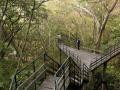
Basically, both Minh Chau and Quan Lan localities have quite favorable conditions for developing ecotourism. However, Quan Lan commune has more advantages to develop ecotourism in a humanistic direction, because this is an area with many famous historical relics such as Quan Lan Communal House, Quan Lan Pagoda, Temple worshiping the hero Tran Khanh Du, ... along with local festivals held annually such as the wind praying ceremony (March 15), Quan Lan festival (June 10-19); due to its location near the port and long exploitation time, the beaches in Quan Lan commune (especially Quan Lan beach) are no longer hygienic and clean to ensure the needs of tourists coming to relax and swim; this is also an area with many beautiful landscapes such as Got Beo wind pass, Ong Phong head, Voi Voi cave, but the ability to access these places is still very limited (dirt hill road, lots of gravel and rocks), especially during rainy and windy times; In addition, other natural resources such as mangrove forests and sea worms have not been really exploited for tourism purposes and ecotourism development. On the contrary, Minh Chau commune has more advantages in developing ecotourism in the direction of natural tourism, this is an area with diverse ecosystems such as at Rua De Beach, Bai Tu Long National Park Conservation Center...; Minh Chau beach is highly appreciated for its natural beauty and cleanliness, ranked in the top ten most beautiful beaches in Vietnam; Minh Chau commune is also home to Tram forest with a large area and a purity of up to 90%, suitable for building bridges through the forest (a very effective type of natural ecotourism currently applied by many countries) for tourists to sightsee, as well as for the purpose of studying and researching.
Figure 3.1: Thenmala Forest Bridge (India) Source: https://www.thenmalaecotourism.com/(August 21, 2019)
3.2.2. Using SWOT matrix to evaluate Quan Lan island tourism
General assessment of current tourism activities of Quan Lan island is shown through the following SWOT matrix:
Table 3.5: SWOT matrix evaluating tourism activities on Quan Lan island
Internal agent
Strengths- There is a lot of potential for tourism development, especially natural ecotourism and humanistic ecotourism.- The unskilled labor force is relatively abundant.- resource environmentunpolluted, still
Weaknesses- Poorly developed infrastructure, especially traffic routes to tourist destinations on the island.- The team of professional staff is still weak.- Tourism products in general
quite wild, originalintact
general and DLST in particularalone is monotonous.
External agents
Opportunity- Tourism is a key industry in the socio-economic development strategy of the province and Van Don economic zone.- Quan Lan was selected as a pilot area for eco-tourism development within the framework of the green growth project between Quang Ninh province and the Japanese organization JICA.- The flow of tourists and especially ecotourism in the world tends toincreasing
Challenge- Weather and climate change abnormally.- Competition in tourism products is increasingly fierce, especially with other localities in the province such as Ha Long, Mong Cai...- Awareness of tourists, especially domestic tourists, about ecotourism and nature conservation is not high.
Through summary analysis using SWOT matrix we see that:
To exploit strengths and take advantage of opportunities, it is necessary to:
- Diversify products and service types (build more tourism routes aimed at specific needs of tourists: experiential tourism immersed in nature, spiritual cultural tourism...)
- Effective exploitation of resources and differentiated products (natural resources and human resources)
div.maincontent .p { color: black; font-family:"Times New Roman", serif; font-style: normal; font-weight: normal; text-decoration: none; font-size: 14pt; margin:0pt; } div.maincontent p { color: black; font-family:"Times New Roman", serif; font-style: normal; font-weight: normal; text-decoration: none; font-size: 14pt; margin:0pt; } div.maincontent .s1 { color: black; font-family:"Times New Roman", serif; font-style: normal; font-weight: normal; text-decoration: none; font-size: 13pt; } div.maincontent .s2 { color: black; font-family:"Times New Roman", serif; font-style: normal; font-weight: normal; text-decoration: none; font-size: 13pt; } div.maincontent .s3 { color: #0D0D0D; font-family:"Times New Roman", serif; font-style: normal; font-weight: bold; text-decoration: none; font-size: 14pt; } div.maincontent .s4 { color: black; font-family:"Times New Roman", serif; font-style: italic; font-weight: normal; text-decoration: none; font-size: 14pt; } div.maincontent .s5 { color: black; font-family:"Times New Roman", serif; font-style: italic; font-weight: bold; text-decoration: none; font-size: 14pt; } div.maincontent .s6 { color: black; font-family:"Times New Roman", serif; font-style: italic; font-weight: normal; text-decoration: none; font-size: 14pt; vertical-align: -3pt; } div.maincontent .s7 { color: black; font-family:"Times New Roman", serif; font-style: italic; font-weight: normal; text-decoration: none; font-size: 14pt; vertical-align: -2pt; } div.maincontent .s8 { color: black; font-family:"Times New Roman", serif; font-style: italic; font-weight: normal; text-decoration: none; font-size: 14pt; vertical-align: -1pt; } div.maincontent .s9 { color: black; font-family:"Times New Roman", serif; font-style: normal; font-weight: normal; text-decoration: none; font-size: 14pt; } div.maincontent .s10 { color: black; font-family:"Times New Roman", serif; font-style: normal; font-weight: bold; text-decoration: none; font-size: 14pt; } div.maincontent .s11 { color: black; font-family:"Times New Roman", serif; font-style: normal; font-weight: normal; text-decoration: none; font-size: 14pt; } div.maincontent .s12 { color: black; font-family:Symbol, serif; font-style: normal; font-weight: normal; text-decoration: none; font-size: 14pt; } div.maincontent .s13 { color: black; font-family:Wingdings; font-style: normal; font-weight: normal; text-decoration: none; font-size: 14pt; } div.maincontent .s14 { color: black; font-family:"Times New Roman", serif; font-style: normal; font-weight: normal; text-decoration: none; font-size: 9pt; vertical-align: 5pt; } div.maincontent .s15 { color: black; font-family:"Times New Roman", serif; font-style: normal; font-weight: normal; text-decoration: none; font-size: 9pt; vertical-align: 5pt; } div.maincontent .s16 { color: black; font-family:Cambria, serif; font-style: italic; font-weight: normal; text-decoration: none; font-size: 14pt; } div.maincontent .s17 { color: #080808; font-family:"Times New Roman", serif; font-style: normal; font-weight: bold; text-decoration: none; font-size: 14pt; } div.maincontent .s18 { color: #080808; font-family:"Times New Roman", serif; font-style: normal; font-weight: normal; text-decoration: none; font-size: 14pt; } div.maincontent .s19 { color: black; font-family:"Times New Roman", serif; font-style: normal; font-weight: normal; text-decoration: none; font-size: 11pt; } div.maincontent .s20 { color: black; font-family:"Times New Roman", serif; font-style: normal; font-weight: normal; text-decoration: none; font-size: 10pt; } div.maincontent .s21 { color: black; font-family:"Times New Roman", serif; font-style: normal; font-weight: bold; text-decoration: none; font-size: 11pt; } div.maincontent .s22 { color: black; font-family:"Times New Roman", serif; font-style: normal; font-weight: normal; text-decoration: none; font-size: 11pt; } div.maincontent .s23 { color: black; font-family:"Times New Roman", serif; font-style: italic; font-weight: normal; text-decoration: none; font-size: 14pt; } div.maincontent .s24 { color: #212121; font-family:"Times New Roman", serif; font-style: normal; font-weight: normal; tex
Identify Rating Levels and Rating Scales
zt2i3t4l5ee
zt2a3gstourism,quan lan,quang ninh,ecology,ecotourism,minh chau,van don,geography,geographical basis,tourism development,science
zt2a3ge
zc2o3n4t5e6n7ts
of the islanders. Therefore, this indicator will be divided into two sub-indicators:
a1. Natural tourism attractiveness a2. Cultural tourism attractiveness
b. Tourist capacity
The two island communes in Quan Lan have different capacities to receive tourists. Minh Chau Commune is home to many standard hotels and resorts, attracting high-income domestic and international tourists. Meanwhile, Quan Lan Commune has many motels mainly built and operated by local people, so the scale and quality are not high, and will be suitable for ordinary tourists such as students.
c. Time of exploitation of Quan Lan Island Commune:
Quan Lan tourism is seasonal due to weather and climate conditions and festivals only take place on certain days of the year, specifically in spring. In Quan Lan commune, the period from April to June and from September to November is considered the best time to visit Quan Lan because the cultural tourism activities are mainly associated with festivals taking place during this time.
Minh Chau island commune:
Tourism exploitation time is all year round, because this is a place with a number of tourist attractions with diverse ecosystems such as Bai Tu Long National Park Research Center, Tram forest, Turtle Laying Beach, so besides coming to the beach for tourism and vacation in the summer, Minh Chau will attract research groups to come for tourism combined with research at other times of the year.
d. Sustainability
The sustainability of ecotourism sites in Quan Lan and Minh Chau communes depends on the sensitivity of the ecosystems to climate changes.
landscape. In general, these tourist destinations have a fairly high level of sustainability, because they are natural ecosystems, planned and protected. However, if a large number of tourists gather at certain times, it can exceed the carrying capacity and affect the sustainability of the environment (polluted beaches, damaged trees, animals moving away from their habitats, etc.), then the sustainability of the above ecosystems (natural ecosystems, human ecosystems) will also be affected and become less sustainable.
e. Location and accessibility
Both island communes have ports to take tourists to visit from Van Don wharf:
- Quan Lan – Van Don traffic route:
Phuc Thinh – Viet Anh high-speed boat and Quang Minh high-speed boat, depart at 8am and 2pm from Van Don to Quan Lan, and at 7am and 1pm from Quan Lan to Van Don. There are also wooden boats departing at 7am and 1pm.
- Van Don - Minh Chau traffic route:
Chung Huong high-speed train, Minh Chau train, morning 7:30 and afternoon 13:30 from Van Don to Minh Chau, morning 6:30 and afternoon 13:00 from Minh Chau to Van Don.
f. Infrastructure
Despite receiving investment attention, the issue of infrastructure and technical facilities for tourism on Quan Lan Island is still an issue that needs to be resolved because it has a direct impact on the implementation of ecotourism activities. The minimum conditions for serving tourists such as accommodation, electricity, water, communication, especially medical services, and security work need to be given top priority. Ecotourism spots in Minh Chau commune are assessed to have better infrastructure and technical facilities for tourism because there are quite complete and synchronous conditions for serving tourists, meeting many needs of domestic and foreign tourists.
3.2.1.4. Determine assessment levels and assessment scales
Corresponding to the levels of each criterion, the index is the score of those levels in the order of 4, 3, 2, 1 decreasing according to the standard of each level: very attractive (4), attractive (3), average (2), less attractive (1).
3.2.1.5. Determining the coefficients of the criteria
For the assessment of DLST in the two communes of Quan Lan and Minh Chau islands, the students added evaluation coefficients to show the importance of the criteria and indicators as follows:
Coefficient 3 with criteria: Attractiveness, Exploitation time. These are the 2 most important criteria for attracting tourists to tourism in general and eco-tourism in particular, so they have the highest coefficient.
Coefficient 2 with criteria: Capacity, Infrastructure, Location and accessibility . Because the assessment area is an island commune of Van Don district, the above criteria are selected by the author with appropriate coefficients at the average level.
Coefficient 1 with criteria: Sustainability. Quan Lan has natural and human-made ecotourism sites, with high biodiversity and little impact from local human factors. Most of the ecotourism sites are still wild, so they are highly sustainable.
3.2.1.6. Results of DLST assessment on Quan Lan island
a. Assessment of the potential for natural tourism development
For Minh Chau commune:
+ Natural tourism attractiveness is determined to be very attractive (4 points) and the most important coefficient (coefficient 3), so the score of the Attractiveness criterion is 4 x 3 = 12.
+ Capacity is determined as average (2 points) and the coefficient is quite important (coefficient 2), then the score of Capacity criterion is 2 x 2 = 4.
+ Exploitation time is long (4 points), the most important coefficient (coefficient 3) so the score of the Exploitation time criterion is 4 x 3 = 12.
+ Sustainability is determined as sustainable (4 points), the important coefficient is the average coefficient (coefficient 1), so the score of the Sustainability criterion is 4 x 1 = 4 points
+ Location and accessibility are determined to be quite favorable (2 points), the coefficient is quite important (coefficient 2), the criterion score is 2 x 2 = 4 points.
+ Infrastructure is assessed as good (3 points), the coefficient is quite important (coefficient 2), then the score of the Infrastructure criterion is 3 x 2 = 6 points.
The total score for evaluating DLST in Minh Chau commune according to 6 evaluation criteria is determined as: 12 + 4 + 12 + 4 + 4 + 6 = 42 points
Similar assessment for Quan Lan commune, we have the following table:
Table 3.3: Assessment of the potential for natural ecotourism development in Quan Lan and Minh Chau communes
Attractiveness of self-tourismof course
Capacity
Mining time
Sustainability
Location and accessibility
Infrastructure
Result
Point
DarkMulti
Point
DarkMulti
Point
DarkMulti
Point
DarkMulti
Point
DarkMulti
Point
DarkMulti
CommuneMinh Chau
12
12
4
8
12
12
4
4
4
8
6
8
42/52
Quan CommuneLan
6
12
6
8
9
12
4
4
4
8
4
8
33/52
b. Assessment of the potential for humanistic tourism development
For Quan Lan commune:
+ The attractiveness of human tourism is determined to be very attractive (4 points) and the most important coefficient (coefficient 3), so the score of the Attractiveness criterion is 4 x 3 = 12.
+ Capacity is determined to be large (3 points) and the coefficient is quite important (coefficient 2), then the score of the Capacity criterion is 3 x 2 = 6.
+ Mining time is average (3 points), the most important coefficient (coefficient 3) so the score of the Mining time criterion is 3 x 3 = 9.
+ Sustainability is determined as sustainable (4 points), the important coefficient is the average coefficient (coefficient 1), so the score of the Sustainability criterion is 4 x 1 = 4 points.
+ Location and accessibility are determined to be quite favorable (2 points), the coefficient is quite important (coefficient 2), the criterion score is 2 x 2 = 4 points.
+ Infrastructure is rated as average (2 points), the coefficient is quite important (coefficient 2), then the score of the Infrastructure criterion is 2 x 2 = 4 points.
The total score for evaluating DLST in Quan Lan commune according to 6 evaluation criteria is determined as: 12 + 6 + 6 + 4 + 4 + 4 = 36 points.
Similar assessment with Minh Chau commune we have the following table:
Table 3.4: Assessment of the potential for developing humanistic eco-tourism in Quan Lan and Minh Chau communes
Attractiveness of human tourismliterature
Capacity
Mining time
Sustainability
Location and accessibility
Infrastructure
Result
Point
DarkMulti
Point
DarkMulti
Point
DarkMulti
Point
DarkMulti
Point
DarkMulti
Point
DarkMulti
Quan CommuneLan
12
12
6
8
9
12
4
4
4
8
4
8
39/52
Minh CommuneChau
6
12
4
8
12
12
4
4
4
8
6
8
36/52
Basically, both Minh Chau and Quan Lan localities have quite favorable conditions for developing ecotourism. However, Quan Lan commune has more advantages to develop ecotourism in a humanistic direction, because this is an area with many famous historical relics such as Quan Lan Communal House, Quan Lan Pagoda, Temple worshiping the hero Tran Khanh Du, ... along with local festivals held annually such as the wind praying ceremony (March 15), Quan Lan festival (June 10-19); due to its location near the port and long exploitation time, the beaches in Quan Lan commune (especially Quan Lan beach) are no longer hygienic and clean to ensure the needs of tourists coming to relax and swim; this is also an area with many beautiful landscapes such as Got Beo wind pass, Ong Phong head, Voi Voi cave, but the ability to access these places is still very limited (dirt hill road, lots of gravel and rocks), especially during rainy and windy times; In addition, other natural resources such as mangrove forests and sea worms have not been really exploited for tourism purposes and ecotourism development. On the contrary, Minh Chau commune has more advantages in developing ecotourism in the direction of natural tourism, this is an area with diverse ecosystems such as at Rua De Beach, Bai Tu Long National Park Conservation Center...; Minh Chau beach is highly appreciated for its natural beauty and cleanliness, ranked in the top ten most beautiful beaches in Vietnam; Minh Chau commune is also home to Tram forest with a large area and a purity of up to 90%, suitable for building bridges through the forest (a very effective type of natural ecotourism currently applied by many countries) for tourists to sightsee, as well as for the purpose of studying and researching.
Figure 3.1: Thenmala Forest Bridge (India) Source: https://www.thenmalaecotourism.com/(August 21, 2019)
3.2.2. Using SWOT matrix to evaluate Quan Lan island tourism
General assessment of current tourism activities of Quan Lan island is shown through the following SWOT matrix:
Table 3.5: SWOT matrix evaluating tourism activities on Quan Lan island
Internal agent
Strengths- There is a lot of potential for tourism development, especially natural ecotourism and humanistic ecotourism.- The unskilled labor force is relatively abundant.- resource environmentunpolluted, still
Weaknesses- Poorly developed infrastructure, especially traffic routes to tourist destinations on the island.- The team of professional staff is still weak.- Tourism products in general
quite wild, originalintact
general and DLST in particularalone is monotonous.
External agents
Opportunity- Tourism is a key industry in the socio-economic development strategy of the province and Van Don economic zone.- Quan Lan was selected as a pilot area for eco-tourism development within the framework of the green growth project between Quang Ninh province and the Japanese organization JICA.- The flow of tourists and especially ecotourism in the world tends toincreasing
Challenge- Weather and climate change abnormally.- Competition in tourism products is increasingly fierce, especially with other localities in the province such as Ha Long, Mong Cai...- Awareness of tourists, especially domestic tourists, about ecotourism and nature conservation is not high.
Through summary analysis using SWOT matrix we see that:
To exploit strengths and take advantage of opportunities, it is necessary to:
- Diversify products and service types (build more tourism routes aimed at specific needs of tourists: experiential tourism immersed in nature, spiritual cultural tourism...)
- Effective exploitation of resources and differentiated products (natural resources and human resources)
div.maincontent .p { color: black; font-family:"Times New Roman", serif; font-style: normal; font-weight: normal; text-decoration: none; font-size: 14pt; margin:0pt; } div.maincontent p { color: black; font-family:"Times New Roman", serif; font-style: normal; font-weight: normal; text-decoration: none; font-size: 14pt; margin:0pt; } div.maincontent .s1 { color: black; font-family:"Times New Roman", serif; font-style: normal; font-weight: normal; text-decoration: none; font-size: 13pt; } div.maincontent .s2 { color: black; font-family:"Times New Roman", serif; font-style: normal; font-weight: normal; text-decoration: none; font-size: 13pt; } div.maincontent .s3 { color: #0D0D0D; font-family:"Times New Roman", serif; font-style: normal; font-weight: bold; text-decoration: none; font-size: 14pt; } div.maincontent .s4 { color: black; font-family:"Times New Roman", serif; font-style: italic; font-weight: normal; text-decoration: none; font-size: 14pt; } div.maincontent .s5 { color: black; font-family:"Times New Roman", serif; font-style: italic; font-weight: bold; text-decoration: none; font-size: 14pt; } div.maincontent .s6 { color: black; font-family:"Times New Roman", serif; font-style: italic; font-weight: normal; text-decoration: none; font-size: 14pt; vertical-align: -3pt; } div.maincontent .s7 { color: black; font-family:"Times New Roman", serif; font-style: italic; font-weight: normal; text-decoration: none; font-size: 14pt; vertical-align: -2pt; } div.maincontent .s8 { color: black; font-family:"Times New Roman", serif; font-style: italic; font-weight: normal; text-decoration: none; font-size: 14pt; vertical-align: -1pt; } div.maincontent .s9 { color: black; font-family:"Times New Roman", serif; font-style: normal; font-weight: normal; text-decoration: none; font-size: 14pt; } div.maincontent .s10 { color: black; font-family:"Times New Roman", serif; font-style: normal; font-weight: bold; text-decoration: none; font-size: 14pt; } div.maincontent .s11 { color: black; font-family:"Times New Roman", serif; font-style: normal; font-weight: normal; text-decoration: none; font-size: 14pt; } div.maincontent .s12 { color: black; font-family:Symbol, serif; font-style: normal; font-weight: normal; text-decoration: none; font-size: 14pt; } div.maincontent .s13 { color: black; font-family:Wingdings; font-style: normal; font-weight: normal; text-decoration: none; font-size: 14pt; } div.maincontent .s14 { color: black; font-family:"Times New Roman", serif; font-style: normal; font-weight: normal; text-decoration: none; font-size: 9pt; vertical-align: 5pt; } div.maincontent .s15 { color: black; font-family:"Times New Roman", serif; font-style: normal; font-weight: normal; text-decoration: none; font-size: 9pt; vertical-align: 5pt; } div.maincontent .s16 { color: black; font-family:Cambria, serif; font-style: italic; font-weight: normal; text-decoration: none; font-size: 14pt; } div.maincontent .s17 { color: #080808; font-family:"Times New Roman", serif; font-style: normal; font-weight: bold; text-decoration: none; font-size: 14pt; } div.maincontent .s18 { color: #080808; font-family:"Times New Roman", serif; font-style: normal; font-weight: normal; text-decoration: none; font-size: 14pt; } div.maincontent .s19 { color: black; font-family:"Times New Roman", serif; font-style: normal; font-weight: normal; text-decoration: none; font-size: 11pt; } div.maincontent .s20 { color: black; font-family:"Times New Roman", serif; font-style: normal; font-weight: normal; text-decoration: none; font-size: 10pt; } div.maincontent .s21 { color: black; font-family:"Times New Roman", serif; font-style: normal; font-weight: bold; text-decoration: none; font-size: 11pt; } div.maincontent .s22 { color: black; font-family:"Times New Roman", serif; font-style: normal; font-weight: normal; text-decoration: none; font-size: 11pt; } div.maincontent .s23 { color: black; font-family:"Times New Roman", serif; font-style: italic; font-weight: normal; text-decoration: none; font-size: 14pt; } div.maincontent .s24 { color: #212121; font-family:"Times New Roman", serif; font-style: normal; font-weight: normal; tex -
 Recruitment of civil servants at the People's Committee of Luc Nam district, Bac Giang province - Current situation and solutions - 9
 -
 Ecotourism in Can Tho City - Current situation and solutions - 2
Not only is it a unique craft village, with talented hands, today, Thuy Ung people also create many handicraft products from buffalo and cow horns to export to many countries around the world. It is not without reason that Thuy Ung villagers are known as the people who "breathe soul into horns."
The Thuy Ung horn craft village has existed for nearly 400 years. At first, the combs were square, then improved to become curved like grapefruit segments. The combs were first made of grapefruit wood, then changed to horn because the combs were not only more beautiful but also more durable. Thuy Ung horn combs from ancient times have become a popular item. During the decades of the 50s, 60s, and 70s of the 20th century, black horn combs and ivory-yellow pumpkin horn combs were popular products that could be found everywhere.
The product is made from young buffalo horn. To make each product, artisans must go through over thirty stages, from buying the horn, cutting it into tubes, heating it, rolling it into molds... then cutting the teeth, sanding it, and polishing it. Each stage requires the craftsman to be skillful and have a keen eye. Making horns is very difficult because "no two horns are alike" and the craftsman must heat, press, mix, and cut each horn according to each horn; young buffalo horns bend when bent, some horns have to be bent up to ten times, but the most difficult part is still shaping.
Not only stopping at comb making, many Thuy Ung craftsmen, through their research, creativity combined with their skillful hands, have created many other valuable handicraft products. Besides traditional products such as horn combs, hairpins, key chains from horn..., they also make fish paintings from buffalo horn. The fish carved from buffalo horn have a very special and natural beauty. Carving fish from horn is not simple because it requires experience in chiseling, drawing, heating to create the right color for the fish's fins, and then nailing the horn so that it fits well and does not break.
* BROCADE WEAVING
Brocade is a type of hand-woven fabric rich in motifs and these motifs often appear on the surface of the fabric as if embroidered. In Vietnam, brocade usually refers to self-woven fabrics with patterns woven according to the traditional methods of ethnic minorities. The patterns on brocade fabrics often represent the traditions of each ethnic group. The traditional brocade weaving profession is preserved and passed down through the skillful hands of women in the family.
Brocade is an indispensable part of the material and spiritual life of ethnic minorities in the highlands of Vietnam. Brocade pieces show the skillful talent of women, are a place to express dreams, aspirations, and also a place to weave nostalgia. Therefore, brocade is not only important in the daily material life of people but also the soul, an indispensable cultural feature. Brocade is the main fabric used to sew clothes, towels and household items such as blankets, slings, pillow covers, bed sheets... Nowadays, brocade has entered the life of Vietnamese people when it becomes a material to make interior decoration, handbags or bags.
cute phone case. This material is very airy, cool, sweat-absorbent and especially the colors are extremely rich, showing the diversity in the culture of Vietnamese ethnic groups.
The value of brocade is the delicate patterns that represent every aspect of daily life, from high mountains, deep forests, streams to tools used in daily life, or simply a wild flower on the mountainside. In the luggage of ethnic girls in the highlands to their husband's house, a brocade-woven dress or shirt is indispensable. These dresses or shirts are only worn on "special" occasions such as Tet and festivals. The newer and more beautiful the dress or shirt is, the more it shows the charm, ingenuity and diligence of the ethnic girls in the highlands. The main colors of the product are strong colors: blue, red, yellow... prominent, carrying optimistic aspirations about life. Brocade also has a soul because it shows the mood of the wearer. When happy, the pattern is vivid and sharp; when sad, it is sometimes crooked. The most valuable asset in each family is the personal loom. Simple loom made from wooden, bamboo and rattan sticks.
The brocade weaving process is completely done by hand, from the planting of raw materials (jute, hemp, cotton) to the skillful weaving, dyeing, embroidering and arranging of patterns. The main materials for weaving brocade are indigo-dyed cotton and dyed silk. This is a very laborious job because brocade must be woven entirely by hand and has many patterns, each brocade takes from 9 to 10 days, even a whole month.
Hand-woven brocade is always thicker and more importantly, it contains the soul of the weaver. Each weaver is also a decorative artist; the sophistication and creativity of the craftsman are clearly shown through each product.
*Dong Ho paintings
Dong Ho paintings , or full name Dong Ho folk woodcut paintings, are a type of Vietnamese folk paintings originating from Dong Ho village (Song Ho commune, Thuan Thanh district, Bac Ninh province). Previously, paintings were sold mainly for the Lunar New Year, when rural people bought paintings to stick on their walls.
When talking about Vietnamese folk paintings, we cannot help but mention the line of woodblock prints.
Dong Ho wood. This line of paintings was born around the 17th century and developed until the first half of the 20th century, then gradually declined. It carries its own quintessential features with great cultural values. The differences between this line of paintings and other lines of paintings are shown from the stages such as drawing models, different prints, production and color processing to printing and painting. This is a woodblock painting line, using wooden boards to print the painting, the number of colors in the painting is the same number of times it is printed.
This genre of painting has a very rich subject matter, reflecting almost everything that happens in daily life, activities as well as social relationships in the Northern countryside. From the most rustic things like picking coconuts, jealousy, roosters,... to worship paintings: Prosperity, Humanity...
Due to its familiar theme, Dong Ho paintings were well received by the people and soon entered their cultural life. Every time Tet comes, it seems that most families in the Northern countryside hang a few Dong Ho paintings. Over time, with the power it carries, Dong Ho paintings have increasingly spread to the surrounding areas, and then it has become an indispensable part of the spiritual and cultural life of the people.
In addition to the characteristics of lines and composition, the folk features of Dong Ho paintings also lie in the color and material of the printing paper. Dong Ho painting printing paper is called diep paper: people crush the shells of scallops, a type of thin-shelled seashell, mix with glue (glue is cooked from rice flour or sticky rice, sometimes cooked with tapioca flour - the glue used to paint the background of the painting is usually cooked thinly from rice flour or tapioca flour, glue cooked from sticky rice flour is often used for gluing) and then use a pine needle brush to sweep it onto the surface of the do paper. The pine needle brush creates lines along the sweeping lines and the shells naturally give a white color with small pieces of scallops sparkling under the light, other colors can be mixed into the glue during the process of making diep paper. The colors used in the paintings are natural colors from plants such as black (xoan charcoal or bamboo charcoal), green (copper rust, indigo leaves), yellow (hojuana flowers), red (red pebbles, vang wood), etc. These are quite basic colors, not mixed, and because the number of colors corresponds to the number of woodblocks, Dong Ho paintings usually only use up to 4 colors.
*Bat Trang Pottery
According to memories and folk customs, among the clans in Bat Trang, there is the Nguyen Ninh Trang clan. There is an opinion that Nguyen Ninh Trang is the Nguyen clan in Vinh Ninh school , a pottery kiln in Thanh Hoa, but there is no confirmed document. The genealogy of some clans in Bat Trang such as Le, Vuong, Pham, Nguyen... records that the ancestors migrated here from Bo Bat (Bo Bat is Bo Xuyen and Bach Bat). During the Later Le Dynasty, around the end of the 14th century - the beginning of the 15th century and the beginning of the Nguyen Dynasty, Bo Xuyen commune and Bach Bat village belonged to Bach Bat commune, Yen Mo district, Truong Yen prefecture, Thanh Hoa Ngoai town. Today, Bo Xuyen and Bach Bat are two villages of Yen Thanh commune, Yen Mo district, Ninh Binh province, this area has a type of white clay that is very suitable for pottery making. According to legend and genealogy of some clans such as Vu in Bo Xuyen, in the past, Bo Bat residents specialized in pottery making for a long time. This is confirmed by the traces of dense layers of baked clay and pottery fragments found in many places in this area.
In 1010, King Ly Thai To moved the capital to Thang Long, Thang Long became the political center of Dai Viet. Due to the development needs of the capital, many merchants and craftsmen from all over came to Thang Long to practice and establish their businesses. The birth and development of Thang Long had a strong impact on the economic activities of the surrounding villages, including Bat Trang village. In particular, this area has a lot of white clay, a good source of raw materials for pottery production. Some Bo Bat potters migrated here with the Nguyen Ninh Trang family to set up a pottery kiln, called Bach Tho Phuong (White Land Ward). The following waves of migration turned Bat Trang from an ordinary pottery village into a famous pottery center.
To make pottery, the potter must go through the stages of selecting, processing and mixing the soil, shaping, creating patterns, glazing, and finally firing the product. The traditional experience of the Bat Trang pottery villagers is "First bone, second skin, third kiln". The first important thing to form a pottery kiln is the source of clay for making pottery. Ancient pottery production centers often produced on the basis of exploiting local soil resources. The same goes for Bat Trang pottery village. The reason why the Bo Bat villagers chose the current Bat Trang village area as the land to settle and develop the pottery industry is because they first discovered a white clay mine here. The raw soil often contains impurities.
In addition, depending on the requirements of each type of pottery, there may be different ways of mixing clay to create suitable products. In Bat Trang, the traditional method of treating clay is to soak it in water in a tank system, including 4 tanks at different heights: beating tank, settling tank (filter tank), drying tank, and incubation tank. The traditional shaping method of Bat Trang villagers is to do it by hand on a turntable. In the shaping stage, Bat Trang potters commonly use the "hand-stroking, be chach" method on the turntable.
Based on the general characteristics of ceramic bones, glaze colors, decorative themes and especially thanks to the inscriptions, we can draw out the basic characteristics of ancient Bat Trang ceramics.
Most of Bat Trang pottery is produced by hand, clearly showing the creative talent of the craftsmen passed down through many generations. Due to the nature of the raw materials used to create the ceramic core and the shaping is done by hand on a turntable, along with the use of domestically mined glazes based on experience, Bat Trang pottery has its own characteristics of being full, solid and quite heavy, the white glaze layer is often ivory and opaque . Bat Trang is also a pottery village with its own lines of glaze from moss green glaze along with brown and white to crackle glaze with a porous ceramic core of gray-brown color.
Bat Trang pottery has 5 typical glaze lines that are expressed through different periods to create different typical products: blue glaze first appeared in Bat Trang with pottery ranging from lead green to dark black; brown glaze is expressed in traditional style and painted using blue glaze technique; ivory white glaze is used on many types of pottery from the 17th to the 19th century, this glaze is thin, ivory yellow, shiny, suitable for meticulous embossed decorations; moss green glaze is used in combination with ivory white and brown glaze to create a very unique Tam Thai line of Bat Trang in the 16th-17th century and crackle glaze is a glaze line that only appeared in Bat Trang from the end of the 16th century and continuously developed through the 17th-19th centuries.
Bat Trang ceramics in many cases have inscriptions, expressed by engraving or writing in blue enamel under white enamel. Some inscriptions clearly state the year of production, the full name and hometown of the creator, and the full name, sometimes even the title of the person who ordered it. And there are many products with inscriptions, some of these products
Some are on display at the Vietnam Museum of History, some at foreign museums, some are currently owned by antique collectors, some are scattered among the people, and some are still deep underground.
*Chuon Ngo Boy
Chuon Ngo is famous as an eco-tourism destination with sparkling mother-of-pearl inlay masterpieces that captivate people's hearts.
Coming to Chuon Ngo, the first impression for visitors is the image of workers diligently cutting mother-of-pearl pieces. With skillful and creative hands, the inlay workers have breathed life into the rough mother-of-pearl pieces, making them lively and soft with many diverse images.
Chuon Ngo mother-of-pearl inlay village in Chuyen My commune - Phu Xuyen - Hanoi is known for its history of more than 600 years, passed down by the ancestor Truong Cong Thanh (former deputy commander of Ly Thuong Kiet). Through many stages, the mother-of-pearl inlay craft has been preserved and developed by the people of Chuon Ngo to this day.
Ngo Village used to be Ngo Ward, a traditional mother-of-pearl inlay craft village, a long-standing village, the ancestral shrine of the inlay craft was ranked as a historical relic by the Ministry of Culture in 1996. Chuon Ngo is a craft village with a thousand-year history bearing the cultural nuances of the low-lying land in the Northern Delta. The highlight of Chuon Ngo mother-of-pearl inlay paintings is that the mother-of-pearl pieces are unbroken, always flat, and chiseled into the wood very tightly. From inlaid cabinets, inlaid beds to simple products of life such as chess boards, wall paintings...
According to legend and genealogy of Chuon Ngo village temple, mother-of-pearl inlay craft has existed in Chuyen My since very early, around the 11th-13th century, established by the founder of the craft, Truong Cong Thanh, a talented general of the Ly dynasty. During the war, there was a time when the craft seemed to have disappeared, but in 1954, when the North was liberated, the commune restored the mother-of-pearl inlay craft, producing mother-of-pearl inlay products, lacquering on plywood products for export to the Soviet Union, Poland, etc.
Especially in the past 30 years, due to market demand, mother-of-pearl inlay in Chuong My has developed strongly, supplying the domestic market and exporting abroad with sophisticated handicraft products that are rare anywhere else.
The materials used for mother-of-pearl inlay in Chuong Ngo include all kinds of domestic and imported materials. Currently, imported shell materials from countries such as Hong Kong, Singapore, Indonesia... are popular with customers. To make a mother-of-pearl inlay product, it takes a lot of time and effort, it is mandatory to go through 5-6 stages, drawing a pattern, cutting according to the pattern, gluing the cut piece to the wood and carving according to the pattern, then gluing the mother-of-pearl piece, using a whetstone to grind it flat and using a steel knife to separate and trim small patterns, using sandpaper to make the pattern stand out. Finally, the entire product is varnished to make it shiny so that the pattern stands out vividly like a painting.
According to artisan Tran Ba Dinh, who has won the Golden Hand Award three times, the most difficult part of this profession is drawing the model. That is the first step in creating the shape, the craftsman must think for himself what the model should look like, and how to arrange it appropriately. The most important part is the separation and trimming - using the tip of a knife to separate the mother-of-pearl into strokes, only skilled craftsmen can create vivid and soulful images.
Mother-of-pearl inlay products in Chuon Ngo range from cabinets, beds, tables and chairs, to parallel sentences and horizontal lacquered boards in churches, temples and shrines; wall paintings based on stories from the Three Kingdoms and ancient stories; and handicraft products for tourists.
With a history of 1,000 years, through many ups and downs, the mother-of-pearl inlay craft of Chuon Ngo has been passed down and developed by the people of Chuyen My commune, Phu Xuyen district, Hanoi, generation after generation, creating a lasting vitality for an ancient craft village. After the upheavals of the craft village, people can now live with the mother-of-pearl inlay craft, which has a tradition of thousands of years. That is truly a good sign for Chuon Ngo.
* Driftwood
Driftwood is the core inside the dry stumps of ancient trees. Being the root and core, driftwood is very hard and never gets eaten by termites or rotten. From here, artisans with creative intelligence and skillful hands have created unique works of art.
Driftwood combined with bonsai and rockery is a hobby and art appreciation.