
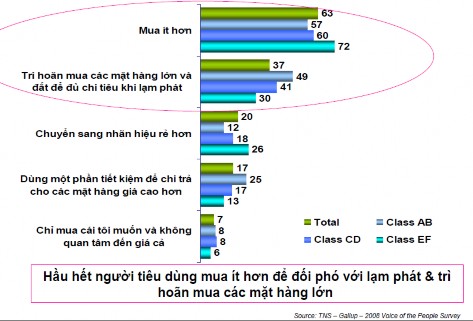
Figure 2.5: Consumer purchasing decisions during inflation
(Source: Presentation at the workshop, Yen Bai Department of Industry and Trade organized in 2008 "Building brands for small and medium enterprises" by Nguyen Thanh Trung, Trade Promotion Agency - Ministry of Industry and Trade)
As illustrated in the chart, the majority of consumers, about 57–72%, are willing to buy less or delay their purchases, 30–49%, to focus on essential items during the inflation period, rather than switching to other brands that they do not know, do not have a brand or have not experienced. Increasing brand loyalty plays a very important role at the time of purchase when competitors are always innovative and have superior products. Brand loyalty is a component of brand equity but is also affected by brand equity. Brand loyalty is one of the values that brand equity brings to the company.
Fourth, branding helps businesses reduce costs for advertising, marketing and communication. Usually, businesses
Businesses that want to sell products or services have to spend a lot on advertising programs, introductions and applying promotional programs to attract customers' attention. These costs account for a large part of the total capital resources that are inherently limited for SMEs and often do not bring the desired results. However, when a brand is built, SMEs will save a lot of advertising costs. Because when there is a brand and the brand is positioned in the minds of customers, there is no need to advertise loudly, there is no need to spend too much money and effort on marketing activities, customers will always remember and seek out the brand. In addition, SMEs can also take advantage of the pervasive nature of the brand and take advantage of the effectiveness of word-of-mouth advertising brought by consumers themselves.
Take for example a very familiar brand that few people do not know, that is the Trang Tien ice cream brand. Trang Tien ice cream has appeared and developed in Vietnam for more than 50 years. Perhaps no one, whether in Hanoi or in remote areas, does not know Trang Tien ice cream. Trang Tien ice cream seems to have become a symbol, a sign, a specialty of Hanoi. People from far away hear about Hanoi, they hear about Trang Tien ice cream, and when coming to Hanoi, they must enjoy Trang Tien ice cream. However, if based on the amount of expenses spent on advertising and marketing, the Trang Tien ice cream brand is only valued at 3.2 billion VND15 , not even a fraction of the expenses that businesses spend on advertising, marketing and promotional programs in a year. Talking about advertising and marketing, Trang Tien ice cream hardly uses any form, the cost for this activity is also insignificant, but no one can deny that Trang Tien ice cream has really entered people's hearts.
15 WINCO Intellectual Property Law Firm, www.wincolaw.com.vn
Vietnamese and international tourists, just because of the quality, the price and because this product carries the soul of Hanoi in it. What Trang Tien ice cream has created is a brand that has been built for over 50 years.
Fifth, the brand is the only factor that helps businesses create a difference. In the era of mass goods and services, customers cannot distinguish the difference between products, so the brand is the only identifying mark. Most companies and small and medium-sized enterprises, although the quality and design of their products are not inferior to similar products, cannot sell their products and services because they do not really have a brand and are not known. For example, with green tea products, a series of brands immediately appeared on the market that produce and supply green tea products, such as O degree green tea, Dr. Thanh herbal tea, Fruity tea, 100 o C tea... and it really became a battle between businesses that supply the same product and a battle in the minds of customers to choose products for their purchasing decisions.
In short , for small and medium-sized enterprises, building, managing and protecting brands becomes even more necessary. Simply because they are small and medium-sized. The disadvantage of small and medium-sized enterprises is that they are small and medium-sized. That shows that their resilience, competitiveness, management and creativity are also somewhat limited. Not to mention that in the battle with the "giants" in the same field, with that power and brand, SMEs can easily be crushed and eliminated from the game, not to mention competition. It is also the reason why SMEs are small and medium-sized, so their ability to withstand economic fluctuations or sudden changes in customer shopping trends is very poor. Building a solid brand is the best way for SMEs to overcome the barrier of scale. With the meaning
And with such a role, nurturing small, medium and micro enterprises is very important for the development of the economy.
II. Current status of brand building and protection for Vietnamese small and medium enterprises.
1. Current status of intellectual property registration and brand awareness
1.1. Current status of intellectual property registration
Intellectual property rights are not only important for large enterprises, but also for small and medium enterprises, especially in the current trend of international economic integration.
In the context of international integration, Vietnamese small and medium enterprises need to pay more attention to protecting intellectual property rights because this will help strengthen their strength, enhance their position, reputation, competitiveness, market share and revenue. If enterprises proactively protect their trademarks, they can avoid negative reputations leading to lawsuits. Moreover, when they have a monopoly on intellectual property assets, especially patents, enterprises will have a better ability to find funding or loans. A company registering many intellectual property products also demonstrates professionalism and modernity.
While capital is limited, small and medium enterprises in Vietnam have not yet realized that they must devote their efforts to developing, protecting and exploiting intellectual property rights (IP) as an economic resource. Currently in Vietnam, 225,000 enterprises, or 95% of the total number of enterprises, can be considered SMEs. These enterprises account for 26% of the workforce and 26% of GDP. However, recent research surveys show that small and medium enterprises in Vietnam have not yet realized that developing, protecting and exploiting IP rights as an economic resource.
Many businesses are still hesitant to invest in building and registering for trademark protection. This is a weakness of Vietnamese small and medium enterprises today. It stems from many reasons, but first of all, it is due to limited financial resources because most businesses are small and medium-sized, operating mainly on borrowed capital. Therefore, they are very reluctant to spend a large amount of money and also face many difficulties in registering for trademark protection, especially in foreign markets. Moreover, SME businesses are still weak in legal awareness, and their business style is typical of an agricultural country such as the mentality of doing small business, fear of risks in business, only seeing immediate benefits but not long-term benefits... Only when the trademark is infringed or at risk of being infringed by a third party, will businesses consider registering for protection.
This is reflected in the number of trademark registration applications submitted by enterprises to the Intellectual Property Office. In recent years, the number of applications by enterprises has increased but not significantly when compared with the number of enterprises registered to operate under the Enterprise Law.
Table 2.1: Number of enterprises registering trademark protection in Hanoi and Vietnam from 2003 to 2006
Year
Number of trademark applications | Number of businesses registered to operate in Vietnam | ||
Hanoi | Vietnam | ||
2003 | 2229 | 8523 | 72012 |
2004 | 2954 | 10534 | 91755 |
2005 | 3796 | 12810 | 112952 |
2006 | 4969 | 16095 | 131318 |
Maybe you are interested!
-
 Research on factors affecting tourists' purchasing decisions for the 3N2D Da Nang - Hoi An tour of Dai Bang Advertising Media and Tourism Services Joint Stock Company - 11
 -
 Practical Enforcement of the Law on Consumer Rights Protection in the Field of Food Hygiene and Safety in Binh Duong
 -
 Brand Management, Maintenance and Protection
 -
 International Organization for Consumer Protection and the United Nations Guidelines for Consumer Protection
 -
 Completing Legal Documents, Regulations Related to Brands, and Brand Building and Protection Issues
(Source: Intellectual Property Office)
Obviously, the number of enterprises registering for trademark protection at the Vietnam Intellectual Property Office is too small compared to the total number of enterprises established. In 2003, this number was only 11.08%. By 2006, the number of enterprises registering for trademark protection had improved to 12.26% but was still too small compared to the total number. This shows that the awareness of enterprises on the issue of intellectual property protection has improved. However, the registration and protection of intellectual property rights has not been of interest to Vietnamese enterprises, there are still quite a few enterprises that do not really understand the regulations on registration for intellectual property protection. It is worth noting that the enterprises coming to the Intellectual Property Office are mainly large enterprises or foreign enterprises, while SMEs are mostly not interested and have no intention of protecting their trademarks.
The situation of not registering for intellectual property protection in local provinces is even more serious. According to the survey of the project "Supporting small and medium enterprises in the field of industrial property in 2004-2006" by Dr. Ha Bach Dang, Director of the Department of Science and Technology of Hai Duong province, posted on the website of the Department of Science and Technology of Hai Duong province 16 : Of the 700 surveyed enterprises, 61 enterprises (9%) have registered for protection of industrial property rights with objects such as trademarks, industrial designs (79 trademarks, 12 industrial designs). Of these, 19 are state-owned enterprises, foreign-invested enterprises and 42 enterprises in the private and collective economic sectors. Thus, the survey shows that the number of enterprises registering for intellectual property protection is too small. The vast majority of enterprises do not register and are not recognized and protected by law for their intellectual property when disputes arise. However, even if they want to, they cannot register for protection for various reasons.
16 www.haiduongdost.gov.vn
Awareness of the industrial property sector among enterprises is also low. Out of 700 enterprises, only 63 enterprises, equivalent to 9%, know about the procedures for registering for protection of industrial property rights, 469 enterprises, equivalent to 67% of enterprises, units, believe that establishing industrial property rights does not affect the development of enterprises.
The situation of infringement of industrial property rights in the province is quite common. In 2004, 224 cases of counterfeit goods and goods violating industrial property rights were discovered and handled. In 2005, 238 cases were discovered and handled. Most of the above violations were discovered and handled by the authorities. Only 6 cases were proactively discovered by enterprises and requested to be resolved by the authorities.
Only 15% of businesses participate in brand promotion, 1.5% of businesses have a brand development plan. The level of corporate logo design of most grassroots businesses is still weak, mainly designed in a traditional style, not impressive.
This intangible asset increasingly affirms its role as a fundamental factor in creating the value of an enterprise and its competitiveness in the market. Nowadays, intangible assets account for an increasingly large proportion of the total value of an enterprise's assets. When it has truly become a member of the WTO and is in the process of deep and wide integration, when tariff barriers are gradually removed, Vietnamese enterprises need to have a strategy for brand development and intellectual property protection. An appropriate development strategy and an effective intellectual property management system will help enterprises have highly competitive products while saving costs and promptly preventing label copying and counterfeiting of products...
Protecting your intellectual property is not only about registering for protection, sticking anti-counterfeit stamps, and managing your distribution system well, an expert in market management believes that businesses must:
Actively coordinate with enforcement agencies. In the United States, to protect their rights, companies have their own departments or hire law firms and private detective companies to protect their copyrights. In the event of intellectual property rights violations, companies have a form of coordination in terms of means and financial support for enforcement forces. Of course, this tactic also depends on the financial capacity and scale of the business, but there are companies in Vietnam that have applied this method to protect their brainchildren. In addition, associations such as the Vietnam Association for Standards and Consumer Protection, the Vietnam Recording Industry Association, the Vietnam Industrial Property Association, and the Vietnam Anti-Counterfeiting and Brand Protection Association are non-governmental organizations that play an active role in the fight against counterfeit goods that violate intellectual property.
1.2. Brand awareness status
- Many SME businesses do not fully understand the concept of brand, and still confuse brand and brand elements.
If asked what a brand is, the vast majority of PR, marketing staff or even small business directors will give different answers from "a brand is just a name" to "a brand is the entire business". The confusion between "name" and "brand" is a mistake that costs businesses money because of miscalculations in investment. Many businesses confuse a brand with a trademark, and confuse a trademark with other brand elements such as geographical indications or trade names. Most, even marketing and marketing staff in businesses do not fully understand a brand. They simply understand a brand as the name of a company or product, not knowing that a brand is made up of many elements, both intangible and tangible. Therefore, small and medium-sized businesses, if any, often focus on embellishing the name, symbol or