
really exploded after the social revolution as in the above countries. That is a very special thing, because the industrial revolution itself was a driving force that contributed to speeding up the unification of Germany in the mid-nineteenth century. The process of improving production tools and increasing labor productivity created an urgent need for a unified market as well as the unification of currency and measurement systems for an industrial production. These were also the factors that the German industrial and commercial bourgeoisie were looking for and striving to implement. On the other hand, the industrial revolution, although just beginning, created the basic foundations for the unification of Germany in the mid-nineteenth century. Although the industrial revolution in Germany, in general, started later than in England and France, there were some fields that were often at the forefront of the world. The railway system is a typical example. The convenience of travel together with the increasing demand for goods exchange made the unification of Germany (1848-1871) not only faster, but also more solid. That means that although the unification of Germany in the mid-19th century took place almost at the same time as the industrial revolution began in this country, it was the industrial revolution that created the necessary premises and was the basic driving force for the unification of Germany (1848-1871). The achievements of the industrial revolution also contributed to the formation of the national identity of the German people, because the railways also had a national character, and the press and communication were of course mainly in the national language. The industrial revolution was the process of national modernization in the economic aspect and it was also a part of the modernization process of nations in the world.
In short, the process of German unification (1848-1871) brought many potential risks of instability to neighboring countries as well as countries directly competing with Germany's core interests in the international arena. However, for the international communist and workers' movement, the national liberation movement as well as the industrial revolution and the modernization process of other nations in the world, the process of German unification in the mid-19th century did not bring the truly positive signals expected as it did for the German nation as a whole. The process of German unification (1848-1871), therefore, brought many advantages to Germany itself as a
national rather than international factors. Germany as a national whole benefited most from the end of the weak division and dependency of the German-speaking states in the mid-nineteenth century.
Chapter 4 Summary
In theory, the German question should have been solved by international means, since it was raised primarily by international forces. However, in the middle of the 19th century, when all the relevant international elements were very busy with more decisive strategic issues for their own nations, the German question usually became a secondary concern, and in practice no international element really placed the German question outside the orbit of its own national interests. Therefore, the German question in the 19th century quickly became an internal national problem of the German-speaking population of Central Europe itself. It was essentially a vital power struggle between Austria and Prussia for a way of organizing the community in the direction most beneficial to the participants. At first Austria appeared to have the upper hand due to its large army and territory, but Prussia was actually more serious about the German question and the model that Prussia pursued was also more in line with the general trend of human development towards modernity at least in the 19th century. That fact placed Prussia in the position of the most responsible candidate for the 19th century German question in its close relationship and connection with international, class, and national factors. However, the 19th century German question actually began with the participation of the French after the dissolution of the German Reich in 1806 and also ended with the withdrawal of the French after the Franco-Prussian War of 1870-1871.
Maybe you are interested!
-
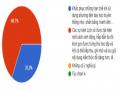
 Chart of Teachers' Opinions on the Role and Significance of Applying Information Technology in Teaching History in High Schools (Unit %)
 -
 Solutions for tourism development in Tien Lang - 10
zt2i3t4l5ee
zt2a3gstourism, tourism development
zt2a3ge
zc2o3n4t5e6n7ts
- District People's Committees and authorities of communes with tourist attractions should support, promote, and provide necessary information to people, helping them improve their knowledge about tourism. Raise tourism awareness for local people.
*
* *
Due to limited knowledge and research time, the thesis inevitably has shortcomings. Therefore, I look forward to receiving guidance from teachers, experts as well as your comments to make the thesis more complete.
Chapter III Conclusion
Through the issues presented in Chapter II, we can come to some conclusions:
Based on the strengths of available tourism resources, the types of tourism in Tien Lang that need to be promoted in the coming time are sightseeing and resort tourism, discovery tourism, weekend tourism. To improve the quality and diversify tourism products, Tien Lang district needs to combine with local cultural tourism resources, at the same time combine with surrounding areas, build rich tourism products. The strengths of Tien Lang tourism are eco-tourism and cultural tourism, so developing Tien Lang tourism must always go hand in hand with restoring and preserving types of cultural tourism resources. Some necessary measures to support and improve the efficiency of exploiting tourism resources in Tien Lang are: strengthening the construction of technical facilities and labor force serving tourism, actively promoting and advertising tourism, and expanding forms of capital mobilization for tourism development.
CONCLUDE
I Conclusion
1. Based on the results achieved within the framework of the thesis's needs, some basic conclusions can be drawn as follows:
Tien Lang is a locality with great potential for tourism development. The relatively abundant cultural tourism resources and ecological tourism resources have great appeal to tourists. Based on this potential, Tien Lang can build a unique tourism industry that is competitive enough with other localities within Hai Phong city and neighboring areas.
In recent years, the exploitation of the advantages of resources to develop tourism and build tourist routes in Tien Lang has not been commensurate with the available potential. In terms of quantity, many resource objects have not been brought into the purpose of tourism development. In terms of time, the regular service time has not been extended to attract more visitors. Infrastructure and technical facilities are still weak. The labor force is still thin and weak in terms of expertise. Tourism programs and routes have not been organized properly, the exploitation content is still monotonous, so it has not attracted many visitors. Although resources have not been mobilized much for tourism development, they are facing the risk of destruction and degradation.
2. Based on the results of investigation, analysis, synthesis, evaluation and selective absorption of research results of related topics, the thesis has proposed a number of necessary solutions to improve the efficiency of exploiting tourism resources in Tien Lang such as: promoting the restoration and conservation of tourism resources, focusing on investment and key exploitation of ecotourism resources, strengthening the construction of infrastructure and tourism workforce. Expanding forms of capital mobilization. In addition, the thesis has built a number of tourist routes of Hai Phong in which Tien Lang tourism resources play an important role.
Exploiting Tien Lang tourism resources for tourism development is currently facing many difficulties. The above measures, if applied synchronously, will likely bring new prospects for the local tourism industry, contributing to making Tien Lang tourism an important economic sector in the district's economic structure.
REFERENCES
1. Nhuan Ha, Trinh Minh Hien, Tran Phuong, Hai Phong - Historical and cultural relics, Hai Phong Publishing House, 1993
2. Hai Phong City History Council, Hai Phong Gazetteer, Hai Phong Publishing House, 1990.
3. Hai Phong City History Council, History of Tien Lang District Party Committee, Hai Phong Publishing House, 1990.
4. Hai Phong City History Council, University of Social Sciences and Humanities, VNU, Hai Phong Place Names Encyclopedia, Hai Phong Publishing House. 2001.
5. Law on Cultural Heritage and documents guiding its implementation, National Political Publishing House, Hanoi, 2003.
6. Tran Duc Thanh, Lecture on Tourism Geography, Faculty of Tourism, University of Social Sciences and Humanities, VNU, 2006
7. Hai Phong Center for Social Sciences and Humanities, Some typical cultural heritages of Hai Phong, Hai Phong Publishing House, 2001
8. Nguyen Ngoc Thao (editor-in-chief, Tourism Geography, Hai Phong Publishing House, two volumes (2001-2002)
9. Nguyen Minh Tue and group of authors, Hai Phong Tourism Geography, Ho Chi Minh City Publishing House, 1997.
10. Nguyen Thanh Son, Hai Phong Tourism Territory Organization, Associate Doctoral Thesis in Geological Geography, Hanoi, 1996.
11. Decision No. 2033/QD – UB on detailed planning of Tien Lang town, Hai Phong city until 2020.
12. Department of Culture, Information, Hai Phong Museum, Hai Phong relics
- National ranked scenic spot, Hai Phong Publishing House, 2005. 13. Tien Lang District People's Committee, Economic Development Planning -
Culture - Society of Tien Lang district to 2010.
14.Website www.HaiPhong.gov.vn
APPENDIX 1
List of national ranked monuments
STT
Name of the monument
Number, year of decisiondetermine
Location
1
Gam Temple
938 VH/QĐ04/08/1992
Cam Khe Village- Toan Thang commune
2
Doc Hau Temple
9381 VH/QĐ04/08/1992
Doc Hau Village –Toan Thang commune
3
Cuu Doi Communal House
3207 VH/QĐDecember 30, 1991
Zone II of townTien Lang
4
Ha Dai Temple
938 VH/QĐ04/08/1992
Ha Dai Village –Tien Thanh commune
APPENDIX II
STT
Name of the monument
Number, year of decision
Location
1
Phu Ke Pagoda Temple
178/QD-UBJanuary 28, 2005
Zone 1 - townTien Lang
2
Trung Lang Temple
178/QD-UBJanuary 28, 2005
Zone 4 – townTien Lang
3
Bao Khanh Pagoda
1900/QD-UBAugust 24, 2006
Nam Tu Village -Kien Thiet commune
4
Bach Da Pagoda
1792/QD-UB11/11/2002
Hung Thang Commune
5
Ngoc Dong Temple
177/QD-UBNovember 27, 2005
Tien Thanh Commune
6
Tomb of Minister TSNhu Van Lan
2848/QD-UBSeptember 19, 2003
Nam Tu Village -Kien Thiet commune
7
Canh Son Stone Temple
2160/QD-UBSeptember 19, 2003
Van Doi Commune –Doan Lap
8
Meiji Temple
2259/QD-UBSeptember 19, 2002
Toan Thang Commune
9
Tien Doi Noi Temple
477/QD-UBSeptember 19, 2005
Doan Lap Commune
10
Tu Doi Temple
177/QD-UBJanuary 28, 2005
Doan Lap Commune
11
Duyen Lao Temple
177/QD-UBJanuary 28, 2005
Tien Minh Commune
12
Dinh Xuan Uc Pagoda
177/QD-UBJanuary 28, 2005
Bac Hung Commune
13
Chu Khe Pagoda
177/QD-UBJanuary 28, 2005
Hung Thang Commune
14
Dong Dinh
2848/QD-UBNovember 21, 2002
Vinh Quang Commune
15
President's Memorial HouseTon Duc Thang
177/QD-UBJanuary 28, 2005
NT Quy Cao
Ha Dai Temple
Ben Vua Temple
Tien Lang hot spring
div.maincontent .p { color: black; font-family:"Times New Roman", serif; font-style: normal; font-weight: normal; text-decoration: none; font-size: 14pt; margin:0pt; } div.maincontent p { color: black; font-family:"Times New Roman", serif; font-style: normal; font-weight: normal; text-decoration: none; font-size: 14pt; margin:0pt; } div.maincontent .s1 { color: black; font-family:"Times New Roman", serif; font-style: normal; font-weight: normal; font-size: 16pt; } div.maincontent .s2 { color: black; font-family:"Times New Roman", serif; font-style: italic; font-weight: bold; text-decoration: none; font-size: 14pt; } div.maincontent .s3 { color: black; font-family:"Times New Roman", serif; font-style: italic; font-weight: normal; text-decoration: none; font-size: 14pt; } div.maincontent .s4 { color: black; font-family:"Times New Roman", serif; font-style: normal; font-weight: normal; font-size: 14pt; } div.maincontent .s5 { color: black; font-family:"Times New Roman", serif; font-style: normal; font-weight: bold; font-size: 14pt; } div.maincontent .s6 { color: black; font-family:"Times New Roman", serif; font-style: normal; font-weight: normal; text-decoration: none; font-size: 14pt; } div.maincontent .s7 { color: black; font-family:"Times New Roman", serif; font-style: normal; font-weight: bold; text-decoration: none; font-size: 14pt; } div.maincontent .s8 { color: black; font-family:"Times New Roman", serif; font-style: normal; font-weight: normal; text-decoration: none; font-size: 9pt; vertical-align: 6pt; } div.maincontent .s9 { color: black; font-family:"Times New Roman", serif; font-style: normal; font-weight: bold; text-decoration: none; font-size: 12pt; } div.maincontent .s11 { color: black; font-family:"Times New Roman", serif; font-style: normal; font-weight: normal; tex
Solutions for tourism development in Tien Lang - 10
zt2i3t4l5ee
zt2a3gstourism, tourism development
zt2a3ge
zc2o3n4t5e6n7ts
- District People's Committees and authorities of communes with tourist attractions should support, promote, and provide necessary information to people, helping them improve their knowledge about tourism. Raise tourism awareness for local people.
*
* *
Due to limited knowledge and research time, the thesis inevitably has shortcomings. Therefore, I look forward to receiving guidance from teachers, experts as well as your comments to make the thesis more complete.
Chapter III Conclusion
Through the issues presented in Chapter II, we can come to some conclusions:
Based on the strengths of available tourism resources, the types of tourism in Tien Lang that need to be promoted in the coming time are sightseeing and resort tourism, discovery tourism, weekend tourism. To improve the quality and diversify tourism products, Tien Lang district needs to combine with local cultural tourism resources, at the same time combine with surrounding areas, build rich tourism products. The strengths of Tien Lang tourism are eco-tourism and cultural tourism, so developing Tien Lang tourism must always go hand in hand with restoring and preserving types of cultural tourism resources. Some necessary measures to support and improve the efficiency of exploiting tourism resources in Tien Lang are: strengthening the construction of technical facilities and labor force serving tourism, actively promoting and advertising tourism, and expanding forms of capital mobilization for tourism development.
CONCLUDE
I Conclusion
1. Based on the results achieved within the framework of the thesis's needs, some basic conclusions can be drawn as follows:
Tien Lang is a locality with great potential for tourism development. The relatively abundant cultural tourism resources and ecological tourism resources have great appeal to tourists. Based on this potential, Tien Lang can build a unique tourism industry that is competitive enough with other localities within Hai Phong city and neighboring areas.
In recent years, the exploitation of the advantages of resources to develop tourism and build tourist routes in Tien Lang has not been commensurate with the available potential. In terms of quantity, many resource objects have not been brought into the purpose of tourism development. In terms of time, the regular service time has not been extended to attract more visitors. Infrastructure and technical facilities are still weak. The labor force is still thin and weak in terms of expertise. Tourism programs and routes have not been organized properly, the exploitation content is still monotonous, so it has not attracted many visitors. Although resources have not been mobilized much for tourism development, they are facing the risk of destruction and degradation.
2. Based on the results of investigation, analysis, synthesis, evaluation and selective absorption of research results of related topics, the thesis has proposed a number of necessary solutions to improve the efficiency of exploiting tourism resources in Tien Lang such as: promoting the restoration and conservation of tourism resources, focusing on investment and key exploitation of ecotourism resources, strengthening the construction of infrastructure and tourism workforce. Expanding forms of capital mobilization. In addition, the thesis has built a number of tourist routes of Hai Phong in which Tien Lang tourism resources play an important role.
Exploiting Tien Lang tourism resources for tourism development is currently facing many difficulties. The above measures, if applied synchronously, will likely bring new prospects for the local tourism industry, contributing to making Tien Lang tourism an important economic sector in the district's economic structure.
REFERENCES
1. Nhuan Ha, Trinh Minh Hien, Tran Phuong, Hai Phong - Historical and cultural relics, Hai Phong Publishing House, 1993
2. Hai Phong City History Council, Hai Phong Gazetteer, Hai Phong Publishing House, 1990.
3. Hai Phong City History Council, History of Tien Lang District Party Committee, Hai Phong Publishing House, 1990.
4. Hai Phong City History Council, University of Social Sciences and Humanities, VNU, Hai Phong Place Names Encyclopedia, Hai Phong Publishing House. 2001.
5. Law on Cultural Heritage and documents guiding its implementation, National Political Publishing House, Hanoi, 2003.
6. Tran Duc Thanh, Lecture on Tourism Geography, Faculty of Tourism, University of Social Sciences and Humanities, VNU, 2006
7. Hai Phong Center for Social Sciences and Humanities, Some typical cultural heritages of Hai Phong, Hai Phong Publishing House, 2001
8. Nguyen Ngoc Thao (editor-in-chief, Tourism Geography, Hai Phong Publishing House, two volumes (2001-2002)
9. Nguyen Minh Tue and group of authors, Hai Phong Tourism Geography, Ho Chi Minh City Publishing House, 1997.
10. Nguyen Thanh Son, Hai Phong Tourism Territory Organization, Associate Doctoral Thesis in Geological Geography, Hanoi, 1996.
11. Decision No. 2033/QD – UB on detailed planning of Tien Lang town, Hai Phong city until 2020.
12. Department of Culture, Information, Hai Phong Museum, Hai Phong relics
- National ranked scenic spot, Hai Phong Publishing House, 2005. 13. Tien Lang District People's Committee, Economic Development Planning -
Culture - Society of Tien Lang district to 2010.
14.Website www.HaiPhong.gov.vn
APPENDIX 1
List of national ranked monuments
STT
Name of the monument
Number, year of decisiondetermine
Location
1
Gam Temple
938 VH/QĐ04/08/1992
Cam Khe Village- Toan Thang commune
2
Doc Hau Temple
9381 VH/QĐ04/08/1992
Doc Hau Village –Toan Thang commune
3
Cuu Doi Communal House
3207 VH/QĐDecember 30, 1991
Zone II of townTien Lang
4
Ha Dai Temple
938 VH/QĐ04/08/1992
Ha Dai Village –Tien Thanh commune
APPENDIX II
STT
Name of the monument
Number, year of decision
Location
1
Phu Ke Pagoda Temple
178/QD-UBJanuary 28, 2005
Zone 1 - townTien Lang
2
Trung Lang Temple
178/QD-UBJanuary 28, 2005
Zone 4 – townTien Lang
3
Bao Khanh Pagoda
1900/QD-UBAugust 24, 2006
Nam Tu Village -Kien Thiet commune
4
Bach Da Pagoda
1792/QD-UB11/11/2002
Hung Thang Commune
5
Ngoc Dong Temple
177/QD-UBNovember 27, 2005
Tien Thanh Commune
6
Tomb of Minister TSNhu Van Lan
2848/QD-UBSeptember 19, 2003
Nam Tu Village -Kien Thiet commune
7
Canh Son Stone Temple
2160/QD-UBSeptember 19, 2003
Van Doi Commune –Doan Lap
8
Meiji Temple
2259/QD-UBSeptember 19, 2002
Toan Thang Commune
9
Tien Doi Noi Temple
477/QD-UBSeptember 19, 2005
Doan Lap Commune
10
Tu Doi Temple
177/QD-UBJanuary 28, 2005
Doan Lap Commune
11
Duyen Lao Temple
177/QD-UBJanuary 28, 2005
Tien Minh Commune
12
Dinh Xuan Uc Pagoda
177/QD-UBJanuary 28, 2005
Bac Hung Commune
13
Chu Khe Pagoda
177/QD-UBJanuary 28, 2005
Hung Thang Commune
14
Dong Dinh
2848/QD-UBNovember 21, 2002
Vinh Quang Commune
15
President's Memorial HouseTon Duc Thang
177/QD-UBJanuary 28, 2005
NT Quy Cao
Ha Dai Temple
Ben Vua Temple
Tien Lang hot spring
div.maincontent .p { color: black; font-family:"Times New Roman", serif; font-style: normal; font-weight: normal; text-decoration: none; font-size: 14pt; margin:0pt; } div.maincontent p { color: black; font-family:"Times New Roman", serif; font-style: normal; font-weight: normal; text-decoration: none; font-size: 14pt; margin:0pt; } div.maincontent .s1 { color: black; font-family:"Times New Roman", serif; font-style: normal; font-weight: normal; font-size: 16pt; } div.maincontent .s2 { color: black; font-family:"Times New Roman", serif; font-style: italic; font-weight: bold; text-decoration: none; font-size: 14pt; } div.maincontent .s3 { color: black; font-family:"Times New Roman", serif; font-style: italic; font-weight: normal; text-decoration: none; font-size: 14pt; } div.maincontent .s4 { color: black; font-family:"Times New Roman", serif; font-style: normal; font-weight: normal; font-size: 14pt; } div.maincontent .s5 { color: black; font-family:"Times New Roman", serif; font-style: normal; font-weight: bold; font-size: 14pt; } div.maincontent .s6 { color: black; font-family:"Times New Roman", serif; font-style: normal; font-weight: normal; text-decoration: none; font-size: 14pt; } div.maincontent .s7 { color: black; font-family:"Times New Roman", serif; font-style: normal; font-weight: bold; text-decoration: none; font-size: 14pt; } div.maincontent .s8 { color: black; font-family:"Times New Roman", serif; font-style: normal; font-weight: normal; text-decoration: none; font-size: 9pt; vertical-align: 6pt; } div.maincontent .s9 { color: black; font-family:"Times New Roman", serif; font-style: normal; font-weight: bold; text-decoration: none; font-size: 12pt; } div.maincontent .s11 { color: black; font-family:"Times New Roman", serif; font-style: normal; font-weight: normal; tex -
 Unanimous Awareness of the Important Role of Fdi.
 -
 The Nature and Role of the Internal Control System
 -
 The Role of Tam Dao National Park in Biodiversity Conservation and Environmental Protection in the Northern Delta Region and Vietnam
C. CONCLUSION
The process of German unification in the mid-nineteenth century took place under the influence of a series of different subjective and objective factors, in which the Kingdom of Prussia played a leading role in both domestic and foreign affairs to solve the German problem. In domestic affairs, Prussia sought every way to bring the member states of the German Confederation of 1815-1866 into a more solid and stable unified bloc. In foreign affairs, Prussia also wanted to turn the German-speaking communities into a leading force in Europe in almost all aspects under the form of a community organization of a modern nation-state. Completing that mission was also completing Prussia's role as the most worthy power to lead the process of German unification in the mid-nineteenth century.
The first role of the Kingdom of Prussia in the process of German unification (1848-1871) was shown by the fact that this state was assigned to manage the lands west of the Rhine River bordering the French border. This action of the European powers at the Congress of Vienna in 1815 seemed to imply that besides the Kingdom of Prussia, almost no other member state of the German Confederation of 1815-1866 was capable of undertaking the mission of protecting the German-speaking community in Central Europe from the gaze of the giant neighbor to the West, which had entered a relatively higher stage of development. With the reception of the lands in the Rhineland, Prussia also joined the ranks of the leading powers in Europe and the second in the German-speaking world in the mid-nineteenth century. Although it was not the ideal position that the ruling class in the Kingdom of Prussia really wanted, it was enough for Prussia to not only be able to take care of its own private affairs, but also have enough power to solve the internal affairs of the German-speaking world in Central Europe at that time.
The second role of the Kingdom of Prussia in the process of German unification in the mid-nineteenth century was also demonstrated in the elimination of revolutionary elements that
The class color of the bourgeoisie as well as the working classes were excluded from the power struggle in the process of solving the German question in the 19th century. Immediately after the German Confederation of 1815-1866 was established, there were many revolutionary movements of the non-aristocratic masses against the order that had been arranged by these European powers and mainly aimed at serving the narrow class interests of the feudal aristocracy. These struggles caused the authorities of the member states of the German Confederation of 1815-1866 many unforeseeable difficulties and in some places the situation seemed to be beyond the scope and control of the state government. Faced with that situation, Prussia took the lead and clearly demonstrated the role and responsibility of a big brother in the suppression of rebellions to maintain the existing order of the ruling feudal aristocracy in Central Europe. This action of the ruling feudal aristocracy of the Kingdom of Prussia not only helped maintain the outdated order of the contemporary German feudal class, but also gained the trust of other feudal dynasties in the German Federation 1815-1866 in the fight against the non-aristocratic classes.
The highest manifestation of this trend was the fact that the Hohenzollern house of the Kingdom of Prussia proactively convened and conducted elections for its own national parliament in Berlin, coexisting with the National Assembly of the bourgeoisie as a declaration and affirmation that apart from the Kingdom of Prussia, there was no other path and choice for the process of solving the German problem in the middle of the 20th century.
XIX. The climax of this problem was the Prussian King Friedrich Wilhelm IV's outright rejection of the bourgeois gift of the crown from the QHQGF on April 3, 1849 for a unified German state under the protection of the Kingdom of Prussia, but the actual power was in the hands of the parliament under the constitutional monarchy. This fact showed that although other political forces may have enough or even more goals, dreams, and ideals, none of them were capable in reality of being able to complete the mission of unifying Germany according to a model more modern than the existing regime. Prussia's rejection of the crown from the bourgeois thus became a milestone marking the end of the historical mission.
of the QQGGF during the Revolution of 1848-1849. This proves once again the historical truth that almost no major problem of the German-speaking population in Central Europe in the mid-nineteenth century could have been solved satisfactorily and thoroughly without Prussia's participation. Even more so, a problem as important as the process of German unification.
The third role of the Kingdom of Prussia in the process of German unification (1848-1871) was that Prussia had secretly prepared and seriously pursued the plan of unifying Germany along the Prussian path for a long time and in the most serious and determined ways possible. One had the feeling that leading the process of German unification was Prussia's mission and that Prussia was born to carry out that mission. That mission was quietly and uniformly carried out by Prussia from the head of the dynasty to the people and soldiers. Most of them were willing to sacrifice their own interests to fulfill the common goal of the whole kingdom, which was given as an inevitable command. In this respect, no political force was more serious and responsible for the fate of the German-speaking population in Central Europe in the mid-nineteenth century than the Kingdom of Prussia. In other words, no political force at that time was more worthy in theory and in practice, as well as having the ability and potential to realize that great plan and noble mission, than the Prussian feudal aristocracy led by the Hohenzollern family.
The fourth role of Prussia in the process of German unification (1848-1871) was expressed in the solution of the national question in international relations. Although Austria at that time enjoyed a more significant international position than Prussia in relation to the European powers in theory, in practice only Prussia enjoyed the full confidence of the European masters in the German question. This was in fact one of the most important political conditions for the Hohenzollerns to be able to quietly implement their plan for the unification of Germany by force in their own way in the years 1848-1871. The German question in the mid-nineteenth century was therefore not simply a question of who would lead the process of unification, but in fact a question of unification.
how and who would be the owner of power in a unified Germany . It was essentially a process of power struggle between political forces both inside and outside. After the political forces with class colors had been completely eliminated in the Revolution of 1848-1849, the German question was only a matter between the Kingdom of Prussia and the states competing for influence. It was in fact a problem for the states and political forces that were generally beyond the ability to become members of a unified Germany or, in other words, the forces that were hindering the process of unifying Germany into a single state under the leadership of the Kingdom of Prussia.
This process could only be resolved by the most drastic violent means possible through border wars with the neighboring states directly involved. The northern frontier was settled in the war with Denmark in 1864. Similarly, the civil war of the German brothers between Prussia and Austria in 1866 not only determined the sole owner of power in the German-speaking world in Central Europe, but also destroyed the power structures created by the Austrian Empire more than half a century earlier and at the same time created the conditions for the establishment of new power structures under the leadership of the Kingdom of Prussia. However, the most decisive battle in the process of German unification in the mid-nineteenth century was fought with the Second French Empire of Louis Napoleon Bonaparte in 1870-1871. This battle not only brought the entire German-speaking world under Prussian rule alone, but also established Germany as a formidable power in Europe from then on. The Franco-Prussian War of 1870-1871 also produced one of the first de facto proletarian states, the Paris Commune of 1871.
The final role of the Kingdom of Prussia in the process of German unification in the mid-nineteenth century was the model of modern development that this country successfully implemented in practice during the reforms of 1807-1821, which not only gave Prussia a formidable practical potential in Europe, but also became one of the ideal models of tireless efforts to rise up in circumstances that seemed to have nothing to lose for many.
other states followed. The achievements in the reforms that Prussia carried out in the early 19th century in the fields of economy, administration, and education played a very important role in the process of unifying Germany (1848-1871) following the Prussian path. It was the economic strength and the level of development of science and technology that created the conditions for Prussia to quickly rise to become one of the leading economies in Europe in the second half of the 19th century. That economy not only served the enrichment needs of the somewhat bourgeoisified Prussian aristocracy, but also created conditions for the bourgeoisie and merchants of the German Federation of 1815-1866 to conduct business activities more easily and conveniently. In the chain of these joint efforts, in 1834 Prussia founded the German Customs Union headed by Prussia with the voluntary participation of almost all the member states of the German Confederation of 1815-1866. Economic dominance together with superior military strength gave Prussia incomparable advantages in the process of competing for the position of hegemony of the German-speaking world in Central Europe and rising to become one of the leading powers in Europe in the mid-nineteenth century.
In short, in the mid-nineteenth century, a series of factors emerged that could have led to the completion of the unification of Germany in various ways. However, only the Kingdom of Prussia had all the subjective and objective factors to turn the German problem into a Prussian problem. That was in fact the time when Prussia proved its irreplaceable role in the process of solving almost all the important problems of the German-speaking world at that time. This shows that despite the many difficulties and challenges that seemed insurmountable after the defeat by Napoleon Bonaparte in the battles of Jena and Auerstadt in 1806, Prussia eventually succeeded in establishing its monopoly in the process of solving the German question in the 19th century and turning the German-speaking population in Central Europe into a political tool serving its own dynastic goals. In that spirit, the role of the Kingdom of Prussia in the process of German unification (1848-1871) was unique, but the consequences it left behind in this way were also unique.
LIST OF SOME PUBLISHED WORKS RELATED TO THE THESIS
1. Nguyen Mau Hung (2019), Railway system in 19th century Germany, Vietnam Journal of Social Sciences, No. 2 (2019), pp. 91-96.
2. Nguyen Mau Hung (2018), The role of the Kingdom of Prussia in the revolution of the German bourgeoisie in the years 1848-1849 , Journal of European Studies, No. 07 (2018), pp. 55-67.
3. Nguyen Mau Hung (2018), National and international factors in the process of solving the German problem in the 19th century, Hue University Journal of Science: Social Sciences and Humanities, Vol. 127, No. 6C, pp. 167-176.
4. Nguyen Mau Hung (2018), The Austro-Prussian War of 1866 in the process of German unification in the mid-19th century, Journal of Science and Technology, University of Science, Hue University, Journal of Literature - History - Philosophy, Vol. 12, No. 3 (August 2018), pp. 151-161.