
Thua Thien Hue in 2011 was 16.8% [14]. Chu Thi Thu Ha et al (2014), in people aged 25 - 64 in Hanoi in 2012 was 11.7% [19]. Tran Thi Mai Hoa (2014), in people aged 25 and over in Tan Phu district, Ca Mau province in 2014 was 17.2% [25]. Do Thi Phuong Ha et al (2015), in overweight and obese people (25 - 64 years old) in Vietnam in 2005 was 25.2% [98]. Nguyen Lan Viet et al (2008), in people aged 25 and over in 8 provinces/cities in 2008 was 25.1% [62]. Truong Thi Thuy Duong (2016), in people aged 18 and over in Ha Nam province in 2013, it was 24.4% [16]. Nguyen Thanh Binh (2017), in Khemer people (24 - 64 years old) in Tra Vinh province in 2015, it was 25.4% [1]. Do Thai Hoa and colleagues (2014), in people aged 40 - 59 in Dong Son district, Thanh Hoa province in 2013, it was 19.7% [26]. Dang Thi Nhan and colleagues (2014), in workers in the coastal areas of the North in 2013, it was 16.6% [42].
The prevalence of hypertension in our study results was lower than the survey results of people ≥ 25 years old in 8 provinces of Vietnam in 2015 which was 47.3% [68]. Hypertension in people aged 18 - 80 years old in Romania in 2014 was 40.41% [88].
The explanation for the difference in the rate of hypertension in our study results compared to the published research results above may be due to the different time/period of the study, different age of the subjects, different sample size and sampling method.
4.1.2. Some factors related to high blood pressure in people aged 18 - 69
Maybe you are interested!
-
 Average Vmtt Thickness of High Blood Pressure and Normal Blood Pressure Groups
 -
 Results in Increased Knowledge and Skills in Self-Monitoring Blood Pressure
 -
 Basic Parts of High Pressure Pump and Nozzle Up
 -
![Blood Pressure Classification According to the World Health Organization (2003) [96]](https://tailieuthamkhao.com/en/uploads/2025/02/09/blood-pressure-classification-according-to-the-world-health-organization-2003-96-120x90.jpg) Blood Pressure Classification According to the World Health Organization (2003) [96]
Blood Pressure Classification According to the World Health Organization (2003) [96] -
 Car body electrical practice - 8
zt2i3t4l5ee
zt2a3gs
zt2a3ge
zc2o3n4t5e6n7ts
If the voltage is out of specification, replace the wire or connector.
If the voltage is within specification, install the front fog light relay and follow step 5.
Step 5 Check the front fog light switch
- Remove the D4 connector of the fog light switch
- Use a multimeter to measure the resistance of the front fog light switch.
Measurement location
Condition
Standard
D4-3 (BFG) -D4-4 (LFG)
Light switchFront Fog OFF
>10kΩ
D4-3 (BFG) -D4-4 (LFG)
Front fog light switchON
<1 Ω
- Standard resistor
D4 connector is located on the combination switch assembly.
If the resistance is out of specification, replace the combination switch (the fog light switch is located in the combination switch).
If the resistance is within specification, follow step 6.
Step 6 Check wiring and connectors (front fog light relay-light selector switch)
- Disconnect connector D4 of the combination switch assembly
- Use a voltmeter to measure the voltage value of jack D4 on the wire side.
Measurement location
Control modecontrol
Standard
D4-3 (BFG) - (-) AQ
TAIL
11 to 14 V
D4 connector for the wiring of the combination switch assembly
If the voltage does not meet the standard, replace the wire or connector.
If the voltage is within standard, there may have been an error in the previous measurements.
Step 7 Check the front fog lights
- Remove the front fog light electrical connector.
- Supply battery voltage to the fog lamp terminals
Jack 8, B9 of front fog lamp on the electrical side
blind first.
Power supply location
Terms and Conditions
Battery positive terminal - Terminal 2Battery negative terminal - Terminal 1
Fog lightsbefore morning
- If the light does not come on, replace the bulb.
If the light is on, re-plug the jack and continue to step 8.
Step 8 Check wiring and connectors (relay and front fog lights)
- Disconnect the B8 and B9 connectors of the front fog lights.
- Use a voltmeter to measure voltage at the following locations:
Measurement location
Switch location
Terms and Conditions
B8-2 - (-) AQ
Electric lock ON TAIL size switchFog switch ON
11 to 14 V
B9-2 - (-) AQ
Electric lock ONTAIL size switch Fog switch ON
11 to 14 V
B8 and B9 connectors on the front fog lamp wiring side
Voltage is not up to standard, repair or replace the jack. If up to standard, there may have been an error in the measurement process.
2.2.4. Procedure for removing, installing and adjusting fog lights 1. Procedure for removing
- Remove the front inner ear pads
Use a screwdriver to remove the 3 screws and remove the front part of the front inner ear liner
-Remove the fog light assembly
+ Disconnect the connector.
+ Use a screwdriver to remove 3 screws to remove the fog light cover
2. Installation sequence
-Rotate the fog lamp bulb in the direction indicated by the arrow as shown in the figure and remove the fog lamp from the fog lamp assembly.
-Rotate the fog light bulb in the direction indicated by the arrow as shown in the figure and install the light into the fog light assembly.
- Use a screwdriver to install the fog light cover
-Install the electrical connector
Attention: Be careful not to damage the plastic thread on the lamp assembly.
- Install the front inner ear pads
Use a screwdriver to install the front inner bumper with 3 screws.
3. Prepare the vehicle to adjust the fog light convergence. Prepare the vehicle:
- Make sure there is no damage or deformation to the vehicle body around the fog lights.
- Add fuel to the fuel tank
- Add oil to standard level.
- Add engine coolant to standard level.
- Inflate the tire to standard pressure.
- Place spare tire, tools and jack in original design position
- Do not leave any load in the luggage compartment.
- Let a person weighing about 75 kg sit in the driver's seat.
4. Prepare to check the fog light convergence
a/ Prepare the vehicle status as follows:
- Place the car in a dark enough place to see the lines. The lines are the dividing line, below which the light from the fog lights can be seen but above which it cannot.
- Place the car perpendicular to the wall.
- Keep a distance of 7.62 m between the center of the fog lamp and the wall.
- Park the car on level ground.
- Press the car down a few times to stabilize the suspension.
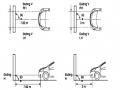
Note: A distance of approximately 7.62 m is required between the vehicle (fog lamp center) and the wall to adjust the convergence correctly. If the distance of 7.62 m cannot be achieved, set the correct distance of 3 m to check and adjust the fog lamp convergence. (Since the target area varies with the distance, please follow the instructions as shown in the figure.)
b/ Prepare a piece of thick white paper about 2 m high and 4 m wide to use as a screen.
c/ Draw a vertical line through the center of the screen (line V).
d/ Set the screen as shown in the picture. Note:
- Keep the screen perpendicular to the ground.
- Align the V line on the screen with the center of the vehicle.
e/Draw the reference lines (H, V LH and V RH lines) on the screen as shown in the figure.HINT:
Mark the center of the fog lamp on the screen. If the center mark cannot be seen on the fog lamp, use the center of the fog lamp or the manufacturer's name mark on the fog lamp as the center mark.
H line (fog light height):
Draw a line across the screen so that it passes through the center mark. Line H should be at the same height as the center mark of the fog light bulb.
Line V LH, V RH (center mark position of left fog lamp LH and right fog lamp RH):
Draw two lines so that they intersect line H at the center marks.
5. Check the fog light convergence
a/ Cover the fog lamp or remove the connector of the other side fog lamp to prevent light from the unchecked fog lamp from affecting the fog lamp convergence test.
b/ Start the engine.
c/ Turn on the fog lights and make sure that the dividing line is outside the standard area as shown in the drawing.
6. Adjust the fog light convergence
Use a screwdriver to adjust the fog light to the standard area by turning the toe adjustment screw.
Note: If the screw is adjusted too far, loosen it and then tighten it again, so that the last rotation of the light adjustment screw is clockwise.
3. Self-study questions
1. Describe the operating principle of the lighting system with automatic headlight function
2. Describe the operating principle of the lighting system with the function of rotating headlights when turning
3. Draw diagram and connect lighting system on Hyundai Porter car
4. Draw diagram and connect lighting system on Honda Accord 1992
5. Draw the lighting circuit on a 1993 Toyota Lexus
LESSON 3 MAINTENANCE AND REPAIR OF SIGNAL SYSTEM
I. IMPLEMENTATION GOAL
After completing this lesson, students will be able to:
- Distinguish between types of signals on cars
- Correctly describe common symptoms and suspected areas causing damage.
- Connecting signal circuits ensures technical requirements
- Disassemble, install, check, maintain and repair the signal system to ensure technical requirements.
- Ensure safety in work and industrial hygiene
II. LESSON CONTENT
1. General description
The signal system equipped on cars aims to create signals to notify other vehicles participating in traffic about the vehicle's operating status such as: stopping, parking, braking, reversing, turning...
Signals are used either by light such as headlamps, brake lights, turn signals….. or by sound such as horns, reverse music….
Just like the lighting system. A signal system circuit usually consists of: battery, fuse, wire, relay, electrical load and control switch. Only some switches of the signal system are on the combination switch. The switches of other signals are usually located in different locations such as in the gearbox or brake pedal……
2. Maintenance and repair
2.1. Turn signals and hazard lights
The installation location of the turn signal is shown in Figure 3.1. The turn signal control switch is located in the combination switch under the steering wheel. Turning this switch to the right or left will make the turn signal turn right or left.
The hazard light switch is used when the vehicle has a problem while participating in traffic. When the hazard light switch is turned on, all the turn signals on the vehicle will light up at a certain frequency. The hazard light switch is usually placed separately from the turn signal switch (some old cars integrate the hazard and turn signal switches on the same combination switch cluster).
Figure 3.1 Turn signal switch Figure 3.2 Hazard switch
The part that generates the flashing frequency for the lights is called a turn signal relay. The turn signal relay usually has 3 terminals: B (positive power supply); E (negative power supply); L (providing the turn signal switch to distribute to the
lamp)
2.1.1. Circuit diagram
To generate the frequency for the turn signal, a turn signal relay is used in the turn signal circuit. The current from the turn signal relay will be sent to the turn signal switch assembly to distribute the current to the turn signal lights for the driver's purpose.
Figure 3.3. Schematic diagram of a turn signal circuit without a hazard switch
1. Battery; 2. Electric lock; 3. Turn signal relay; 4. Turn signal switch; 5. Turn signal lamp; 6. Turn signal lamp; 7. Hazard switch
Figure 3.4 Schematic diagram of turn signal circuit with hazard switch
1. Battery; 2. Combination switch cluster; 3. Turn signal;
4. Turn signal light; 5. Turn signal relay
Today's cars no longer use three-pin turn signal relays (B, L, E) but use eight-pin turn signal relays (figure 3.5) (pin number 8 is used for hazard lights).
For this type, the current supplying the turn signal lights is supplied directly from the turn signal relay to the lights.
div.maincontent .p { color: black; font-family:"Times New Roman", serif; font-style: normal; font-weight: normal; text-decoration: none; font-size: 14pt; margin:0pt; } div.maincontent p { color: black; font-family:"Times New Roman", serif; font-style: normal; font-weight: normal; text-decoration: none; font-size: 14pt; margin:0pt; } div.maincontent .s1 { color: black; font-family:"Times New Roman", serif; font-style: normal; font-weight: normal; text-decoration: none; font-size: 13pt; } div.maincontent .s2 { color: black; font-family:"Times New Roman", serif; font-style: italic; font-weight: normal; text-decoration: none; font-size: 14pt; } div.maincontent .s3 { color: black; font-family:"Times New Roman", serif; font-style: normal; font-weight: normal; text-decoration: none; font-size: 14pt; } div.maincontent .s4 { color: black; font-family:"Times New Roman", serif; font-style: normal; font-weight: normal; text-decoration: none; font-size: 13pt; } div.maincontent .s5 { color: black; font-family:"Times New Roman", serif; font-style: normal; font-weight: normal; text-decoration: none; font-size: 13pt; vertical-align: 1pt; } div.maincontent .s6 { color: black; font-family:"Times New Roman", serif; font-style: normal; font-weight: normal; text-decoration: none; font-size: 11pt; } div.maincontent .s7 { color: black; font-family:"Times New Roman", serif; font-style: normal; font-weight: normal; text-decoration: none; font-size: 14pt; vertical-align: -9pt; } div.maincontent .s8 { color: black; font-family:"Times New Roman", serif; font-style: normal; font-weight: normal; text-decoration: none; font-size: 11pt; } div.maincontent .s9 { color: #008000; font-family:"Times New Roman", serif; font-style: normal; font-weight: normal; text-decoration: none; font-size: 14pt; } div.maincontent .s10 { color: black; font-family:"Times New Roman", serif; font-style: italic; font-weight: normal; te
Car body electrical practice - 8
zt2i3t4l5ee
zt2a3gs
zt2a3ge
zc2o3n4t5e6n7ts
If the voltage is out of specification, replace the wire or connector.
If the voltage is within specification, install the front fog light relay and follow step 5.
Step 5 Check the front fog light switch
- Remove the D4 connector of the fog light switch
- Use a multimeter to measure the resistance of the front fog light switch.
Measurement location
Condition
Standard
D4-3 (BFG) -D4-4 (LFG)
Light switchFront Fog OFF
>10kΩ
D4-3 (BFG) -D4-4 (LFG)
Front fog light switchON
<1 Ω
- Standard resistor
D4 connector is located on the combination switch assembly.
If the resistance is out of specification, replace the combination switch (the fog light switch is located in the combination switch).
If the resistance is within specification, follow step 6.
Step 6 Check wiring and connectors (front fog light relay-light selector switch)
- Disconnect connector D4 of the combination switch assembly
- Use a voltmeter to measure the voltage value of jack D4 on the wire side.
Measurement location
Control modecontrol
Standard
D4-3 (BFG) - (-) AQ
TAIL
11 to 14 V
D4 connector for the wiring of the combination switch assembly
If the voltage does not meet the standard, replace the wire or connector.
If the voltage is within standard, there may have been an error in the previous measurements.
Step 7 Check the front fog lights
- Remove the front fog light electrical connector.
- Supply battery voltage to the fog lamp terminals
Jack 8, B9 of front fog lamp on the electrical side
blind first.
Power supply location
Terms and Conditions
Battery positive terminal - Terminal 2Battery negative terminal - Terminal 1
Fog lightsbefore morning
- If the light does not come on, replace the bulb.
If the light is on, re-plug the jack and continue to step 8.
Step 8 Check wiring and connectors (relay and front fog lights)
- Disconnect the B8 and B9 connectors of the front fog lights.
- Use a voltmeter to measure voltage at the following locations:
Measurement location
Switch location
Terms and Conditions
B8-2 - (-) AQ
Electric lock ON TAIL size switchFog switch ON
11 to 14 V
B9-2 - (-) AQ
Electric lock ONTAIL size switch Fog switch ON
11 to 14 V
B8 and B9 connectors on the front fog lamp wiring side
Voltage is not up to standard, repair or replace the jack. If up to standard, there may have been an error in the measurement process.
2.2.4. Procedure for removing, installing and adjusting fog lights 1. Procedure for removing
- Remove the front inner ear pads
Use a screwdriver to remove the 3 screws and remove the front part of the front inner ear liner
-Remove the fog light assembly
+ Disconnect the connector.
+ Use a screwdriver to remove 3 screws to remove the fog light cover
2. Installation sequence
-Rotate the fog lamp bulb in the direction indicated by the arrow as shown in the figure and remove the fog lamp from the fog lamp assembly.
-Rotate the fog light bulb in the direction indicated by the arrow as shown in the figure and install the light into the fog light assembly.
- Use a screwdriver to install the fog light cover
-Install the electrical connector
Attention: Be careful not to damage the plastic thread on the lamp assembly.
- Install the front inner ear pads
Use a screwdriver to install the front inner bumper with 3 screws.
3. Prepare the vehicle to adjust the fog light convergence. Prepare the vehicle:
- Make sure there is no damage or deformation to the vehicle body around the fog lights.
- Add fuel to the fuel tank
- Add oil to standard level.
- Add engine coolant to standard level.
- Inflate the tire to standard pressure.
- Place spare tire, tools and jack in original design position
- Do not leave any load in the luggage compartment.
- Let a person weighing about 75 kg sit in the driver's seat.
4. Prepare to check the fog light convergence
a/ Prepare the vehicle status as follows:
- Place the car in a dark enough place to see the lines. The lines are the dividing line, below which the light from the fog lights can be seen but above which it cannot.
- Place the car perpendicular to the wall.
- Keep a distance of 7.62 m between the center of the fog lamp and the wall.
- Park the car on level ground.
- Press the car down a few times to stabilize the suspension.
Note: A distance of approximately 7.62 m is required between the vehicle (fog lamp center) and the wall to adjust the convergence correctly. If the distance of 7.62 m cannot be achieved, set the correct distance of 3 m to check and adjust the fog lamp convergence. (Since the target area varies with the distance, please follow the instructions as shown in the figure.)
b/ Prepare a piece of thick white paper about 2 m high and 4 m wide to use as a screen.
c/ Draw a vertical line through the center of the screen (line V).
d/ Set the screen as shown in the picture. Note:
- Keep the screen perpendicular to the ground.
- Align the V line on the screen with the center of the vehicle.
e/Draw the reference lines (H, V LH and V RH lines) on the screen as shown in the figure.HINT:
Mark the center of the fog lamp on the screen. If the center mark cannot be seen on the fog lamp, use the center of the fog lamp or the manufacturer's name mark on the fog lamp as the center mark.
H line (fog light height):
Draw a line across the screen so that it passes through the center mark. Line H should be at the same height as the center mark of the fog light bulb.
Line V LH, V RH (center mark position of left fog lamp LH and right fog lamp RH):
Draw two lines so that they intersect line H at the center marks.
5. Check the fog light convergence
a/ Cover the fog lamp or remove the connector of the other side fog lamp to prevent light from the unchecked fog lamp from affecting the fog lamp convergence test.
b/ Start the engine.
c/ Turn on the fog lights and make sure that the dividing line is outside the standard area as shown in the drawing.
6. Adjust the fog light convergence
Use a screwdriver to adjust the fog light to the standard area by turning the toe adjustment screw.
Note: If the screw is adjusted too far, loosen it and then tighten it again, so that the last rotation of the light adjustment screw is clockwise.
3. Self-study questions
1. Describe the operating principle of the lighting system with automatic headlight function
2. Describe the operating principle of the lighting system with the function of rotating headlights when turning
3. Draw diagram and connect lighting system on Hyundai Porter car
4. Draw diagram and connect lighting system on Honda Accord 1992
5. Draw the lighting circuit on a 1993 Toyota Lexus
LESSON 3 MAINTENANCE AND REPAIR OF SIGNAL SYSTEM
I. IMPLEMENTATION GOAL
After completing this lesson, students will be able to:
- Distinguish between types of signals on cars
- Correctly describe common symptoms and suspected areas causing damage.
- Connecting signal circuits ensures technical requirements
- Disassemble, install, check, maintain and repair the signal system to ensure technical requirements.
- Ensure safety in work and industrial hygiene
II. LESSON CONTENT
1. General description
The signal system equipped on cars aims to create signals to notify other vehicles participating in traffic about the vehicle's operating status such as: stopping, parking, braking, reversing, turning...
Signals are used either by light such as headlamps, brake lights, turn signals….. or by sound such as horns, reverse music….
Just like the lighting system. A signal system circuit usually consists of: battery, fuse, wire, relay, electrical load and control switch. Only some switches of the signal system are on the combination switch. The switches of other signals are usually located in different locations such as in the gearbox or brake pedal……
2. Maintenance and repair
2.1. Turn signals and hazard lights
The installation location of the turn signal is shown in Figure 3.1. The turn signal control switch is located in the combination switch under the steering wheel. Turning this switch to the right or left will make the turn signal turn right or left.
The hazard light switch is used when the vehicle has a problem while participating in traffic. When the hazard light switch is turned on, all the turn signals on the vehicle will light up at a certain frequency. The hazard light switch is usually placed separately from the turn signal switch (some old cars integrate the hazard and turn signal switches on the same combination switch cluster).
Figure 3.1 Turn signal switch Figure 3.2 Hazard switch
The part that generates the flashing frequency for the lights is called a turn signal relay. The turn signal relay usually has 3 terminals: B (positive power supply); E (negative power supply); L (providing the turn signal switch to distribute to the
lamp)
2.1.1. Circuit diagram
To generate the frequency for the turn signal, a turn signal relay is used in the turn signal circuit. The current from the turn signal relay will be sent to the turn signal switch assembly to distribute the current to the turn signal lights for the driver's purpose.
Figure 3.3. Schematic diagram of a turn signal circuit without a hazard switch
1. Battery; 2. Electric lock; 3. Turn signal relay; 4. Turn signal switch; 5. Turn signal lamp; 6. Turn signal lamp; 7. Hazard switch
Figure 3.4 Schematic diagram of turn signal circuit with hazard switch
1. Battery; 2. Combination switch cluster; 3. Turn signal;
4. Turn signal light; 5. Turn signal relay
Today's cars no longer use three-pin turn signal relays (B, L, E) but use eight-pin turn signal relays (figure 3.5) (pin number 8 is used for hazard lights).
For this type, the current supplying the turn signal lights is supplied directly from the turn signal relay to the lights.
div.maincontent .p { color: black; font-family:"Times New Roman", serif; font-style: normal; font-weight: normal; text-decoration: none; font-size: 14pt; margin:0pt; } div.maincontent p { color: black; font-family:"Times New Roman", serif; font-style: normal; font-weight: normal; text-decoration: none; font-size: 14pt; margin:0pt; } div.maincontent .s1 { color: black; font-family:"Times New Roman", serif; font-style: normal; font-weight: normal; text-decoration: none; font-size: 13pt; } div.maincontent .s2 { color: black; font-family:"Times New Roman", serif; font-style: italic; font-weight: normal; text-decoration: none; font-size: 14pt; } div.maincontent .s3 { color: black; font-family:"Times New Roman", serif; font-style: normal; font-weight: normal; text-decoration: none; font-size: 14pt; } div.maincontent .s4 { color: black; font-family:"Times New Roman", serif; font-style: normal; font-weight: normal; text-decoration: none; font-size: 13pt; } div.maincontent .s5 { color: black; font-family:"Times New Roman", serif; font-style: normal; font-weight: normal; text-decoration: none; font-size: 13pt; vertical-align: 1pt; } div.maincontent .s6 { color: black; font-family:"Times New Roman", serif; font-style: normal; font-weight: normal; text-decoration: none; font-size: 11pt; } div.maincontent .s7 { color: black; font-family:"Times New Roman", serif; font-style: normal; font-weight: normal; text-decoration: none; font-size: 14pt; vertical-align: -9pt; } div.maincontent .s8 { color: black; font-family:"Times New Roman", serif; font-style: normal; font-weight: normal; text-decoration: none; font-size: 11pt; } div.maincontent .s9 { color: #008000; font-family:"Times New Roman", serif; font-style: normal; font-weight: normal; text-decoration: none; font-size: 14pt; } div.maincontent .s10 { color: black; font-family:"Times New Roman", serif; font-style: italic; font-weight: normal; te
* Behavioral risk factors for hypertension:
- Smoking behavior: When smoking increases the concentration of catecholamine in the blood (this is a hormone that stimulates the body's sympathetic nervous system) and increases carbon monoxide, on the other hand, the increased concentration of nicotine in the blood causes vasoconstriction, causing hypertension, increasing heart rate leading to arrhythmia. The level of impact on the cardiovascular system increases with the level of smoking, that is, the more you smoke and the longer you smoke, the higher the risk of cardiovascular disease, including hypertension.
The research results show that the rate of subjects smoking is 18.2%, equivalent to the research results of Nguyen Ngoc Huy et al. (2021), in Cham people aged 18 and over in 11 communes of 4 provinces (Ninh Thuan, Binh Thuan, Binh Dinh and Phu Yen) in 2016 - 2017, the smoking rate was 18.2% [30]. But it is much lower than the research results of Pham The Xuyen (2019), in people aged 45 - 64 in Dien Bien province in 2014, the smoking rate was 44.9% (76.1% in men and 14.6% in women) [71]; Nguyen Thanh Binh (2017), in Khmer people in Tra Vinh province in 2015 - 2016, the smoking rate was 32.0% [1].
- Alcohol/beer drinking behavior: The habit of drinking alcohol/beer has caused harmful effects such as hypertension, lipid metabolism disorders, and blood sugar disorders. These are risk factors that cause cardiovascular complications for people who drink alcohol/beer. Excessive and long-term alcohol/beer drinking will cause hypertension, which in turn leads to other dangerous cardiovascular complications such as stroke, myocardial infarction, etc. People who drink too much alcohol/beer have blood pressure values 5 - 10 mmHg higher than others.
Standard alcohol intake for men and women: if 1 glass of alcohol is considered equivalent to 330 ml of beer (5%), 30 ml of spirits (40%), 120 ml of wine (11%) or 50 ml of aperitif (20%), the maximum amount of alcohol recommended for health benefits is: 2 glasses/day for men under 65 years old; 1 glass/day for men 65 years old and over; 1 glass/day for women of all ages. A person is identified as abusing alcohol/beer when the amount of alcohol/beer consumed is determined to be more than 1 standard unit of alcohol/day for women, more than 2 standard units of alcohol/day for men [27], [73], [132].
The research results showed that the rate of subjects who drank alcohol/beer was 24.9%, this rate was lower than the research results of Pham The Xuyen in Dien Bien district, Dien Bien province in 2014, the rate of drinking alcohol/beer was 54.2% [71]. But
higher than the research results of Nguyen Thanh Binh in Khmer people in Tra Vinh province (2015 - 2016), the rate of alcohol/beer abuse was 14.8% [1].
- The habit of regularly adding salt, salty spices or salty sauces to food: Diet has a direct impact on each person's body. If you eat properly and scientifically, your body will be healthier. On the contrary, an unreasonable and improper diet is like nurturing more pathogens in the body. In particular, the habit of eating salty foods needs to be eliminated because it can be harmful to health, especially increasing the risk of hypertension.
Salt is an indispensable seasoning in every person's daily meals. However, people who have a habit of eating salty foods or eating too much salt may face health risks. Salt contains sodium and chloride, which are two very good and important minerals for the body. Sodium helps regulate blood pressure, blood volume, muscle contraction and nerve function. Chloride is an electrolyte, which is essential for organs in the body. So it can be said that salt is very important for health.
However, many studies have shown that salt is the cause of hypertension. In countries with a high salt diet, the population has a higher rate of hypertension. When there is excess salt, the amount of fluid in the blood increases, causing hypertension, and the amount of salt accumulated in the blood vessel wall makes the blood vessel wall "harder", which is a favorable factor for hypertension. Therefore, you should not eat too much salt, eating a lot of salt regularly will lead to hypertension and is also the cause of potential heart attacks. Therefore, doctors recommend that patients with cardiovascular disease, including hypertension, should follow a less salty diet.
How to know if someone is eating too much salt. In fact, it is difficult to measure exactly how much salt each person consumes daily from foods. But there are questions to ask a person (subject) we are interested in to see if that person is eating too much salt or not such as: Do you always feel thirsty? Do you feel swollen feet, hands
No? Do you feel that food is not tasty and always bland? Do you often add salt, salty spices or salty sauces to your food? ... When the subject answers one of the above questions yes, it is a habit or behavior of eating a lot of salt (eating salty) and is at risk of hypertension.
The research results showed that the proportion of subjects who regularly added salt, salty spices or salty sauces to food was 60.9%, which was lower than the research results of Nguyen Thanh Binh (2017) on Khmer people in Tra Vinh province (2015 - 2016), the proportion of subjects eating salty foods was 89.4% [1]. But it was higher than the research results of Nguyen Ngoc Huy et al. (2021) on Cham people aged 18 and over in 4 provinces of the South Central Coast (2016 - 2017), the proportion of salty foods was 47.3% [30].
- Regarding the habit of consuming animal fat: The first "enemy" of people with hypertension is fat. Fat from animal fat, from meat as well as fat in the skin of poultry not only causes weight gain but is also an important factor contributing to atherosclerosis, leading to hypertension, heart disease, and stroke. Therefore, people with hypertension, instead of eating fatty foods, should eat dishes made from fish and seafood to both reduce fat and add unsaturated fatty acids, omega, and minerals that are beneficial for people with hypertension. Research results show that the rate of people with the habit of eating/consuming animal fat is 10.0%. This result is lower than the research results of Nguyen Thanh Binh (2017) in Tra Vinh province (2015 - 2016), the rate of eating a lot of animal fat is 16.4% [1]; According to a study by Nguyen Ngoc Huy et al. (2021) in 4 provinces of the South Central region (2016 - 2017), the proportion of Cham people eating a lot of animal fat was 15.9% [30].
- Regarding low physical activity or irregular physical activity: Many studies show that regular physical activity will help increase longevity, reduce the risk of disease and death. Regular physical activity or daily exercise will bring clear benefits in preventing hypertension, even in people with many high risk factors for this disease. In people with hypertension, regular physical activity at a light level and
Moderate exercise can also lower blood pressure. Exercise also reduces mortality in people with hypertension [136]. Physical activity such as exercise, walking or moderate physical activity suitable for one's health, regularly ≥ 30 minutes/day or ≥ 150 minutes/week is considered regular daily physical activity or > 600 MET/minute/week [108]. The study results showed that the rate of regular physical activity was not high (34.4%), this result was lower than the research results of Nguyen Ngoc Huy et al. (2021), the rate of regular physical activity of Cham people in the South Central region was 67.2% [30].
- Regarding monitoring the nutritional composition of daily meals: For people who do not have hypertension, to prevent hypertension, they should practice a healthy lifestyle early. Many studies show that maintaining an ideal weight, exercising regularly, a reasonable, healthy diet (low fat, lots of fruits, vegetables, tubers, nuts and low-fat dairy products, eating fish, skinless poultry, reducing salt intake, reducing fatty meat, canned food, fast food) will help reduce blood pressure numbers and maintain a normal, healthy blood pressure level.
For people with hypertension: Diet plays a very important role in controlling blood pressure. Therefore, in addition to taking daily blood pressure control medication, diet also needs to be focused on to quickly return blood pressure to normal levels. Accordingly, patients with hypertension need to follow the main principles of the "3 reductions" and "3 increases" diet: 3 reductions (reduce salt intake, reduce fat, reduce alcohol/beer consumption) and 3 increases (increase the use of foods rich in calcium, rich in potassium and rich in protective substances such as green vegetables, tubers, beans and fruits); build a "1 increase, 1 reduction and 1 quit" lifestyle: increase exercise, reduce stress and quit smoking. Thus, both people who do not have hypertension and people with hypertension need to monitor the nutritional composition of daily meals to adjust their diet appropriately in preventing hypertension and other non-communicable diseases. Research results show that the rate of monitoring the nutritional composition of daily meals is low (35.1%). Thus, people who do not regularly follow
The risk of hypertension among subjects who regularly monitored their daily nutritional composition was statistically significant (OR = 1.57; 95% CI: 1.19 - 2.22; p < 0.001).
- Body mass index (BMI): Medicine has proven that controlling BMI plays an important role in preventing hypertension. In particular, preventing obesity and overweight means that patients will also reduce the risk of other chronic non-communicable diseases such as diabetes, gout, etc. Therefore, BMI is a typical index, reflecting whether a person's weight is at an appropriate level or not. This index is calculated based on the correlation between weight and height. BMI ≥ 23 is considered overweight - obese [3].
Hypertension and overweight - obesity are inherently correlated. Overweight - obese people who are sedentary have a higher rate of hypertension and other non-communicable diseases than normal people. On the contrary, if hypertensive patients do not know how to control their BMI or weight, the possibility of serious complications is very high. Therefore, BMI is the basis for both doctors and patients to monitor weight and treat the disease most effectively. From the physician's perspective, BMI plays a role as an indicator in the process of diagnosing the risk of hypertension, as well as complications in people who already have hypertension. For hypertensive patients, monitoring and adjusting BMI is a simple, inexpensive and can be done at home way to adjust and control weight. Thanks to that, the treatment process and living with hypertension are also easier and more comfortable.
The study results showed that the overweight - obese group had a higher risk of hypertension than the non-overweight - obese group at a statistically significant level (OR = 1.98; 95% CI: 1.18 - 2.30; p < 0.001). A study in China (2015) showed that the risk of hypertension in the BMI ≥ 28 group was 3.13 times higher (OR = 3.13; 95% CI: 2.84 - 3.45) than in the group with BMI < 22 [122]. A
Research in Tan Phu district, Ho Chi Minh City (2011) showed that obesity causes
increased risk of hypertension 5.9 times [32]. From the above research results, it shows that there is a close relationship between overweight - obesity and hypertension.
- Diabetes: Diabetes and hypertension are two separate, independent non-communicable diseases but are closely related to each other. When a person has one of these two diseases, it is very likely that they will continue to have the other. Both diseases (hypertension and diabetes) progress silently and cause many dangerous complications. The incidence of diabetes and hypertension always fluctuate and increase with age; diabetic patients have a risk of hypertension twice as high as normal people. Diabetes can cause hypertension by 3 factors: reducing the elasticity of blood vessels, increasing blood circulation in the body and changing the way the body manages insulin.
Thus, diabetes and hypertension have a close relationship. People with hypertension make diabetes develop faster, easily leading to diabetic complications. On the contrary, diabetes causes blood pressure to increase rapidly, making the rate of cardiovascular disease and stroke due to cardiovascular disease increase about 2 - 3 times compared to people with hypertension without diabetes.
Hypertension associated with diabetes can cause diabetic patients to develop complications faster and increase mortality. The reason is that hypertension obstructs blood flow to the kidneys (affecting diabetes); causing retinal complications and blindness. In addition, drugs to treat hypertension such as diuretics have the side effect of increasing blood glucose levels. Therefore, diabetic patients with hypertension are always given priority for treatment to reduce hypertension and vice versa, hypertensive patients with diabetes are always given priority for treatment to control blood glucose early at < 7.0 mmol/l (fasting) and ≤ 9.0 mmol/l (after meals) [5].
When a person has one of the two chronic non-communicable diseases above, the patient will encounter many difficulties in daily life because both diseases greatly affect the patient's health and can cause serious complications that threaten the patient's life. If a patient has both hypertension and diabetes at the same time, it will accelerate the process of atherosclerosis.
In patients with hypertension and diabetes, there are often 4 factors that cause atherosclerosis: hypertension, diabetes, dyslipidemia, overweight - obesity. These 4 factors interact with each other and are called "metabolic syndrome". The risk of diabetes and hypertension also causing cardiovascular disease and cerebrovascular disease is 6 - 7 times higher than that of normal people.
The study results showed that the rate of diabetic patients with hypertension was quite high (75.0%) and the diabetic group had a higher risk of hypertension than the non-diabetic group at a statistically significant level (OR = 6.03; 95% CI: 3.72 - 9.21; p < 0.001).
- Hypercholesterolemia factor: Dyslipidemia or hypercholesterolemia in particular is very common in hypertensive patients, and can occur before or after hypertension. Dyslipidemia causes atherosclerosis. Many studies have shown that dyslipidemia in hypertensive patients increases the risk of death from stroke and cardiovascular disease. Dyslipidemia is characterized by increased blood cholesterol, including: increased total cholesterol, increased triglycerides, increased LDL-C and decreased HDL-C. Cholesterol, triglycerides, LDL-C are bad cholesterol, the culprits of atherosclerosis; on the contrary, HDL-C is good cholesterol that protects the cardiovascular system. When HDL-C is reduced, it will have a negative effect on the cardiovascular system. Cholesterol is a type of fat produced by liver cells and partly absorbed from food. Cholesterol is essential for cell membrane structure, hormone balance in the body and vitamin production. However, excess cholesterol in the blood will cause atherosclerosis, increasing the risk of death from coronary artery disease and stroke.
The study results showed that the rate of patients with hypercholesterolemia and hypertension was quite high (64.6%) and the group of subjects with hypercholesterolemia had a higher risk of hypertension than the group without hypercholesterolemia at a statistically significant level (OR = 4.81; 95% CI: 2.98 - 7.35; p < 0.001). Truong Khanh Ly and colleagues (2007) also showed a close relationship between dyslipidemia and hypertension [32].
* On the relationship between some personal characteristics and hypertension: