
Meanwhile, developed countries, taking advantage of their development and competitive advantages in high-tech and capital-intensive sectors such as services, intellectual property and investment, have sought to formally institutionalize these sectors in the world trading system and have succeeded. In addition, they have added new issues to the WTO liberalization agenda such as transparency in government procurement, competition policy and environmental issues.
Up to this point, to a certain extent, developing countries have succeeded in opposing the inclusion of the above contents in the WTO liberalization program. However, the above successes of developing countries are very fragile and developed countries continue to, in one way or another, achieve their goal of including the above issues in the new round of WTO negotiations. Moreover, developed countries also use other channels such as the International Labor Organization - ILO to pressure the inclusion of labor standards in the WTO. In fact, developed countries have had some success in adding new issues that are not included in the WTO agreements. For example, the Information Technology Agreement (ITA), this is an area where developed countries actually have a competitive advantage. Unlike the Uruguay Round, the drafts on investment and information technology were only negotiated within a group of large developed countries such as the US, Canada, EU, and Japan before being brought to general discussion. The content of the Agreement as well as the entire negotiation process were conducted in secret and went against the WTO's principle of transparency. Developing countries were forced to make commitments with very little benefit in the current development conditions.
The world trading system under the previous GATT and the current WTO seems to be inclined towards the reciprocity-based agreements emphasized in the Preamble of GATT and WTO. Although in GATT 1994, least developed and developing countries were somewhat exempted from making commitments on the basis of reciprocity (Part IV, GATT, Article XXXVI), in practice, most commitments made in bilateral and multilateral negotiations were based on the implicit principles of "more for more, less for less, no
"give and take". This greatly limits the economic development of developing member countries when their economic conditions are much worse than those of developed countries.
One factor that influences the implementation of WTO regulations, especially the economic opportunities and trade prospects of developing countries, is the domestic trade policies and measures of developed countries. Due to the large scope and economic scale of developed countries, especially the US, EU, and Japan, their economic and trade policies have a significant impact on the world trade environment. Developed countries often apply trade restriction policies and measures in areas such as textiles, footwear, steel, agriculture, etc. under pressure from interest groups and domestic industries that suffer trade losses. The victims of these policies and measures will be developing countries with competitive advantages in the above-mentioned areas. Usually, the application of such policies is contrary to GATT/WTO regulations. However, under pressure from domestic interest groups and industries, governments of developed countries are willing to go against the general regulations of GATT/WTO to protect these groups, essentially protecting the political interests of the current government.
Developing countries in the WTO Dispute Settlement Mechanism:
The DSU stipulates the principle of special treatment for developing countries when applying the WTO dispute settlement mechanism, specifically as follows:
- First of all, Article 4.10 of the DSU stipulates that during consultations, members must pay special attention to specific issues and interests of members who are developing countries. This is understood that the economic and trade difficulties of developing member countries must be considered by developed member countries during the consultation period.
- Article 3.12 of the DSU allows developing countries to apply dispute settlement procedures adopted by the GATT General Council under the Decision of April 5, 1966. The 1966 Decision is very beneficial to developing countries, because
within a short period of time, the Member State in breach may cease its violation or seek compensation or be permitted to retaliate. In applying this Decision to resolve disputes, developing countries have advantages such as:
+ Immediately mediated by the WTO Director General to find a satisfactory solution to the dispute.
+ Quickly obtain results in dispute settlement, because according to Decision 1966, the term of operation of the Panel is very short: 60 days from the date of receiving the dispute, the Panel must submit its report, unless the Panel decides to extend the term of operation if it deems that more time is needed.
- Article 8.10 of the DSU stipulates that when a dispute arises between a developed member and a developing member, if there is a request from a developing country, the Panel will have at least one juror from the developing member. This provision is beneficial to the developing member because this juror understands the characteristics, difficulties and interests of the developing country and raises them for discussion and consideration with other jurors when drafting the panel report. If there is no request, the Panel will only include jurors from developed countries. Therefore, if Vietnam participates in dispute settlement at the WTO in the future, it should make its own requests regarding the establishment of a Panel.
- Pursuant to Article 12.10 of the DSU, in the context of consultations concerning a measure taken by a developing country Member, the parties may agree to extend the periods provided for in Articles 4.7 and 4.8. After the expiry of the relevant period, if consultations between the parties fail, the Chairman of the DSB shall decide, after consultations with the parties, whether to extend the relevant period and, if so, for how long. In addition, in considering a complaint against a developing country Member, the Panel shall provide sufficient time for the developing country Member to prepare and present its arguments. The provisions of Articles 20.1 and 21.4 shall not be affected by any proceeding under this paragraph.
- When one or more of the parties is a developing country, the panel report shall clearly indicate the form in which it takes into account the provisions relating to differential and more favourable treatment for developing country members forming part of the covered agreements which have been raised by the developing countries in the course of the dispute settlement procedures (Article 12.11 of the DSU).
- The monitoring of the implementation of recommendations and rulings should pay special attention to issues that have been or are being the subject of dispute settlement affecting the interests of developing country members (Article 21.2 of the DSU). If the issue is raised by a developing country member, the DSB will consider further action appropriate to the circumstances (Article 21.7 of the DSU). If the dispute is raised by a developing country member, when considering the appropriate measure that can be applied, the DSB will consider not only the trade aspects of the measures complained of, but also their effects on the economies of the developing country members concerned (Article 21.8 of the DSU).
- When considering a case involving a least-developed country, Article 24.1 of the DSU also recommends that the complaining party refrain from initiating a dispute settlement procedure, seeking compensation, or seeking authorization to take action against or suspend other obligations under this procedure. In a case where consultations involving a least-developed country fail, the country may request the Director-General or the Chairman of the DSB to act as a facilitator before requesting the establishment of a panel (Article 24.2).
- In terms of technical assistance, according to Article 27.2 of the DSU, while the Secretariat assists Members in dispute settlement upon their request, it should also provide additional legal advice and assistance in dispute settlement to developing country Members. To this end, the Secretariat may provide a competent legal expert from the WTO technical cooperation bodies to any developing country Member upon request. This expert will assist the Member
developing countries in a manner that ensures the objectivity of the Secretariat.
In the process of considering a dispute in which a developing country is the respondent, the Panel allows the developing country sufficient time to prepare and present its arguments, since the developing country still has many limitations and is not yet able to respond quickly in terms of law and technology to prepare evidence and arguments in time. In addition to the trade aspect of the dispute, the Panel must also consider the impact of the measures being complained about on the economy of the developing country. In the process of monitoring the implementation of the judgment, the interests of the developing country related to the content of the judgment will be given special attention by the DSB. If the respondent country is a developing country, the DSB may recommend a number of specific solutions for the developed country to implement, in order to fully restore the rights of the developing country.
Thus, the incentives given to developing countries are mainly in terms of time limits, restrictions on the application of measures that may damage the economic interests of these countries, and technical assistance measures.
2.2. DISPUTE SETTLEMENT OF DEVELOPING COUNTRIES UNDER THE DISPUTE SETTLEMENT MECHANISM OF THE WORLD TRADE ORGANIZATION
Before the WTO mechanism, the GATT dispute settlement mechanism (mainly stipulated in Article XXII and Article XXIII of GATT) had 344 lawsuits during its existence. From 1948 to the end of 1988, there were 207 lawsuits filed in GATT, of which 88 cases resulted in final judgments, and of these 88 judgments, 68 were found to be in violation. In the 1980s alone, there were 115 lawsuits resulting in 47 judgments, of which 40 were found to be in violation. In the last 5 years of GATT's existence (1990 - 1995), there were 71 lawsuits resulting in 22 judgments, of which 20 were found to be in violation.
Although they have always had a majority in GATT, for historical reasons (most developing countries were once colonies of developed countries), developing countries have always been skeptical and wary of mechanisms established by developed countries.
The West has set out. The general view of developing countries towards the GATT Dispute Settlement Mechanism for about 30 years (1948 - 1978) was to "ignore" this mechanism. During this period, the number of lawsuits filed by developing countries accounted for only 12% of the total number of lawsuits at GATT and the majority were concluded through negotiations before the GATT Panel adopted its final report. It was only in the period after the Tokyo Round (1973 - 1979) that developing countries, especially some newly industrialized countries (NICs) such as Brazil, Mexico, India, and Argentina, really paid attention to and used the GATT Dispute Settlement Mechanism more frequently. This change stems from the following reasons:
- The decline in world trade in the 1970s due to the impact of two oil crises led to the rise of protectionism in most developed industrial countries.
- The industrialization process in some developing countries has brought about the first results, most notably in some industrial and processing industries, NICs have achieved competitive advantages over similar products from the West and have begun to have excess production capacity in some areas such as garments, consumer electronics, and steel. These countries have begun to realize the need to use many tools to access the consumer markets of Western countries and, when necessary, to use the dispute settlement mechanism. In addition, the establishment of a legal department under the GATT Secretariat has helped provide effective technical assistance to developing countries in studying the institutional and legal structure of GATT and providing legal advice to these countries in the process of preparing documents and complaint procedures.
The principles and procedures for dispute settlement of GATT have been inherited and developed by WTO. Up to now, the dispute settlement mechanism of WTO has been operating for more than 10 years and is relatively effective. The dispute settlement mechanism of WTO has brought clarity and predictability of the results of dispute settlement,
The rulings adopted by the DSB are increasingly consistent and unified, especially with regard to the Appellate Body Report.
Since the first case was brought to the WTO dispute settlement mechanism on January 10, 1995 (Singapore suing Malaysia over the ban on the import of Polyethylene and Polypropylene) until June 20, 2005, there have been 332 disputes brought to the WTO dispute settlement mechanism. The participation of developed and developing countries in the WTO dispute settlement mechanism is also very different: developed countries have 210 requests, developing countries have 122 requests. Countries with large trade proportions have participated very actively in this dispute settlement mechanism such as the US, EC, Canada, Japan, India, Mexico, etc. Disputes arose a lot in the last years of the last century (about 39 cases/year). Since 1999, on average, about 27 disputes have been resolved annually under the WTO mechanism. This figure shows the effectiveness of this settlement mechanism (nearly three times the number of cases accepted annually under GATT). Some of these disputes could have led to serious trade wars without the WTO dispute settlement mechanism that has been in place in recent times (the most recent example is the trade dispute between the US and the EU, Korea, China and the WTO court's decision allowing EU countries to retaliate against the US and forcing the US to end its discriminatory tariffs on EU steel products). In fact, many WTO member economies, although small, have won cases against the US. In the process of settling disputes, there are disputes that are within the scope of the signed WTO Agreements, but there are also disputes that, after consideration and analysis, the Panel concludes are not within the framework of the WTO and therefore cannot reach a conclusion.
Of the 332 disputes brought to the WTO dispute settlement mechanism,
Developing countries participated as plaintiffs in 122 cases, accounting for 36.75% of the total number of disputes, and as defendants in 127 cases, accounting for 38.2% of the total number (Table 1, Table 2, Table 3).
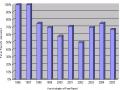
Table 2.1 : Number of disputes resolved under the WTO mechanism (1995 - 2004)
Year
1995 | 1996 | 1997 | 1998 | 1999 | 2000 | 2001 | 2002 | 2003 | 2004 | |
Case number | 1- 25 | 26- 64 | 65- 114 | 115- 155 | 156- 185 | 186- 219 | 220- 242 | 243- 279 | 280- 305 | 306- 324 |
Number of cases | 25 | 39 | 50 | 41 | 30 | 34 | 23 | 37 | 26 | 19 |
Maybe you are interested!
-
 Assessment of the World Trade Organization's Dispute Settlement Mechanism for Developing Countries
 -
 Developing Countries in the WTO Dispute Settlement Mechanism – From Theory to Practice
 -
 Disputes and Dispute Resolution on Loan Security Using Valuable Papers at Credit Institutions
 -
 Disputes and Dispute Resolution on Loan Security by Debt Collection Rights at Credit Institutions
 -
 The Impact of Financial Integration on Poverty in Developing Countries in Asia.
Source: http:/www.wto.org/dispute settlement - chronological list of dispute cases
Table 2.2 : Number of disputes brought to the WTO by developing countries (1995-2004)
Year
1995 | 1996 | 1997 | 1998 | 1999 | 2000 | 2001 | 2002 | 2003 | 2004 | |
Defendant | 12 | 11 | 10 | 5 | 7 | 18 | 17 | 17 | 15 | 5 |
Original single | 7 | 18 | 21 | 11 | 12 | 19 | 11 | 8 | 9 | 6 |
Total | 19 | 29 | 31 | 16 | 19 | 37 | 28 | 25 | 24 | 11 |
Source: http:/www.wto.org/dispute settlement - chronological list of dispute cases
Table 2.3 : Number of disputes brought to the WTO by country group (up to June 20, 2005)
Developed countries
Developing countries | Total | |||
Plaintiff | 210 | Plaintiff | 122 | 332 |
Defendant | 205 | Defendant | 127 | 332 |
Source: http: /www.wto.org/ dispute settlement-disputes by country
Among the disputes brought to the WTO, developed countries account for nearly two-thirds of the total number of lawsuits and lawsuits, and are mainly concentrated in two major economic centers: the United States (80 cases as plaintiffs and 89 cases as defendants) and the European Community (70 cases as plaintiffs and 53 cases as defendants). Developing countries participating in this mechanism mainly focus on a few countries such as Brazil with 35 cases (22 cases as plaintiffs and 13 cases as defendants), India with 33 cases (16 cases as plaintiffs and 17 cases as defendants), Mexico with 28 cases (15 cases as plaintiffs and 13 cases as defendants), Korea with 25 cases (12 cases as plaintiffs and 13 cases as defendants), Argentina with 25 cases (9 cases as plaintiffs and 16 cases as defendants), and Chile with 20 cases (10 cases as plaintiffs and 10 cases as defendants). The remaining developing countries' participation in the WTO dispute settlement mechanism is still limited. (Table 4).