
These are dangerous diseases that can easily cause death for the elderly and are common in the elderly with good living conditions. Cardiovascular disease is closely related to hypertension (accounting for more than half of deaths in the elderly due to hypertension) and is especially common in the elderly living in urban areas. Osteoarthritis is mainly caused by humid climate conditions, heavy work conditions, and heavy lifting. However, the rate of osteoarthritis in the elderly is gradually decreasing as economic conditions develop.
21.9
7.8
Maybe you are interested!
-
 Common Internal Medicine Diseases of the Digestive System
 -
 Division of common property between husband and wife according to the Law on Marriage and Family 2014 - 9
 -
 Division of common property of spouses during marriage under Vietnamese law - 14
 -
 Applying the process of caring for, preventing and treating diseases for breeding sows and piglets raised by their mothers at Thien Thuan Tuong Mineral Exploitation Joint Stock Company, Cam Pha, Quang Ninh province - 8
 -
 Common Method Difference Test
7.7
5.3
4.1
2.4
2.1
2.1
1.9
1.7
Stroke
Pneumonia Hypertension
Type II diabetes Chronic obstructive pulmonary disease
Heart failure Vestibular syndrome Parkinson's disease Osteoporosis
Acute bronchitis
0 5 10 15 20 25
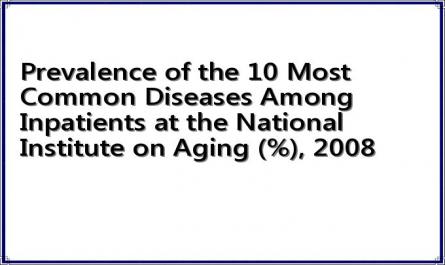
Figure 2.3. Prevalence of the 10 most common diseases of inpatients at the National Institute on Aging (%), 2008
Source: The author constructed the chart based on data from the 2008 National Institute on Aging's Treatment and Disease Model.
According to statistics on the 10 most common diseases of elderly patients in the research topic of disease treatment model at the National Institute of Aging in 2008, 10/10 diseases that elderly patients often suffer from are non-communicable diseases and mainly chronic diseases such as: Stroke, Hypertension, Type II diabetes, Chronic obstructive pulmonary disease, Heart failure, Vestibular syndrome, Parkinson's disease, Osteoporosis. Of which, stroke (21.9%), hypertension (7.7%) are the most common diseases.
Eye and ear diseases, vision loss, and hearing loss are also common diseases in the elderly. These two diseases are related to the degeneration of organs in the body. These two diseases are also the cause of disability in the elderly, greatly affecting the psychological life as well as the activities and community integration of the elderly. Especially
The decline or even complete loss of vision is the most serious because it affects the entire life of the elderly and causes difficulties and hardships for relatives in caring for them.
When suffering from an injury, due to the characteristics of old age, the number of days for the elderly to recover is longer than other age groups. According to the results of the survey on the living standards of the population over the years, on average, an elderly person has to take about 30 days off due to illness/injury in 12 months, which is 4-5 times more than children and 3 times more than adults. Thus, each elderly person in Vietnam has to bear the burden of illness for up to 14 years out of a total of more than 70 years of life [38].
2.1.3. Economic and social characteristics of the elderly in Vietnam
2.1.3.1. Professional education level of the elderly
Education level: The literacy status of the elderly in Vietnam is gradually improving but still has many limitations. A large number of the elderly cannot read or write, of which a large number are female and mainly elderly in rural areas.
In 1999, approximately 2.5 million people (50+) were illiterate. Most of them lived in rural areas (over 80%) and were female (over 80%) [25], [40]. After a decade, according to the results of the 2009 Population and Housing Census, the rate of illiterate elderly people was about 18.13% (over 1.35 million people). Of which, the rate of illiterate female elderly people was 3.6 times higher (25.62% of the total number of female elderly people) than that of male elderly people (7.05% of the total number of male elderly people) [40], (Refer to Appendix 2, Table 2).
This is also a characteristic of the Vietnamese elderly in this period because the elderly are all people from previous generations many decades ago, the learning conditions at that time were very difficult and lacking, and were interrupted by two wars, which greatly limited the opportunity to improve their qualifications. The higher rate of illiterate female elderly is due to the consequences of gender inequality in the previous period.
With the limited literacy level of Vietnamese elderly, it requires planners and especially agencies implementing policies for the elderly to pay attention to approaches, channels of propaganda and communication with this group, especially in rural areas. For example, how to propagate policies, answer questions
Policy and health care for the illiterate elderly must use radio, television or direct communication. Communication channels such as leaflets, brochures, booklets, etc. cannot be promoted.
Professional qualifications: The professional qualifications of the elderly in Vietnam are gradually improving, but there are still many limitations. There is a large gap in the educational level and technical qualifications of the elderly between men and women, and there is a small workforce with high professional qualifications among the elderly.
According to the results of the 2010 Household Living Standards Survey, the proportion of the elderly who have never been to school is 17.2%, those without a degree are 34.8%, those who have graduated from primary school are 20.4%, those who have graduated from junior high school are 10.9%, those who have graduated from high school are 3.2%, those who have received training from elementary school to college are 4.8%, technical workers are 3.9%, vocational high school is 0.9% and the proportion of the elderly who have graduated from college or higher is 3.8% (Refer to Appendix 3, Chart 3). Thus, the proportion of the elderly with high education, graduating from high school or higher and receiving vocational training is small (16.7%). This is also a common and widespread situation in Vietnam in other age groups during this period. In all age groups, the proportion of the population with high education (graduated from high school or higher) is small. The educational level of the elderly between urban and rural areas also has a difference, with urban areas having a much higher level than rural areas. The educational level of male and female elderly varies by educational level and in a very clear opposite direction. The higher the educational level, the lower the graduation rate of female elderly and the greater the difference compared to male elderly.
Thus, there is a part of the elderly population with high professional qualifications. In the current conditions of Vietnam, the state needs to have policies to attract a highly qualified elderly workforce to compensate for the shortage of highly qualified human resources in the working-age population.
2.1.3.2. Living standards of the elderly
Vietnam is still a developing country, the life of the elderly is still difficult. According to the survey data on the elderly in 2007 by the Ministry of Labor, Invalids and Social Affairs, the majority of elderly households (57%) said that their current living standards are still at an average level. Only 18.3% of elderly households said they were better off, and 23% of elderly households still self-assessed their living standards as poor. Of which, lonely elderly people have the worst living standards, 42% of single elderly people have a poor life [52]. The living standards of elderly households differ greatly between rural and urban areas, the rate of elderly households with a rich living standard in rural areas is half that of urban areas (1.13% and 2.47%), while the rate of elderly households with a poor living standard is the opposite (13.56% and 27.6%) [52].
With such a limited standard of living, but the elderly have the characteristic of increasingly poor health with age, so the elderly's spending on health care is very large. According to the 2010 survey on living standards, the average health care spending of an elderly person with medical examination and treatment in 12 months (2,049 thousand VND) is 4 times higher than the 0-4 age group (586 thousand VND) and nearly 2 times higher than the 15-24 age group (1,152 thousand VND).
2.1.4. The role of the elderly in Vietnam
The Vietnamese elderly play an extremely important role in society. In politics, the Vietnamese elderly are an important support for the Party, the State and society. The majority of the Vietnamese elderly are those who have made many contributions to the two resistance wars of the nation, as well as to the construction and development of the country during the most difficult years. Even when they are old, the elderly continue to play the role of advisors and consultants for the Party and the Government. Many healthy elderly still participate in Party organizations, unions and authorities at the commune level, in the village/hamlet/hamlet level.
In economics, the elderly are the ones who contribute to the economic development of the country, creating investment capital in the past. When they are old, a part of the elderly, especially highly qualified workers with a lot of experience, social capital, etc., are still participating in economic activities. They participate in production and business to generate income,
improve the quality of life, contribute to hunger eradication, poverty reduction and set an example for the younger generation to follow. In 2011, with more than 4.5 million (52.7%) million elderly people participating in economic activities, meaning that for every 2 elderly people, 1 person is economically active... In addition, the elderly also contribute indirectly to the national economy (doing housework, looking after grandchildren...).
In culture and education, the elderly are a treasure trove of valuable experiences, a bridge between the past and the present, and a guide for young people. In the education and training career, many scientists, teachers, doctors, etc. after retirement and many elderly people living in rural areas with experience and knowledge have actively participated in education and training, promoting learning and talent promotion, contributing to building a learning society at the grassroots level. Most of the Chairmen of the grassroots learning promotion associations are elderly people. In particular, in preserving and developing traditional crafts in "craft villages", the elderly have a special responsibility to preserve, restore, and pass on traditional crafts to the next generation in order to maintain the cultural quintessence accumulated over many generations.
In scientific research, in addition to advising children, relatives and everyone to apply scientific and technological advances in production, business, people's health care, improving the quality of life... NCT are retired officials in the education, training, science and technology, and health sectors who are still constantly researching science and technology, especially in social fields, contributing significantly to the industrialization and modernization of the country.
In society, the elderly participate in many activities in areas with special characteristics that only the elderly can undertake, such as: Participating in mediation groups, neighborhood groups, education promotion associations, charity activities; Propagating crime prevention, building cultural families for the elderly... From the achievements that have been made, it can be seen that the elderly are increasingly playing a great role in the development of culture and society.
In the family, the elderly have a very important position in the traditional family of Vietnamese people. The elderly are always considered the spiritual and moral pillars of the family lineage. They play an important role in educating children and grandchildren to build a civilized family.
culture, cultural family, implementing the movement of "exemplary grandparents and parents, filial children and grandchildren". Over 60% of the elderly participate in movements to build cultural families and civilized residential areas, the rate of households with elderly achieving the title of cultural family is higher than the general rate [48].
2.2. ANALYSIS OF THE CURRENT STATE OF ELDERLY CARE QUALITY IN VIETNAM
In Vietnam, the family is the foundation of society, the first resource for caring for the elderly. The main form of elderly care is still informal care from the family and is undertaken by the family/children. The Government and the community provide formal forms of care to support families through social security policies, services and models of elderly care at home and in the community. Particularly for the elderly in difficult circumstances without shelter, people with meritorious services to the revolution who are subject to policies, the Government directly nurtures and cares for them in social protection centers and nursing homes for people with meritorious services to the revolution. Thus, the Government creates a legal corridor for policies and directly participates in elderly care, the private sector provides care for profit, and non-governmental organizations provide care with the encouragement of the Government.
2.2.1. Analysis of the current status of elderly care policy in Vietnam
The formation and development of the elderly policy since the country's founding in 1945 can be seen through the following stages:
Period 1945 - 1994 (50 years): Right from the founding of the Democratic Republic of Vietnam (1945), our Party and State have paid great attention to the elderly, which is clearly shown in the 1946 Constitution, Article 14 stipulates: "Elderly or disabled citizens who cannot work will be assisted". Article 32 of the 1959 Constitution clearly states: "Help the elderly, the sick and the disabled. Expand social insurance, health insurance and social relief...". Article 64 of the 1992 Constitution stipulates: "...Parents have the responsibility to raise their children. Children have the responsibility to respect and care for their grandparents and parents...". And Article 87 of the Constitution clearly states: "The elderly, the disabled, orphans, and the disabled are entitled to receive assistance.
orphans and homeless people are supported by the state and society”. In 1991, after the United Nations General Assembly issued Resolution 45/106, choosing October 1st of each year as the International Day of the Elderly, the then President of the State Council of Vietnam called on the whole country to respond to the decision of the United Nations, and affirmed that “health care for the elderly is a very important and consistent policy of our Party and State”. The attention to the elderly is also demonstrated through the Resolutions and Directives of the Party, and integrated into legal documents such as: Law on Marriage and Family, Law on Protection of People's Health (1989), Labor Law (1994), Ordinance on People with Meritorious Services to the Revolution (1994). Thus, there is no separate policy for the elderly, policies on the elderly are integrated into general policies and are not complete and comprehensive.
During this period, the Government's support for the material life of the elderly only focused on the group of elderly people retired from the state sector, lonely elderly people without support. Support through regulations on pension levels and social insurance benefits for elderly people retired from the state sector, lonely elderly people without support (Decree 218/CP promulgating temporary regulations on social insurance regimes for state employees; Decree No. 27-CP dated March 25, 1993 on pensions and benefits for policy beneficiaries; Decree 05/CP dated January 26, 1994 of the Government temporarily regulating the implementation of salary levels for incumbents in State agencies, the Party, organizations, armed forces and in enterprises; adjusting pension levels and benefits for social policy beneficiaries).
Regarding health care, there are only a few specific policies: For the elderly over 100 years old, health insurance cards are provided free of charge; the elderly are given priority when examining patients and are given periodic check-ups when sick; the Government regulates training programs and knowledge improvement on common diseases in the elderly in medical schools (Decree 23/HDBT of the Council of Ministers dated January 24, 1991 on the Regulations on medical examination, treatment and rehabilitation).
The above documents and policies demonstrate the Party and Government's concern for the elderly from a very early age. During the past 50 years, policies for the elderly have only been incorporated into legal documents and have only stopped at prioritizing the material care of the special elderly group, including those who have retired in the state sector, and the elderly who are in difficulty and alone and have no one to rely on. During this period, policies on health care and medical care have not been differentiated much from other age groups and policies on caring for the spiritual life and promoting the role of the elderly have not been clearly mentioned.
Period 1995 - 1999 (Formation period): Policies on elderly care are still mainly concerned with the economic life of a specific group of elderly people, including retirees in the public sector, lonely elderly people without support through social security and social protection. Legal documents continue to be integrated and supplemented in legal documents such as Decree 19/CP on the establishment of social insurance (1995), Civil Law (1995), Circular 06/BYT/TT on health care for the elderly (1996), Criminal Law (1997), Ordinance on the disabled (1998), Decree 28/CP on social preferential policies (1995). An important milestone in this period was the establishment of the Vietnam Association of the Elderly (1995) as a unified organization of the elderly nationwide. The Association is organized in all 63 provinces/cities, to all districts/towns and has grassroots Elderly Associations and Elderly Associations in all communes, hamlets and villages nationwide. Up to now, the members account for about 90% of the total number of elderly people in Vietnam. The Elderly Association has helped the Government carry out many charitable activities, activities on elderly health care, encouraging and improving knowledge to support the elderly in economic activities, improving spiritual life and promoting the role of the elderly, organizing recreational activities suitable for the elderly, and caring for the elderly at home.
Period 2000 to present (Completion period): This period has a strong change in the Government's policy towards the elderly and the care of the elderly. Vietnam has issued the Ordinance on the Elderly (No. 23/2000/PL-UBTVQH10), the Ordinance on the Elderly is an appropriate step to care for the elderly.