
The Bank will set aside a pool of income-producing assets and sell securities issued on those assets to the market. When these assets are paid for, the Bank will transfer the payment to the owners of the said securities.
Securitization is a financial tool that helps limit interest rate risks and portfolio risks for the Bank, because thanks to it, the Bank can reduce the duration of the investment portfolio to match the nature of the mobilized capital, and can transfer investment sources from one market to another with more prospects.
Banks can issue securities through intermediaries, which are organizations that operate professionally in issuing securities, or without intermediaries. Investors in these securities are usually banks, construction associations, insurance companies, life funds, pension funds, etc.
In order to effectively securitize, a bank must have a pool of assets of sufficient value and of similar characteristics. With such criteria, long-term loans with collateral, usually real estate, are the top priority asset group for securitization. Developed countries often have a secondary market for real estate (usually real estate), thus allowing for relatively accurate valuation of real estate in the event of a borrower's default.
Maybe you are interested!
-
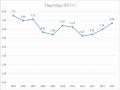
 Model of the Impact of Credit Risk on the Business Performance of Commercial Banks
 -
 The impact of credit risk on business performance of Vietnamese commercial banks - 1
 -
 Factors affecting credit risk in credit card business at Vietnam Joint Stock Commercial Bank for Industry and Trade - 14
 -
 Credit risk management at Vietnam International Commercial Joint Stock Bank - Hanoi Branch - 12
 -
 Current Status of Credit Risk Management at Vietnam Bank for Agriculture and Rural Development
(2) Sale of loans
Selling loans is a business in which a Bank transfers its debt collection rights to another organization in order to recover its capital early. Loans that a Bank sells are usually of two types: good loans and bad debts.
Banks typically sell loans that are considered good, with a remaining term of about 90 days, and are highly collectible. This often increases the likelihood of
liquidity for the Bank, reducing interest rate risk, contributing to shifting investment for the Bank.
The second target of loan sales transactions is overdue debts with low recovery rates. The selling price of these debts may be lower than the face value, but the Bank can recover capital for new investments immediately and ensure more safety and avoid having to set up additional provisions, increasing the Bank's costs.
Buyers of loans often have to have information about the sector and the investment area of the loan. Foreign banks with experience and large capital potential can also buy large debts with the aim of finding a solid position in the domestic market.
(3) Derivative financial instruments
Debt sale or securitization can help banks prevent and limit credit risks, however, these two methods are not flexible because the loans sold or securitized must have a relatively large value and have similar characteristics. Nowadays, banks often use credit derivatives, which are modern and proactive financial instruments to reduce credit risks.
* Credit swap contracts: Common forms of credit swap contracts include:
- Credit exchange contract: Is a form in which 2 banks agree to exchange with each other a certain amount of money, including principal and interest that the bank receives from the borrower through an intermediary organization.
- Total income exchange contract: is a form in which Bank A agrees to pay Bank B or an intermediary organization all the income from a certain loan. In return, Bank B or the intermediary organization must pay Bank A a fixed interest rate (such as bond interest rate or Libor interest rate + a certain margin). Thus, the Bank has exchanged the risky income from the credit for stable income.
more definite
* Credit options
This is a popular tool to protect the Bank when the Bank's credit quality declines. If the Bank is concerned about the quality of a loan, it can enter into a credit option contract with an option dealer. The contract will guarantee full payment of the loan if the loan declines significantly or cannot be paid. If the customer defaults, the Bank will not need to use the option contract and will only incur the cost of paying on the option contract.
* Credit – Linded Notes
A bond is an instrument that combines the features of a conventional debt and a credit option contract, giving the Bank the privilege of reducing its payments if there are significant changes in certain factors. For example, if a Bank securitizes a group of debts with an interest rate of 10% per annum, the security may contain a constraint that if the ratio of credit losses to the debt is too large, the Bank will pay investors a lower interest rate, say 7% per annum.
Although the use of derivative instruments is quite useful, it is not without risks because there are still many legal issues related to the use of these instruments and therefore, the Bank is not fully guaranteed by law. In fact, the market for these instruments is still small and has not created attraction for Banks as well as investors.
1.3.9. Effective debt settlement
The characteristic of currency business is that banks still face risks but at a tolerable level, that is, in the credit granting activities of banks, there are always bad debts. Bad debts are debts that are not paid by customers when due, these bad debts are the direct cause of losses for banks, to reduce losses
The bank must establish a debt collection plan and consider optimal options to recover the loan in the most effective way. Overdue debt can be handled by the following measures:
Mining organization
Exploitation is the process of working with the borrower until the loan is repaid in part or in full and without relying on legal means to force the cashier. Exploitation is applied to borrowers who are honest, responsible and willing to repay, have a high net worth and a history of sound and effective management.
Exploitation measures can be advice on a production expansion program, changing the sales method, increasing new products or eliminating unprofitable activities, selling off some unnecessary assets... For poorly managed enterprises, the Bank can take the initiative in business management. On the other hand, the Bank can adjust the loan contract to reduce the repayment level of additional capital.
Liquidation of bad debts
If the Bank finds it clearly unprofitable to operate the loan, liquidation in some form may be considered the best way to deal with a loan that has become bad, although the legal procedures are sometimes cumbersome and tedious:
Foreclosure and liquidation of secured assets
The bank may dispose of the collateral by consensus or by court order.
With the consensus method, the customer and the Bank agree to recover debt from the secured assets in one of the following ways:
- Customers sell their collateral to pay the Bank: this is the most beneficial solution for both customers and the Bank because the Bank does not incur auction costs, and businesses can sell at a higher price.
high price as expected
- The bank accepts assets in lieu of debt repayment obligations: this measure can be implemented quickly and at low cost, however not all collateral assets can be applied.
- Selling assets through auction centers: this method is quite convenient because it is easy to find buyers, but the cost is too high, affecting the Bank's debt collection.
- The Bank can also file a lawsuit in court when it cannot reach an agreement with the customer. In general, this is a rarely used measure, it causes tension in the relationship between the customer and the Bank, costs a lot of money and takes a long time to wait. However, this is an opportunity for the Bank to gain capital in case the collateral is disputed, the customer is not willing...
Business bankruptcy
In the event that the Bank decides to use legal means to recover unsecured loans, a court judgment is required. This judgment allows the seizure and sale of the debtor's assets in an appropriate amount, often accompanied by the bankruptcy of a business.
Cover losses from reserves and credit insurance
Losses in credit liquidation are debts that are not repaid after the Bank has exhausted all the borrower's resources. This loss needs to be compensated to ensure the Bank's operations are stable and safe. Sources of compensation for losses include:
- Credit insurance.
- Risk reserve fund: this fund is formed after classifying loans based on risk assessment and is included in the Bank's operating expenses. This is the most significant source to compensate for losses in credit activities.
- Financial reserve fund: is set aside at a rate compared to the remaining profit before the financial reserve fund. This fund is used to compensate
loss when the contingency fund is insufficient to cover actual losses.
- Accounting for extraordinary expenses: the remaining loss after compensation from the above sources will be accounted for as extraordinary expenses of the Bank. In some special cases, the budget may support to resolve the loss.
Conclude
Credit is the main profit-making business of commercial banks. In which, medium and long-term credit contributes a significant part to the profits from credit activities. However, medium and long-term credit risks are also inevitable and have very serious impacts on banks, depositors and the entire economy. However, commercial banks can recognize the signs leading to risks, assess the level of risk that their banks are facing and have measures to minimize the risks that arise.
There are many solutions to limit medium and long-term credit risks. Banks often focus on a group of solutions such as establishing a strict and scientific credit policy, performing a comprehensive assessment of customers, loan projects, and collateral, having measures to check and monitor customers' use of loans effectively, handling overdue debts well, and applying modern risk prevention tools such as securitization, debt sales, and derivative financial instruments to proactively prevent risks in banking business activities...
Chapter 2:
CURRENT STATUS OF MEDIUM AND LONG TERM CREDIT RISK AT THE BANK FOR FOREIGN TRADE OF VIETNAM
2.1. Overview of the business performance of the Bank for Foreign Trade of Vietnam in recent times
2.1.1. Overview of the Bank for Foreign Trade of Vietnam
On April 1, 1963, the Vietnam Joint Stock Commercial Bank was established under Decree No. 115/CP of the Government Council and was re-established under the model of Corporation 90 under Decision No. 286/QD-NH5 dated September 21, 1996 of the Governor of the State Bank of Vietnam, with the transaction name BANK FOR FOREIGN TRADE OF VIETNAM (VIETCOMBANK). The Vietnam Joint Stock Commercial Bank has the function of performing foreign and domestic operations. As the first commercial bank granted exclusive rights to foreign exchange management by the State Bank of Vietnam, the Vietnam Joint Stock Commercial Bank has marked a very important development step in foreign banking activities in Vietnam during the period of economic renovation and development.
After more than 42 years of construction, development and growth, the Vietnam Joint Stock Commercial Bank for Industry and Trade has actively contributed to the cause of serving the country's general economic development by mobilizing capital in society for investment to serve the economic growth target and implementing monetary policy in line with the State's orientation. Along with the achievements, the Vietnam Joint Stock Commercial Bank for Industry and Trade has also demonstrated its role as a leading state-owned commercial bank in the field of foreign affairs. The Vietnam Joint Stock Commercial Bank for Industry and Trade has been expanding cooperation with foreign banks, introducing modern banking products in the world to Vietnam. In addition, the Bank is also applying new payment methods such as smart card applications, becoming a member of the international MASTER CARD and international VISA CARD, and a payment agent of AMERICAN EXPRESS and JBC. The Bank is also a member bank of the international payment system via the SWIFT network.
Currently, NHNT can provide customers with the following services:
- Receive demand deposits, term deposits, payment deposits, savings deposits from economic organizations in VND and foreign currencies.
- Short, medium and long term loans in VND and foreign currencies.
- Make import and export payments.
- Domestic and international payment transfer (incoming and outgoing), collection, exchange
money,...
- Spot, forward and swap foreign exchange trading, gold trading
silver gemstones...
- Issue and pay for all types of cards and act as a payment agent for international credit cards such as VISA CARD, MASTER CARD and AMERICAN EXPRESS.
- Open L/C to pay for imported goods.
- Issue deferred payment L/C.
- Provide retail banking services to customers such as E-Banking services.
- In addition, the State Bank also receives and manages assets of the State and other credit institutions if requested, provides wholesale loans to domestic credit institutions, and provides capital support to branches in the system when needed.
To promote business activities, NHNT has a complete organizational system including transaction offices and branches in commercial centers and regions throughout the country, along with a team of staff with extensive experience in foreign affairs and agency relations around the world.
2.1.2. Main business activities at the Bank for Foreign Trade of Vietnam
Through many years of innovation and self-improvement, NHNT is now truly strong enough to compete in the world market, and at the same time increasingly affirms itself as a leading bank in the country, striving to rise with the motto: " reputation and efficiency - always bring customers success".