
With the potential of Ninh Binh, Van Long will certainly become a wetland nature reserve, a valuable ecotourism destination.
Although Van Long is a newly discovered destination, the management and exploitation planning for ecotourism development has initially attracted the attention of tourists. Most of the tourists coming here are scientists, students and those who love exploration and adventure.
Van Long is one of the valuable resource points for development as a type of ecotourism. It has been planned in detail by the Ninh Binh tourism industry to have a plan for resource management and investment in building infrastructure for tourism development. Currently, the number of visitors to this tourist destination is not much compared to its potential, but they are tourists who really have the need to travel in the form of ecotourism. They are scientists, students, and students researching biology and ecological environment. Van Long area has been invested in infrastructure by many individuals and organizations to exploit and do ecotourism business (See the current status of investment and construction). However, in order for these businesses to operate in accordance with the criteria of ecotourism, the role of industry management needs to be concerned, especially in investing in building infrastructure.
* Forest resources:
Due to the long-standing unplanned exploitation, forests in Ninh Binh have been devastated. Apart from Cuc Phuong, natural forests in Ninh Binh are not much and intact. On the limestone mountain slopes are poor, secondary forests. Most of them are small bushes. In the Southeast of the province, in Kim Son district, there are some mangrove forests.
According to the Central Natural Forest Inventory Board, in the early 90s, the natural forest area in Ninh Binh was 11,275 hectares. Compared to the provinces in the Red River Delta, Ninh Binh is a province with a fairly large forest area. Regarding animals, if not counting Cuc Phuong, Ninh Binh only has a few scattered wild animals in the rocky mountains and mangrove areas in Con Thoi - Kim Son. The most valuable for tourism is the forest carpet and wild animals of Cuc Phuong.
Cuc Phuong National Park was established on the basis of Decision No. 72/TTg dated July 7, 1962 of the Prime Minister and Decision No. 139/CT dated May 9, 1998 of the Council of Ministers, approving the technical and economic justification of Cuc Phuong National Park. The park belongs to the administrative boundaries of 3 provinces: Ninh Binh, Thanh Hoa, Hoa Binh.
The total natural area of the garden is 22,200 hectares, of which:
Cuc Phuong National Park is divided into 3 main functional areas:
- Intact protection area (20,745ha including natural forest: 20,065ha, has the function of maintaining and protecting the most primitive natural conditions; protecting intact natural resources, existing historical landscapes.
- Specialized area (734ha) with functions of service activities, administrative management, scientific research services (laboratories, science museums, science libraries, botanical gardens...)
- The buffer zone is intended to create a protective belt, avoiding direct human impacts that are harmful to the intact protected area and expanding the range of birds and animals, creating a stable environment for them.
Speaking of Cuc Phuong, we must mention its rich flora. On the area of 22,200 hectares of Cuc Phuong, 1,880 species of higher plants have been found. Of which, the Phylum Dendrobium has 31 families, 57 genera, 149 species; the Phylum Gymnospermum has 3 families, 3 genera, 3 species; the Phylum Angiosperm has 154 families, 747 genera and 1,588 species. With an area of only 1/700 of the North and nearly 1/1,500 of Vietnam, the flora of Cuc Phuong accounts for 76.6% of the genera, 30% of the species of the North; 68% of the families, 43.6% of the species of Vietnam [ ] .
With a diverse habitat, Cuc Phuong has a rich fauna system, 137 bird species, 36 reptile species, 17 amphibian species and some special fish species. There are animal species that have only been discovered for the first time in Cuc Phuong such as: Cuc Phuong red-bellied squirrel, cave carp, python, bear, clouded leopard, mountain goat, monkey... are animal species that are still commonly found in Cuc Phuong. Parrots, ground phoenixes, pheasants, and orioles are beautiful birds in Cuc Phuong.
Invertebrates in Cuc Phuong are still little studied, only 1,800 insect species of 200 families and 24 orders have been collected. Invertebrates in Cuc Phuong have thousands of beautiful butterfly species.
Coming to Cuc Phuong, tourists can also visit the following places: Crescent Moon Cave, Joyful Spring Cave, Thanh Minh Cave, Chua Cave, Ancient People Cave... Especially, for Ancient People Cave, no matter how tired, any tourist coming to Cuc Phuong will not miss it. Climbing 223 steps, reaching the cave entrance, a mossy area with the intact imprint of ancient ancestors, the time of early humans.
Cuc Phuong National Park is a facility managed by the General Department of Forestry - Ministry of Agriculture and Rural Development. Investment in infrastructure for ecotourism business here has been carried out for many years. Up to now, this area has been built relatively completely with a synchronous infrastructure system, suitable for the general environmental landscape, is an ideal ecotourism destination not only for Ninh Binh but also for the whole country and is a place that attracts many tourists when visiting Ninh Binh.
Tourists to Cuc Phuong mainly come in groups, usually students from Hanoi and neighboring provinces, coming on weekends and holidays. This tourist area also attracts the attention of foreign tourists, but they usually come in small groups, and are scientists.
In addition, in Ninh Binh there is also a system of protective forests that were planted many years ago such as: pine forests in Nho Quan, Gia Vien (located in the Dong Chuong Lake eco-tourism complex).
The mangrove forest system protects the alluvial plain of Con Thoi - Kim Son. This is a forest area formed to reclaim the sea and block waves. Due to the hydro-climatic characteristics of this area, there is a diverse ecosystem. Of which, there are three main types of plants: Parrot, sedge, reed. In addition, the area inside the dike also has a significant area of eucalyptus forest and fruit trees. This is also the place where many migratory birds come to winter such as: wild geese, mallards, white-rumped ducks, herons, teals, teals, etc.
In addition to natural aquatic resources such as: Clams, mussels, blood cockles, crabs and marine fish... a large area has been formed for aquaculture in recent years (shrimp, crab farming...) This is also a factor attracting tourists when ecotourism develops. Visitors come to visit, enjoy the fresh air, diverse ecological environment and can also enjoy the culinary art with specialties of the Kim Son region such as Kim Son wine, salad dishes...
This area has been planned for ecotourism development but currently no investment has been made. Hopefully, with the available resources in the near future, this place will be invested in and built into an attractive ecotourism area for tourists.
Table 2.1: Natural forest area in Ninh Binh [39]
Natural forest area of course | In which divided | Reserves wood ( m3 ) | ||||
Forest defense household | % | solid forest use | % | |||
Red River Delta | 22,718 | 8,314 | 37.0 | 11,000 | 48.0 | 298,099 |
Ninh Binh | 11,275 | 875 | 8.0 | 10,400 | 92.0 | 55,913 |
Maybe you are interested!
-
 Identify Rating Levels and Rating Scales
zt2i3t4l5ee
zt2a3gstourism,quan lan,quang ninh,ecology,ecotourism,minh chau,van don,geography,geographical basis,tourism development,science
zt2a3ge
zc2o3n4t5e6n7ts
of the islanders. Therefore, this indicator will be divided into two sub-indicators:
a1. Natural tourism attractiveness a2. Cultural tourism attractiveness
b. Tourist capacity
The two island communes in Quan Lan have different capacities to receive tourists. Minh Chau Commune is home to many standard hotels and resorts, attracting high-income domestic and international tourists. Meanwhile, Quan Lan Commune has many motels mainly built and operated by local people, so the scale and quality are not high, and will be suitable for ordinary tourists such as students.
c. Time of exploitation of Quan Lan Island Commune:
Quan Lan tourism is seasonal due to weather and climate conditions and festivals only take place on certain days of the year, specifically in spring. In Quan Lan commune, the period from April to June and from September to November is considered the best time to visit Quan Lan because the cultural tourism activities are mainly associated with festivals taking place during this time.
Minh Chau island commune:
Tourism exploitation time is all year round, because this is a place with a number of tourist attractions with diverse ecosystems such as Bai Tu Long National Park Research Center, Tram forest, Turtle Laying Beach, so besides coming to the beach for tourism and vacation in the summer, Minh Chau will attract research groups to come for tourism combined with research at other times of the year.
d. Sustainability
The sustainability of ecotourism sites in Quan Lan and Minh Chau communes depends on the sensitivity of the ecosystems to climate changes.
landscape. In general, these tourist destinations have a fairly high level of sustainability, because they are natural ecosystems, planned and protected. However, if a large number of tourists gather at certain times, it can exceed the carrying capacity and affect the sustainability of the environment (polluted beaches, damaged trees, animals moving away from their habitats, etc.), then the sustainability of the above ecosystems (natural ecosystems, human ecosystems) will also be affected and become less sustainable.
e. Location and accessibility
Both island communes have ports to take tourists to visit from Van Don wharf:
- Quan Lan – Van Don traffic route:
Phuc Thinh – Viet Anh high-speed boat and Quang Minh high-speed boat, depart at 8am and 2pm from Van Don to Quan Lan, and at 7am and 1pm from Quan Lan to Van Don. There are also wooden boats departing at 7am and 1pm.
- Van Don - Minh Chau traffic route:
Chung Huong high-speed train, Minh Chau train, morning 7:30 and afternoon 13:30 from Van Don to Minh Chau, morning 6:30 and afternoon 13:00 from Minh Chau to Van Don.
f. Infrastructure
Despite receiving investment attention, the issue of infrastructure and technical facilities for tourism on Quan Lan Island is still an issue that needs to be resolved because it has a direct impact on the implementation of ecotourism activities. The minimum conditions for serving tourists such as accommodation, electricity, water, communication, especially medical services, and security work need to be given top priority. Ecotourism spots in Minh Chau commune are assessed to have better infrastructure and technical facilities for tourism because there are quite complete and synchronous conditions for serving tourists, meeting many needs of domestic and foreign tourists.
3.2.1.4. Determine assessment levels and assessment scales
Corresponding to the levels of each criterion, the index is the score of those levels in the order of 4, 3, 2, 1 decreasing according to the standard of each level: very attractive (4), attractive (3), average (2), less attractive (1).
3.2.1.5. Determining the coefficients of the criteria
For the assessment of DLST in the two communes of Quan Lan and Minh Chau islands, the students added evaluation coefficients to show the importance of the criteria and indicators as follows:
Coefficient 3 with criteria: Attractiveness, Exploitation time. These are the 2 most important criteria for attracting tourists to tourism in general and eco-tourism in particular, so they have the highest coefficient.
Coefficient 2 with criteria: Capacity, Infrastructure, Location and accessibility . Because the assessment area is an island commune of Van Don district, the above criteria are selected by the author with appropriate coefficients at the average level.
Coefficient 1 with criteria: Sustainability. Quan Lan has natural and human-made ecotourism sites, with high biodiversity and little impact from local human factors. Most of the ecotourism sites are still wild, so they are highly sustainable.
3.2.1.6. Results of DLST assessment on Quan Lan island
a. Assessment of the potential for natural tourism development
For Minh Chau commune:
+ Natural tourism attractiveness is determined to be very attractive (4 points) and the most important coefficient (coefficient 3), so the score of the Attractiveness criterion is 4 x 3 = 12.
+ Capacity is determined as average (2 points) and the coefficient is quite important (coefficient 2), then the score of Capacity criterion is 2 x 2 = 4.
+ Exploitation time is long (4 points), the most important coefficient (coefficient 3) so the score of the Exploitation time criterion is 4 x 3 = 12.
+ Sustainability is determined as sustainable (4 points), the important coefficient is the average coefficient (coefficient 1), so the score of the Sustainability criterion is 4 x 1 = 4 points
+ Location and accessibility are determined to be quite favorable (2 points), the coefficient is quite important (coefficient 2), the criterion score is 2 x 2 = 4 points.
+ Infrastructure is assessed as good (3 points), the coefficient is quite important (coefficient 2), then the score of the Infrastructure criterion is 3 x 2 = 6 points.
The total score for evaluating DLST in Minh Chau commune according to 6 evaluation criteria is determined as: 12 + 4 + 12 + 4 + 4 + 6 = 42 points
Similar assessment for Quan Lan commune, we have the following table:
Table 3.3: Assessment of the potential for natural ecotourism development in Quan Lan and Minh Chau communes
Attractiveness of self-tourismof course
Capacity
Mining time
Sustainability
Location and accessibility
Infrastructure
Result
Point
DarkMulti
Point
DarkMulti
Point
DarkMulti
Point
DarkMulti
Point
DarkMulti
Point
DarkMulti
CommuneMinh Chau
12
12
4
8
12
12
4
4
4
8
6
8
42/52
Quan CommuneLan
6
12
6
8
9
12
4
4
4
8
4
8
33/52
b. Assessment of the potential for humanistic tourism development
For Quan Lan commune:
+ The attractiveness of human tourism is determined to be very attractive (4 points) and the most important coefficient (coefficient 3), so the score of the Attractiveness criterion is 4 x 3 = 12.
+ Capacity is determined to be large (3 points) and the coefficient is quite important (coefficient 2), then the score of the Capacity criterion is 3 x 2 = 6.
+ Mining time is average (3 points), the most important coefficient (coefficient 3) so the score of the Mining time criterion is 3 x 3 = 9.
+ Sustainability is determined as sustainable (4 points), the important coefficient is the average coefficient (coefficient 1), so the score of the Sustainability criterion is 4 x 1 = 4 points.
+ Location and accessibility are determined to be quite favorable (2 points), the coefficient is quite important (coefficient 2), the criterion score is 2 x 2 = 4 points.
+ Infrastructure is rated as average (2 points), the coefficient is quite important (coefficient 2), then the score of the Infrastructure criterion is 2 x 2 = 4 points.
The total score for evaluating DLST in Quan Lan commune according to 6 evaluation criteria is determined as: 12 + 6 + 6 + 4 + 4 + 4 = 36 points.
Similar assessment with Minh Chau commune we have the following table:
Table 3.4: Assessment of the potential for developing humanistic eco-tourism in Quan Lan and Minh Chau communes
Attractiveness of human tourismliterature
Capacity
Mining time
Sustainability
Location and accessibility
Infrastructure
Result
Point
DarkMulti
Point
DarkMulti
Point
DarkMulti
Point
DarkMulti
Point
DarkMulti
Point
DarkMulti
Quan CommuneLan
12
12
6
8
9
12
4
4
4
8
4
8
39/52
Minh CommuneChau
6
12
4
8
12
12
4
4
4
8
6
8
36/52
Basically, both Minh Chau and Quan Lan localities have quite favorable conditions for developing ecotourism. However, Quan Lan commune has more advantages to develop ecotourism in a humanistic direction, because this is an area with many famous historical relics such as Quan Lan Communal House, Quan Lan Pagoda, Temple worshiping the hero Tran Khanh Du, ... along with local festivals held annually such as the wind praying ceremony (March 15), Quan Lan festival (June 10-19); due to its location near the port and long exploitation time, the beaches in Quan Lan commune (especially Quan Lan beach) are no longer hygienic and clean to ensure the needs of tourists coming to relax and swim; this is also an area with many beautiful landscapes such as Got Beo wind pass, Ong Phong head, Voi Voi cave, but the ability to access these places is still very limited (dirt hill road, lots of gravel and rocks), especially during rainy and windy times; In addition, other natural resources such as mangrove forests and sea worms have not been really exploited for tourism purposes and ecotourism development. On the contrary, Minh Chau commune has more advantages in developing ecotourism in the direction of natural tourism, this is an area with diverse ecosystems such as at Rua De Beach, Bai Tu Long National Park Conservation Center...; Minh Chau beach is highly appreciated for its natural beauty and cleanliness, ranked in the top ten most beautiful beaches in Vietnam; Minh Chau commune is also home to Tram forest with a large area and a purity of up to 90%, suitable for building bridges through the forest (a very effective type of natural ecotourism currently applied by many countries) for tourists to sightsee, as well as for the purpose of studying and researching.
Figure 3.1: Thenmala Forest Bridge (India) Source: https://www.thenmalaecotourism.com/(August 21, 2019)
3.2.2. Using SWOT matrix to evaluate Quan Lan island tourism
General assessment of current tourism activities of Quan Lan island is shown through the following SWOT matrix:
Table 3.5: SWOT matrix evaluating tourism activities on Quan Lan island
Internal agent
Strengths- There is a lot of potential for tourism development, especially natural ecotourism and humanistic ecotourism.- The unskilled labor force is relatively abundant.- resource environmentunpolluted, still
Weaknesses- Poorly developed infrastructure, especially traffic routes to tourist destinations on the island.- The team of professional staff is still weak.- Tourism products in general
quite wild, originalintact
general and DLST in particularalone is monotonous.
External agents
Opportunity- Tourism is a key industry in the socio-economic development strategy of the province and Van Don economic zone.- Quan Lan was selected as a pilot area for eco-tourism development within the framework of the green growth project between Quang Ninh province and the Japanese organization JICA.- The flow of tourists and especially ecotourism in the world tends toincreasing
Challenge- Weather and climate change abnormally.- Competition in tourism products is increasingly fierce, especially with other localities in the province such as Ha Long, Mong Cai...- Awareness of tourists, especially domestic tourists, about ecotourism and nature conservation is not high.
Through summary analysis using SWOT matrix we see that:
To exploit strengths and take advantage of opportunities, it is necessary to:
- Diversify products and service types (build more tourism routes aimed at specific needs of tourists: experiential tourism immersed in nature, spiritual cultural tourism...)
- Effective exploitation of resources and differentiated products (natural resources and human resources)
div.maincontent .p { color: black; font-family:"Times New Roman", serif; font-style: normal; font-weight: normal; text-decoration: none; font-size: 14pt; margin:0pt; } div.maincontent p { color: black; font-family:"Times New Roman", serif; font-style: normal; font-weight: normal; text-decoration: none; font-size: 14pt; margin:0pt; } div.maincontent .s1 { color: black; font-family:"Times New Roman", serif; font-style: normal; font-weight: normal; text-decoration: none; font-size: 13pt; } div.maincontent .s2 { color: black; font-family:"Times New Roman", serif; font-style: normal; font-weight: normal; text-decoration: none; font-size: 13pt; } div.maincontent .s3 { color: #0D0D0D; font-family:"Times New Roman", serif; font-style: normal; font-weight: bold; text-decoration: none; font-size: 14pt; } div.maincontent .s4 { color: black; font-family:"Times New Roman", serif; font-style: italic; font-weight: normal; text-decoration: none; font-size: 14pt; } div.maincontent .s5 { color: black; font-family:"Times New Roman", serif; font-style: italic; font-weight: bold; text-decoration: none; font-size: 14pt; } div.maincontent .s6 { color: black; font-family:"Times New Roman", serif; font-style: italic; font-weight: normal; text-decoration: none; font-size: 14pt; vertical-align: -3pt; } div.maincontent .s7 { color: black; font-family:"Times New Roman", serif; font-style: italic; font-weight: normal; text-decoration: none; font-size: 14pt; vertical-align: -2pt; } div.maincontent .s8 { color: black; font-family:"Times New Roman", serif; font-style: italic; font-weight: normal; text-decoration: none; font-size: 14pt; vertical-align: -1pt; } div.maincontent .s9 { color: black; font-family:"Times New Roman", serif; font-style: normal; font-weight: normal; text-decoration: none; font-size: 14pt; } div.maincontent .s10 { color: black; font-family:"Times New Roman", serif; font-style: normal; font-weight: bold; text-decoration: none; font-size: 14pt; } div.maincontent .s11 { color: black; font-family:"Times New Roman", serif; font-style: normal; font-weight: normal; text-decoration: none; font-size: 14pt; } div.maincontent .s12 { color: black; font-family:Symbol, serif; font-style: normal; font-weight: normal; text-decoration: none; font-size: 14pt; } div.maincontent .s13 { color: black; font-family:Wingdings; font-style: normal; font-weight: normal; text-decoration: none; font-size: 14pt; } div.maincontent .s14 { color: black; font-family:"Times New Roman", serif; font-style: normal; font-weight: normal; text-decoration: none; font-size: 9pt; vertical-align: 5pt; } div.maincontent .s15 { color: black; font-family:"Times New Roman", serif; font-style: normal; font-weight: normal; text-decoration: none; font-size: 9pt; vertical-align: 5pt; } div.maincontent .s16 { color: black; font-family:Cambria, serif; font-style: italic; font-weight: normal; text-decoration: none; font-size: 14pt; } div.maincontent .s17 { color: #080808; font-family:"Times New Roman", serif; font-style: normal; font-weight: bold; text-decoration: none; font-size: 14pt; } div.maincontent .s18 { color: #080808; font-family:"Times New Roman", serif; font-style: normal; font-weight: normal; text-decoration: none; font-size: 14pt; } div.maincontent .s19 { color: black; font-family:"Times New Roman", serif; font-style: normal; font-weight: normal; text-decoration: none; font-size: 11pt; } div.maincontent .s20 { color: black; font-family:"Times New Roman", serif; font-style: normal; font-weight: normal; text-decoration: none; font-size: 10pt; } div.maincontent .s21 { color: black; font-family:"Times New Roman", serif; font-style: normal; font-weight: bold; text-decoration: none; font-size: 11pt; } div.maincontent .s22 { color: black; font-family:"Times New Roman", serif; font-style: normal; font-weight: normal; text-decoration: none; font-size: 11pt; } div.maincontent .s23 { color: black; font-family:"Times New Roman", serif; font-style: italic; font-weight: normal; text-decoration: none; font-size: 14pt; } div.maincontent .s24 { color: #212121; font-family:"Times New Roman", serif; font-style: normal; font-weight: normal; tex
Identify Rating Levels and Rating Scales
zt2i3t4l5ee
zt2a3gstourism,quan lan,quang ninh,ecology,ecotourism,minh chau,van don,geography,geographical basis,tourism development,science
zt2a3ge
zc2o3n4t5e6n7ts
of the islanders. Therefore, this indicator will be divided into two sub-indicators:
a1. Natural tourism attractiveness a2. Cultural tourism attractiveness
b. Tourist capacity
The two island communes in Quan Lan have different capacities to receive tourists. Minh Chau Commune is home to many standard hotels and resorts, attracting high-income domestic and international tourists. Meanwhile, Quan Lan Commune has many motels mainly built and operated by local people, so the scale and quality are not high, and will be suitable for ordinary tourists such as students.
c. Time of exploitation of Quan Lan Island Commune:
Quan Lan tourism is seasonal due to weather and climate conditions and festivals only take place on certain days of the year, specifically in spring. In Quan Lan commune, the period from April to June and from September to November is considered the best time to visit Quan Lan because the cultural tourism activities are mainly associated with festivals taking place during this time.
Minh Chau island commune:
Tourism exploitation time is all year round, because this is a place with a number of tourist attractions with diverse ecosystems such as Bai Tu Long National Park Research Center, Tram forest, Turtle Laying Beach, so besides coming to the beach for tourism and vacation in the summer, Minh Chau will attract research groups to come for tourism combined with research at other times of the year.
d. Sustainability
The sustainability of ecotourism sites in Quan Lan and Minh Chau communes depends on the sensitivity of the ecosystems to climate changes.
landscape. In general, these tourist destinations have a fairly high level of sustainability, because they are natural ecosystems, planned and protected. However, if a large number of tourists gather at certain times, it can exceed the carrying capacity and affect the sustainability of the environment (polluted beaches, damaged trees, animals moving away from their habitats, etc.), then the sustainability of the above ecosystems (natural ecosystems, human ecosystems) will also be affected and become less sustainable.
e. Location and accessibility
Both island communes have ports to take tourists to visit from Van Don wharf:
- Quan Lan – Van Don traffic route:
Phuc Thinh – Viet Anh high-speed boat and Quang Minh high-speed boat, depart at 8am and 2pm from Van Don to Quan Lan, and at 7am and 1pm from Quan Lan to Van Don. There are also wooden boats departing at 7am and 1pm.
- Van Don - Minh Chau traffic route:
Chung Huong high-speed train, Minh Chau train, morning 7:30 and afternoon 13:30 from Van Don to Minh Chau, morning 6:30 and afternoon 13:00 from Minh Chau to Van Don.
f. Infrastructure
Despite receiving investment attention, the issue of infrastructure and technical facilities for tourism on Quan Lan Island is still an issue that needs to be resolved because it has a direct impact on the implementation of ecotourism activities. The minimum conditions for serving tourists such as accommodation, electricity, water, communication, especially medical services, and security work need to be given top priority. Ecotourism spots in Minh Chau commune are assessed to have better infrastructure and technical facilities for tourism because there are quite complete and synchronous conditions for serving tourists, meeting many needs of domestic and foreign tourists.
3.2.1.4. Determine assessment levels and assessment scales
Corresponding to the levels of each criterion, the index is the score of those levels in the order of 4, 3, 2, 1 decreasing according to the standard of each level: very attractive (4), attractive (3), average (2), less attractive (1).
3.2.1.5. Determining the coefficients of the criteria
For the assessment of DLST in the two communes of Quan Lan and Minh Chau islands, the students added evaluation coefficients to show the importance of the criteria and indicators as follows:
Coefficient 3 with criteria: Attractiveness, Exploitation time. These are the 2 most important criteria for attracting tourists to tourism in general and eco-tourism in particular, so they have the highest coefficient.
Coefficient 2 with criteria: Capacity, Infrastructure, Location and accessibility . Because the assessment area is an island commune of Van Don district, the above criteria are selected by the author with appropriate coefficients at the average level.
Coefficient 1 with criteria: Sustainability. Quan Lan has natural and human-made ecotourism sites, with high biodiversity and little impact from local human factors. Most of the ecotourism sites are still wild, so they are highly sustainable.
3.2.1.6. Results of DLST assessment on Quan Lan island
a. Assessment of the potential for natural tourism development
For Minh Chau commune:
+ Natural tourism attractiveness is determined to be very attractive (4 points) and the most important coefficient (coefficient 3), so the score of the Attractiveness criterion is 4 x 3 = 12.
+ Capacity is determined as average (2 points) and the coefficient is quite important (coefficient 2), then the score of Capacity criterion is 2 x 2 = 4.
+ Exploitation time is long (4 points), the most important coefficient (coefficient 3) so the score of the Exploitation time criterion is 4 x 3 = 12.
+ Sustainability is determined as sustainable (4 points), the important coefficient is the average coefficient (coefficient 1), so the score of the Sustainability criterion is 4 x 1 = 4 points
+ Location and accessibility are determined to be quite favorable (2 points), the coefficient is quite important (coefficient 2), the criterion score is 2 x 2 = 4 points.
+ Infrastructure is assessed as good (3 points), the coefficient is quite important (coefficient 2), then the score of the Infrastructure criterion is 3 x 2 = 6 points.
The total score for evaluating DLST in Minh Chau commune according to 6 evaluation criteria is determined as: 12 + 4 + 12 + 4 + 4 + 6 = 42 points
Similar assessment for Quan Lan commune, we have the following table:
Table 3.3: Assessment of the potential for natural ecotourism development in Quan Lan and Minh Chau communes
Attractiveness of self-tourismof course
Capacity
Mining time
Sustainability
Location and accessibility
Infrastructure
Result
Point
DarkMulti
Point
DarkMulti
Point
DarkMulti
Point
DarkMulti
Point
DarkMulti
Point
DarkMulti
CommuneMinh Chau
12
12
4
8
12
12
4
4
4
8
6
8
42/52
Quan CommuneLan
6
12
6
8
9
12
4
4
4
8
4
8
33/52
b. Assessment of the potential for humanistic tourism development
For Quan Lan commune:
+ The attractiveness of human tourism is determined to be very attractive (4 points) and the most important coefficient (coefficient 3), so the score of the Attractiveness criterion is 4 x 3 = 12.
+ Capacity is determined to be large (3 points) and the coefficient is quite important (coefficient 2), then the score of the Capacity criterion is 3 x 2 = 6.
+ Mining time is average (3 points), the most important coefficient (coefficient 3) so the score of the Mining time criterion is 3 x 3 = 9.
+ Sustainability is determined as sustainable (4 points), the important coefficient is the average coefficient (coefficient 1), so the score of the Sustainability criterion is 4 x 1 = 4 points.
+ Location and accessibility are determined to be quite favorable (2 points), the coefficient is quite important (coefficient 2), the criterion score is 2 x 2 = 4 points.
+ Infrastructure is rated as average (2 points), the coefficient is quite important (coefficient 2), then the score of the Infrastructure criterion is 2 x 2 = 4 points.
The total score for evaluating DLST in Quan Lan commune according to 6 evaluation criteria is determined as: 12 + 6 + 6 + 4 + 4 + 4 = 36 points.
Similar assessment with Minh Chau commune we have the following table:
Table 3.4: Assessment of the potential for developing humanistic eco-tourism in Quan Lan and Minh Chau communes
Attractiveness of human tourismliterature
Capacity
Mining time
Sustainability
Location and accessibility
Infrastructure
Result
Point
DarkMulti
Point
DarkMulti
Point
DarkMulti
Point
DarkMulti
Point
DarkMulti
Point
DarkMulti
Quan CommuneLan
12
12
6
8
9
12
4
4
4
8
4
8
39/52
Minh CommuneChau
6
12
4
8
12
12
4
4
4
8
6
8
36/52
Basically, both Minh Chau and Quan Lan localities have quite favorable conditions for developing ecotourism. However, Quan Lan commune has more advantages to develop ecotourism in a humanistic direction, because this is an area with many famous historical relics such as Quan Lan Communal House, Quan Lan Pagoda, Temple worshiping the hero Tran Khanh Du, ... along with local festivals held annually such as the wind praying ceremony (March 15), Quan Lan festival (June 10-19); due to its location near the port and long exploitation time, the beaches in Quan Lan commune (especially Quan Lan beach) are no longer hygienic and clean to ensure the needs of tourists coming to relax and swim; this is also an area with many beautiful landscapes such as Got Beo wind pass, Ong Phong head, Voi Voi cave, but the ability to access these places is still very limited (dirt hill road, lots of gravel and rocks), especially during rainy and windy times; In addition, other natural resources such as mangrove forests and sea worms have not been really exploited for tourism purposes and ecotourism development. On the contrary, Minh Chau commune has more advantages in developing ecotourism in the direction of natural tourism, this is an area with diverse ecosystems such as at Rua De Beach, Bai Tu Long National Park Conservation Center...; Minh Chau beach is highly appreciated for its natural beauty and cleanliness, ranked in the top ten most beautiful beaches in Vietnam; Minh Chau commune is also home to Tram forest with a large area and a purity of up to 90%, suitable for building bridges through the forest (a very effective type of natural ecotourism currently applied by many countries) for tourists to sightsee, as well as for the purpose of studying and researching.
Figure 3.1: Thenmala Forest Bridge (India) Source: https://www.thenmalaecotourism.com/(August 21, 2019)
3.2.2. Using SWOT matrix to evaluate Quan Lan island tourism
General assessment of current tourism activities of Quan Lan island is shown through the following SWOT matrix:
Table 3.5: SWOT matrix evaluating tourism activities on Quan Lan island
Internal agent
Strengths- There is a lot of potential for tourism development, especially natural ecotourism and humanistic ecotourism.- The unskilled labor force is relatively abundant.- resource environmentunpolluted, still
Weaknesses- Poorly developed infrastructure, especially traffic routes to tourist destinations on the island.- The team of professional staff is still weak.- Tourism products in general
quite wild, originalintact
general and DLST in particularalone is monotonous.
External agents
Opportunity- Tourism is a key industry in the socio-economic development strategy of the province and Van Don economic zone.- Quan Lan was selected as a pilot area for eco-tourism development within the framework of the green growth project between Quang Ninh province and the Japanese organization JICA.- The flow of tourists and especially ecotourism in the world tends toincreasing
Challenge- Weather and climate change abnormally.- Competition in tourism products is increasingly fierce, especially with other localities in the province such as Ha Long, Mong Cai...- Awareness of tourists, especially domestic tourists, about ecotourism and nature conservation is not high.
Through summary analysis using SWOT matrix we see that:
To exploit strengths and take advantage of opportunities, it is necessary to:
- Diversify products and service types (build more tourism routes aimed at specific needs of tourists: experiential tourism immersed in nature, spiritual cultural tourism...)
- Effective exploitation of resources and differentiated products (natural resources and human resources)
div.maincontent .p { color: black; font-family:"Times New Roman", serif; font-style: normal; font-weight: normal; text-decoration: none; font-size: 14pt; margin:0pt; } div.maincontent p { color: black; font-family:"Times New Roman", serif; font-style: normal; font-weight: normal; text-decoration: none; font-size: 14pt; margin:0pt; } div.maincontent .s1 { color: black; font-family:"Times New Roman", serif; font-style: normal; font-weight: normal; text-decoration: none; font-size: 13pt; } div.maincontent .s2 { color: black; font-family:"Times New Roman", serif; font-style: normal; font-weight: normal; text-decoration: none; font-size: 13pt; } div.maincontent .s3 { color: #0D0D0D; font-family:"Times New Roman", serif; font-style: normal; font-weight: bold; text-decoration: none; font-size: 14pt; } div.maincontent .s4 { color: black; font-family:"Times New Roman", serif; font-style: italic; font-weight: normal; text-decoration: none; font-size: 14pt; } div.maincontent .s5 { color: black; font-family:"Times New Roman", serif; font-style: italic; font-weight: bold; text-decoration: none; font-size: 14pt; } div.maincontent .s6 { color: black; font-family:"Times New Roman", serif; font-style: italic; font-weight: normal; text-decoration: none; font-size: 14pt; vertical-align: -3pt; } div.maincontent .s7 { color: black; font-family:"Times New Roman", serif; font-style: italic; font-weight: normal; text-decoration: none; font-size: 14pt; vertical-align: -2pt; } div.maincontent .s8 { color: black; font-family:"Times New Roman", serif; font-style: italic; font-weight: normal; text-decoration: none; font-size: 14pt; vertical-align: -1pt; } div.maincontent .s9 { color: black; font-family:"Times New Roman", serif; font-style: normal; font-weight: normal; text-decoration: none; font-size: 14pt; } div.maincontent .s10 { color: black; font-family:"Times New Roman", serif; font-style: normal; font-weight: bold; text-decoration: none; font-size: 14pt; } div.maincontent .s11 { color: black; font-family:"Times New Roman", serif; font-style: normal; font-weight: normal; text-decoration: none; font-size: 14pt; } div.maincontent .s12 { color: black; font-family:Symbol, serif; font-style: normal; font-weight: normal; text-decoration: none; font-size: 14pt; } div.maincontent .s13 { color: black; font-family:Wingdings; font-style: normal; font-weight: normal; text-decoration: none; font-size: 14pt; } div.maincontent .s14 { color: black; font-family:"Times New Roman", serif; font-style: normal; font-weight: normal; text-decoration: none; font-size: 9pt; vertical-align: 5pt; } div.maincontent .s15 { color: black; font-family:"Times New Roman", serif; font-style: normal; font-weight: normal; text-decoration: none; font-size: 9pt; vertical-align: 5pt; } div.maincontent .s16 { color: black; font-family:Cambria, serif; font-style: italic; font-weight: normal; text-decoration: none; font-size: 14pt; } div.maincontent .s17 { color: #080808; font-family:"Times New Roman", serif; font-style: normal; font-weight: bold; text-decoration: none; font-size: 14pt; } div.maincontent .s18 { color: #080808; font-family:"Times New Roman", serif; font-style: normal; font-weight: normal; text-decoration: none; font-size: 14pt; } div.maincontent .s19 { color: black; font-family:"Times New Roman", serif; font-style: normal; font-weight: normal; text-decoration: none; font-size: 11pt; } div.maincontent .s20 { color: black; font-family:"Times New Roman", serif; font-style: normal; font-weight: normal; text-decoration: none; font-size: 10pt; } div.maincontent .s21 { color: black; font-family:"Times New Roman", serif; font-style: normal; font-weight: bold; text-decoration: none; font-size: 11pt; } div.maincontent .s22 { color: black; font-family:"Times New Roman", serif; font-style: normal; font-weight: normal; text-decoration: none; font-size: 11pt; } div.maincontent .s23 { color: black; font-family:"Times New Roman", serif; font-style: italic; font-weight: normal; text-decoration: none; font-size: 14pt; } div.maincontent .s24 { color: #212121; font-family:"Times New Roman", serif; font-style: normal; font-weight: normal; tex -
 Bai Dinh Pagoda - Ninh Binh's tourism potential - 8
 -
 Study on the relationship between local people's livelihoods and conservation activities in Van Long wetland nature reserve, Ninh Binh province - 11
 -
 Study on natural regeneration characteristics of Lim xet tree species Peltophorum tonkinensis A.Chev in Lam Binh district, Tuyen Quang province - 13
 -
 Research on the Current Characteristics of Forest Resources and Factors Affecting Forest Resources Management in the National Park Area
![Natural Forest Area In Ninh Binh [39]](https://tailieuthamkhao.com/en/uploads/2024/12/24/natural-forest-area-in-ninh-binh-39-445x306.jpg)
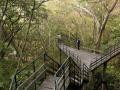
Forest resources play an important role in creating ecotourism products of Ninh Binh. In addition to serving tourism development, Ninh Binh's forest system has a great effect in preserving biodiversity, preventing erosion (upstream forests, mangrove forests), regulating the air and balancing the ecological environment.
* Cave system in Ninh Binh:
The weathering process of karst limestone has created many poetic and spectacular caves for the Ninh Binh countryside. The caves are scattered in the limestone mountain range from Nho Quan district, through Gia Vien, Hoa Lu to Tam Diep town, down to the South of Yen Mo district. That is a precious asset that nature has bestowed on Ninh Binh that many other localities do not have.
Nho Quan district has Ancient People cave in Cuc Phuong national park, Vui Xuan cave, Trang Khuyet cave, Con Moong cave (meaning animal cave).
Gia Vien district has Hoa Lu cave in Gia Hung commune, which was the initial base of Dinh Bo Linh. From here, he raised an army to suppress the rebellion of 12 warlords, unified the country, and established the independent and autonomous Dai Co Viet nation in the 10th century. Dich Long cave (meaning flute sound) in Gia Thanh commune was named by the ancients as Nam Thien De Tam Dong (the third most beautiful cave in the South, after Huong Tich and Bich Dong caves).
Hoa Lu district has the largest number of beautiful caves in the province, which has been famous since ancient times, and Ninh Binh books have recorded quite thoroughly: The ancient capital Hoa Lu area (now in Truong Yen commune) has Xuyen Thuy Dong (meaning a cave that goes through the mountain). Am Tien Cave, according to legend, was a place to raise fierce tigers to punish criminals under the reign of King Dinh. Da Ban Cave,
Bin Cave and Muoi Cave, according to legend, were places to store fish sauce and salt under the Dinh - Le dynasties, especially Lien Hoa Dong (a cave as beautiful as a lotus). Quan Cave, according to legend, when King Dinh died, his body was kept here, so the cave got its name.
Thien Ton Cave in Ninh My is the gateway that blocks the eastern road to Hoa Lu citadel. In the cave there is a temple worshiping Buddha and Tran Vu Thien Ton, so the cave is named after the god he worships.
Bich Cave, also known as Bich Dong (a beautiful cave like a stone wall) in Ninh Hai commune, was named by the ancients as: "Nam Thien De Nhi Dong" (the second most beautiful cave in the South) after Huong Tich Cave. Adjacent to Bich Cave is Tien Cave or Moc Cave; Especially Ba Hang (also known as Tam Coc). These can be considered the most beautiful caves in Ninh Binh because there is a river running through it with many stalactites that are reflected by the light from the water surface, creating magical shimmering colors.
Tam Diep town has Thung Lang cave in the Ghenh market area, an archaeological site discovered by French archaeologist - Mrs. Colani in 1930. Scientific analysis shows that primitive people lived there about 10,100 years ago. Tam Giao cave (three caves meeting halfway up the mountain) in Nam Son ward is also a very beautiful cave.
These are some typical caves among hundreds of beautiful caves of Ninh Binh that have been known to many domestic and foreign visitors.
The types of caves in Ninh Binh are quite rich and diverse, with many large and small sizes and many amazing natural scenes. The natural landscape and natural stalactites have carved many magical shapes and stories for Ninh Binh caves, and it is these factors that have made the caves here famous for their natural, poetic and spectacular beauty.
Caves and grottoes have important meanings and values for building and developing Ninh Binh tourism both in the present and the future. With the strategy of developing eco-tourism, the diverse and rich system of caves and grottoes of Ninh Binh will be a unique and valuable resource. Combined with the diverse ecosystem of fresh wild nature, it will truly attract those who love nature and love to explore new things of the natural world if we know how to invest in reasonable and scientific exploitation.
Currently, the cave system in Ninh Binh has been classified and strictly managed. Each cave is associated with each area and tourist spot that is managed and used for relatively good tourism development.
Tourists coming to Ninh Binh, especially foreign tourists, all rate the cave system of Ninh Binh as diverse and evenly distributed in the province's tourist areas. This is also convenient for management and exploitation for tourism purposes.
* Ecological lakes:
Dong Chuong Lake is located on the border between three communes of Phu Loc, Phu Long and Ky Phu, Nho Quan district. A lake of about 45 hectares. The lake water is always blue, surrounded by green pine hills, towering, undulating, overlapping as if covering the lake surface, making the blue lake water even bluer.
Coming to Dong Chuong Lake, visitors can rest or walk around the pine hills to enjoy the fresh, cool air of the pine hills. It is difficult to find a quiet place like here. With a large area of pine forests, the air here is fresh and cool, suitable for relaxing activities.
A very unique thing is that every year, if tourists visit Dong Chuong Lake from July to October (lunar calendar), they will see many storks, storks densely perched, white on the pine rows. All the pine hills are a carpet of flowers with two colors: green of trees and white of storks.
Also here, there is Ba Tua waterfall (Three waterfalls flowing down from the mountain), with a height of nearly 40 meters. During the rainy season, water from the rocky mountain flows endlessly, making Tua waterfall look as beautiful as Yaly waterfall!
Coming to Dong Chuong Lake, visitors can also climb Canh Phuong Hill to see the sky pond. The sky pond is also clear, although small, it never runs out of water. Visitors to Dong Chuong Lake will see the combination of nature and people. To green the bare hills, people had to plant more pine trees around the lake. Nature and people have created it, it is a "Da Lat" of Ninh Binh now and in the future.
Currently, Dong Chuong Lake has been planned to develop into a multi-functional ecotourism area: Weekend vacation, sports, adventure tourism. The number of tourists coming here is not much, usually spontaneous travel in groups to camp and have fun, relax on weekends. Although not much revenue from tourism has been generated, that makes planning and investing in building Dong Chuong Lake into an ecotourism spot easier because the population is concentrated here.
This is not too crowded, the landscape and environment are still relatively natural, with little human intervention. This is truly a place with great potential for ecotourism development.
Dong Thai Lake is located in Yen Mo District. With a water surface area of 350 hectares, surrounded by Tam Diep Mountain Range with majestic and charming mountain scenery, a fresh ecosystem with many potential tourism resources, cave tourism... next to Dong Thai Lake is Yen Thang Lake with a water surface area of 250 hectares and surrounding pine hills creating a harmonious landscape environment, a fresh ecosystem, promising to become a tourism destination, weekend entertainment for domestic and foreign tourists.
This area currently has not many tourists because the technical facilities have not been invested in, and tourism promotion activities have not been carried out much. However, it has been planned by the tourism industry to build eco-tourism areas with a planning area of
2,118 ha. This is an area consisting of large lakes, a river system convenient for waterway transportation, craft villages, cultural and historical villages, a system of temples, pagodas, festivals... low limestone mountains, a place with beautiful landscapes with forests covering the limestone mountains along with vegetation creating an ideal ecological area for the development of eco-tourism, resorts, windsurfing, boat racing...
In addition, Ninh Binh province has many other natural resources: Hoang Long River, Van Sang River, Ngoc My Nhan Mountain, Duc Thuy Mountain, Tam Diep Pass...
* Mineral springs:
Kenh Ga hot spring. Belongs to Kenh Ga village, Gia Thinh commune, Gia Vien district. This stream has existed for a long time, but it was not until 1940 that the French researched and confirmed that this is a very good salty mineral water containing many salts: Sodium chloride, Potassium chloride, calcium, Magnesium chloride and Bicarbonate salt with a stable temperature of 53 degrees Celsius. Kenh Ga hot spring flows from the mountain, is crystal clear, never stops, has very good healing effects, bathing many times will cure diseases such as: Chronic arthritis, neuritis, skin diseases... people come here in large numbers to get spring water to drink to cure diseases. In addition, using Kenh Ga mineral water can treat infections, cure goiter. In particular, it is also used to prepare serum for intravenous injection to help revive cardiovascular collapse due to acute blood loss. In 1986 and 1989, Kenh Ga mineral water was awarded the Silver Medal by the Vietnam Economic and Technical Exhibition.
Along with visiting and using the mineral springs, visitors can also visit Kenh Ga floating village and buy and sell local products at the floating market on Hoang Long river.
Kenh Ga hot spring is a place that attracts many tourists to visit, to bathe, and to get water for medical treatment. Currently, this area is an attractive tourist destination. Ninh Binh tourism industry has surveyed, evaluated and planned in detail to invest in building infrastructure for tourism. Hopefully, in the near future, it will be an attractive place for tourists, creating a diversity of tourism products in Ninh Binh province.
Ky Phu - Nho Quan mineral spring . A new tourist destination put into operation for tourism, located in the buffer zone of Cuc Phuong National Park. Currently, there is an enterprise investing in building a tourism, sports and medical treatment area including: a bathing area with an indoor and outdoor swimming pool system serving both winter and summer. The hot mineral water bathing system is very good for relaxation, rest and treatment along with a system of restaurants, hotels (with 15 bedrooms) and sports facilities: tennis court, multi-purpose gymnasium, volleyball court to serve tourists.
This is a tourist destination with great potential for development in the future. Coming here, tourists can visit the national park, rest and receive medical treatment, visit the Muong village in Cuc Phuong commune and enjoy local specialties.
2.1.2.2 Human resources
Ninh Binh is one of the lands filled with historical relics, architectural and cultural works of high value for exploitation and tourism development. Not only that, Ninh Binh also has many talented and immortal "heroes" such as: Dinh Tien Hoang, Duong Van Nga, Nguyen Minh Khong, Truong Han Sieu, Ninh Ton, Vu Duy Thanh, Vu Pham Khai... Ninh Binh is also home to many traditional festivals imbued with the cultural identity of the villages in the Northern Delta. Among them are Hoa Lu Ancient Capital, Dinh-Le Temple, Thai Vi Pagoda, Truong Han Sieu Temple, Noi Lam Temple, Bich Dong Pagoda and Phat Diem Stone Church. Besides, there are many other tangible and intangible cultural values associated with talented people and traditional festivals such as: Cheo singing, Xam singing, Truong Yen festival, Thai Vi Temple festival or from traditional craft villages such as embroidery, bamboo and rattan weaving, sedge mats, stone carving... Folk dishes and traditional specialties also contribute to creating the unique character of Ninh Binh.