
drug smuggling, human rights, POW/MIA issues. At the same time, from the perspective of the United States, the report assessed Vietnam in the following aspects: economic progress; overseas Vietnamese, political trends, the 9th National Congress of the Communist Party of Vietnam, riots in the Central Highlands, measures to deal with SARS, foreign and defense policies. This is an important document expressing the perspective and assessment of the United States, however, the work mainly stops at analyzing the impacts on bilateral relations policy... We use the document to clarify more from the perspective of the United States to serve the research problem.
The article “Vietnam - United States Economic Cooperation: Current Status and Future Prospects”, a bilingual document in English - Vietnamese by Bui Thanh Nam, was published in the proceedings of the Scientific Conference: Vietnam - United States Relations Towards a New Height (2012). The article is divided into 3 parts with very specific data and comparative tables, in which the author presents the practical economic relations between Vietnam and the United States, thereby drawing out the limitations in the economic relations between the two countries, and at the same time evaluating the trend of economic cooperation between Vietnam and the United States. However, the work only briefly mentions the achievements of bilateral trade and investment in a short period. The work “ Vietnam - United States Trade and Investment Relations” by Nguyen Thiet Son (2004), the book has 3 main parts: The process of Vietnam - US economic and trade relations; Vietnam - US relations on trade and investment; Prospects for Vietnam-US trade and investment relations, in which the author has synthesized and analyzed data on economic relations between the two countries since the normalization of relations to 2001. At the same time, the author initially made assessments on the prospects of economic relations in the following years. The work helps us to provide many important arguments and evidence to indicate the direction of research on the contents of the thesis, the work does not coincide with the research time of the thesis.
Reflecting the above content, we can mention: The work "An Assessment of the Economic Impact of the United States - Vietnam Bilateral Trade Agreement"
Maybe you are interested!
-
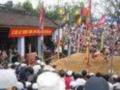
 Solutions for tourism development in Tien Lang - 10
zt2i3t4l5ee
zt2a3gstourism, tourism development
zt2a3ge
zc2o3n4t5e6n7ts
- District People's Committees and authorities of communes with tourist attractions should support, promote, and provide necessary information to people, helping them improve their knowledge about tourism. Raise tourism awareness for local people.
*
* *
Due to limited knowledge and research time, the thesis inevitably has shortcomings. Therefore, I look forward to receiving guidance from teachers, experts as well as your comments to make the thesis more complete.
Chapter III Conclusion
Through the issues presented in Chapter II, we can come to some conclusions:
Based on the strengths of available tourism resources, the types of tourism in Tien Lang that need to be promoted in the coming time are sightseeing and resort tourism, discovery tourism, weekend tourism. To improve the quality and diversify tourism products, Tien Lang district needs to combine with local cultural tourism resources, at the same time combine with surrounding areas, build rich tourism products. The strengths of Tien Lang tourism are eco-tourism and cultural tourism, so developing Tien Lang tourism must always go hand in hand with restoring and preserving types of cultural tourism resources. Some necessary measures to support and improve the efficiency of exploiting tourism resources in Tien Lang are: strengthening the construction of technical facilities and labor force serving tourism, actively promoting and advertising tourism, and expanding forms of capital mobilization for tourism development.
CONCLUDE
I Conclusion
1. Based on the results achieved within the framework of the thesis's needs, some basic conclusions can be drawn as follows:
Tien Lang is a locality with great potential for tourism development. The relatively abundant cultural tourism resources and ecological tourism resources have great appeal to tourists. Based on this potential, Tien Lang can build a unique tourism industry that is competitive enough with other localities within Hai Phong city and neighboring areas.
In recent years, the exploitation of the advantages of resources to develop tourism and build tourist routes in Tien Lang has not been commensurate with the available potential. In terms of quantity, many resource objects have not been brought into the purpose of tourism development. In terms of time, the regular service time has not been extended to attract more visitors. Infrastructure and technical facilities are still weak. The labor force is still thin and weak in terms of expertise. Tourism programs and routes have not been organized properly, the exploitation content is still monotonous, so it has not attracted many visitors. Although resources have not been mobilized much for tourism development, they are facing the risk of destruction and degradation.
2. Based on the results of investigation, analysis, synthesis, evaluation and selective absorption of research results of related topics, the thesis has proposed a number of necessary solutions to improve the efficiency of exploiting tourism resources in Tien Lang such as: promoting the restoration and conservation of tourism resources, focusing on investment and key exploitation of ecotourism resources, strengthening the construction of infrastructure and tourism workforce. Expanding forms of capital mobilization. In addition, the thesis has built a number of tourist routes of Hai Phong in which Tien Lang tourism resources play an important role.
Exploiting Tien Lang tourism resources for tourism development is currently facing many difficulties. The above measures, if applied synchronously, will likely bring new prospects for the local tourism industry, contributing to making Tien Lang tourism an important economic sector in the district's economic structure.
REFERENCES
1. Nhuan Ha, Trinh Minh Hien, Tran Phuong, Hai Phong - Historical and cultural relics, Hai Phong Publishing House, 1993
2. Hai Phong City History Council, Hai Phong Gazetteer, Hai Phong Publishing House, 1990.
3. Hai Phong City History Council, History of Tien Lang District Party Committee, Hai Phong Publishing House, 1990.
4. Hai Phong City History Council, University of Social Sciences and Humanities, VNU, Hai Phong Place Names Encyclopedia, Hai Phong Publishing House. 2001.
5. Law on Cultural Heritage and documents guiding its implementation, National Political Publishing House, Hanoi, 2003.
6. Tran Duc Thanh, Lecture on Tourism Geography, Faculty of Tourism, University of Social Sciences and Humanities, VNU, 2006
7. Hai Phong Center for Social Sciences and Humanities, Some typical cultural heritages of Hai Phong, Hai Phong Publishing House, 2001
8. Nguyen Ngoc Thao (editor-in-chief, Tourism Geography, Hai Phong Publishing House, two volumes (2001-2002)
9. Nguyen Minh Tue and group of authors, Hai Phong Tourism Geography, Ho Chi Minh City Publishing House, 1997.
10. Nguyen Thanh Son, Hai Phong Tourism Territory Organization, Associate Doctoral Thesis in Geological Geography, Hanoi, 1996.
11. Decision No. 2033/QD – UB on detailed planning of Tien Lang town, Hai Phong city until 2020.
12. Department of Culture, Information, Hai Phong Museum, Hai Phong relics
- National ranked scenic spot, Hai Phong Publishing House, 2005. 13. Tien Lang District People's Committee, Economic Development Planning -
Culture - Society of Tien Lang district to 2010.
14.Website www.HaiPhong.gov.vn
APPENDIX 1
List of national ranked monuments
STT
Name of the monument
Number, year of decisiondetermine
Location
1
Gam Temple
938 VH/QĐ04/08/1992
Cam Khe Village- Toan Thang commune
2
Doc Hau Temple
9381 VH/QĐ04/08/1992
Doc Hau Village –Toan Thang commune
3
Cuu Doi Communal House
3207 VH/QĐDecember 30, 1991
Zone II of townTien Lang
4
Ha Dai Temple
938 VH/QĐ04/08/1992
Ha Dai Village –Tien Thanh commune
APPENDIX II
STT
Name of the monument
Number, year of decision
Location
1
Phu Ke Pagoda Temple
178/QD-UBJanuary 28, 2005
Zone 1 - townTien Lang
2
Trung Lang Temple
178/QD-UBJanuary 28, 2005
Zone 4 – townTien Lang
3
Bao Khanh Pagoda
1900/QD-UBAugust 24, 2006
Nam Tu Village -Kien Thiet commune
4
Bach Da Pagoda
1792/QD-UB11/11/2002
Hung Thang Commune
5
Ngoc Dong Temple
177/QD-UBNovember 27, 2005
Tien Thanh Commune
6
Tomb of Minister TSNhu Van Lan
2848/QD-UBSeptember 19, 2003
Nam Tu Village -Kien Thiet commune
7
Canh Son Stone Temple
2160/QD-UBSeptember 19, 2003
Van Doi Commune –Doan Lap
8
Meiji Temple
2259/QD-UBSeptember 19, 2002
Toan Thang Commune
9
Tien Doi Noi Temple
477/QD-UBSeptember 19, 2005
Doan Lap Commune
10
Tu Doi Temple
177/QD-UBJanuary 28, 2005
Doan Lap Commune
11
Duyen Lao Temple
177/QD-UBJanuary 28, 2005
Tien Minh Commune
12
Dinh Xuan Uc Pagoda
177/QD-UBJanuary 28, 2005
Bac Hung Commune
13
Chu Khe Pagoda
177/QD-UBJanuary 28, 2005
Hung Thang Commune
14
Dong Dinh
2848/QD-UBNovember 21, 2002
Vinh Quang Commune
15
President's Memorial HouseTon Duc Thang
177/QD-UBJanuary 28, 2005
NT Quy Cao
Ha Dai Temple
Ben Vua Temple
Tien Lang hot spring
div.maincontent .p { color: black; font-family:"Times New Roman", serif; font-style: normal; font-weight: normal; text-decoration: none; font-size: 14pt; margin:0pt; } div.maincontent p { color: black; font-family:"Times New Roman", serif; font-style: normal; font-weight: normal; text-decoration: none; font-size: 14pt; margin:0pt; } div.maincontent .s1 { color: black; font-family:"Times New Roman", serif; font-style: normal; font-weight: normal; font-size: 16pt; } div.maincontent .s2 { color: black; font-family:"Times New Roman", serif; font-style: italic; font-weight: bold; text-decoration: none; font-size: 14pt; } div.maincontent .s3 { color: black; font-family:"Times New Roman", serif; font-style: italic; font-weight: normal; text-decoration: none; font-size: 14pt; } div.maincontent .s4 { color: black; font-family:"Times New Roman", serif; font-style: normal; font-weight: normal; font-size: 14pt; } div.maincontent .s5 { color: black; font-family:"Times New Roman", serif; font-style: normal; font-weight: bold; font-size: 14pt; } div.maincontent .s6 { color: black; font-family:"Times New Roman", serif; font-style: normal; font-weight: normal; text-decoration: none; font-size: 14pt; } div.maincontent .s7 { color: black; font-family:"Times New Roman", serif; font-style: normal; font-weight: bold; text-decoration: none; font-size: 14pt; } div.maincontent .s8 { color: black; font-family:"Times New Roman", serif; font-style: normal; font-weight: normal; text-decoration: none; font-size: 9pt; vertical-align: 6pt; } div.maincontent .s9 { color: black; font-family:"Times New Roman", serif; font-style: normal; font-weight: bold; text-decoration: none; font-size: 12pt; } div.maincontent .s11 { color: black; font-family:"Times New Roman", serif; font-style: normal; font-weight: normal; tex
Solutions for tourism development in Tien Lang - 10
zt2i3t4l5ee
zt2a3gstourism, tourism development
zt2a3ge
zc2o3n4t5e6n7ts
- District People's Committees and authorities of communes with tourist attractions should support, promote, and provide necessary information to people, helping them improve their knowledge about tourism. Raise tourism awareness for local people.
*
* *
Due to limited knowledge and research time, the thesis inevitably has shortcomings. Therefore, I look forward to receiving guidance from teachers, experts as well as your comments to make the thesis more complete.
Chapter III Conclusion
Through the issues presented in Chapter II, we can come to some conclusions:
Based on the strengths of available tourism resources, the types of tourism in Tien Lang that need to be promoted in the coming time are sightseeing and resort tourism, discovery tourism, weekend tourism. To improve the quality and diversify tourism products, Tien Lang district needs to combine with local cultural tourism resources, at the same time combine with surrounding areas, build rich tourism products. The strengths of Tien Lang tourism are eco-tourism and cultural tourism, so developing Tien Lang tourism must always go hand in hand with restoring and preserving types of cultural tourism resources. Some necessary measures to support and improve the efficiency of exploiting tourism resources in Tien Lang are: strengthening the construction of technical facilities and labor force serving tourism, actively promoting and advertising tourism, and expanding forms of capital mobilization for tourism development.
CONCLUDE
I Conclusion
1. Based on the results achieved within the framework of the thesis's needs, some basic conclusions can be drawn as follows:
Tien Lang is a locality with great potential for tourism development. The relatively abundant cultural tourism resources and ecological tourism resources have great appeal to tourists. Based on this potential, Tien Lang can build a unique tourism industry that is competitive enough with other localities within Hai Phong city and neighboring areas.
In recent years, the exploitation of the advantages of resources to develop tourism and build tourist routes in Tien Lang has not been commensurate with the available potential. In terms of quantity, many resource objects have not been brought into the purpose of tourism development. In terms of time, the regular service time has not been extended to attract more visitors. Infrastructure and technical facilities are still weak. The labor force is still thin and weak in terms of expertise. Tourism programs and routes have not been organized properly, the exploitation content is still monotonous, so it has not attracted many visitors. Although resources have not been mobilized much for tourism development, they are facing the risk of destruction and degradation.
2. Based on the results of investigation, analysis, synthesis, evaluation and selective absorption of research results of related topics, the thesis has proposed a number of necessary solutions to improve the efficiency of exploiting tourism resources in Tien Lang such as: promoting the restoration and conservation of tourism resources, focusing on investment and key exploitation of ecotourism resources, strengthening the construction of infrastructure and tourism workforce. Expanding forms of capital mobilization. In addition, the thesis has built a number of tourist routes of Hai Phong in which Tien Lang tourism resources play an important role.
Exploiting Tien Lang tourism resources for tourism development is currently facing many difficulties. The above measures, if applied synchronously, will likely bring new prospects for the local tourism industry, contributing to making Tien Lang tourism an important economic sector in the district's economic structure.
REFERENCES
1. Nhuan Ha, Trinh Minh Hien, Tran Phuong, Hai Phong - Historical and cultural relics, Hai Phong Publishing House, 1993
2. Hai Phong City History Council, Hai Phong Gazetteer, Hai Phong Publishing House, 1990.
3. Hai Phong City History Council, History of Tien Lang District Party Committee, Hai Phong Publishing House, 1990.
4. Hai Phong City History Council, University of Social Sciences and Humanities, VNU, Hai Phong Place Names Encyclopedia, Hai Phong Publishing House. 2001.
5. Law on Cultural Heritage and documents guiding its implementation, National Political Publishing House, Hanoi, 2003.
6. Tran Duc Thanh, Lecture on Tourism Geography, Faculty of Tourism, University of Social Sciences and Humanities, VNU, 2006
7. Hai Phong Center for Social Sciences and Humanities, Some typical cultural heritages of Hai Phong, Hai Phong Publishing House, 2001
8. Nguyen Ngoc Thao (editor-in-chief, Tourism Geography, Hai Phong Publishing House, two volumes (2001-2002)
9. Nguyen Minh Tue and group of authors, Hai Phong Tourism Geography, Ho Chi Minh City Publishing House, 1997.
10. Nguyen Thanh Son, Hai Phong Tourism Territory Organization, Associate Doctoral Thesis in Geological Geography, Hanoi, 1996.
11. Decision No. 2033/QD – UB on detailed planning of Tien Lang town, Hai Phong city until 2020.
12. Department of Culture, Information, Hai Phong Museum, Hai Phong relics
- National ranked scenic spot, Hai Phong Publishing House, 2005. 13. Tien Lang District People's Committee, Economic Development Planning -
Culture - Society of Tien Lang district to 2010.
14.Website www.HaiPhong.gov.vn
APPENDIX 1
List of national ranked monuments
STT
Name of the monument
Number, year of decisiondetermine
Location
1
Gam Temple
938 VH/QĐ04/08/1992
Cam Khe Village- Toan Thang commune
2
Doc Hau Temple
9381 VH/QĐ04/08/1992
Doc Hau Village –Toan Thang commune
3
Cuu Doi Communal House
3207 VH/QĐDecember 30, 1991
Zone II of townTien Lang
4
Ha Dai Temple
938 VH/QĐ04/08/1992
Ha Dai Village –Tien Thanh commune
APPENDIX II
STT
Name of the monument
Number, year of decision
Location
1
Phu Ke Pagoda Temple
178/QD-UBJanuary 28, 2005
Zone 1 - townTien Lang
2
Trung Lang Temple
178/QD-UBJanuary 28, 2005
Zone 4 – townTien Lang
3
Bao Khanh Pagoda
1900/QD-UBAugust 24, 2006
Nam Tu Village -Kien Thiet commune
4
Bach Da Pagoda
1792/QD-UB11/11/2002
Hung Thang Commune
5
Ngoc Dong Temple
177/QD-UBNovember 27, 2005
Tien Thanh Commune
6
Tomb of Minister TSNhu Van Lan
2848/QD-UBSeptember 19, 2003
Nam Tu Village -Kien Thiet commune
7
Canh Son Stone Temple
2160/QD-UBSeptember 19, 2003
Van Doi Commune –Doan Lap
8
Meiji Temple
2259/QD-UBSeptember 19, 2002
Toan Thang Commune
9
Tien Doi Noi Temple
477/QD-UBSeptember 19, 2005
Doan Lap Commune
10
Tu Doi Temple
177/QD-UBJanuary 28, 2005
Doan Lap Commune
11
Duyen Lao Temple
177/QD-UBJanuary 28, 2005
Tien Minh Commune
12
Dinh Xuan Uc Pagoda
177/QD-UBJanuary 28, 2005
Bac Hung Commune
13
Chu Khe Pagoda
177/QD-UBJanuary 28, 2005
Hung Thang Commune
14
Dong Dinh
2848/QD-UBNovember 21, 2002
Vinh Quang Commune
15
President's Memorial HouseTon Duc Thang
177/QD-UBJanuary 28, 2005
NT Quy Cao
Ha Dai Temple
Ben Vua Temple
Tien Lang hot spring
div.maincontent .p { color: black; font-family:"Times New Roman", serif; font-style: normal; font-weight: normal; text-decoration: none; font-size: 14pt; margin:0pt; } div.maincontent p { color: black; font-family:"Times New Roman", serif; font-style: normal; font-weight: normal; text-decoration: none; font-size: 14pt; margin:0pt; } div.maincontent .s1 { color: black; font-family:"Times New Roman", serif; font-style: normal; font-weight: normal; font-size: 16pt; } div.maincontent .s2 { color: black; font-family:"Times New Roman", serif; font-style: italic; font-weight: bold; text-decoration: none; font-size: 14pt; } div.maincontent .s3 { color: black; font-family:"Times New Roman", serif; font-style: italic; font-weight: normal; text-decoration: none; font-size: 14pt; } div.maincontent .s4 { color: black; font-family:"Times New Roman", serif; font-style: normal; font-weight: normal; font-size: 14pt; } div.maincontent .s5 { color: black; font-family:"Times New Roman", serif; font-style: normal; font-weight: bold; font-size: 14pt; } div.maincontent .s6 { color: black; font-family:"Times New Roman", serif; font-style: normal; font-weight: normal; text-decoration: none; font-size: 14pt; } div.maincontent .s7 { color: black; font-family:"Times New Roman", serif; font-style: normal; font-weight: bold; text-decoration: none; font-size: 14pt; } div.maincontent .s8 { color: black; font-family:"Times New Roman", serif; font-style: normal; font-weight: normal; text-decoration: none; font-size: 9pt; vertical-align: 6pt; } div.maincontent .s9 { color: black; font-family:"Times New Roman", serif; font-style: normal; font-weight: bold; text-decoration: none; font-size: 12pt; } div.maincontent .s11 { color: black; font-family:"Times New Roman", serif; font-style: normal; font-weight: normal; tex -
 The Research Results of the Thesis Are Consistent with the Stated Scientific Hypothesis, and the Tasks of the Topic Have Been Solved.
 -
 Review of Research Status Related to the Topic
 -
 Vietnam - Japan economic and trade relations in the international context. Current situation and solutions - 1
 -
 Prospects and solutions to promote economic and trade relations between Vietnam and China - 2
by Star - Vietnam translated and published by the National Political Publishing House; " 21 years of US aid in Vietnam " by Dang Phong (1991); " Prospects of US relations"
- Vietnam” by Douglas Peter Peterson – US Ambassador to Vietnam…
The articles on Vietnam-US economic relations in the Americas Today Magazine, although only focusing on specific areas and at specific times, are very rich and diverse. In the field of trade relations, we can mention: " Vietnam-US trade relations after 5 years looking back " by Pham Hong Tien (2000); "Issues on the US market - Vietnam's textile and garment exports need attention" by Vu Hoang Chuong (2005); " Changes in the structure of Vietnamese goods to the US " by Nguyen Van Binh (2006); " Exporting Vietnamese goods to the US market: situation and solutions" by Bui Ngoc Son (2007); " Issues that Vietnamese enterprises need to pay attention to when being sued by the US for dumping" by Doan Tat Thang (2007); " Vietnam-US economic relations in the new context " by Nguyen Ngoc Manh (2009); “ Experience of exporting textiles and garments to the US market of some Asian countries ” by Nguyen Minh Quang (2010).etc…
In the field of investment relations, we can mention: " Investment of US transnational corporations and the issue with Vietnam " by Nguyen Xuan Trung (2006); " The movement of international FDI capital flows and some proposals to promote FDI attraction in Vietnam " by To Hien Tha (2009); " Foreign indirect investment in Vietnam in 2010 and prospects " by Nguyen Minh Tam (2011). etc.
Some comments
Based on accessing original documents and works, the research article is divided into 3 groups of topics, and the following comments can be made:
Firstly, many works and articles only mention one field, one aspect of the US-Vietnam economic relationship and often only in a short period, not coinciding with the research time frame of the thesis (2000 - 2012). On the other hand, most of the research works on bilateral relations in the country are mainly on the economic aspect and viewed and evaluated from the perspective of the Vietnamese subject.
Second , there are many scientific contents of the research problem that need to be supplemented and completed, such as: the concept of the establishment process and the birth of the US - Vietnam economic relationship; The content of the economic and trade policies of the two countries for each other and its role in the practice of bilateral economic relations; The achievements of trade and investment relations during the period when the BTA was in effect until 2012; The impacts and challenges for the relationship in the coming years...
Third, due to different perspectives, there are still different, even contradictory evaluations between domestic and foreign researchers, requiring a more scientific and convincing view of the problem by the author of the thesis, for example: The impact of the China factor and the US-China interaction on the US-Vietnam economic relationship; The political difference between the US and Vietnam and its impact and influence on the bilateral economic relationship; Evaluation of the difference in US aid in Vietnam before and after 1975, etc.
Thus, there has not been a systematic and comprehensive study of the US-Vietnam economic relationship from 2000 to 2012 from a historical perspective , from the foundation; establishment; relationship process to achievements, limitations; impacts, and prospects of the relationship.
From the above research results and practices, we see that the process of US-Vietnam economic relations (2000-2012) from a historical perspective is a new issue, with profound scientific and practical value, which needs to be systematically and comprehensively studied. As a unified historical process, in which the United States is the subject of the process, placed by the author at the starting point of the problem, it is necessary to study the US-Vietnam economic relations from the establishment process, legal basis and content of the relationship. From there, there is enough necessary data to evaluate the achievements, limitations, and make scientific forecasts about the movement of US-Vietnam economic relations in the coming years. This is also the goal and research task of the thesis and has never been systematically studied by any work.
With the documents and research works collected and initially processed from many different sources, we have provided us with a lot of important information, which is the foundation for the research of the thesis topic. Therefore, we appreciate all these documents, considering them as useful reference materials for the author throughout the research process.
3. Research objectives and tasks
3.1. Research objectives
The objective of the topic is to systematically reflect the process of US-Vietnam economic relations (2000-2012), clarify the history of the movement and development of the relationship. At the same time, present and analyze the contents of the relationship, thereby assessing the impact and making initial forecasts on the movement trend of US-Vietnam economic relations in the coming time.
3.2. Research tasks
The US - Vietnam economic relations take place between two subjects with very large differences. To achieve the stated research objectives, the author of the thesis needs to focus on solving the following tasks:
- Demonstrate the deep origin of the economic relationship between the United States and Vietnam through an overview of the political and economic foundations before 1975. Analyze the direct origin of the economic relationship in the period 1975 - 2000.
- Analyze the establishment of US-Vietnam economic relations (2000-2012) through the legal basis, US trade policy, foreign economic policy of the Communist Party and the State of Vietnam and the content of trade policy between the two countries.
- Generalize and systematize the progress of US-Vietnam economic relations in two important areas: trade and investment.
- Through specific data on the relationship fields (analysis, synthesis, comparison), make independent comments and assessments on the development process and prospects of the relationship.
4. Research scope and sources of materials
4.1. Scope of research
4.1.1. In terms of space , the research topic is the relationship between two subjects in the Asia-Pacific region, the United States and Vietnam, on the economic level.
4.1.2. In terms of time , the topic focuses on studying the economic relations between the United States and Vietnam in the period of 2000 - 2012. The author takes the year 2000 as the starting point of the research period, because this is the milestone of establishing official economic relations between the two countries with the signing of the BTA Agreement. The year 2012 was chosen as the research time limit because this is the year that ended the term of the President of the United States - B.Obama, at the same time in the economic field, with a time frame closer to the present, it has more practical significance and profound updating. At the same time, the period 2000 - 2012 is the necessary time to study the economic relations between the two countries, ensuring time for testing the policies and movements of economic sectors between the United States and Vietnam. However, to complete the research objectives and ensure the logic of the topic of economic relations history, the period before 2000 was also surveyed by the author of the thesis to a certain extent.
4.1.3. In terms of content, the US-Vietnam economic relationship (2000-2012) took place in many areas such as: trade; investment; development cooperation in agriculture, transportation; scientific and technical cooperation exchanges... However, because trade and investment are the two most important areas, the "backbone" of economic relations, and due to the limitations of the content and form of a historical doctoral thesis, the topic only stops at analyzing, synthesizing, and evaluating the progress of the US-Vietnam economic relationship (2000-2012) in two important areas: trade and investment. On the other hand, the topic devotes research time to placing the progress of this relationship in the dialectical relationship and impact on political-security and social factors between the two countries, as well as relating and comparing it with other related relationships.
4.2. Sources of information
To complete the research topic, the author of the thesis has collected and exploited the following main sources of documents:
- Documents on US foreign policy, works of classics Marx - Lenin and Ho Chi Minh, documents of the Communist Party of Vietnam.
- Joint statements, speeches, declarations reflecting the leadership of the United States and Vietnam, special reference documents of the Vietnam News Agency, agreements, signed documents on cooperation in the fields of political security, diplomacy, economy and culture between the two countries. The latest original figures from the Customs Department, General Statistics Office, Department of Commerce of the United States and Vietnam.
- Monographs on world history, history of international relations, foreign economics, international economic relations, research articles published in specialized journals, conference proceedings, scientific seminars at all levels directly related to the topic.
- Some PhD theses and Master's theses are related to the topic to some extent but not duplicated.
- Official websites of the US Government, the Vietnamese Government and relevant Ministries and Departments of the two countries such as: Ministry of Foreign Affairs, Ministry of Industry and Trade, Commerce, General Department of Customs, General Statistics Office...
5. Methodology and research methods
5.1. Methodology
Thoroughly grasp the Marxist historical methodology, Ho Chi Minh Thought and the viewpoints of the Communist Party of Vietnam in the study of world history and international relations.
5.2. Research methods
As the topic of research on international economic relations from a historical perspective, the main methods in the thesis are historical and logical methods and their combination.
Because the topic is related to the economic field, to a certain extent, the thesis uses interdisciplinary scientific methods such as analysis, synthesis, comparison, statistics, contrast, scientific forecasting...
6. Contribution of the topic
6.1. On the scientific aspect
6.1.1. Since 1995, especially after the signing of the BTA, the history of US-Vietnam relations has turned a new page, economic relations have changed in quality compared to previous periods. In order to find the cause of those changes, there may be many approaches, but it is impossible to separate the principles of Marxism-Leninism and Marxist historical methodology, according to which "politics is a concentrated expression of economics" and "politics is condensed economics". This affirms the secondary nature of politics compared to the primary nature of economics. Therefore, delving into the study of bilateral economic relations from a historical perspective to clarify the development of history is a new contribution, explaining in the most convincing way the qualitative change of this relationship throughout the nearly 200-year history of diplomatic relations between the two countries.
1.2. Based on the inheritance and systematization of research works on specific areas of economic relations in each period (mainly in the aspect of Economics ), the research results of the thesis will contribute to systematically reproducing from a historical perspective the picture of the process of US-Vietnam economic relations in the period 2000-2012. Raising the issue of researching bilateral economic relations in this period and comparing it with the overall relations in previous periods, the thesis has created a new point, making a positive contribution to increasing the historical nature of research works on international economic relations in general, and US-Vietnam economic relations in particular.
1.3. From the bilateral economic cooperation institutions and the results achieved in the practical relationship, the thesis evaluates the impacts of BTA and Vietnam's accession to the WTO as a strong driving force creating a new development stage, with qualitative changes in bilateral trade and investment relations in the 2000s.
– 2006 and 2007 – 2012.
1.4. Based on the system of factors affecting bilateral economic relations and the evolution of this process, the thesis has independently generalized the characteristics and properties of US - Vietnam economic relations.
1.5. From the results achieved, the thesis initially makes independent comments and assessments on the achievements and limitations of both sides, the problems and solutions, and at the same time evaluates the prospects and forecasts the trend of the relationship in the coming years.
2. In terms of practice
2.1. If the thesis is successfully defended, it will contribute to helping Vietnamese economic policy makers concretize and implement the foreign economic policies and guidelines of the Party and State of Vietnam in economic and trade relations with the United States.
2.2. Through this project, businesses that are cooperating with the US can refer to it to have appropriate production and business strategies to approach the US market.
2.3. The thesis can be used as reference material for studying, teaching and research at universities, colleges, institutes, research centers and relevant economic organizations.
7. Structure of the thesis
In addition to the Introduction, Conclusion, References and Appendix, the content of the thesis is divided into 3 chapters:
Chapter 1. Factors affecting the progress of US - Vietnam economic relations in the period 2000 - 2012
Chapter 2. New developments in US-Vietnam economic relations in the period 2000 - 2012
Chapter 3. Some comments and assessments on the progress of US - Vietnam economic relations in the period 2000 - 2012