
5. Salivation
0 = Normal.
1 = Mild but marked hypersalivation, with possible nocturnal drooling. 2 = Moderate hypersalivation, with possible minimal drooling.
3 = Marked increase in salivation with some drooling.
Maybe you are interested!
-
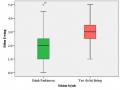
 Prevalence of Autonomic Dysfunction in Parkinson's Disease
 -
 Techniques for Performing Autonomic Nerve Function Tests
4 = Obvious drooling, requires tissue or handkerchief.
6. Swallow
0 = normal.
1 = Rarely chokes on swallowing. 2 = Occasionally chokes on swallowing. 3 = Requires soft foods.
4 = Requires nasogastric tube feeding or gastrostomy.
7. Handwritten
0 = Normal.
1 = Slightly slow or slightly small.
2 = Moderately slow or small print, all print still legible. 3 = Severely affected, not all print still legible.
4 = Most of the writing is illegible.
8. Cutting food and using kitchen utensils
0 = Normal.
1 = A bit slow and clumsy, but still no help needed.
2 = Can still cut most foods, although clumsy and slow, needs some help.
3 = Food must be cut by others, but can still eat slowly. 4 = Needs to be fed by others.
9. Dress
0 = Normal.
1 = Somewhat slow but no assistance needed. 2 = Occasionally needs assistance with buttons, sleeves.
3 = Needs a lot of help, but can still do some things on her own. 4 = Cannot do much on her own.
10. Cleaning
0 = Normal.
1 = A little slow but no help needed.
2 = Needs assistance with bathing, or is very slow with personal hygiene. 3 = Needs assistance with washing hands, brushing teeth, combing hair, going to bathroom.
4 = Placement of catheter or other mechanical aid.
11. Turn in bed and adjust your pajamas
0 = Normal.
1 = A bit slow and clumsy, but still no help needed.
2 = Can turn or adjust bed sheets by himself, but with difficulty.
3 = Can initiate movement, but cannot rotate or adjust sheets alone. 4 = Cannot do so independently.
12. Falls (unrelated to freezing)
0 = No fall.
1 = Rare falls.
2 = Occasional falls, less than once a day. 3 = Falls an average of once a day.
4 = Falls more than once a day.
13. Freezing (stiffness) while walking
0 = No.
1 = Rarely freezes while walking, may have hesitation when starting 2 = Occasionally freezes while walking.
3 = Frequent freezing. Occasional falls due to freezing. 4 = Frequent falls due to freezing.
14. Sensory complaints associated with Parkinson's disease
0 = None.
1 = Occasional numbness, tingling (itching), or mild pain.
2 = Often has numbness, tingling (itching), or pain; but does not cause distress. 3 = Often has pain.
4 = Excruciating pain.
III. MOTOR EXAMINATION
15. Speak
0 = Normal.
1 = Mild loss of loudness, articulation, and emphasis (no expression) 2 = Monotonous, slurred but understandable, moderate reduction. 3 = Severe reduction, difficult to understand (unusual breaks in sentences)
4 = Unintelligible.
16. Facial expressions
0 = Normal
1 = Mild reduction in facial expression, “stone face” may be normal. 2 = Mild abnormality, but marked reduction in facial expression.
3 = Moderate facial expression, lips occasionally parted.
4 = Complete or severe loss of facial expression with “masked” or frozen appearance; lips parted ≥ ¼ inch.
17. Tremor at rest
Upper limb
0 = None
1 = Yes but mild and rare.
2 = Mild amplitude and persistent, or moderate amplitude but present only briefly (visible, only in the distal limb)
3 = Moderate in amplitude and present most of the time (affecting the fingers) 4 = Severe in amplitude and present most of the time (involving the proximal limb)
Lower limbs
0 = Normal
1 = Mild and occasional (fingering)
2 = Mild amplitude and constant or moderate amplitude but intermittent (both feet) 3 = Moderate amplitude and almost constant
4 = Severe amplitude and almost continuous duration (both legs as if dancing, affecting the base of the limb)
Lips
0 = None
1 = Mild and occasional
2 = Mild and persistent or moderate but occasional (visible, not affecting the entire orbicularis oris muscle)
3 = Moderate and almost constant (affecting the entire orbicularis oris muscle) 4 = Severe and almost constant (outside the orbicularis oris muscle)
18. Tremor of the hand according to posture or during activity
0 = No
1 = Mild, present with activity.
2 = Moderate amplitude, present during activity.
3 = Moderate amplitude with holding position and during activity. 4 = High amplitude, affecting feeding.
19. Muscle stiffness
(Assess passive movement of major joints with patient in relaxed sitting position. Omit if patient is in wheelchair.)
0 = No
1 = Very mild or noticeable only with mirror or other movements. 2 = Mild to moderate.
3 = Mild, but full range of motion is easily achieved. 4 = Severe, full range of motion is difficult to achieve.
20. Finger lock
(Patient locks thumb with finger 2 quickly and successfully) 0 = Normal
1 = Mild slowing and/or reduction in amplitude (10-15 beats/5 seconds)
2 = Moderately impaired. Definite and early fatigability. May have occasional arrests in movement.
3 = Severely impaired. Frequent hesitation in initiating movements or arrest in movement (fingers are jumbled, difficult to do but able to do if attempted)
4 = Poor exercise performance.
21. Hand movements
(Patient opens and closes hand quickly and successfully) 0 = Normal.
1 = Mild slowing and/or reduction in amplitude.
2 = Moderately impaired. Definite and easy fatigability. May have occasional arrests in movement (as the patient ages, the range of palmar extension decreases)
3 = Severely impaired. Frequent hesitation in initiating movement or arrest during movement (Amplitude not fully open)
4 = Poor exercise performance.
22. Change hand movements quickly
(Pronation - supination of the hand with the largest possible amplitude on both hands at the same time) 0 = Normal.
1 = Mild slowing and/or reduction in amplitude.
2 = Moderately impaired. Definite and early fatigability. May have occasional arrests in movement.
3 = Severely impaired. Frequent hesitation in initiating movements or arrest in movement. (incomplete range of pronation)
4 = Poor exercise performance. (cannot perform up to 10 reps)
23. Quick feet
(Patient sits in chair, legs perpendicular, feet touching the ground. Tap heel lightly on ground and lift foot - leg up quickly. Amplitude should be at least 3 inches)
0 = Normal.
1 = Mild slowing and/or reduction in amplitude.
2 = Moderately impaired. Definite and early fatigability. May have occasional arrests in movement (weak continuity, one at a time)
3 = Severely impaired. Frequent hesitation in initiating movement or arrest in movement (leg cannot be raised)
4 = Poor exercise performance. (Lifting and lowering legs is very difficult.)
24. Stand up from a chair
(Patient attempts to stand from a chair, with arms crossed over chest) 0 = Normal
1 = Slow; may require more than 1 attempt 2 = Stands with hands on the ground, leaning on chair.
3 = Tends to fall backwards, may try several times, but can stand up without help (even with hands on the ground, still stands up slowly to regain balance)
4 = Unable to stand without help.
25. Posture
(Look at patient from front and side, feet shoulder-width apart) 0 = Normal upright standing.
1 = Not completely straight, slightly bent; may be normal in elderly.
2 = Moderate stooping, considered abnormal; may lean slightly to one side (looking straight ahead) 3 = Severe stooping, may lean moderately to one side.
4 = Severe flexion with extreme postural disturbance (patient has difficulty turning sideways)
26. Gait
0 = Normal.
1 = Walk slowly, possibly dragging short steps, but not hastily or hurriedly.
2 = Difficulty walking, needs little or no assistance, may have haste, short steps, or stumbling. 3 = Severe gait disturbance, needs assistance (cane, walker)
4 = Unable to walk even with help.
27. Postural stability
(Response abruptly, pulling the shoulders back while the patient is standing upright, eyes open, feet slightly apart. The patient is prepared.)
0 = Normal.
1 = Tendency to walk backwards, correctable without assistance. 2 = Loss of postural response; falls if not caught by examiner.
3 = Very unstable, tendency to lose balance spontaneously (patient has difficulty maintaining balance when standing, without need for push)
4 = Unable to stand without assistance.
28. Slow movement, reduced movement
(Combined slowness, hesitation, reduced arm swing, reduced amplitude, and general poor movement.) Observe the patient walking back and forth across the room, pulling a chair from a corner to the center, sitting up, and standing up.
0 = Normal
1 = Mild slowness, performing movements with a deliberate character; may have reduced amplitude (slow, gradual movements)
2 = Mild slowness, and poor movement considered abnormal, variable, some reduction in amplitude (patient has limited movement when moving a chair)
3 = Moderately slow, small and poor range of motion (difficulty getting up and down) 4 = Very slow, small and poor range of motion (mainly wheelchair bound)
IV. TREATMENT COMPLICATIONS (In the past week)
A. Turbulence
29. Prolonged: (Information based on medical history.) 0 = No
1 = 1-25% day
2 = 26-50% day.
3 = 51-75% day.
4 = 76-100% day.
30. Disability: What is the dyskinesia like? (Medical history; may be supplemented by examination)
0 = Not disabled.
1 = Mild disability.
2 = Moderate disability.
3 = Severely disabled. 4 = Totally disabled.
31. Painful dyskinesia: How painful is the dyskinesia? 0 = Painless dyskinesia.
1 = Mild pain.
2 = Average.
3 = Severe. 4 = Very severe.
32. Early morning muscle tone disturbances (Information from medical history)
0 = No
1 = Yes
B. Oscillation of motion
33. Is the “off” phase predictable? 0 = No
1 = Yes
34. Unknown “off” phase? 0 = No
1 = Yes
35. Does the “off” phase appear suddenly, within a few seconds? 0 = No
1 = Yes
36. What is the average rate of walking in “off” patients? 0 = No
1 = 1-25% day.
2 = 26-50% day.
3 = 51-75% day.
4 = 76-100% day.
C. OTHER COMPLICATIONS
40. Does the patient have nausea, loss of appetite, or vomiting? 0 = No
1 = Yes
41. Any sleep disturbances such as insomnia, restless sleep? 0 = No
1 = Yes
42. Does the patient have symptoms of postural hypotension? 0 = No
1 = Yes
UNIFIED MULTIPLE SYSTEM ATROPHY SCALE
(UNIFIED MULTIPLE SYSTEM ATROPHY RATING SCALE)
PART I. HISTORY (within the last 2 weeks)
1. Words
0 = Normal.
1 = Mild effect. Not difficult to understand.
2 = Moderate impact. Occasionally (less than half the time) asked to repeat words 3 = Severe impact. Frequently (more than half the time) asked to repeat words
4 = Almost incomprehensible
2. Swallow
0 = Normal.
1 = Mild impact. Choking less than once a week
2 = Moderate impact. Occasionally chokes on food with gagging more than once a week. 3 = Marked impact. Frequently chokes on food
4 = Requires nasogastric tube feeding or gastrostomy.
3. Handwritten
0 = Normal.
1 = Mild effect, all letters are still legible
2 = Moderate impact, up to half of the letters are illegible 3 = Marked impact, most of the letters are illegible
4 = Cannot write
4. Cutting food and using kitchen utensils
0 = Normal.
1 = Somewhat slow and/or clumsy, but still no help needed.
2 = Can still cut most foods, although clumsy and slow, needs some help.
3 = Food must be cut by others, but can still eat slowly. 4 = Needs to be fed by others.
5. Wear a shirt
0 = Normal.
1 = Somewhat slow and/or clumsy, but still does not need help 2 = Occasionally needs help with buttons, sleeves.
3 = Needs a lot of help, but can still do some things on his own. 4 = Needs complete help
6. Cleaning
0 = Normal.
1 = Somewhat slow and/or clumsy, but no help needed.