
+ Emotional expression complexes can be observed, especially those reflected on the face. [1]
Daniel Goleman understands emotions as both feelings and thoughts, as particular psychological and physiological states, and as the scale of action tendencies they cause. [4]
Through some of the above concepts, we choose the concept of emotion for our research as follows:
Emotions are vibrations that express people's attitudes towards things and phenomena related to the satisfaction or dissatisfaction of their needs.
Maybe you are interested!
-

 Emotions of a first-time mother - 1
 -
 The worship of Mother Goddess Lieu Hanh in Phu Giay through Han Nom documents - 24
 -
 Current Status of Mother-to-Child HBV Transmission in Pregnant Women with Chronic HBV Visiting and Managing Pregnancy at Hai Phong Obstetrics and Gynecology Hospital in 2017-
 -
 Space/Time Art – A Picture of the World Through the Eyes of Women
 -
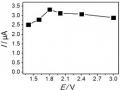 Effects of Voltage (A); Kcl Concentration (B); Electrolysis Time (C); and Stirring Time (D) on Hg Signal (Ii)
Emotion is a complex psychological phenomenon, manifested in three aspects:
+ Feeling or awareness of emotions.

+ Processes occurring in the nervous system, endocrine system, respiratory system and other systems of the body.
+ Emotional expression complexes can be observed, especially those reflected on the face.
In this topic, we only explore mothers' emotions through their subjective perceptions of their emotions in some child-rearing and care situations.
2.1.2. Physiological basis of emotions
The neurophysiological basis of emotions is the activity of the cortical and subcortical parts of the brain. The oldest part of the brain is the brainstem, starting from the top vertebrae and then reaching the subcortex. The brainstem is very simple at first, and gradually the brainstem develops, and with it, emotions become more and more complex. In the brainstem there is a part called the “amygdala” which is the seat of emotional memory and a part called the “hippocampus” which is the seat of specific memories about
context of raw events. For example, if a person has experienced a traffic accident, in a specific situation, the hippocampus can help that person remember where the accident happened, and the amygdala can help him reappear feelings of sadness and pity for the unfortunate person.
When a new cell structure develops around the brain stem called the limbic system, three components are involved in emotional control: the hippocampus, the amygdala, and the limbic system.
As the layers of the cerebral cortex increase rapidly, the connections between neurons also increase, which means that the level of emotional life is increasingly developed and more complex. One of the manifestations of this strong development is the mother-child bond, which is currently being further studied by psychologists.
In order for the human brain to develop extremely quickly and strongly, the layers of the cerebral cortex in humans increase greatly compared to the layers of cerebral cortex cells in animals. The number of connection points between neurons increases many times compared to mammals. The types of connections between neurons also increase very quickly, so the field of human emotions and feelings is extremely complex.
The amygdala and hippocampus are where the emotions of animals are controlled. These are unconscious emotions, they are stored in the amygdala so that they do not disappear. Research has shown that the more the amygdala is stimulated, the more excited it is, the greater the effect on memory. Therefore, memories of terrible events or extreme happiness cannot be erased.
Although the amygdala and hippocampus store different types of information, they work closely together during activity.
If the amygdala generates emotions unconsciously, then actions are based solely on these emotions and not on thoughts.
Meanwhile, most of the messages are sent to different parts of the cerebral cortex and are analyzed there. The role of different circuits in the cerebral cortex in general and the frontal lobe in particular makes emotions conscious, at which point actions are motivated by conscious emotions. [24, p.9]
Thus, human emotional life is the result of the coordination of activities between the cerebral cortex in general and the prefrontal lobe in particular with the limbic region, amygdala and hippocampus. Emotional life is the result of the coordination between consciousness and unconsciousness.
2.1.3. Expression of emotions
In order for others to recognize their emotions, individuals themselves must also express their emotions through a certain channel: it can be through eyes, facial expressions, behavior, gestures, words, etc.
We find out:
a. Facial expression
In 1872, Darwin suggested that facial expressions emerged during the evolutionary process. During this process, facial emotional signals began to perform an informational function. Facial expressions play an important role in visual communication. Hinde and Rowell described different complexes of facial expressions in monkeys to express threat, uncertainty, fear, and peace.
Studies on the evolution of facial expressions have led to the following conclusions:
1. The neuromuscular mechanisms of the face necessary to perform the basic expressions of facial expression form a continuum from higher primates to humans.
2. The expressions of the human face are very similar to the reactions of animals that originally performed functions related to being cared for or injured.
3. Some facial expressions closely resemble reflex responses to non-social stimuli.
4. At least some facial expressions have their origin in animal communication responses. This is a view expressed in Darwin's writings.
5. Some facial expressions may be the result of involuntary actions regulated by the structure of the nervous system. [1, pp.92 – 93]
If human facial expressions are a species-specific continuation of those inherent in human ancestors, then evolutionary selection must have played an important role in the differentiation of emotions. Many studies have demonstrated the existence of genetically predetermined universal behavioral complexes that express some basic emotions.
It can be said that all human social relationships are based on emotions, and emotions are expressed basically through facial expressions.
The importance of facial expressions over gestures in emotional communication increases with the development of the species as well as with the development of the individual. Facial expressions are uniform characteristics, independent of posture, movement, and the surrounding environment to a certain extent.
Facial expressions of emotion in the mother-child relationship:
Long before a child begins to pronounce individual words, his facial expressions are capable of conveying information. We know from the expressions of a child's face whether he is happy or sad, angry.
or fear, surprise or confusion. If we cannot read a child's facial expressions, we cannot understand the child's most important information, cannot understand his or her feelings and therefore cannot express our own.
At three weeks of age, the infant begins to respond to the gaze of the person looking at it (Walf, 1969). Infants prefer to look at faces or the outline of faces to any other stimuli (Fantz, 1963). Faces with natural expressions are gazed at for long periods by the infant (Fantz, 1966).
Many scientists consider the attachment between mother and child as an important basis for the child's social and psychological development, and everything that creates attachment is closely related to emotions. J. Bowlby wrote: "There is no behavior that is more strongly associated with affection than the attachment between mother and child. The child feels secure during the time of the presence of the beloved mother. If the child loses this affection, it will cause suffering for him. [1, p.99]
When the baby recognizes its mother among many others it always looks at her and cries when she leaves it. When the baby reaches about 6 months of age, it not only cries but also leans after its mother and reacts strongly when she returns, smiling, holding out its arms and making happy sounds.
By the ninth month, all these actions are more regulated and the baby knows how to cling to the mother when scared or sad.
Attachment appears on the basis of emotional communication through hearing, sight, and touch. These senses play a clear role in the perception of emotional signs. However, the authors do not deny the role of innate and educational factors. They acknowledge the instinctive nature of mother-child attachment as Bowlby stated. If the term
"Instinct" refers to biological characteristics that change little during development under the influence of environmental changes, while the manifestations of basic emotions are instincts.
Thus, the way of teaching can be better if it takes into account the innate tendencies and the development of self-awareness, which are factors that develop together with the maturity of the child. The older the child, the more obvious the emotional expressions on the face, helping them develop emotional relationships with friends and people around them, relationships that are typical in social life and human. When parents, through the emotional expressions on the face of the child, you will give the right response or attitude as empathy with the child, which is also a demonstration of understanding the child.
b. Emotional expression and sense of touch
The human senses are still a mystery that scientists are still searching for an answer to. Many studies have shown that the human senses are closely related to emotions. It is said that: "The five senses are five invisible strings, which in reality connect a meaningful existence and also give us boundless strength and a perfect life." [15, p.129]
The five senses have a very special meaning to the life of each individual, joy, sadness, happiness, suffering, excitement... all have the participation of the senses. If, vision with attentive, loving, affectionate looks will create "overflowing" emotions. And hearing, for example: music, according to a research project of the Institute of Human Sexuality in San Francisco-Sisco, also produces stimulants in people's minds. Sound can make people happier, love each other more or can make them sadder.
With the sense of smell, scent is also an important factor in love and in life. The child recognizes the mother through her body scent, the mother's familiar scent makes the child happy when he sees that familiar scent [15, p.126].
All human senses bring us emotions, but many studies have confirmed that among the senses, touch brings people the most emotions and creates a close relationship. With the mother-child relationship, touch becomes even more important, it is the skin contact that creates an early mother-child relationship, creating a mother-child bond. According to Dr. Vu Thi Chin: "From skin-to-skin contact, the scent blends together, the mother describes a feeling of complete satisfaction: seeing and touching the child, suddenly makes the mother's wishes come true, makes her forget all the pain and suffering, removes all the worries about the child's body not being healthy" [2, p.14].
Harlow's 1971 research concluded that physical contact or connection is a synthetic biological need for feelings of attachment and love.
Montague, 1972, stated that it is touch that expresses emotional response.
The sense of touch plays an important role in emotional communication and emotional regulation. The sensory impressions derived from physical touch are evolutionarily stable complexes. In some species, different types of touch serve different biological and social functions.
Touch as well as facial expression are subject to social norms and taboo systems. The sense of touch is complex, Gelldard, 1972, studied the following characteristics of touch: tactile pressure, subcutaneous pressure, warmth, coldness, heat, mechanical pressure…
Gentle or rough facial contact leaves a profound emotional impression. Most mammals lick the skin of their newborns, cleaning their fur. Such stimulation is vitally important, since in some species the urogenital system cannot function without skin stimulation.
Animal studies show that licking, petting, and cuddling have health-promoting effects on adult animals.
Montague concluded that there is an evolutionary sequence from licking in lower mammals, tooth brushing in lower primates, hand scratching in monkeys and apes to stroking in humans. Montague argued that the evolutionary perspective demonstrates the importance of skin stimulation for children. He wrote: “We may rightly call it the basic and fundamental part of the emotions and an important factor in the healthy development of every organism.” [1, p.103 ]
c. Emotional expression and physiological arousal
A series of studies have found an inverse relationship between internal physiological arousal and external emotional expression under different stimulus conditions.
If the external expression of emotion is suppressed, its physiological expression is enhanced. Conversely, if the emotion is allowed to be expressed externally, its internal activity is reduced.
In 1970, Lanzetta and Kleck argued that, in the process of socialization, people have paid a price for expressing their emotions, so they have learned to restrain them. They have experienced a conflict between the desire to express and the need to restrain their expressions in emotional situations. Their individual physiological arousal level is the sum of