
13,592.95 ha and development area 10,317.77 ha. In addition to the function of conserving species and habitats of coral reef ecosystems and seagrass beds, Phu Quoc Marine Protected Area also conserves mangrove ecosystems and rare marine flora and fauna species in the island district.
The vast seagrass area, south of the island is the An Thoi archipelago, this is an area with large coral reefs, the coral reefs here are the habitat and provide abundant food sources for fish living in the reef, there are up to 152 species of fish belonging to 71 genera and 31 families, of which the fish families have high economic value such as 13 species of grouper, 11 species of parrotfish, 8 species of rabbitfish, 7 species of snapper, 8 species of mullet. There are 98 species of seaweed belonging to 51 genera, of which 31 species are red algae, green algae and brown algae. There are 132 species of mollusks belonging to three genera of 35 mollusk families living in the coral reef, the most common are dugong, pearl, and scaly giant clam. There are 32 species of echinoderms belonging to 23 genera of 15 echinoderms, of which sea cucumbers are the most abundant. In particular, in this sea area, there are recorded species on the list of endangered species such as Dugong (Sea Cow), Sea Turtle, Dolphin. In addition to the rich flora and fauna, the island currently has 9 species of seagrass, distributed in the East of the island and a few in the North and South of the island with a total area of 10,600 hectares [30].
Coral core conservation area: Phu Quoc has 21 coral sites, 3 in the Northwest of the island and 18 in the South of the island. The distribution and area of coral reefs are mainly concentrated around the island clusters in the Southwest of An Thoi archipelago such as: Hon Ban, Hon Thay Boi, Hon Doi Moi, Hon Mong Tay, Ganh Dau, Mui Ong Quoi, Cua Can,... The total area of coral reefs in the sea is 473.9 ha, mainly concentrated in the South of the island with an area of 362.2 ha (76%), the largest area is in Cua Can area with 37 ha and the smallest is Hon Ban with 1.2 ha [32].
With the diversity of flora and fauna living in the seagrass beds, it is a favorable condition for organizing ecotourism activities: sightseeing, diving to see corals, grass beds, diverse ecosystems on the seabed, studying and researching marine life.
* Beach and coastal islands:
Maybe you are interested!
-
 Identify Rating Levels and Rating Scales
zt2i3t4l5ee
zt2a3gstourism,quan lan,quang ninh,ecology,ecotourism,minh chau,van don,geography,geographical basis,tourism development,science
zt2a3ge
zc2o3n4t5e6n7ts
of the islanders. Therefore, this indicator will be divided into two sub-indicators:
a1. Natural tourism attractiveness a2. Cultural tourism attractiveness
b. Tourist capacity
The two island communes in Quan Lan have different capacities to receive tourists. Minh Chau Commune is home to many standard hotels and resorts, attracting high-income domestic and international tourists. Meanwhile, Quan Lan Commune has many motels mainly built and operated by local people, so the scale and quality are not high, and will be suitable for ordinary tourists such as students.
c. Time of exploitation of Quan Lan Island Commune:
Quan Lan tourism is seasonal due to weather and climate conditions and festivals only take place on certain days of the year, specifically in spring. In Quan Lan commune, the period from April to June and from September to November is considered the best time to visit Quan Lan because the cultural tourism activities are mainly associated with festivals taking place during this time.
Minh Chau island commune:
Tourism exploitation time is all year round, because this is a place with a number of tourist attractions with diverse ecosystems such as Bai Tu Long National Park Research Center, Tram forest, Turtle Laying Beach, so besides coming to the beach for tourism and vacation in the summer, Minh Chau will attract research groups to come for tourism combined with research at other times of the year.
d. Sustainability
The sustainability of ecotourism sites in Quan Lan and Minh Chau communes depends on the sensitivity of the ecosystems to climate changes.
landscape. In general, these tourist destinations have a fairly high level of sustainability, because they are natural ecosystems, planned and protected. However, if a large number of tourists gather at certain times, it can exceed the carrying capacity and affect the sustainability of the environment (polluted beaches, damaged trees, animals moving away from their habitats, etc.), then the sustainability of the above ecosystems (natural ecosystems, human ecosystems) will also be affected and become less sustainable.
e. Location and accessibility
Both island communes have ports to take tourists to visit from Van Don wharf:
- Quan Lan – Van Don traffic route:
Phuc Thinh – Viet Anh high-speed boat and Quang Minh high-speed boat, depart at 8am and 2pm from Van Don to Quan Lan, and at 7am and 1pm from Quan Lan to Van Don. There are also wooden boats departing at 7am and 1pm.
- Van Don - Minh Chau traffic route:
Chung Huong high-speed train, Minh Chau train, morning 7:30 and afternoon 13:30 from Van Don to Minh Chau, morning 6:30 and afternoon 13:00 from Minh Chau to Van Don.
f. Infrastructure
Despite receiving investment attention, the issue of infrastructure and technical facilities for tourism on Quan Lan Island is still an issue that needs to be resolved because it has a direct impact on the implementation of ecotourism activities. The minimum conditions for serving tourists such as accommodation, electricity, water, communication, especially medical services, and security work need to be given top priority. Ecotourism spots in Minh Chau commune are assessed to have better infrastructure and technical facilities for tourism because there are quite complete and synchronous conditions for serving tourists, meeting many needs of domestic and foreign tourists.
3.2.1.4. Determine assessment levels and assessment scales
Corresponding to the levels of each criterion, the index is the score of those levels in the order of 4, 3, 2, 1 decreasing according to the standard of each level: very attractive (4), attractive (3), average (2), less attractive (1).
3.2.1.5. Determining the coefficients of the criteria
For the assessment of DLST in the two communes of Quan Lan and Minh Chau islands, the students added evaluation coefficients to show the importance of the criteria and indicators as follows:
Coefficient 3 with criteria: Attractiveness, Exploitation time. These are the 2 most important criteria for attracting tourists to tourism in general and eco-tourism in particular, so they have the highest coefficient.
Coefficient 2 with criteria: Capacity, Infrastructure, Location and accessibility . Because the assessment area is an island commune of Van Don district, the above criteria are selected by the author with appropriate coefficients at the average level.
Coefficient 1 with criteria: Sustainability. Quan Lan has natural and human-made ecotourism sites, with high biodiversity and little impact from local human factors. Most of the ecotourism sites are still wild, so they are highly sustainable.
3.2.1.6. Results of DLST assessment on Quan Lan island
a. Assessment of the potential for natural tourism development
For Minh Chau commune:
+ Natural tourism attractiveness is determined to be very attractive (4 points) and the most important coefficient (coefficient 3), so the score of the Attractiveness criterion is 4 x 3 = 12.
+ Capacity is determined as average (2 points) and the coefficient is quite important (coefficient 2), then the score of Capacity criterion is 2 x 2 = 4.
+ Exploitation time is long (4 points), the most important coefficient (coefficient 3) so the score of the Exploitation time criterion is 4 x 3 = 12.
+ Sustainability is determined as sustainable (4 points), the important coefficient is the average coefficient (coefficient 1), so the score of the Sustainability criterion is 4 x 1 = 4 points
+ Location and accessibility are determined to be quite favorable (2 points), the coefficient is quite important (coefficient 2), the criterion score is 2 x 2 = 4 points.
+ Infrastructure is assessed as good (3 points), the coefficient is quite important (coefficient 2), then the score of the Infrastructure criterion is 3 x 2 = 6 points.
The total score for evaluating DLST in Minh Chau commune according to 6 evaluation criteria is determined as: 12 + 4 + 12 + 4 + 4 + 6 = 42 points
Similar assessment for Quan Lan commune, we have the following table:
Table 3.3: Assessment of the potential for natural ecotourism development in Quan Lan and Minh Chau communes
Attractiveness of self-tourismof course
Capacity
Mining time
Sustainability
Location and accessibility
Infrastructure
Result
Point
DarkMulti
Point
DarkMulti
Point
DarkMulti
Point
DarkMulti
Point
DarkMulti
Point
DarkMulti
CommuneMinh Chau
12
12
4
8
12
12
4
4
4
8
6
8
42/52
Quan CommuneLan
6
12
6
8
9
12
4
4
4
8
4
8
33/52
b. Assessment of the potential for humanistic tourism development
For Quan Lan commune:
+ The attractiveness of human tourism is determined to be very attractive (4 points) and the most important coefficient (coefficient 3), so the score of the Attractiveness criterion is 4 x 3 = 12.
+ Capacity is determined to be large (3 points) and the coefficient is quite important (coefficient 2), then the score of the Capacity criterion is 3 x 2 = 6.
+ Mining time is average (3 points), the most important coefficient (coefficient 3) so the score of the Mining time criterion is 3 x 3 = 9.
+ Sustainability is determined as sustainable (4 points), the important coefficient is the average coefficient (coefficient 1), so the score of the Sustainability criterion is 4 x 1 = 4 points.
+ Location and accessibility are determined to be quite favorable (2 points), the coefficient is quite important (coefficient 2), the criterion score is 2 x 2 = 4 points.
+ Infrastructure is rated as average (2 points), the coefficient is quite important (coefficient 2), then the score of the Infrastructure criterion is 2 x 2 = 4 points.
The total score for evaluating DLST in Quan Lan commune according to 6 evaluation criteria is determined as: 12 + 6 + 6 + 4 + 4 + 4 = 36 points.
Similar assessment with Minh Chau commune we have the following table:
Table 3.4: Assessment of the potential for developing humanistic eco-tourism in Quan Lan and Minh Chau communes
Attractiveness of human tourismliterature
Capacity
Mining time
Sustainability
Location and accessibility
Infrastructure
Result
Point
DarkMulti
Point
DarkMulti
Point
DarkMulti
Point
DarkMulti
Point
DarkMulti
Point
DarkMulti
Quan CommuneLan
12
12
6
8
9
12
4
4
4
8
4
8
39/52
Minh CommuneChau
6
12
4
8
12
12
4
4
4
8
6
8
36/52
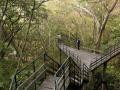
Basically, both Minh Chau and Quan Lan localities have quite favorable conditions for developing ecotourism. However, Quan Lan commune has more advantages to develop ecotourism in a humanistic direction, because this is an area with many famous historical relics such as Quan Lan Communal House, Quan Lan Pagoda, Temple worshiping the hero Tran Khanh Du, ... along with local festivals held annually such as the wind praying ceremony (March 15), Quan Lan festival (June 10-19); due to its location near the port and long exploitation time, the beaches in Quan Lan commune (especially Quan Lan beach) are no longer hygienic and clean to ensure the needs of tourists coming to relax and swim; this is also an area with many beautiful landscapes such as Got Beo wind pass, Ong Phong head, Voi Voi cave, but the ability to access these places is still very limited (dirt hill road, lots of gravel and rocks), especially during rainy and windy times; In addition, other natural resources such as mangrove forests and sea worms have not been really exploited for tourism purposes and ecotourism development. On the contrary, Minh Chau commune has more advantages in developing ecotourism in the direction of natural tourism, this is an area with diverse ecosystems such as at Rua De Beach, Bai Tu Long National Park Conservation Center...; Minh Chau beach is highly appreciated for its natural beauty and cleanliness, ranked in the top ten most beautiful beaches in Vietnam; Minh Chau commune is also home to Tram forest with a large area and a purity of up to 90%, suitable for building bridges through the forest (a very effective type of natural ecotourism currently applied by many countries) for tourists to sightsee, as well as for the purpose of studying and researching.
Figure 3.1: Thenmala Forest Bridge (India) Source: https://www.thenmalaecotourism.com/(August 21, 2019)
3.2.2. Using SWOT matrix to evaluate Quan Lan island tourism
General assessment of current tourism activities of Quan Lan island is shown through the following SWOT matrix:
Table 3.5: SWOT matrix evaluating tourism activities on Quan Lan island
Internal agent
Strengths- There is a lot of potential for tourism development, especially natural ecotourism and humanistic ecotourism.- The unskilled labor force is relatively abundant.- resource environmentunpolluted, still
Weaknesses- Poorly developed infrastructure, especially traffic routes to tourist destinations on the island.- The team of professional staff is still weak.- Tourism products in general
quite wild, originalintact
general and DLST in particularalone is monotonous.
External agents
Opportunity- Tourism is a key industry in the socio-economic development strategy of the province and Van Don economic zone.- Quan Lan was selected as a pilot area for eco-tourism development within the framework of the green growth project between Quang Ninh province and the Japanese organization JICA.- The flow of tourists and especially ecotourism in the world tends toincreasing
Challenge- Weather and climate change abnormally.- Competition in tourism products is increasingly fierce, especially with other localities in the province such as Ha Long, Mong Cai...- Awareness of tourists, especially domestic tourists, about ecotourism and nature conservation is not high.
Through summary analysis using SWOT matrix we see that:
To exploit strengths and take advantage of opportunities, it is necessary to:
- Diversify products and service types (build more tourism routes aimed at specific needs of tourists: experiential tourism immersed in nature, spiritual cultural tourism...)
- Effective exploitation of resources and differentiated products (natural resources and human resources)
div.maincontent .p { color: black; font-family:"Times New Roman", serif; font-style: normal; font-weight: normal; text-decoration: none; font-size: 14pt; margin:0pt; } div.maincontent p { color: black; font-family:"Times New Roman", serif; font-style: normal; font-weight: normal; text-decoration: none; font-size: 14pt; margin:0pt; } div.maincontent .s1 { color: black; font-family:"Times New Roman", serif; font-style: normal; font-weight: normal; text-decoration: none; font-size: 13pt; } div.maincontent .s2 { color: black; font-family:"Times New Roman", serif; font-style: normal; font-weight: normal; text-decoration: none; font-size: 13pt; } div.maincontent .s3 { color: #0D0D0D; font-family:"Times New Roman", serif; font-style: normal; font-weight: bold; text-decoration: none; font-size: 14pt; } div.maincontent .s4 { color: black; font-family:"Times New Roman", serif; font-style: italic; font-weight: normal; text-decoration: none; font-size: 14pt; } div.maincontent .s5 { color: black; font-family:"Times New Roman", serif; font-style: italic; font-weight: bold; text-decoration: none; font-size: 14pt; } div.maincontent .s6 { color: black; font-family:"Times New Roman", serif; font-style: italic; font-weight: normal; text-decoration: none; font-size: 14pt; vertical-align: -3pt; } div.maincontent .s7 { color: black; font-family:"Times New Roman", serif; font-style: italic; font-weight: normal; text-decoration: none; font-size: 14pt; vertical-align: -2pt; } div.maincontent .s8 { color: black; font-family:"Times New Roman", serif; font-style: italic; font-weight: normal; text-decoration: none; font-size: 14pt; vertical-align: -1pt; } div.maincontent .s9 { color: black; font-family:"Times New Roman", serif; font-style: normal; font-weight: normal; text-decoration: none; font-size: 14pt; } div.maincontent .s10 { color: black; font-family:"Times New Roman", serif; font-style: normal; font-weight: bold; text-decoration: none; font-size: 14pt; } div.maincontent .s11 { color: black; font-family:"Times New Roman", serif; font-style: normal; font-weight: normal; text-decoration: none; font-size: 14pt; } div.maincontent .s12 { color: black; font-family:Symbol, serif; font-style: normal; font-weight: normal; text-decoration: none; font-size: 14pt; } div.maincontent .s13 { color: black; font-family:Wingdings; font-style: normal; font-weight: normal; text-decoration: none; font-size: 14pt; } div.maincontent .s14 { color: black; font-family:"Times New Roman", serif; font-style: normal; font-weight: normal; text-decoration: none; font-size: 9pt; vertical-align: 5pt; } div.maincontent .s15 { color: black; font-family:"Times New Roman", serif; font-style: normal; font-weight: normal; text-decoration: none; font-size: 9pt; vertical-align: 5pt; } div.maincontent .s16 { color: black; font-family:Cambria, serif; font-style: italic; font-weight: normal; text-decoration: none; font-size: 14pt; } div.maincontent .s17 { color: #080808; font-family:"Times New Roman", serif; font-style: normal; font-weight: bold; text-decoration: none; font-size: 14pt; } div.maincontent .s18 { color: #080808; font-family:"Times New Roman", serif; font-style: normal; font-weight: normal; text-decoration: none; font-size: 14pt; } div.maincontent .s19 { color: black; font-family:"Times New Roman", serif; font-style: normal; font-weight: normal; text-decoration: none; font-size: 11pt; } div.maincontent .s20 { color: black; font-family:"Times New Roman", serif; font-style: normal; font-weight: normal; text-decoration: none; font-size: 10pt; } div.maincontent .s21 { color: black; font-family:"Times New Roman", serif; font-style: normal; font-weight: bold; text-decoration: none; font-size: 11pt; } div.maincontent .s22 { color: black; font-family:"Times New Roman", serif; font-style: normal; font-weight: normal; text-decoration: none; font-size: 11pt; } div.maincontent .s23 { color: black; font-family:"Times New Roman", serif; font-style: italic; font-weight: normal; text-decoration: none; font-size: 14pt; } div.maincontent .s24 { color: #212121; font-family:"Times New Roman", serif; font-style: normal; font-weight: normal; tex
Identify Rating Levels and Rating Scales
zt2i3t4l5ee
zt2a3gstourism,quan lan,quang ninh,ecology,ecotourism,minh chau,van don,geography,geographical basis,tourism development,science
zt2a3ge
zc2o3n4t5e6n7ts
of the islanders. Therefore, this indicator will be divided into two sub-indicators:
a1. Natural tourism attractiveness a2. Cultural tourism attractiveness
b. Tourist capacity
The two island communes in Quan Lan have different capacities to receive tourists. Minh Chau Commune is home to many standard hotels and resorts, attracting high-income domestic and international tourists. Meanwhile, Quan Lan Commune has many motels mainly built and operated by local people, so the scale and quality are not high, and will be suitable for ordinary tourists such as students.
c. Time of exploitation of Quan Lan Island Commune:
Quan Lan tourism is seasonal due to weather and climate conditions and festivals only take place on certain days of the year, specifically in spring. In Quan Lan commune, the period from April to June and from September to November is considered the best time to visit Quan Lan because the cultural tourism activities are mainly associated with festivals taking place during this time.
Minh Chau island commune:
Tourism exploitation time is all year round, because this is a place with a number of tourist attractions with diverse ecosystems such as Bai Tu Long National Park Research Center, Tram forest, Turtle Laying Beach, so besides coming to the beach for tourism and vacation in the summer, Minh Chau will attract research groups to come for tourism combined with research at other times of the year.
d. Sustainability
The sustainability of ecotourism sites in Quan Lan and Minh Chau communes depends on the sensitivity of the ecosystems to climate changes.
landscape. In general, these tourist destinations have a fairly high level of sustainability, because they are natural ecosystems, planned and protected. However, if a large number of tourists gather at certain times, it can exceed the carrying capacity and affect the sustainability of the environment (polluted beaches, damaged trees, animals moving away from their habitats, etc.), then the sustainability of the above ecosystems (natural ecosystems, human ecosystems) will also be affected and become less sustainable.
e. Location and accessibility
Both island communes have ports to take tourists to visit from Van Don wharf:
- Quan Lan – Van Don traffic route:
Phuc Thinh – Viet Anh high-speed boat and Quang Minh high-speed boat, depart at 8am and 2pm from Van Don to Quan Lan, and at 7am and 1pm from Quan Lan to Van Don. There are also wooden boats departing at 7am and 1pm.
- Van Don - Minh Chau traffic route:
Chung Huong high-speed train, Minh Chau train, morning 7:30 and afternoon 13:30 from Van Don to Minh Chau, morning 6:30 and afternoon 13:00 from Minh Chau to Van Don.
f. Infrastructure
Despite receiving investment attention, the issue of infrastructure and technical facilities for tourism on Quan Lan Island is still an issue that needs to be resolved because it has a direct impact on the implementation of ecotourism activities. The minimum conditions for serving tourists such as accommodation, electricity, water, communication, especially medical services, and security work need to be given top priority. Ecotourism spots in Minh Chau commune are assessed to have better infrastructure and technical facilities for tourism because there are quite complete and synchronous conditions for serving tourists, meeting many needs of domestic and foreign tourists.
3.2.1.4. Determine assessment levels and assessment scales
Corresponding to the levels of each criterion, the index is the score of those levels in the order of 4, 3, 2, 1 decreasing according to the standard of each level: very attractive (4), attractive (3), average (2), less attractive (1).
3.2.1.5. Determining the coefficients of the criteria
For the assessment of DLST in the two communes of Quan Lan and Minh Chau islands, the students added evaluation coefficients to show the importance of the criteria and indicators as follows:
Coefficient 3 with criteria: Attractiveness, Exploitation time. These are the 2 most important criteria for attracting tourists to tourism in general and eco-tourism in particular, so they have the highest coefficient.
Coefficient 2 with criteria: Capacity, Infrastructure, Location and accessibility . Because the assessment area is an island commune of Van Don district, the above criteria are selected by the author with appropriate coefficients at the average level.
Coefficient 1 with criteria: Sustainability. Quan Lan has natural and human-made ecotourism sites, with high biodiversity and little impact from local human factors. Most of the ecotourism sites are still wild, so they are highly sustainable.
3.2.1.6. Results of DLST assessment on Quan Lan island
a. Assessment of the potential for natural tourism development
For Minh Chau commune:
+ Natural tourism attractiveness is determined to be very attractive (4 points) and the most important coefficient (coefficient 3), so the score of the Attractiveness criterion is 4 x 3 = 12.
+ Capacity is determined as average (2 points) and the coefficient is quite important (coefficient 2), then the score of Capacity criterion is 2 x 2 = 4.
+ Exploitation time is long (4 points), the most important coefficient (coefficient 3) so the score of the Exploitation time criterion is 4 x 3 = 12.
+ Sustainability is determined as sustainable (4 points), the important coefficient is the average coefficient (coefficient 1), so the score of the Sustainability criterion is 4 x 1 = 4 points
+ Location and accessibility are determined to be quite favorable (2 points), the coefficient is quite important (coefficient 2), the criterion score is 2 x 2 = 4 points.
+ Infrastructure is assessed as good (3 points), the coefficient is quite important (coefficient 2), then the score of the Infrastructure criterion is 3 x 2 = 6 points.
The total score for evaluating DLST in Minh Chau commune according to 6 evaluation criteria is determined as: 12 + 4 + 12 + 4 + 4 + 6 = 42 points
Similar assessment for Quan Lan commune, we have the following table:
Table 3.3: Assessment of the potential for natural ecotourism development in Quan Lan and Minh Chau communes
Attractiveness of self-tourismof course
Capacity
Mining time
Sustainability
Location and accessibility
Infrastructure
Result
Point
DarkMulti
Point
DarkMulti
Point
DarkMulti
Point
DarkMulti
Point
DarkMulti
Point
DarkMulti
CommuneMinh Chau
12
12
4
8
12
12
4
4
4
8
6
8
42/52
Quan CommuneLan
6
12
6
8
9
12
4
4
4
8
4
8
33/52
b. Assessment of the potential for humanistic tourism development
For Quan Lan commune:
+ The attractiveness of human tourism is determined to be very attractive (4 points) and the most important coefficient (coefficient 3), so the score of the Attractiveness criterion is 4 x 3 = 12.
+ Capacity is determined to be large (3 points) and the coefficient is quite important (coefficient 2), then the score of the Capacity criterion is 3 x 2 = 6.
+ Mining time is average (3 points), the most important coefficient (coefficient 3) so the score of the Mining time criterion is 3 x 3 = 9.
+ Sustainability is determined as sustainable (4 points), the important coefficient is the average coefficient (coefficient 1), so the score of the Sustainability criterion is 4 x 1 = 4 points.
+ Location and accessibility are determined to be quite favorable (2 points), the coefficient is quite important (coefficient 2), the criterion score is 2 x 2 = 4 points.
+ Infrastructure is rated as average (2 points), the coefficient is quite important (coefficient 2), then the score of the Infrastructure criterion is 2 x 2 = 4 points.
The total score for evaluating DLST in Quan Lan commune according to 6 evaluation criteria is determined as: 12 + 6 + 6 + 4 + 4 + 4 = 36 points.
Similar assessment with Minh Chau commune we have the following table:
Table 3.4: Assessment of the potential for developing humanistic eco-tourism in Quan Lan and Minh Chau communes
Attractiveness of human tourismliterature
Capacity
Mining time
Sustainability
Location and accessibility
Infrastructure
Result
Point
DarkMulti
Point
DarkMulti
Point
DarkMulti
Point
DarkMulti
Point
DarkMulti
Point
DarkMulti
Quan CommuneLan
12
12
6
8
9
12
4
4
4
8
4
8
39/52
Minh CommuneChau
6
12
4
8
12
12
4
4
4
8
6
8
36/52
Basically, both Minh Chau and Quan Lan localities have quite favorable conditions for developing ecotourism. However, Quan Lan commune has more advantages to develop ecotourism in a humanistic direction, because this is an area with many famous historical relics such as Quan Lan Communal House, Quan Lan Pagoda, Temple worshiping the hero Tran Khanh Du, ... along with local festivals held annually such as the wind praying ceremony (March 15), Quan Lan festival (June 10-19); due to its location near the port and long exploitation time, the beaches in Quan Lan commune (especially Quan Lan beach) are no longer hygienic and clean to ensure the needs of tourists coming to relax and swim; this is also an area with many beautiful landscapes such as Got Beo wind pass, Ong Phong head, Voi Voi cave, but the ability to access these places is still very limited (dirt hill road, lots of gravel and rocks), especially during rainy and windy times; In addition, other natural resources such as mangrove forests and sea worms have not been really exploited for tourism purposes and ecotourism development. On the contrary, Minh Chau commune has more advantages in developing ecotourism in the direction of natural tourism, this is an area with diverse ecosystems such as at Rua De Beach, Bai Tu Long National Park Conservation Center...; Minh Chau beach is highly appreciated for its natural beauty and cleanliness, ranked in the top ten most beautiful beaches in Vietnam; Minh Chau commune is also home to Tram forest with a large area and a purity of up to 90%, suitable for building bridges through the forest (a very effective type of natural ecotourism currently applied by many countries) for tourists to sightsee, as well as for the purpose of studying and researching.
Figure 3.1: Thenmala Forest Bridge (India) Source: https://www.thenmalaecotourism.com/(August 21, 2019)
3.2.2. Using SWOT matrix to evaluate Quan Lan island tourism
General assessment of current tourism activities of Quan Lan island is shown through the following SWOT matrix:
Table 3.5: SWOT matrix evaluating tourism activities on Quan Lan island
Internal agent
Strengths- There is a lot of potential for tourism development, especially natural ecotourism and humanistic ecotourism.- The unskilled labor force is relatively abundant.- resource environmentunpolluted, still
Weaknesses- Poorly developed infrastructure, especially traffic routes to tourist destinations on the island.- The team of professional staff is still weak.- Tourism products in general
quite wild, originalintact
general and DLST in particularalone is monotonous.
External agents
Opportunity- Tourism is a key industry in the socio-economic development strategy of the province and Van Don economic zone.- Quan Lan was selected as a pilot area for eco-tourism development within the framework of the green growth project between Quang Ninh province and the Japanese organization JICA.- The flow of tourists and especially ecotourism in the world tends toincreasing
Challenge- Weather and climate change abnormally.- Competition in tourism products is increasingly fierce, especially with other localities in the province such as Ha Long, Mong Cai...- Awareness of tourists, especially domestic tourists, about ecotourism and nature conservation is not high.
Through summary analysis using SWOT matrix we see that:
To exploit strengths and take advantage of opportunities, it is necessary to:
- Diversify products and service types (build more tourism routes aimed at specific needs of tourists: experiential tourism immersed in nature, spiritual cultural tourism...)
- Effective exploitation of resources and differentiated products (natural resources and human resources)
div.maincontent .p { color: black; font-family:"Times New Roman", serif; font-style: normal; font-weight: normal; text-decoration: none; font-size: 14pt; margin:0pt; } div.maincontent p { color: black; font-family:"Times New Roman", serif; font-style: normal; font-weight: normal; text-decoration: none; font-size: 14pt; margin:0pt; } div.maincontent .s1 { color: black; font-family:"Times New Roman", serif; font-style: normal; font-weight: normal; text-decoration: none; font-size: 13pt; } div.maincontent .s2 { color: black; font-family:"Times New Roman", serif; font-style: normal; font-weight: normal; text-decoration: none; font-size: 13pt; } div.maincontent .s3 { color: #0D0D0D; font-family:"Times New Roman", serif; font-style: normal; font-weight: bold; text-decoration: none; font-size: 14pt; } div.maincontent .s4 { color: black; font-family:"Times New Roman", serif; font-style: italic; font-weight: normal; text-decoration: none; font-size: 14pt; } div.maincontent .s5 { color: black; font-family:"Times New Roman", serif; font-style: italic; font-weight: bold; text-decoration: none; font-size: 14pt; } div.maincontent .s6 { color: black; font-family:"Times New Roman", serif; font-style: italic; font-weight: normal; text-decoration: none; font-size: 14pt; vertical-align: -3pt; } div.maincontent .s7 { color: black; font-family:"Times New Roman", serif; font-style: italic; font-weight: normal; text-decoration: none; font-size: 14pt; vertical-align: -2pt; } div.maincontent .s8 { color: black; font-family:"Times New Roman", serif; font-style: italic; font-weight: normal; text-decoration: none; font-size: 14pt; vertical-align: -1pt; } div.maincontent .s9 { color: black; font-family:"Times New Roman", serif; font-style: normal; font-weight: normal; text-decoration: none; font-size: 14pt; } div.maincontent .s10 { color: black; font-family:"Times New Roman", serif; font-style: normal; font-weight: bold; text-decoration: none; font-size: 14pt; } div.maincontent .s11 { color: black; font-family:"Times New Roman", serif; font-style: normal; font-weight: normal; text-decoration: none; font-size: 14pt; } div.maincontent .s12 { color: black; font-family:Symbol, serif; font-style: normal; font-weight: normal; text-decoration: none; font-size: 14pt; } div.maincontent .s13 { color: black; font-family:Wingdings; font-style: normal; font-weight: normal; text-decoration: none; font-size: 14pt; } div.maincontent .s14 { color: black; font-family:"Times New Roman", serif; font-style: normal; font-weight: normal; text-decoration: none; font-size: 9pt; vertical-align: 5pt; } div.maincontent .s15 { color: black; font-family:"Times New Roman", serif; font-style: normal; font-weight: normal; text-decoration: none; font-size: 9pt; vertical-align: 5pt; } div.maincontent .s16 { color: black; font-family:Cambria, serif; font-style: italic; font-weight: normal; text-decoration: none; font-size: 14pt; } div.maincontent .s17 { color: #080808; font-family:"Times New Roman", serif; font-style: normal; font-weight: bold; text-decoration: none; font-size: 14pt; } div.maincontent .s18 { color: #080808; font-family:"Times New Roman", serif; font-style: normal; font-weight: normal; text-decoration: none; font-size: 14pt; } div.maincontent .s19 { color: black; font-family:"Times New Roman", serif; font-style: normal; font-weight: normal; text-decoration: none; font-size: 11pt; } div.maincontent .s20 { color: black; font-family:"Times New Roman", serif; font-style: normal; font-weight: normal; text-decoration: none; font-size: 10pt; } div.maincontent .s21 { color: black; font-family:"Times New Roman", serif; font-style: normal; font-weight: bold; text-decoration: none; font-size: 11pt; } div.maincontent .s22 { color: black; font-family:"Times New Roman", serif; font-style: normal; font-weight: normal; text-decoration: none; font-size: 11pt; } div.maincontent .s23 { color: black; font-family:"Times New Roman", serif; font-style: italic; font-weight: normal; text-decoration: none; font-size: 14pt; } div.maincontent .s24 { color: #212121; font-family:"Times New Roman", serif; font-style: normal; font-weight: normal; tex -
 General Assessment of Factors Affecting Tourism Development in Vientiane City
 -
 Conditions on Political Security, Social Security and Tourism Development Policies
 -
 Implementing tourism development policy in Phu Tho province - 9
 -
 Conditions and Potential for Tourism Development in Sam Son Town Sam Son
Phu Quoc with more than 150 km of coastline, many mountain ranges gradually lower towards the sea, Phu Quoc forms many beaches, interspersed with narrow plains, sandy beaches.
Long stretches of white sand and clear blue water such as Sao beach, Khem beach, Dai beach, Truong beach, Thom beach, Rach Vem, Vung Bau, Da Chong, Ong Lang... are suitable for building high-quality eco-tourism areas with many types of sightseeing tourism, studying and researching marine theme parks, visiting fishing villages on the island combined with sports activities related to the sea.
Phu Quoc's coastal terrain, in addition to beautiful beaches favorable for swimming, also has a rocky shore in the North and rocky capes running close to the sea creating many beautiful landscapes such as Cape Ganh Dau, Cape Tau Ru, Cape Ong Doi, ... These terrains create favorable conditions for the development of eco-tourism with types of sightseeing, fishing, combined with learning about local culture.
In addition to the main island, Phu Quoc also has many coastal islands: Doi Moi island, Mong Tay island, Thay Boi island in the North of the island; Dam Trong island, Dam Ngoai island, Roi island, Thom island, Vang island, Gham Ghi island, etc. The An Thoi and Tho Chu archipelagos are also places with many beautiful landscapes and diverse ecosystems. This is where a marine ecology research center and a high-quality ecotourism area can be built with activities such as sightseeing, studying, researching marine biodiversity, and exploring the wild nature on the islands...
2.2.1.2. Agricultural ecosystems
Nowadays, agricultural ecosystems have been recognized as unique ecotourism resources. Tourism organizations in many places have focused on exploiting them to create attractive rural ecotourism and garden ecotourism products, especially in tropical agricultural regions.
* Pepper garden tourism: In Phu Quoc, the type of ecotourism visiting pepper gardens has begun to appear and develop, although it is not yet complete in its true sense, but it is increasingly attracting the attention of many domestic and foreign tourists.
Phu Quoc is known as the “Kingdom of Pepper”, with an area of about 471 hectares concentrated in 3 communes: Cua Duong, Cua Can and Duong To. Pepper is an advantageous crop with high economic value, enriching thousands of farming households in the area. This type of ecotourism in the form of visiting pepper gardens is attracting the attention of international visitors and is a unique tourism resource that needs to be exploited to create attractive farm ecotourism products.
Currently, due to unstable prices, many farmers have switched to growing other crops, and the pepper acreage is gradually shrinking. However, due to the district's tourism development policy, which plans ecotourism areas including pepper farms, many pepper gardens have been renovated and developed into ecotourism spots to welcome tourists to visit and buy pepper as gifts for friends and relatives when traveling on the island.
* Phu Quoc Dog Farm: Known in the early 19th century when the French colonized Phu Quoc Island, and mentioned as a brand from the addresses of websites talking about this rare hunting dog breed in the world.
Phu Quoc dogs have many special features, such as a back whorl; broad chest, slim belly; tail tapered to a fishing rod; hair less than 2cm long; webbed feet, ability to hunt, dig holes, climb fences, agility, curiosity, and absolute loyalty to the owner.
With this precious feature, Phu Quoc has established a dog breeding site to both preserve the precious dog gene and to be a place to visit and buy Phu Quoc dogs for those who are interested in this pet when traveling. In addition, Phu Quoc also has the conditions to develop wild boar farms to serve both sightseeing and providing food for tourists.
* Fruit and vegetable gardens: With a large area of yellow-gray Feralit land, it is very favorable for the development of fruit trees and clean vegetables. Currently, on the island district, many rambutan and durian gardens have been formed and developed; two clean vegetable companies are developing according to European technology to provide clean vegetables for people and tourists. With this condition, Phu Quoc can develop high-tech agriculture, build fruit gardens, clean vegetable production areas into high-quality eco-tourism sites, both providing products for tourism and seeing modern production processes creating diversity for eco-tourism on the island district.
2.2.1.3. Indigenous culture
Besides the natural ecotourism potential, the humanistic tourism potential (indigenous culture) in natural ecological areas is an inseparable component. The source of humanistic tourism resources includes the traditional cultural values of the community.
Indigenous culture such as customs, lifestyle, festival activities, folk culture, traditional handicrafts, historical relics, architectural art, culinary specialties...
In Phu Quoc island district, this resource is quite diverse, contributing significantly to the richness and attractiveness of ecotourism types here.
* Historical - cultural relics, festivals
Going back in history, the formation and development of the island district went through many wars, leaving many historical marks, and many relics that have been passed down by the people to this day.
Phu Quoc is a gathering place for many ethnic groups, Vietnamese, Chinese, Khmer... to live and work. The majority of Vietnamese people are from the Central region, the Chinese are mainly Hainanese people who came to settle and work. In particular, the history of Phu Quoc is closely linked to the pioneering work of Mac Cuu and the Mac family about 300 years ago. Due to the above characteristics, Phu Quoc culture, first of all folk culture, is a cultural stream integrated from many different sources, forming a line of Vietnamese traditional culture including both tangible and intangible culture.
Phu Quoc is a land with many historical and cultural relics such as: Nguyen Trung Truc Temple, Gia Long Well, King's Throne Rock, Prince Canh's Tomb, King Gia Long's Footprint, Ong Doi Cape, General Le Kim Dinh's Tomb, Cau Temple... with profound humanistic values, associated with traditional and historical festivals such as Duong Dong Temple Festival, worshiping the Water Goddess Thuy Long Thanh Mau, Whale Temple Festival, Sung Hung Co Tu Festival, An Thoi Temple Festival and the National Hero Nguyen Trung Truc Memorial Ceremony... These are attractive places, where galleries and museums can be built to serve the activities of sightseeing, learning, and researching local culture for tourists.
Besides, Phu Quoc also has historical relics and other typical products such as:
- Phu Quoc Prison with the names "Coconut Tree Camp", "Coconut Tree Prison", and "Phu Quoc Communist Prisoner Camp" was built by the US from 1967 - 1973, in which the Phu Quoc prison relic has been recognized and ranked.
- Coi Nguon Museum is a place to preserve and display the cultural characteristics of Phu Quoc people, customs and traditional economic activities of Phu Quoc island. Currently, Coi Nguon Museum is an ideal destination for tourists to learn about local culture on the island district.
* Traditional craft villages
Formed long ago, closely associated with the lives of the islanders, Phu Quoc has fish sauce production and coastal fishing villages.
With the rich anchovy resources of Phu Quoc sea, the anchovy fish sauce production profession of the island district has been formed for a long time, passed down from generation to generation, becoming a famous specialty throughout the country and the world, mainly concentrated in Duong Dong and An Thoi.
The factories can be organized into points for tourists to visit, research, and buy products as gifts.
In addition to the craft villages, Phu Quoc also has many coastal fishing villages: Bai Thom, Rach Vem, Rach Tram, Ganh Dau, Cua Can, Ham Ninh. This is a destination for tourists to visit, learn about the lives of the people, shop for local specialties, and experience the real life of coastal fishermen. The most notable is Ham Ninh fishing village, located on the east coast of the island. It clearly shows that life here is almost still pristine, associated with pearl diving, catching sea cucumbers (don dot) and crab netting.
2.2.2. Conditions affecting the development of Phu Quoc eco-tourism
2.2.2.1. Infrastructure
* Transportation system
Transportation is the most important issue in the island district's tourism development strategy. The district's transportation network, including waterways, roads, and air transport, has had positive changes.
- Road: According to statistics in 2010, the total length of roads in the district is 149km, including 132.6km of provincial roads; 37.4km of inner-town roads and 5 main routes: An Thoi - Duong Dong - Bai Thom route (50km),
cross-island in the North-South direction connecting rural residential areas. Most urban residential areas have roads. The volume of passengers transported by road in 2012 (3,096 thousand passengers) increased rapidly compared to 2009 (1,293 thousand passengers) [26].
Currently, Phu Quoc has many tourism businesses operating, so passenger transportation services are mainly by car to meet the demand. With tour and route transportation services, businesses also rent Honda cars, tourist cars from 7 seats to 50 seats to serve tourists when there is a transportation request. In particular, on the island district, there are 3 taxi companies operating: Sasco, Mai Linh, Hoang Long with modern 7-seat cars equipped to serve 24/24 the travel needs of customers very conveniently.
However, currently, the island district's road traffic is also facing many difficulties, construction is slow, the main North-South axis has not been completed, coastal roads have not been built, roads leading to tourist destinations have not been constructed, currently they are just temporary red stone roads, not meeting the requirements of tourism development on the island district.
- Sea route: Sea routes play an important role in the development strategy of the island district. The port system includes: Bai Vong, Bai Thom, An Thoi International Port currently meeting the demand for transporting goods and tourists. In 2012, goods transported by sea were 2,531 thousand tons, an increase of 71.71% compared to the previous year. Passenger transport in the year reached 6,393 thousand passengers, an increase of 28.89% compared to the same period last year. Phu Quoc has 2 main sea routes: Important sea routes for transporting passengers and goods connecting the island with the mainland: Phu Quoc - Rach Gia 120km long; Phu Quoc - Ha Tien 50km long; sea routes for transporting passengers and goods connecting the big island with small islands such as Phu Quoc - Tho Chu 120km long, Phu Quoc - Hon Thom 10km long, Tho Chau - An Thoi 110km long...
There are currently three companies providing high-speed boat services: Superdong, Duong Dong, Trameco... running at an average speed of about 26 nautical miles/hour (48.36 km/hour), so traveling from Phu Quoc to Rach Gia city only takes about 2 hours and 20 minutes (previously it took 6-8 hours), Phu Quoc - Ha Tien takes 1 hour and 10 minutes.
minutes...According to calculations, the high-speed boats running on two routes from the mainland to the island and vice versa can transport about 2,000 passengers in and out per day (capacity from 171 - 289 passengers/trip). In addition, the Phu Quoc - Ha Tien route also has Thanh Thoi high-speed ferry with large tonnage capacity, capable of carrying 20 large cars, 500 passengers and 150 motorbikes, creating more convenience for traffic to the island [26].
However, in the future, when the number of international visitors increases, it is necessary to build a port system in the East of the island that can receive large-tonnage cruise ships from other countries, only then can the tourism strengths of the island district be promoted.
- Air route : The project was started on November 23, 2008 with a total investment of over 16,200 billion VND, invested by Vietnam Airports Corporation. On December 15, 2012, the airport was inaugurated, with a total floor area of 24,325m2 , serving over 2.65 million passengers/year, peak hour capacity of 1,350 passengers/hour, invested with advanced technology equipment. Phu Quoc International Airport put into operation contributes to developing the island into a regional and international center for eco-tourism, resorts and sea tourism. Along with Can Tho International Airport, Phu Quoc International Airport will help Kien Giang and the provinces and cities in the Mekong Delta connect directly with regions in the country, with Southeast Asia and the world.
Currently, the airport has two airlines operating, Vietnam Airlines and Vietjet, with up to 20 flights per day to Rach Gia, Can Tho, Ho Chi Minh City, and Hanoi. In particular, international flights in the near future will focus on tourist routes connecting Phu Quoc with Singapore, Hong Kong, Thailand, Malaysia, etc.
* Power supply system
Currently, the island still has no national power grid, electricity for lighting and production is provided by 2 Diesel plants with a capacity of 7MW in Duong Dong town and a plant located in Cua Duong commune. From 2006 to now, the total amount of electricity generated has increased from 37,450,000 KWh (in 2006) to 53,234,000 Wh (in 2010), currently 8/8 communes have electricity. Duong Dong town has 45.5km of medium voltage power lines; 46.3km of low voltage power lines. However, the power capacity of the plants is not enough.
meet the electricity demand for daily life and production, especially restaurants, hotels, tourist areas, some areas must use generators with small capacity. The situation of power shortages and power cuts occurs frequently, causing difficulties for economic and social development [26]. To meet the electricity demand in daily life, production and especially in the tourism industry, the project to bring electricity from the mainland to the island by installing an underground cable system across the sea from Ha Tien to Phu Quoc with a total length of 53 km needs to be constructed soon. This project is invested by Vietnam Electricity Group with a capital of 260 million USD, scheduled to be completed by June 2014. In addition, to have enough energy sources, Phu Quoc, in addition to the energy transmitted from the mainland, must also use energy from natural energy sources such as solar energy, wind power... This both promotes economic development and ensures a sustainable ecological environment [33].
* Water supply system
3
The entire island has a rainwater storage system with a total capacity of 30,000m , 21
3
1400m3/day and night capacity drilled well, water supply station (Duong Dong lake) with capacity
3
capacity of 3.3 million m, providing water for agriculture and daily life of the whole island (accounting for 60 -
70% of the island's needs). In addition, islanders have the habit of storing rainwater for drinking and daily use. As of 2009, the entire district had more than 900 rainwater tanks at home. At restaurants, hotels, and tourist attractions, the main water source is from the island's underground water source.
However, the exploitation of groundwater on the island also has many issues of concern such as the risk of lowering the groundwater level, creating conditions for saltwater intrusion, thereby affecting the quality of surface water. This risk is increasing as the demand for water for tourism, production and daily life increases.
* Communication system
The information system on the island is well developed. Telephone and network coverage has been achieved on the large island and the small islands. Internet services have been strongly developed. Currently, with the satellite receiving and transmitting stations on the mainland (Hon Queo - Hon Dat), most of the islands have been able to receive live satellite channels such as VT1, VT2, VT3, VT4... as well as