
As a developing country with backward production level, a forming market economy, and uneven intellectual level, in the value structure of products, material factors, raw materials, and labor account for a large proportion compared to intellectual factors.
The level of technology is backward, the combination of science with production and market is still in the linear model, starting from natural resources, scientific research activities are conducted sequentially to create new technology. Through the production stage on the basis of new technology, products are brought to the market. This linear model has proven to be outdated because the time from research to production is long, researchers often have difficulty finding the address to apply new technologies while manufacturers are hesitant to decide to invest in risky technology innovation when the market of the new product has not been determined. Therefore, the innovation process is slow, science and technology and production are not organically linked together, the competitiveness of enterprises is weak, research and development receive little funding from enterprises. On the other hand, the need to apply science and technology to production and social life is not high enough to become a driving force to attract people to approach, master and control science and technology, leading to the underestimation of the role of creative activities, as well as innovation in society. Therefore, the habit of overvaluing material resources and underestimating intellectual resources is still common in society and in the thinking of a number of party members and cadres.
On the other hand, due to limited leadership and management skills, many Party and government officials have not fully recognized the role and position of science and technology, education and training, and cultural factors, and therefore have not paid enough attention to building intellectual capital - the subject of social and spiritual creativity. The awareness of intellectual work of leaders and managers is still limited, so the implementation of policies to build intellectual capital is weak.
In education and training, there still exist distorted views, the "fame and profit" way of learning - learning for the purpose of promotion, bringing benefits to oneself. That is a major cause leading to the disease of achievement, cheating in learning and
Maybe you are interested!
-
 Identify Rating Levels and Rating Scales
zt2i3t4l5ee
zt2a3gstourism,quan lan,quang ninh,ecology,ecotourism,minh chau,van don,geography,geographical basis,tourism development,science
zt2a3ge
zc2o3n4t5e6n7ts
of the islanders. Therefore, this indicator will be divided into two sub-indicators:
a1. Natural tourism attractiveness a2. Cultural tourism attractiveness
b. Tourist capacity
The two island communes in Quan Lan have different capacities to receive tourists. Minh Chau Commune is home to many standard hotels and resorts, attracting high-income domestic and international tourists. Meanwhile, Quan Lan Commune has many motels mainly built and operated by local people, so the scale and quality are not high, and will be suitable for ordinary tourists such as students.
c. Time of exploitation of Quan Lan Island Commune:
Quan Lan tourism is seasonal due to weather and climate conditions and festivals only take place on certain days of the year, specifically in spring. In Quan Lan commune, the period from April to June and from September to November is considered the best time to visit Quan Lan because the cultural tourism activities are mainly associated with festivals taking place during this time.
Minh Chau island commune:
Tourism exploitation time is all year round, because this is a place with a number of tourist attractions with diverse ecosystems such as Bai Tu Long National Park Research Center, Tram forest, Turtle Laying Beach, so besides coming to the beach for tourism and vacation in the summer, Minh Chau will attract research groups to come for tourism combined with research at other times of the year.
d. Sustainability
The sustainability of ecotourism sites in Quan Lan and Minh Chau communes depends on the sensitivity of the ecosystems to climate changes.
landscape. In general, these tourist destinations have a fairly high level of sustainability, because they are natural ecosystems, planned and protected. However, if a large number of tourists gather at certain times, it can exceed the carrying capacity and affect the sustainability of the environment (polluted beaches, damaged trees, animals moving away from their habitats, etc.), then the sustainability of the above ecosystems (natural ecosystems, human ecosystems) will also be affected and become less sustainable.
e. Location and accessibility
Both island communes have ports to take tourists to visit from Van Don wharf:
- Quan Lan – Van Don traffic route:
Phuc Thinh – Viet Anh high-speed boat and Quang Minh high-speed boat, depart at 8am and 2pm from Van Don to Quan Lan, and at 7am and 1pm from Quan Lan to Van Don. There are also wooden boats departing at 7am and 1pm.
- Van Don - Minh Chau traffic route:
Chung Huong high-speed train, Minh Chau train, morning 7:30 and afternoon 13:30 from Van Don to Minh Chau, morning 6:30 and afternoon 13:00 from Minh Chau to Van Don.
f. Infrastructure
Despite receiving investment attention, the issue of infrastructure and technical facilities for tourism on Quan Lan Island is still an issue that needs to be resolved because it has a direct impact on the implementation of ecotourism activities. The minimum conditions for serving tourists such as accommodation, electricity, water, communication, especially medical services, and security work need to be given top priority. Ecotourism spots in Minh Chau commune are assessed to have better infrastructure and technical facilities for tourism because there are quite complete and synchronous conditions for serving tourists, meeting many needs of domestic and foreign tourists.
3.2.1.4. Determine assessment levels and assessment scales
Corresponding to the levels of each criterion, the index is the score of those levels in the order of 4, 3, 2, 1 decreasing according to the standard of each level: very attractive (4), attractive (3), average (2), less attractive (1).
3.2.1.5. Determining the coefficients of the criteria
For the assessment of DLST in the two communes of Quan Lan and Minh Chau islands, the students added evaluation coefficients to show the importance of the criteria and indicators as follows:
Coefficient 3 with criteria: Attractiveness, Exploitation time. These are the 2 most important criteria for attracting tourists to tourism in general and eco-tourism in particular, so they have the highest coefficient.
Coefficient 2 with criteria: Capacity, Infrastructure, Location and accessibility . Because the assessment area is an island commune of Van Don district, the above criteria are selected by the author with appropriate coefficients at the average level.
Coefficient 1 with criteria: Sustainability. Quan Lan has natural and human-made ecotourism sites, with high biodiversity and little impact from local human factors. Most of the ecotourism sites are still wild, so they are highly sustainable.
3.2.1.6. Results of DLST assessment on Quan Lan island
a. Assessment of the potential for natural tourism development
For Minh Chau commune:
+ Natural tourism attractiveness is determined to be very attractive (4 points) and the most important coefficient (coefficient 3), so the score of the Attractiveness criterion is 4 x 3 = 12.
+ Capacity is determined as average (2 points) and the coefficient is quite important (coefficient 2), then the score of Capacity criterion is 2 x 2 = 4.
+ Exploitation time is long (4 points), the most important coefficient (coefficient 3) so the score of the Exploitation time criterion is 4 x 3 = 12.
+ Sustainability is determined as sustainable (4 points), the important coefficient is the average coefficient (coefficient 1), so the score of the Sustainability criterion is 4 x 1 = 4 points
+ Location and accessibility are determined to be quite favorable (2 points), the coefficient is quite important (coefficient 2), the criterion score is 2 x 2 = 4 points.
+ Infrastructure is assessed as good (3 points), the coefficient is quite important (coefficient 2), then the score of the Infrastructure criterion is 3 x 2 = 6 points.
The total score for evaluating DLST in Minh Chau commune according to 6 evaluation criteria is determined as: 12 + 4 + 12 + 4 + 4 + 6 = 42 points
Similar assessment for Quan Lan commune, we have the following table:
Table 3.3: Assessment of the potential for natural ecotourism development in Quan Lan and Minh Chau communes
Attractiveness of self-tourismof course
Capacity
Mining time
Sustainability
Location and accessibility
Infrastructure
Result
Point
DarkMulti
Point
DarkMulti
Point
DarkMulti
Point
DarkMulti
Point
DarkMulti
Point
DarkMulti
CommuneMinh Chau
12
12
4
8
12
12
4
4
4
8
6
8
42/52
Quan CommuneLan
6
12
6
8
9
12
4
4
4
8
4
8
33/52
b. Assessment of the potential for humanistic tourism development
For Quan Lan commune:
+ The attractiveness of human tourism is determined to be very attractive (4 points) and the most important coefficient (coefficient 3), so the score of the Attractiveness criterion is 4 x 3 = 12.
+ Capacity is determined to be large (3 points) and the coefficient is quite important (coefficient 2), then the score of the Capacity criterion is 3 x 2 = 6.
+ Mining time is average (3 points), the most important coefficient (coefficient 3) so the score of the Mining time criterion is 3 x 3 = 9.
+ Sustainability is determined as sustainable (4 points), the important coefficient is the average coefficient (coefficient 1), so the score of the Sustainability criterion is 4 x 1 = 4 points.
+ Location and accessibility are determined to be quite favorable (2 points), the coefficient is quite important (coefficient 2), the criterion score is 2 x 2 = 4 points.
+ Infrastructure is rated as average (2 points), the coefficient is quite important (coefficient 2), then the score of the Infrastructure criterion is 2 x 2 = 4 points.
The total score for evaluating DLST in Quan Lan commune according to 6 evaluation criteria is determined as: 12 + 6 + 6 + 4 + 4 + 4 = 36 points.
Similar assessment with Minh Chau commune we have the following table:
Table 3.4: Assessment of the potential for developing humanistic eco-tourism in Quan Lan and Minh Chau communes
Attractiveness of human tourismliterature
Capacity
Mining time
Sustainability
Location and accessibility
Infrastructure
Result
Point
DarkMulti
Point
DarkMulti
Point
DarkMulti
Point
DarkMulti
Point
DarkMulti
Point
DarkMulti
Quan CommuneLan
12
12
6
8
9
12
4
4
4
8
4
8
39/52
Minh CommuneChau
6
12
4
8
12
12
4
4
4
8
6
8
36/52
Basically, both Minh Chau and Quan Lan localities have quite favorable conditions for developing ecotourism. However, Quan Lan commune has more advantages to develop ecotourism in a humanistic direction, because this is an area with many famous historical relics such as Quan Lan Communal House, Quan Lan Pagoda, Temple worshiping the hero Tran Khanh Du, ... along with local festivals held annually such as the wind praying ceremony (March 15), Quan Lan festival (June 10-19); due to its location near the port and long exploitation time, the beaches in Quan Lan commune (especially Quan Lan beach) are no longer hygienic and clean to ensure the needs of tourists coming to relax and swim; this is also an area with many beautiful landscapes such as Got Beo wind pass, Ong Phong head, Voi Voi cave, but the ability to access these places is still very limited (dirt hill road, lots of gravel and rocks), especially during rainy and windy times; In addition, other natural resources such as mangrove forests and sea worms have not been really exploited for tourism purposes and ecotourism development. On the contrary, Minh Chau commune has more advantages in developing ecotourism in the direction of natural tourism, this is an area with diverse ecosystems such as at Rua De Beach, Bai Tu Long National Park Conservation Center...; Minh Chau beach is highly appreciated for its natural beauty and cleanliness, ranked in the top ten most beautiful beaches in Vietnam; Minh Chau commune is also home to Tram forest with a large area and a purity of up to 90%, suitable for building bridges through the forest (a very effective type of natural ecotourism currently applied by many countries) for tourists to sightsee, as well as for the purpose of studying and researching.
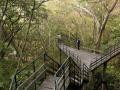
Figure 3.1: Thenmala Forest Bridge (India) Source: https://www.thenmalaecotourism.com/(August 21, 2019)
3.2.2. Using SWOT matrix to evaluate Quan Lan island tourism
General assessment of current tourism activities of Quan Lan island is shown through the following SWOT matrix:
Table 3.5: SWOT matrix evaluating tourism activities on Quan Lan island
Internal agent
Strengths- There is a lot of potential for tourism development, especially natural ecotourism and humanistic ecotourism.- The unskilled labor force is relatively abundant.- resource environmentunpolluted, still
Weaknesses- Poorly developed infrastructure, especially traffic routes to tourist destinations on the island.- The team of professional staff is still weak.- Tourism products in general
quite wild, originalintact
general and DLST in particularalone is monotonous.
External agents
Opportunity- Tourism is a key industry in the socio-economic development strategy of the province and Van Don economic zone.- Quan Lan was selected as a pilot area for eco-tourism development within the framework of the green growth project between Quang Ninh province and the Japanese organization JICA.- The flow of tourists and especially ecotourism in the world tends toincreasing
Challenge- Weather and climate change abnormally.- Competition in tourism products is increasingly fierce, especially with other localities in the province such as Ha Long, Mong Cai...- Awareness of tourists, especially domestic tourists, about ecotourism and nature conservation is not high.
Through summary analysis using SWOT matrix we see that:
To exploit strengths and take advantage of opportunities, it is necessary to:
- Diversify products and service types (build more tourism routes aimed at specific needs of tourists: experiential tourism immersed in nature, spiritual cultural tourism...)
- Effective exploitation of resources and differentiated products (natural resources and human resources)
div.maincontent .p { color: black; font-family:"Times New Roman", serif; font-style: normal; font-weight: normal; text-decoration: none; font-size: 14pt; margin:0pt; } div.maincontent p { color: black; font-family:"Times New Roman", serif; font-style: normal; font-weight: normal; text-decoration: none; font-size: 14pt; margin:0pt; } div.maincontent .s1 { color: black; font-family:"Times New Roman", serif; font-style: normal; font-weight: normal; text-decoration: none; font-size: 13pt; } div.maincontent .s2 { color: black; font-family:"Times New Roman", serif; font-style: normal; font-weight: normal; text-decoration: none; font-size: 13pt; } div.maincontent .s3 { color: #0D0D0D; font-family:"Times New Roman", serif; font-style: normal; font-weight: bold; text-decoration: none; font-size: 14pt; } div.maincontent .s4 { color: black; font-family:"Times New Roman", serif; font-style: italic; font-weight: normal; text-decoration: none; font-size: 14pt; } div.maincontent .s5 { color: black; font-family:"Times New Roman", serif; font-style: italic; font-weight: bold; text-decoration: none; font-size: 14pt; } div.maincontent .s6 { color: black; font-family:"Times New Roman", serif; font-style: italic; font-weight: normal; text-decoration: none; font-size: 14pt; vertical-align: -3pt; } div.maincontent .s7 { color: black; font-family:"Times New Roman", serif; font-style: italic; font-weight: normal; text-decoration: none; font-size: 14pt; vertical-align: -2pt; } div.maincontent .s8 { color: black; font-family:"Times New Roman", serif; font-style: italic; font-weight: normal; text-decoration: none; font-size: 14pt; vertical-align: -1pt; } div.maincontent .s9 { color: black; font-family:"Times New Roman", serif; font-style: normal; font-weight: normal; text-decoration: none; font-size: 14pt; } div.maincontent .s10 { color: black; font-family:"Times New Roman", serif; font-style: normal; font-weight: bold; text-decoration: none; font-size: 14pt; } div.maincontent .s11 { color: black; font-family:"Times New Roman", serif; font-style: normal; font-weight: normal; text-decoration: none; font-size: 14pt; } div.maincontent .s12 { color: black; font-family:Symbol, serif; font-style: normal; font-weight: normal; text-decoration: none; font-size: 14pt; } div.maincontent .s13 { color: black; font-family:Wingdings; font-style: normal; font-weight: normal; text-decoration: none; font-size: 14pt; } div.maincontent .s14 { color: black; font-family:"Times New Roman", serif; font-style: normal; font-weight: normal; text-decoration: none; font-size: 9pt; vertical-align: 5pt; } div.maincontent .s15 { color: black; font-family:"Times New Roman", serif; font-style: normal; font-weight: normal; text-decoration: none; font-size: 9pt; vertical-align: 5pt; } div.maincontent .s16 { color: black; font-family:Cambria, serif; font-style: italic; font-weight: normal; text-decoration: none; font-size: 14pt; } div.maincontent .s17 { color: #080808; font-family:"Times New Roman", serif; font-style: normal; font-weight: bold; text-decoration: none; font-size: 14pt; } div.maincontent .s18 { color: #080808; font-family:"Times New Roman", serif; font-style: normal; font-weight: normal; text-decoration: none; font-size: 14pt; } div.maincontent .s19 { color: black; font-family:"Times New Roman", serif; font-style: normal; font-weight: normal; text-decoration: none; font-size: 11pt; } div.maincontent .s20 { color: black; font-family:"Times New Roman", serif; font-style: normal; font-weight: normal; text-decoration: none; font-size: 10pt; } div.maincontent .s21 { color: black; font-family:"Times New Roman", serif; font-style: normal; font-weight: bold; text-decoration: none; font-size: 11pt; } div.maincontent .s22 { color: black; font-family:"Times New Roman", serif; font-style: normal; font-weight: normal; text-decoration: none; font-size: 11pt; } div.maincontent .s23 { color: black; font-family:"Times New Roman", serif; font-style: italic; font-weight: normal; text-decoration: none; font-size: 14pt; } div.maincontent .s24 { color: #212121; font-family:"Times New Roman", serif; font-style: normal; font-weight: normal; tex
Identify Rating Levels and Rating Scales
zt2i3t4l5ee
zt2a3gstourism,quan lan,quang ninh,ecology,ecotourism,minh chau,van don,geography,geographical basis,tourism development,science
zt2a3ge
zc2o3n4t5e6n7ts
of the islanders. Therefore, this indicator will be divided into two sub-indicators:
a1. Natural tourism attractiveness a2. Cultural tourism attractiveness
b. Tourist capacity
The two island communes in Quan Lan have different capacities to receive tourists. Minh Chau Commune is home to many standard hotels and resorts, attracting high-income domestic and international tourists. Meanwhile, Quan Lan Commune has many motels mainly built and operated by local people, so the scale and quality are not high, and will be suitable for ordinary tourists such as students.
c. Time of exploitation of Quan Lan Island Commune:
Quan Lan tourism is seasonal due to weather and climate conditions and festivals only take place on certain days of the year, specifically in spring. In Quan Lan commune, the period from April to June and from September to November is considered the best time to visit Quan Lan because the cultural tourism activities are mainly associated with festivals taking place during this time.
Minh Chau island commune:
Tourism exploitation time is all year round, because this is a place with a number of tourist attractions with diverse ecosystems such as Bai Tu Long National Park Research Center, Tram forest, Turtle Laying Beach, so besides coming to the beach for tourism and vacation in the summer, Minh Chau will attract research groups to come for tourism combined with research at other times of the year.
d. Sustainability
The sustainability of ecotourism sites in Quan Lan and Minh Chau communes depends on the sensitivity of the ecosystems to climate changes.
landscape. In general, these tourist destinations have a fairly high level of sustainability, because they are natural ecosystems, planned and protected. However, if a large number of tourists gather at certain times, it can exceed the carrying capacity and affect the sustainability of the environment (polluted beaches, damaged trees, animals moving away from their habitats, etc.), then the sustainability of the above ecosystems (natural ecosystems, human ecosystems) will also be affected and become less sustainable.
e. Location and accessibility
Both island communes have ports to take tourists to visit from Van Don wharf:
- Quan Lan – Van Don traffic route:
Phuc Thinh – Viet Anh high-speed boat and Quang Minh high-speed boat, depart at 8am and 2pm from Van Don to Quan Lan, and at 7am and 1pm from Quan Lan to Van Don. There are also wooden boats departing at 7am and 1pm.
- Van Don - Minh Chau traffic route:
Chung Huong high-speed train, Minh Chau train, morning 7:30 and afternoon 13:30 from Van Don to Minh Chau, morning 6:30 and afternoon 13:00 from Minh Chau to Van Don.
f. Infrastructure
Despite receiving investment attention, the issue of infrastructure and technical facilities for tourism on Quan Lan Island is still an issue that needs to be resolved because it has a direct impact on the implementation of ecotourism activities. The minimum conditions for serving tourists such as accommodation, electricity, water, communication, especially medical services, and security work need to be given top priority. Ecotourism spots in Minh Chau commune are assessed to have better infrastructure and technical facilities for tourism because there are quite complete and synchronous conditions for serving tourists, meeting many needs of domestic and foreign tourists.
3.2.1.4. Determine assessment levels and assessment scales
Corresponding to the levels of each criterion, the index is the score of those levels in the order of 4, 3, 2, 1 decreasing according to the standard of each level: very attractive (4), attractive (3), average (2), less attractive (1).
3.2.1.5. Determining the coefficients of the criteria
For the assessment of DLST in the two communes of Quan Lan and Minh Chau islands, the students added evaluation coefficients to show the importance of the criteria and indicators as follows:
Coefficient 3 with criteria: Attractiveness, Exploitation time. These are the 2 most important criteria for attracting tourists to tourism in general and eco-tourism in particular, so they have the highest coefficient.
Coefficient 2 with criteria: Capacity, Infrastructure, Location and accessibility . Because the assessment area is an island commune of Van Don district, the above criteria are selected by the author with appropriate coefficients at the average level.
Coefficient 1 with criteria: Sustainability. Quan Lan has natural and human-made ecotourism sites, with high biodiversity and little impact from local human factors. Most of the ecotourism sites are still wild, so they are highly sustainable.
3.2.1.6. Results of DLST assessment on Quan Lan island
a. Assessment of the potential for natural tourism development
For Minh Chau commune:
+ Natural tourism attractiveness is determined to be very attractive (4 points) and the most important coefficient (coefficient 3), so the score of the Attractiveness criterion is 4 x 3 = 12.
+ Capacity is determined as average (2 points) and the coefficient is quite important (coefficient 2), then the score of Capacity criterion is 2 x 2 = 4.
+ Exploitation time is long (4 points), the most important coefficient (coefficient 3) so the score of the Exploitation time criterion is 4 x 3 = 12.
+ Sustainability is determined as sustainable (4 points), the important coefficient is the average coefficient (coefficient 1), so the score of the Sustainability criterion is 4 x 1 = 4 points
+ Location and accessibility are determined to be quite favorable (2 points), the coefficient is quite important (coefficient 2), the criterion score is 2 x 2 = 4 points.
+ Infrastructure is assessed as good (3 points), the coefficient is quite important (coefficient 2), then the score of the Infrastructure criterion is 3 x 2 = 6 points.
The total score for evaluating DLST in Minh Chau commune according to 6 evaluation criteria is determined as: 12 + 4 + 12 + 4 + 4 + 6 = 42 points
Similar assessment for Quan Lan commune, we have the following table:
Table 3.3: Assessment of the potential for natural ecotourism development in Quan Lan and Minh Chau communes
Attractiveness of self-tourismof course
Capacity
Mining time
Sustainability
Location and accessibility
Infrastructure
Result
Point
DarkMulti
Point
DarkMulti
Point
DarkMulti
Point
DarkMulti
Point
DarkMulti
Point
DarkMulti
CommuneMinh Chau
12
12
4
8
12
12
4
4
4
8
6
8
42/52
Quan CommuneLan
6
12
6
8
9
12
4
4
4
8
4
8
33/52
b. Assessment of the potential for humanistic tourism development
For Quan Lan commune:
+ The attractiveness of human tourism is determined to be very attractive (4 points) and the most important coefficient (coefficient 3), so the score of the Attractiveness criterion is 4 x 3 = 12.
+ Capacity is determined to be large (3 points) and the coefficient is quite important (coefficient 2), then the score of the Capacity criterion is 3 x 2 = 6.
+ Mining time is average (3 points), the most important coefficient (coefficient 3) so the score of the Mining time criterion is 3 x 3 = 9.
+ Sustainability is determined as sustainable (4 points), the important coefficient is the average coefficient (coefficient 1), so the score of the Sustainability criterion is 4 x 1 = 4 points.
+ Location and accessibility are determined to be quite favorable (2 points), the coefficient is quite important (coefficient 2), the criterion score is 2 x 2 = 4 points.
+ Infrastructure is rated as average (2 points), the coefficient is quite important (coefficient 2), then the score of the Infrastructure criterion is 2 x 2 = 4 points.
The total score for evaluating DLST in Quan Lan commune according to 6 evaluation criteria is determined as: 12 + 6 + 6 + 4 + 4 + 4 = 36 points.
Similar assessment with Minh Chau commune we have the following table:
Table 3.4: Assessment of the potential for developing humanistic eco-tourism in Quan Lan and Minh Chau communes
Attractiveness of human tourismliterature
Capacity
Mining time
Sustainability
Location and accessibility
Infrastructure
Result
Point
DarkMulti
Point
DarkMulti
Point
DarkMulti
Point
DarkMulti
Point
DarkMulti
Point
DarkMulti
Quan CommuneLan
12
12
6
8
9
12
4
4
4
8
4
8
39/52
Minh CommuneChau
6
12
4
8
12
12
4
4
4
8
6
8
36/52
Basically, both Minh Chau and Quan Lan localities have quite favorable conditions for developing ecotourism. However, Quan Lan commune has more advantages to develop ecotourism in a humanistic direction, because this is an area with many famous historical relics such as Quan Lan Communal House, Quan Lan Pagoda, Temple worshiping the hero Tran Khanh Du, ... along with local festivals held annually such as the wind praying ceremony (March 15), Quan Lan festival (June 10-19); due to its location near the port and long exploitation time, the beaches in Quan Lan commune (especially Quan Lan beach) are no longer hygienic and clean to ensure the needs of tourists coming to relax and swim; this is also an area with many beautiful landscapes such as Got Beo wind pass, Ong Phong head, Voi Voi cave, but the ability to access these places is still very limited (dirt hill road, lots of gravel and rocks), especially during rainy and windy times; In addition, other natural resources such as mangrove forests and sea worms have not been really exploited for tourism purposes and ecotourism development. On the contrary, Minh Chau commune has more advantages in developing ecotourism in the direction of natural tourism, this is an area with diverse ecosystems such as at Rua De Beach, Bai Tu Long National Park Conservation Center...; Minh Chau beach is highly appreciated for its natural beauty and cleanliness, ranked in the top ten most beautiful beaches in Vietnam; Minh Chau commune is also home to Tram forest with a large area and a purity of up to 90%, suitable for building bridges through the forest (a very effective type of natural ecotourism currently applied by many countries) for tourists to sightsee, as well as for the purpose of studying and researching.
Figure 3.1: Thenmala Forest Bridge (India) Source: https://www.thenmalaecotourism.com/(August 21, 2019)
3.2.2. Using SWOT matrix to evaluate Quan Lan island tourism
General assessment of current tourism activities of Quan Lan island is shown through the following SWOT matrix:
Table 3.5: SWOT matrix evaluating tourism activities on Quan Lan island
Internal agent
Strengths- There is a lot of potential for tourism development, especially natural ecotourism and humanistic ecotourism.- The unskilled labor force is relatively abundant.- resource environmentunpolluted, still
Weaknesses- Poorly developed infrastructure, especially traffic routes to tourist destinations on the island.- The team of professional staff is still weak.- Tourism products in general
quite wild, originalintact
general and DLST in particularalone is monotonous.
External agents
Opportunity- Tourism is a key industry in the socio-economic development strategy of the province and Van Don economic zone.- Quan Lan was selected as a pilot area for eco-tourism development within the framework of the green growth project between Quang Ninh province and the Japanese organization JICA.- The flow of tourists and especially ecotourism in the world tends toincreasing
Challenge- Weather and climate change abnormally.- Competition in tourism products is increasingly fierce, especially with other localities in the province such as Ha Long, Mong Cai...- Awareness of tourists, especially domestic tourists, about ecotourism and nature conservation is not high.
Through summary analysis using SWOT matrix we see that:
To exploit strengths and take advantage of opportunities, it is necessary to:
- Diversify products and service types (build more tourism routes aimed at specific needs of tourists: experiential tourism immersed in nature, spiritual cultural tourism...)
- Effective exploitation of resources and differentiated products (natural resources and human resources)
div.maincontent .p { color: black; font-family:"Times New Roman", serif; font-style: normal; font-weight: normal; text-decoration: none; font-size: 14pt; margin:0pt; } div.maincontent p { color: black; font-family:"Times New Roman", serif; font-style: normal; font-weight: normal; text-decoration: none; font-size: 14pt; margin:0pt; } div.maincontent .s1 { color: black; font-family:"Times New Roman", serif; font-style: normal; font-weight: normal; text-decoration: none; font-size: 13pt; } div.maincontent .s2 { color: black; font-family:"Times New Roman", serif; font-style: normal; font-weight: normal; text-decoration: none; font-size: 13pt; } div.maincontent .s3 { color: #0D0D0D; font-family:"Times New Roman", serif; font-style: normal; font-weight: bold; text-decoration: none; font-size: 14pt; } div.maincontent .s4 { color: black; font-family:"Times New Roman", serif; font-style: italic; font-weight: normal; text-decoration: none; font-size: 14pt; } div.maincontent .s5 { color: black; font-family:"Times New Roman", serif; font-style: italic; font-weight: bold; text-decoration: none; font-size: 14pt; } div.maincontent .s6 { color: black; font-family:"Times New Roman", serif; font-style: italic; font-weight: normal; text-decoration: none; font-size: 14pt; vertical-align: -3pt; } div.maincontent .s7 { color: black; font-family:"Times New Roman", serif; font-style: italic; font-weight: normal; text-decoration: none; font-size: 14pt; vertical-align: -2pt; } div.maincontent .s8 { color: black; font-family:"Times New Roman", serif; font-style: italic; font-weight: normal; text-decoration: none; font-size: 14pt; vertical-align: -1pt; } div.maincontent .s9 { color: black; font-family:"Times New Roman", serif; font-style: normal; font-weight: normal; text-decoration: none; font-size: 14pt; } div.maincontent .s10 { color: black; font-family:"Times New Roman", serif; font-style: normal; font-weight: bold; text-decoration: none; font-size: 14pt; } div.maincontent .s11 { color: black; font-family:"Times New Roman", serif; font-style: normal; font-weight: normal; text-decoration: none; font-size: 14pt; } div.maincontent .s12 { color: black; font-family:Symbol, serif; font-style: normal; font-weight: normal; text-decoration: none; font-size: 14pt; } div.maincontent .s13 { color: black; font-family:Wingdings; font-style: normal; font-weight: normal; text-decoration: none; font-size: 14pt; } div.maincontent .s14 { color: black; font-family:"Times New Roman", serif; font-style: normal; font-weight: normal; text-decoration: none; font-size: 9pt; vertical-align: 5pt; } div.maincontent .s15 { color: black; font-family:"Times New Roman", serif; font-style: normal; font-weight: normal; text-decoration: none; font-size: 9pt; vertical-align: 5pt; } div.maincontent .s16 { color: black; font-family:Cambria, serif; font-style: italic; font-weight: normal; text-decoration: none; font-size: 14pt; } div.maincontent .s17 { color: #080808; font-family:"Times New Roman", serif; font-style: normal; font-weight: bold; text-decoration: none; font-size: 14pt; } div.maincontent .s18 { color: #080808; font-family:"Times New Roman", serif; font-style: normal; font-weight: normal; text-decoration: none; font-size: 14pt; } div.maincontent .s19 { color: black; font-family:"Times New Roman", serif; font-style: normal; font-weight: normal; text-decoration: none; font-size: 11pt; } div.maincontent .s20 { color: black; font-family:"Times New Roman", serif; font-style: normal; font-weight: normal; text-decoration: none; font-size: 10pt; } div.maincontent .s21 { color: black; font-family:"Times New Roman", serif; font-style: normal; font-weight: bold; text-decoration: none; font-size: 11pt; } div.maincontent .s22 { color: black; font-family:"Times New Roman", serif; font-style: normal; font-weight: normal; text-decoration: none; font-size: 11pt; } div.maincontent .s23 { color: black; font-family:"Times New Roman", serif; font-style: italic; font-weight: normal; text-decoration: none; font-size: 14pt; } div.maincontent .s24 { color: #212121; font-family:"Times New Roman", serif; font-style: normal; font-weight: normal; tex -
 Building a Team of Intellectuals to Meet the Requirements of Promoting Industrialization and Modernization of the Country
 -
 Building a Team of Trade Union Officials at Japanese-Invested Automobile Manufacturing Enterprises in Vietnam to Perform Representative and Security Work
 -
 Building a Strength Development Training Plan for 15-16 Year Old Male Weightlifters of the National Youth Team
 -
 Current Status of Building a Team of Provincial Administrative Civil Servants in the Lao People's Democratic Republic
Exams, studying to get degrees and chasing after degrees... make the habit of studying to practice a profession, studying to create science of intellectuals not yet popular in society, directly affecting the process of building a socialist-oriented market economy.
4.2. SOME MAIN EXPERIENCES
From research and study of the process of training and using Vietnamese intellectuals in the renovation period and the results of implementation in practice, some initial experiences are drawn:
4.2.1. Building a team of intellectuals always originates from the political tasks of each period and is associated with the goal of national development.
The country entered the renovation in the context of a long period of having to focus on war with serious consequences, the transition to socialism skipped the stage of capitalist development, the starting point was low, the production level was backward, mainly agriculture, in the context of the rapid development of the scientific and technological revolution, the world was entering a knowledge-based economy, science and technology gradually became a direct productive force. At the beginning of the renovation, with the implementation of three major economic programs, focusing on solving pressing social problems, in order to stabilize the situation, gradually overcome the crisis. In which, education and training together with science and technology were identified as the top national policies with the aim of improving people's knowledge, training human resources, and nurturing talents, in which a key task was to build a synchronous and comprehensive national economy. The implementation of the Strategy for socio-economic stability and development has achieved results that have created a premise for entering a new period, accelerating industrialization and modernization, with the goal of building our country into a basically modern industrialized country by 2020.
In the early years of renovation, along with the goal of stabilizing the socio-economic situation and maintaining political security, Vietnam focused on intellectual work on solving employment and income, gradually stabilizing life so that intellectuals could work with peace of mind and stick with their profession.
Leading the socio-economic development, the Vietnamese State has emphasized the tasks and roles of science and technology as the foundation for the country's development. The intellectual force - a highly intelligent force - is the leading subject in implementing this important central task. Therefore, in the human resource development strategy, it is necessary to clearly identify the position and responsibility of the intellectual sector working in relation to technology transfer, sectors that have a direct impact on improving the technological level of many sectors; sectors of applied research and implementation associated with the development of advanced technology sectors (information technology, biology, processing, etc.). At the same time, due attention is paid to the development of basic scientific research, social sciences and humanities. Thanks to that, in the years of promoting innovation, implementing the country's industrialization and modernization, the Party and the State have built appropriate strategic guidelines and policies, which have been effectively implemented in practice. Quickly receiving the world's technological achievements.
Due to cultural characteristics and uneven development between regions and localities, Party committees, authorities and organizations need to have a correct understanding of the intellectual team in accordance with local realities. Reality shows that, in order to effectively implement the Party's viewpoints and policies on building a socialist-oriented nation, Party committees must closely follow reality and clearly identify intellectuals in order to have appropriate policies and guidelines. In urban areas, with developed socio-economic conditions and high educational levels, intellectuals are distinguished as intellectual workers, working in creative fields such as science and technology, education and training, culture and arts, etc. However, in mountainous areas, remote areas, ethnic minority areas, with limited socio-economic development and lower educational levels, especially in isolated areas and closed communities, intellectuals are not only intellectual workers with university or college degrees, but also include people with higher education and understanding than the average of the local community and have an influence on socio-cultural development, such as nurses, doctors, teachers, border guards, etc.
The policy of appropriate use, honor, and treatment in accordance with the country's conditions and commensurate with the contributions of intellectuals is the driving force for the development of the intellectual community.
comprehensive development. Reality shows that, to build a strong intellectual community, to effectively promote the intellectual resources of the nation in the process of national innovation, it is necessary to have a truly scientific strategy, a system of synchronous policies. At the same time, only with appropriate mobilization methods can we create motivation to promote creative intellectual activities of all classes of people, improving the quality of intellectual resources of the nation.
To create motivation for the construction of the national intellectual property, it is necessary to regularly review whether any policies and regimes are no longer suitable for timely innovation, so that the mechanisms and policies can keep up with the actual situation of society. Especially the financial mechanism, policies on the employment and treatment of intellectuals. The Party and State's policies on the employment of talented people, the proper use and treatment of intellectuals are the important basis and foundation to create motivation for training and the construction of the national intellectual property. Policies are only considered suitable when they create favorable conditions both materially and spiritually for intellectuals to fully express their creative talents and contribute their best to the prosperity of the nation.
Respect is not only about salary but also includes working environment, creating material and spiritual conditions. It is necessary to perfect the system of policies and mechanisms to respect and reward intellectuals and create a favorable environment for intellectuals to develop their talents.
Our country went from a backward feudal society, oppressed by colonialists and imperialists for a long time, to building socialism, so in society there are still many remnants of the old society; social psychology is still influenced by feudal style and ideology, small-scale farmer mentality, and valuing experience. The Vietnamese intellectual class is also influenced by Confucian ideology, studying to become an official, local mentality, contentment,...
Besides, in the 20th century, Vietnam had to devote 3/4 of its entire nation's time to the struggle for national liberation, so the Communist Party of Vietnam did not have normal conditions to promote its proper function, role and full potential.
During the period of bureaucratic subsidy, implementing the industrialization and modernization of intellectuals, intellectual labor was not really valued, and intellectuals were not directed to perform the proper social and political function as a creative spiritual subject. The trend of civil servants and administrative officials has turned the intellectuals into a class of purely "state officials". The situation of cadres with postgraduate degrees switching to management and leadership work, not doing professional work, accounts for a large proportion. Of the nearly 9,000 PhDs surveyed, up to 70% of PhDs were in management work, only 30% were actually doing professional work [53]. Thus, of the nearly 20,000 PhDs nationwide, only about 6,000 people were doing professional work.
Talent is a valuable asset of the community, without talent it cannot develop. Talent becomes the property value of the talented person, can be valued and exchanged in the global labor market. In the integration process, if any country or unit has talented people but does not use them effectively, wastes their talent, it will suffer long-term losses. At the same time, valuing talent is the most directly effective measure for developing talent. If a society wants to develop, it must valuate talent and talented people, first of all, it requires a system of policies to nurture and valuate talent, eliminating narrow-mindedness, restraint, and jealousy of talent. During the period of implementing the subsidy bureaucracy, talented workers are often attached to the organization, dependent and subject to all aspects of organizational work. The shift from a centralized, subsidized economy to a socialist-oriented market economy has created the premise for changing society's approach to talent, evaluating and using talent, forming objective conditions that gradually fundamentally change that situation.
Building a team of intellectuals is the task of the entire political system.
As the ruling party, the Communist Party of Vietnam has the role of comprehensively leading the cause of building and defending the Socialist Republic of Vietnam. In order to ensure both centralized and comprehensive leadership and expand democracy in the creative activities of intellectuals, the Party must constantly innovate its leadership methods to suit the new situation in a theoretical and practical manner. Leadership methods for building
Intellectuals must innovate in the direction of ensuring both direct and comprehensive power while developing a democratic environment in all areas of intellectual activity. Any activity that ensures the freedom of creativity of individuals with a pure purpose will encourage creativity, independent thinking and a sense of responsibility of intellectuals.
The growth of the intellectual community is a direct result of the leadership of the Party and the State. The Party's viewpoint is to promote the role of intellectuals and attach importance to building a comprehensively developed intellectual community, but the implementation results are still low, the intellectual community still has many weaknesses, and has not met the needs of socio-economic development. The main reason is that the Party's leadership is not effective, especially the concretization and implementation of the Party's policies and guidelines in practice is not serious, many regulations, policies and regimes of the State are not followed or implemented incorrectly, reducing the effectiveness of leadership.
To overcome this situation, it is necessary to raise the awareness of the Party, the government and the whole society about the role of intellectuals in the development process, first of all the awareness of the Party Committees from the Central to the grassroots. Correctly recognizing the role of intellectuals, the precious asset of the nation, building a strong intellectual community is directly building the Party, enhancing the intellectual potential of the nation. Party Committees at all levels need to identify the first task as renewing thinking, eliminating the petty peasant mentality in a part of Party members and cadres. With its conservative and stagnant characteristics, empirical thinking always tends to prevent the proposal of new ideas, changes, especially sudden changes, breakthrough innovations; small-scale production mentality with short-sighted vision, often misjudging reality; disregarding scientific knowledge, disregarding theory, carrying heavy habits of freedom, arbitrariness, poor sense of organization and discipline; - not having the habit of strictly obeying the law.
To simultaneously carry out industrialization and modernization with the construction of a knowledge-based economy, it is necessary to build a knowledge-based economy associated with the development of a new technological system. In the new technological system, technological innovation plays a key role in development. Science and technology, production and market are placed in close interaction with each other. The role of resources
Natural resources in this system become secondary to intelligence and information. The innovation process is carried out continuously under the influence of technology push and market pull, where science and technology become direct productive forces.
From that reality, one of the key contents in the leadership of implementing political tasks of Party committees at all levels is to promote propaganda and education work, raising social awareness of the role of science and technology, education and training, culture and arts in social development. Party committees at all levels must promote the tradition of studiousness, respect for talents, and guide people to approach and exploit the benefits of science and technology in social life. It is necessary to identify human resource development as creating a driving force for sustainable and effective development, towards the goal of a rich people, a strong country, a fair, civilized and democratic society, and building a strong intellectual community as the task of all levels and sectors. In addition, it is necessary to overcome negative psychology, studying for "fame and profit", chasing after degrees, considering learning as a means to advance, seek security, and enjoy benefits... leading to people having a distorted and incomplete perception of the role of intellectual resources in development.
It is necessary to grasp the labor needs of society, overcome the contradiction between the desire for degrees and the labor needs of society. From there, overcome the phenomenon of many highly qualified workers doing ordinary jobs or not paying for specialized training, wasting training costs and intellectual resources.
4.2.3. Strengthen political and ideological training, raise sense of responsibility, train revolutionary ethics and professional ethics for intellectuals.
To build a strong Communist Party of the nation, the work of fostering political ideology, improving the political mettle and revolutionary ethics of the Communist Party is a regular and important task. Training and improving revolutionary ethics and political mettle to realize one's mission for the development of the country is also a direct way to build social ethics.
Faced with the unpredictable changes in the world, the explosion of science and technology, the huge amount of information increasing every day, many problems continuously arise.
new, including issues that are not easy to distinguish right from wrong; requiring intellectuals to promptly and accurately process daily information from many sources. If the level of political theory is limited and there is no focus on training political and ideological qualities, intellectuals will not recognize the nature of the problems that are taking place.
Reality shows that to effectively overcome moral degradation and the decline in intellectuals' sense of social responsibility, it is necessary to simultaneously implement many solutions: education, training to improve revolutionary ethics, perfecting mechanisms, policies, and cadre management...
First of all , it is necessary to strengthen moral education for students, and overcome distorted perceptions of personality and personal style. Educators, families and the whole society pay attention to education so that each student realizes that morality is the leading element of an intellectual's personality; to become a true intellectual, one must first have pure moral qualities. Creative work of intellectuals requires a unique style, but a unique style is not something unusual, and certainly not eccentric. The intellectuals recorded in history are all modest people with simple lifestyles.
Intellectuals are synonymous with constant creativity, knowing how to enrich the mind with all the knowledge created by humanity. True intellectuals always strive, are eager to seek and discover new things for the benefit of the community, the nation and the people. Because knowledge is not like other goods, it does not run out, does not lose its value when used, but thanks to being widely disseminated and tested in practice, it increases in value, and a person's right to own it is established. Therefore, honesty, a serious work ethic and appreciation of spiritual values are the top qualities of true intellectuals.
Second, raise awareness of self-implementation of the law, practice and cultivate revolutionary ethics associated with professional ethics and sense of social responsibility.