
Finally, sprinkle some sesame seeds, roll tightly, let cool, then cut into bite-sized pieces and arrange on a plate.
1.5 Step 5: Sensory quality assessment:
- Color: Harmonious: white, blue, red of the ingredients.
- Smell: Characteristic aroma of rice and salmon.
- Taste: Just right.
- Status: Sticky rice, crispy vegetables.
- How to eat: Eat at main meals, cold parties or picnics
II. TYPES OF DEFECTS AND HOW TO PREVENT THEM
STT
Phenomena | Reason | Prevention | |
1 | - The rice is mushy. | - Because the rice is cooked with too much water. - Because the rice is pressed too hard. | - Cook rice to ensure the standard of sticky rice, not broken |
2 | - Rice and other non-binding ingredients | - Because the rice is too dry. - Due to pressing rice not according to technical requirements. | - Cook rice to ensure the standard of sticky rice, not mushy. - Press rice as required be careful |
Maybe you are interested!
-

 Mobile Phone Penetration Rates in Southeast Asian Countries
 -
 Collection of European Self-Proofing Documents
 -
 Experience of the Russian Federation and Eastern European Countries:
 -
 The impact of liquidity risk on banking performance: a case study of Southeast Asian countries - 2
 -
 Grouping of Researched Pumpkin Varieties According to Yield Components
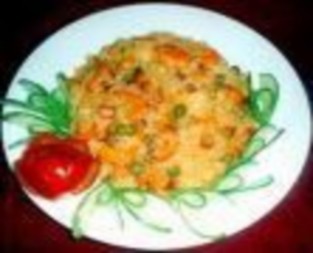
2.2.4.Yangzhou fried rice
DISH 16: YANGZHOU FRIED RICE
I. SPECIALIZED KNOWLEDGE FOR PRACTICE
Step 1: prepare ingredients.
Quantity for 10 servings:
1.5 kg | Chicken eggs | 3 fruits | |
Sausage | 0.1 kg | Green beans | 0.1 kg |
Prawn | 0.3 kg | Scallions | 5 trees |
Lean | 0.15 kg | Dried onion | 3 bulbs |
Ham | 0.1 kg | Pepper | 0.002 kg |
Carrot | 0.1 kg | Salt | 0.01 kg |
Butter | 0.03 kg | MSG | 0.01 kg |
Oil | 0.2 liter |
Step 2: Prepare ingredients:
- Wash the rice, drain the water, cook the rice, scoop it out and let it cool.
- Roasted lean pork, diced (can be replaced with pork roll)
- Blanch shrimp, peel and dice.
- Diced sausage and ham.
- Thinly sliced omelette.
- Carrots, diced snow peas, blanch, finely chop green onions.
Step 3: Heat processing:
- Add chopped onion oil and stir-fry until fragrant, add stir-fried rice, shrimp, pork, Chinese sausage, ham, carrots, beans, stir well, season to taste.
- When almost done, sprinkle eggs, green onions, and butter evenly.
Step 4: Product presentation:
- Arrange rice on a plate, decorate with sausage and cucumber around.
Step 5: Sensory quality assessment:
- Color: bright, harmonious colors of the ingredients.
- Smell: Characteristic aroma of ingredients and spices.
- Taste: just right.
- Status: Rice grains are firm, plump, not crumbly.
- How to eat: Main dish, eaten at the end of the meal.
II. TYPES OF DEFECTS AND PREVENTION
STT
Phenomena | Reason | Prevention | |
1 | - Rice grains are not firm. | - Due to too much raw material in the unbalanced tool. - Due to uneven cutting of ingredients. | - Must ensure correct quantity between ingredients and frying tools. - Cut evenly and the same size. |
2 | - The rice grains are too dry or too mushy. | - Because the rice is not cooked properly. - Frying time is too long. | - Cook rice to ensure it is not too dry or too mushy. - Adjust the temperature and time appropriately when fried. |
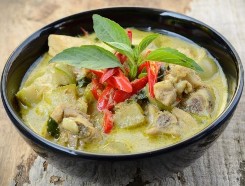
2.2.1. Thai green carry chicken
DISH 17: THAI GREEN CHICKEN CURRY
* Target.
- Describe the process of making green curry chicken.
- Choose delicious, disease-free chicken and spices that are still within their expiration date, ensuring quality.
- Perform the steps in the process of preparing chicken curry to ensure food safety and hygiene.
- Practice careful, agile working style, save materials and work safely. Organize the processing area neatly and scientifically.
a) Processing procedure. Step 1: preparation:
+ Prepare kitchen equipment: Gas stove, Asian pan, knife, cutting board, tray, pan, ladle of all kinds, bowls, plates, gloves...
+ Quantity of ingredients for 10 servings:
Chicken breast
1.0kg | Eggplant | 3 fruits | |
Blue Cary | 0.05kg | Chili pepper | 5 fruits |
Thai coconut milk | 0.2 liter | Dog basil leaves | 0.05kg |
Thai fish sauce | 5ml | White salt | 1g |
Pepper | 1g | MSG | 2g |
Onion, garlic | 20 g |
Step 2: Prepare ingredients
- Wash eggplant, cut into hoof shape.
- Wash chili peppers and cut into 0.5cm thick slices
- Pick the basil leaves, wash and drain.
- Peel onions and garlic, wash, crush and chop finely.
- Wash chicken breast, cut into square pieces.
Step 3: Heat treatment
- Put the prepared eggplant and chili peppers into the pot and boil until soft, remove and drain.
-Put the pot on the stove, add coconut milk, green curry, stir until dissolved and bring to a boil. Add the chicken, cook until done and season with MSG to taste. When ready to turn off the stove, add purple choca, chili pepper and pandan leaves and stir well.
Step 4: Product presentation
- Arrange the chicken on a plate, sprinkle some chili slices on top, and add coriander sprigs to make it look nice.
Step 5: Finished product requirements:
- Color: the sauce is reddish yellow.
- Smell: The aroma of coconut milk, chicken and green curry.
- Taste: Characteristic taste, slightly spicy, sweet, fatty and rich..
- Status: chicken is cooked, not tough
- How to eat: Main dish eaten with rice.
II. TYPES OF DEFECTS AND PREVENTION
STT
Phenomena | Reason | Prevention | |
1 | - The chicken meat is mushy and crumbly. | - Due to the ingredients not being fresh. | - Pay attention to choosing fresh, delicious ingredients. |
2 | - The curry sauce is watery. | - Due to unbalanced ratio of raw materials and core coconut. | - Comply with quantitative standards. |
Lesson 2: Techniques for preparing European dishes
Objective of the lesson:
- Describe the preparation process of some typical European dishes.
- Select, prepare, cut, and combine ingredients and spices.
- Prepare some typical European dishes according to the correct preparation process.
- Present prepared dishes attractively and beautifully, ensuring food hygiene and labor safety.
- Implement hygiene, security, safety and fire prevention measures
explosion during food processing;
- Serious, proactive, positive and highly cooperative in teamwork
- Careful, precise, safe and economical in raw materials during processing.
- Actively practice knowledge, skills, autonomy and responsibility, and culinary ethics to best meet job requirements.
Content of the article:
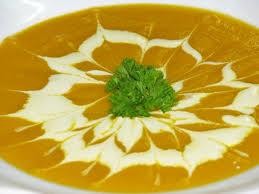
1. Appetizers 1.1. Creamy pumpkin soup
DISH 1: CREAM OF PUMPKIN SOUP
I. SPECIALIZED KNOWLEDGE FOR PRACTICE
Step 1: prepare ingredients.
Quantity for 10 servings:
Pork bones
1.0 Kg | Road | 0.03 Kg | |
Pumpkin | 0.7 Kg | Butter | 0.05 kg |
Potato | 0.3kg | Pepper | 0.002 Kg |
Onion | ½ tuber | Salt | 0.01 Kg |
0.1 liter | Parsley leaves, thyme | 1 little |
Fresh cream
Step 2: Prepare ingredients:
- Pork bones simmered in clear broth with chopped thyme leaves.
- Peel pumpkin and potatoes, cut into cubes.
- Peel the onion, wash and chop finely
Step 3: Heat processing:
- Saute onion and butter until fragrant, add pumpkin and season with salt and pepper, then pour in pumpkin broth and simmer for 30 minutes. When pumpkin and potatoes are soft, turn off the heat, let cool, put in blender, and strain through a wire.
- Put the pumpkin pot on the stove to boil again, simmer, stir while boiling, slowly add fresh cream. Season again.
Step 4: Product presentation:
- When eating, serve the soup on a deep plate, garnish with whipped cream and parsley leaves.
Step 5: Sensory quality assessment:
- Color: bright yellow of pumpkin
- Smell: Characteristic aroma of butter, pumpkin, fresh cream
- Taste: delicious, sweet, cool, rich with fresh cream
- Status: smooth soup
- How to eat: As a hot appetizer
II. TYPES OF DEFECTS AND PREVENTION
STT
Phenomena | Reason | Prevention | |
1 | - The soup is thick. | Due to imbalance with broth | Comply with the regulations quantity |
2 | - The soup is watery. | Due to limited materials. | Comply with the regulations quantity |
DISH: LEGUMS SOUPE
I. SPECIALIZED KNOWLEDGE FOR PRACTICE
1. Step 1: Prepare ingredients (10 servings):
Potato
0.3 kg | Dutch beans | 0.1 Kg | |
Carrot | 0.2 | Butter | 0.12 |
Onion | 0.1 | Flour | 0.1 |
Celery | 0.05 | Fresh cream | 0.2 liter |
Leek | 0.05 | Broth | 2.5 liters |
Tomato | 0.1 | Salt | 0.02 |
2. Step 2: Prepare ingredients
- Peel and wash all vegetables and dice them.
3. Step 3: Heat treatment
- Put butter in a pan, heat until melted, add potatoes and carrots, stir-fry briefly, then add broth, simmer, add onions, celery, tomatoes, cook until soft, season.
- When eating, stir-fry butter, flour and mix into soup, stir well, pour into bowl with fresh cream and stir until soup is smooth.
4. Step 4: Product presentation
- Scoop soup into soup bowls or deep plates.
5. Step 5: Sensory quality assessment
- Color: The soup has a harmonious color.
- Smell: The aroma of butter and flour.
- Taste: Fragrant, sweet and cool.
- Status: Vegetables are not crushed, medium consistency.
- How to eat: As an appetizer, eaten at the beginning of the meal.