
Vietnamese laws on biddingare also continuously issued in accordance with international practices and the international legal system, ensuring foreign contractors participate in bidding in Vietnam while creating conditions for Vietnamese contractors to access and learn from the experience of foreign contractors.
1.4 Vietnam's regulations on applicable law and dispute resolution in international construction bidding.
Bidding for construction with foreign elements as analyzed above shows that there is an increasing tendency to develop strongly along with the needs of economic development in the country and the world.
Determining the law applicable to bidding relationships with foreign elements in general and international construction bidding in particular, in general, Vietnam's bidding law does not have any clear and specific provisions. Article 3 of the Bidding Law states: Application of the Bidding Law, relevant laws, international treaties, international agreements
1. Bidding activities must comply with the provisions of this Law and relevant legal provisions.
Maybe you are interested!
-
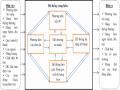
 Regulations on Environmental Protection for Seaports in Vietnamese Law
 -
 Regulations of notaries under Vietnamese law - 1
 -
 Regulations of Vietnamese Law on Voluntary Social Insurance
 -
 Labor regulations according to Vietnamese law - 13
 -
 Labor regulations according to Vietnamese law - 2
2. In case of special bidding regulations in other laws, the provisions of that law shall apply.
3. For projects using official development assistance (ODA), bidding is conducted on the basis of the content of international treaties to which the Socialist Republic of Vietnam is a member or international agreements to which competent agencies and organizations of the Socialist Republic of Vietnam have signed.

Most construction packages have foreign elements, mainly official development assistance capital, when applying international bidding, the investor units give priority to applying the provisions of Vietnamese bidding law. Because this is the initial stage of the process of reaching a specific agreement on signing a sales contract, service contract, consulting contract in bidding. For
Therefore, the choice of applicable law, Vietnamese law stipulated in Article 3 uses a discretionary method for the units applying the choice. In case there are provisions in the International Treaty that the competent agency or organization of the Socialist Republic of Vietnam has signed, during the implementation of international construction bidding, it will be applied and adjusted.
The issue of dispute resolution in international bidding is also a complicated issue. If bidding is a private legal relationship (civil law) between the bidder and the contractor, regardless of whether the subject is a state agency, organization, or enterprise, then the resolution of bidding lawsuits should be conducted according to civil procedure. If the nature of the bidding lawsuit is an administrative case if one party is a state agency, including a central agency as a party in national construction bidding. And the bidding dispute will be a civil case when one party is a representative of a social organization. The "division" in the assessment of the nature of the bidding relationship is such that the establishment of a dispute resolution mechanism in bidding is still... under debate, although in reality, disputes are still happening busily every day.
Due to the nature of capital sources and subjects, the bidding relationship is not necessarily an administrative relationship, but it is not necessarily a civil relationship either. If we define this relationship as purely administrative, it is not correct because current administrative law only stipulates the subjects as decisions and administrative acts of State agencies and competent persons.
Therefore, it is more reasonable to consider the bidding relationship as a civil relationship. However, the worrying thing is that if it is a civil relationship, resolving disputes according to civil procedures is very complicated, especially related to the issue of compensation for damages, application of temporary emergency measures, etc.
According to international practice, countries must have an independent judicial body to resolve disputes in bidding, especially when one party is the State.
(participate as an investor). If the disputing parties do not accept the decision of this agency, then the case will be brought to Court.
Currently in Vietnam, the only agency that resolves bidding disputes is the Court because the arbitration agency only resolves disputes related to trade. Bidding disputes are mainly disputes in the pre-winning stage such as suing investors in the bidding process, selecting contractors, etc.
Therefore, the regulation of arbitration mechanism to resolve bidding disputes will not be suitable to the nature and will “make it difficult” for commercial arbitration activities in Vietnam because it is not known how to resolve bidding disputes appropriately. This will be wasteful for both the disputing parties and the arbitration agency because in the end, the lawsuits will still go to court.
From the assessment, in the condition that domestic law is not clear, complete, consistent and the nature of bidding relations is civil relations, the settlement of disputes in this field must be conducted according to civil proceedings at the Court in accordance with the legislative viewpoint of our country, even though one party may be the state (state agency).
In summary: The choice of applicable law and dispute resolution method in bidding will be agreed upon by the parties in the bidding process and clearly stated in the Invitation to Bid for International Construction Bidding Documents and that is considered the basis for application in the implementation of this form of bidding.
Chapter 2
Current status of implementation of bidding law for domestic contractors in international construction bidding
2.1 Overview of the law on bidding in general
Our country's economy has shifted from a centralized planning mechanism to a market mechanism, and the law of competition has gradually been formed. In order to create equal competition and improve the efficiency of using state capital for basic construction investment projects as well as other projects, Vietnam has issued the 2005 Law on Bidding and the 2009 Law on Amendments and Supplements to the 2009 Law on Bidding, Decree 85/2009/ND-CP Guiding the implementation of the Law on Bidding and selection of construction contractors according to the Law on Construction, a complete and unified system of Bidding Laws throughout the country has helped bidding activities to be organized and not spontaneous as before.
In previous years, the final settlement price of basic construction investment projects often exceeded the total estimated budget and the approved total investment. This is a situation that causes loss of domestic resources and at the same time creates many negative aspects in project management and implementation. The birth of bidding has helped to calculate the volume of work and cost accurately, and the construction progress is specifically planned, thus saving a lot of costs and avoiding loss of resources for investors. Contractors who want to win the bid must take advantage of their advantages to reduce the cost of the project while still ensuring the quality of the project. Usually, the winning bid price is often lower than the estimated price. For construction and installation packages, the average capital savings rate is 14%, higher than that of goods procurement packages [43]. The reason is that the input factors of construction products can fluctuate during the construction process such as: workers' wages, raw material prices, and construction organization measures. These are factors that contractors can leverage their advantages.
compared to other contractors to reduce costs and improve competitiveness. The inviting party often calculates the price of the project based on average standards without considering all the capabilities of the contractors, so the winning bid price is always lower than the estimated price. In some cases, the winning bid price can be much lower than the estimated price, almost bringing no profit to the contractors. This can be considered a strategy of contractors to create a market and gain prestige in the construction market. However, this phenomenon only occurs with contractors who are new to the construction market and this contractor must have very strong forces.
Bidding work in recent years has had many positive changes, bringing high efficiency and a healthy competitive environment. In 2010, the total state capital (state capital for development investment purposes, purchasing state assets and joint venture capital, shares, business cooperation contracts) applied to contractor selection according to the Bidding Law was 357,269.98 billion VND, the difference between the total winning bid price and the total achieved bid package price was 6.63%, corresponding to a savings of 23,172.08 billion VND (about 1.13 billion USD) [4].
By purpose of capital use: Bidding packages using state capital for development investment purposes had the largest number of packages implemented in 2010, specifically 89,516 packages (accounting for 94%), total package price was 324,086.62 billion VND (accounting for 90%) and total winning bid price was 302,987.97 billion VND (accounting for 91%). Bidding packages using state capital for asset procurement had the second largest number of packages, 5,025 packages (accounting for 5.2%); total package price was 28,873.6 billion VND (accounting for 8%), total winning bid price was 26,864.28 billion VND (accounting for 8%). The bid packages using joint venture capital, shares, and business cooperation contracts have the lowest number of bid packages, with only 528 bid packages (accounting for 0.5%) with a total bid package price of VND 4,039 billion (accounting for 2%) and a total winning bid price of VND 4,245 billion (accounting for 1%) [39].
On the savings rate in bidding: bidding packages using state capital to
Asset procurement has the highest savings rate, reaching 6.95%, the bidding package using state capital for development investment purposes has the second highest savings rate, reaching 6.51%; the bidding package using joint venture capital, shares, and business cooperation contracts has the lowest savings rate, reaching 1.48% [39].
Compared to 2009, the number of bid packages using state capital for development investment purposes in 2010 increased but the total bid package price and total winning bid price decreased, specifically, there were 16,301 more bid packages but the total bid package price decreased by 43,507.03 billion VND and the total winning bid price decreased by 46,786.95 billion VND. On the contrary, the number of bid packages using state capital for asset procurement decreased but the total bid package price and total winning bid price were higher, specifically, there was a decrease of 420 bid packages but the total bid package price increased by 4,319.7 billion VND and the total winning bid price increased by 4,685 billion VND. The number and total winning bid price of bid packages using joint venture capital, shares, and business cooperation contracts decreased compared to 2009. Specifically, the number of bid packages decreased by 1,014 packages and the total winning bid price decreased by 12,785.26 billion VND [4].
According to the form of contractor selection: with the results through the forms of bidding, the designated bidding has the largest number of applied bidding packages: 70,147 packages and accounts for 73% of the total number of bidding packages implemented in 2010, with a total winning bid price of 113,643.51 billion VND but only saved 5,656 billion VND, a low saving rate, only reaching 4.74% [39].
Open bidding has the second largest number of applied packages: 13,959 packages and accounts for 15% of the total; has a total winning bid price of 185,532.83 billion VND; has the largest savings value of 15,191.46 billion VND with a savings rate of 7.56%, accounting for 65% of the total savings value of all forms (23,172.08 billion VND).
Competitive bidding has the number of applied packages of 5,655, only 6% of the number of packages applied by direct bidding with the lowest savings achieved (VND 242.22 billion) and the lowest savings rate (2.65%) [39].
Compared to 2009, the number of bid packages applying direct bidding in 2010 only increased in number of bid packages but decreased in total bid package price and total winning bid price. Specifically, there were 16,307 more bid packages but the total winning bid price decreased.
79,182 billion VND, in addition, the savings rate for the form of designated bidding in 2010 was higher than in 2009 (in 2010 it was 4.74%, in 2009 it was 2.07%) [39].
Building a policy on bidding: The Ministry of Planning and Investment has drafted and submitted to the Government for signing and promulgation of Directive 494/CT-TTg on October 24, 2010. The promulgation of that Directive helps to provide solutions to implement the Politburo's policy on the campaign "Vietnamese people prioritize using Vietnamese goods" to build a Vietnamese consumer culture and produce many Vietnamese goods with high quality and competitiveness, meeting domestic consumption and export needs. At the same time, the Ministry of Planning and Investment has issued Document 3081/BKH-QLDT requesting ministries, branches and localities to urgently implement Directive 494/CT-TTg on the use of domestically produced materials and goods in bidding and investment projects using state capital; Implementing Document No. 157/TTg-KTN dated January 22, 2010 on the implementation of bidding designation according to Document No. 229/TTg-KTN and strengthening bidding management according to decentralized responsibilities. Regarding the development of bidding document templates, in 2010, the Ministry of Planning and Investment issued 16, including 07 circulars related to construction bidding activities and guiding documents, [39] including:
(1) Circular No. 01/2010/TT-BKH dated January 6, 2010 detailing the preparation of construction and installation bidding documents (including 84 pages).
(2) Circular No. 02/2010/TT-BKH dated January 19, 2010 detailing the preparation of Bidding Documents for small-scale construction and installation packages (including 65 pages).
(3) Circular No. 03/2010/TT-BKH dated January 27, 2010 detailing the preparation of construction and installation pre-qualification invitation documents (including 29 pages).
(4) Circular 04/2010/TT-BKH dated February 1, 2010 detailing the preparation of the Construction and Installation Bidding Request Document (consisting of 53 pages).
(5) Circular No. 08/2010/TT-BKH dated April 21, 2010 detailing the preparation of bidding result appraisal reports (including 11 pages).
(8) Circular No. 09/2010/TT-BKH dated April 21, 2010 detailing the preparation of bid evaluation reports for goods and construction procurement packages (including 36 pages).
(6) Circular No. 10/2010/TT-BKH dated May 13, 2010 regulating training and professional development in bidding (including 22 pages).
(10) Circular No. 11/2010/TT-BKH dated May 27, 2010 detailing competitive bidding (including 35 pages).
(7) Circular No. 20/2010/TT-BKH-BTC dated September 21, 2010 jointly issued by the Ministry of Planning and Investment and the Ministry of Finance detailing the provision of bidding information posted on the Bidding Newspaper (consisting of 30 pages).
(8) Circular No. 21/2010/TT-BKH dated October 28, 2010 detailing the appraisal of bidding documents and request documents (including 12 pages).
(9) Circular No. 01/2011/TT-BKHĐT dated January 4, 2011 detailing the inspection of bidding work (including 28 pages).
The issuance of Bidding Document Templates aims to unify the content and structure of Bidding Documents, increase transparency, improve quality and save time in the bidding process according to international practices, facilitate bidding work and has been highly appreciated by many bidding units.
2.2 Achievements in implementing bidding laws for domestic contractors in international construction bidding
2.2.1. Achievements in the implementation of bidding laws for domestic contractors in international construction bidding from the practical perspective of contractors