
CHAPTER 1 SUMMARY
Chapter 1 has introduced the general issues of urgency, objectives, objects, scope and research methods of the thesis.
In particular, the thesis focuses on clarifying the urgency of the research topic from a theoretical and practical perspective. The urgency from a theoretical perspective in Chapter 1 shows theoretical gaps when considering a number of studies on the issue of satisfaction. In the digital environment in general and the C2C model in particular, there has been no study that approaches satisfaction according to the structure of consumer behavior psychology (which will be analyzed more clearly in Chapter 2, in the overview of studies on satisfaction). From a practical perspective, the thesis delves into the current state of e-commerce development in general and the C2C e-commerce model in particular in Vietnam. The rapidly increasing and stable figures in revenue and traffic show that the C2C model is developing quite rapidly thanks to its ability to attract and reach individual customers along with high business efficiency for businesses. However, there are still many major limitations from the environment such as security issues, personal information security, law enforcement in resolving disputes between buyers and sellers; from the business side are issues of ensuring security, transaction safety and creating customer satisfaction; from the consumer side are issues of awareness and trust.
Maybe you are interested!
-
 Customer satisfaction in C2C online marketing - 17
 -
 Theoretical and Practical Basis of Employee Job Satisfaction
 -
 The impact of online banking service quality of Vietnam Development Investment Bank on customer satisfaction in Ho Chi Minh City market - 14
 -
 Theoretical Basis of Tourism Destination Marketing
 -
 The impact of online banking service quality of Vietnam Development Investment Bank on customer satisfaction in Ho Chi Minh City market - 2
Therefore, the objective of the thesis is to identify factors affecting the level of customer satisfaction in Vietnam with the C2C model, specifically with the websites of C2C businesses. On that basis, propose solutions and recommendations that demonstrate priority in practical implementation.
The main research subjects are people who have used the services of C2C websites in Vietnam.

The scope of the study clearly defined the target audience as undergraduate and graduate students who have used and are likely to become loyal customers in the future. The study also focused on the extent of customer satisfaction with the technology services provided by the website rather than expanding the satisfaction
for the entire transaction process.
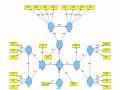
Common methods used in research are descriptive statistics, linear regression of primary data and analysis, comparison, and synthesis of secondary information. In addition, the author of the thesis also conducted in-depth interviews with representatives of state management agencies, enterprises, and customers. The thesis uses quantitative analysis tools SPSS 17.0 and SmartPLS 2.0 in descriptive statistical analysis and running multivariate linear regression models. The above research methods will be presented in more detail in Chapter 3. Methods, research results, and discussion.
.Thus, Chapter 1 has basically introduced the main contents and analyzed the actual context of the study. In the next chapter, the thesis will continue to clarify the theoretical issues with the content of synthesis and analysis of the theoretical foundations of satisfaction, thereby proposing the model and research hypotheses.
CHAPTER 2. THEORETICAL BASIS OF CUSTOMER SATISFACTION AND PROPOSED RESEARCH MODEL
2.1. Overview of customer satisfaction studies
2.1.1. Research in Vietnam
In Vietnam, studies on satisfaction are mainly empirical studies with the reuse of existing theoretical models. Depending on the research field, specific factors are determined according to the model. In recent times, most studies related to satisfaction have been conducted in traditional environments, focusing on a number of areas such as:
- Education:
In the field of Education, there have been many research topics at the master's level or school-level scientific reports on student satisfaction in the past 5 years, such as the studies of: Nguyen Thanh Long (2006) on " Using the SERVPERF scale to evaluate the quality of undergraduate training at An Giang University " [7]; Vu Tri Toan (2007) on " Research on the training quality of the Faculty of Economics and Management according to the SERVQUAL service quality model " [14]; Nguyen Ngoc Thao (2008) on " Satisfaction with the training quality of students of the Faculty of Hospital Management, Hung Vuong University " [10]; Nguyen Thi Trang (2010) on " Building a model to evaluate the level of student satisfaction with the training quality at the University of Economics, University of Da Nang " [16]; Nguyen Thi Tham (2010): " Survey of student satisfaction with training activities at the University of Natural Sciences, Ho Chi Minh City National University " [11]...
The above studies on satisfaction are set in the educational context, so they mainly approach the issue of satisfaction based on the application of the European satisfaction index model and the SERVQUAL overall service quality model. The specific observed variables in the model are determined according to the specific situations of the educational environment.
- Banking services:
o Research by Le Van Huy (2007): “ Using customer satisfaction index in banking business strategy planning: theoretical model approach ” [5]. This research only stops at the level of proposing a model approach and the ability to apply it in strategic planning, improving customer satisfaction in the banking sector.
o Research by Hoang Xuan Bich Loan (2008): “Improving customer satisfaction at the Bank for Investment and Development of Vietnam – Ho Chi Minh City Branch” [6]. The author used the European satisfaction index model to evaluate expectations, perceived quality, perceived value, and customer satisfaction with: reliability, responsiveness, accessibility, information, and staff service skills. The study proposed to include the price factor in the model as an intermediate variable in the relationship between image, expectations, and perceived quality with customer perceived value. The survey and analysis results showed that all variables have a positive impact on customer satisfaction. However, the study has not yet clearly indicated the strong and weak impact of the variables in relation to the satisfaction structure as well as the significance of those impacts in solutions to improve satisfaction levels.
o Research by Ha Nam Khanh Giao (2011): “ Satisfaction level of customers using payment cards in Ho Chi Minh City ” [3]. The author studies satisfaction and uses the theoretical system “Expectation – Confirmation” of Oliver (1980). The research model uses the SERVPERF measurement tool to evaluate the satisfaction of customers using payment cards in Ho Chi Minh City. The study uses a 5-point Likert scale, including 29 observed variables to measure 9 components including reliability, empathy, responsiveness, assurance, tangibles, convenience, accessibility, price and complaint resolution. The survey results and correlation regression analysis show that only 4 variables: reliability, convenience, price and complaint resolution have a statistically significant impact on satisfaction.
- Mobile telecommunications services : research by Thai Thanh Ha and Ton Duc Sau (2007) on: " Evaluation of customer satisfaction with mobile telecommunications services in Thua Thien - Hue " [4]. The research uses the theoretical basis of "Expectation - Confirmation" (Oliver, 1985). Customer satisfaction is the result of this comparison and there will be three cases: Customer expectations are (a) confirmed if the performance of the service completely matches customer expectations; (b) will be disappointed if the performance of the service does not match customer expectations;
(c) will be satisfied if what they feel and experience after using the service exceeds what they expected and expected before purchasing the service. The 7-point Likert scale was used to measure the level of customer evaluation of factors and satisfaction. The research results identified that the customer perception factor of call quality has the strongest impact on satisfaction. Other factors such as staff professionalism, service registration location, and marketing factors have a weaker impact on satisfaction. However, like the above studies, this study did not analyze in depth the impact of factors in relation to the satisfaction structure.
- Tourism and hotel services: Nguyen Tai Phuc's (2010) study on " Survey of tourist satisfaction with ecotourism activities in Phong Nha - Ke Bang " [9]; Nguyen Quoc Nghi and Phan Van Phung (2011) on " Factors affecting customer satisfaction with the hotel system in Can Tho city " [8]. The two studies mentioned above approach the problem of satisfaction research by determining influencing factors using regression methods. The method of testing and multivariate linear regression is used quite systematically with SPSS 15.0 software. However, the influencing factors are only listed based on feelings with the service and quality factors that the business is providing. In addition, the theoretical basis of satisfaction has not been clarified to ensure scientific and inherited nature in the research.
Thus, a review of domestic studies on satisfaction shows that the main contributions of the above studies are the application of concepts and models of indicators.
European satisfaction index and overall service quality SERVQUAL to analyze and identify influencing factors. Some studies have not ensured scientific and inherited in satisfaction research. Most have not gone deep into the structure of satisfaction. The content as well as the results of the studies do not have much theoretical and academic contribution in satisfaction research from the perspective of customer behavior science in Marketing.
2.1.2. World research
Research on satisfaction in Marketing mainly focuses on building and developing concepts and models to apply to measure customer satisfaction in different areas in traditional and online business environments.
2.1.2.1. On the concept of satisfaction
Cardozo was the first to address the issue of satisfaction in a study on customer effort, expectation and satisfaction, published in the Journal of Marketing in 1965 [25]. Since then, a series of subsequent studies have begun to exploit and delve into this issue. Although researchers have attempted to measure and explain satisfaction, there is no common unified definition.
The lack of consensus on the definition of satisfaction is reflected in the controversy over whether satisfaction is a process or a reaction/result of a process. That is, definitions of satisfaction either emphasize the evaluation process (such as in the studies of Fornell 1992; Hunt 1977; Oliver 1981). Customer satisfaction is formed, increased or decreased depending on the process of using the service with different factors affecting customers. Process definitions assume that customer satisfaction is often less stable and when measured, process satisfaction is greatly influenced by the differences in the factors that have a decisive impact on satisfaction.
Meanwhile, there are definitions that emphasize satisfaction as the result of a customer evaluation process (such as in the studies of Halstead, Hartman, and Schmidt 1994; Howard and Sheth 1969; Oliver 1997,1981; Tse and Wilton 1988; Westbrook and Reilly 1983). This means that, after all the usage processes, customers give an overall judgment about their level of satisfaction.
Most studies use the definition of customer satisfaction as the customer's response after the evaluation process. In particular, studies often use the connotation of customer satisfaction as a simplified concept (such as: response after completing something (Oliver, 1997); affective response (Halstead, Hartman and Schmidt, 1994); overall evaluation (Fornell, 1992); psychological state or reaction after evaluation (Day, 1984)). However, there is still disagreement about the nature of satisfaction in these simplified concepts. Researchers have conceptualized customer satisfaction as a rational response (in studies by Bolton and Drew, 1991; Howard and Sheth, 1969; Tse and Wilton, 1988) or an emotional response (e.g., in studies by Cadotte, Woodruff, and Jenkins, 1987; Halstead, Hartman, and Schmidt, 1994; Wesbrook and Reilly, 1983). Additionally, the definitions included for measurement may include the behavioral aspect of satisfaction (e.g., “I would recommend this website to others who are interested”).
Another inconsistency is found in the terminology used to conceptualize the concept. Researchers have used terms that imply that satisfaction is determined by the end user: consumer satisfaction (e.g., Cronin and Taylor, 1992; Oliver, 1993; Spreng, MacKenzie, and Olshavsky, 1996; Tse and Wilton, 1988), overall customer satisfaction (e.g., Churchill and Surprenant, 1982; Fornell 1992; Halstead, Hartman, and Schmidt, 1994; Smith, Bolton, and Wagner, 1999), or simply satisfaction (e.g., Kourilsky and Murray, 1981; Mittal, Kumar, and Tsiros, 1999; Oliver, 1992; Oliver and
Swan 1989). These terms are used interchangeably, and are limited depending on the author's judgment about which particular term to use.
The specific concepts and conceptual explanations used for measurement in the thesis research will be mentioned in section 2.2. Theoretical basis of satisfaction.
2.1.2.2. About the research model
Willard Hom's (2000) study summarized customer satisfaction models and divided them into two groups of models: macro models and micro models [112].
In which, macro models are understood as models that use the concept of customer satisfaction in the impact, linked to a network of related concepts, such as value, quality, complaining behavior and loyalty. These macro models are especially important and are often used by businesses to study customer satisfaction for the purpose of building marketing policies.
In addition, micro-models consider the factors that constitute customer satisfaction, such as uncertainty of expectations, equity, attributes, affect, and regret. Micro-models help researchers operationalize satisfaction scales accurately. Thus, they help establish a solid structure of satisfaction in research.
2.1.2.2.1. Macro models of customer satisfaction
Perceived product/service uncertainty
Comparison criteria
Figure 2.1. Traditional macro model of satisfaction
of customers (Woodruff & Gardial, 1996)
- Traditional macro model of customer satisfaction (Figure 2.1)
Perceived utility value
Feeling satisfied
Result