
In 2016, the group of authors Tomasz also agreed that radical surgery is still optimal in the treatment of malignant leiomyomas, minimally invasive surgery or endoscopy is the choice and extensive lymph node dissection is not necessary as for carcinomas [33]. Unlike carcinomas, non-epithelial tumors of the submucosal components, often develop completely into the peritoneal cavity, only related to and adherent to the damaged organ (stomach, duodenum, small intestine, colon) on a small area, so the surgical method for these cases is still not unified and depends on the surgeon: wedge resection or typical organ resection.
Table 3.16 shows that, with tumors in the stomach, the rate of segmental resection and wedge resection is almost the same, 132/136. In the small intestine (92.7%), the majority of segments were resected and the digestive circulation was immediately restored, while in the colon, this rate was 75.4%. The rate of local tumor resection of the rectum and anal canal was the highest, 12/33 cases (36.4%), the rate of amputation with tumors in the rectum was quite high (28.1%). Wedge tumor resection was performed most often in the stomach, segmental resection and removal for HMNT (Hartmann surgery) mainly in the left colon, cecum, and sigmoid colon.
For GIST, the majority of patients in the study underwent surgery for radical treatment. Stage 1 GIST is considered very low risk, with almost no recurrence after radical surgery, stage II and III GIST has a low and moderate risk of progression with recommendations for combined surgery and adjuvant treatment, stage IV GIST is considered high risk, requiring adjuvant treatment [21]. Surgery is still a basic treatment method for primary GIST with a radical surgery rate of up to 70 - 80% [4], contraindications to surgery are when the tumor has metastasized far away, the patient's health is weak and does not qualify for surgery, except in cases of complications requiring emergency intervention. Because GIST is located outside the mucosa, it often tends to push and invade neighboring tissues rather than the digestive tract itself where the tumor originates, so
Maybe you are interested!
-
 Study on Some Clinical and Paraclinical Features of Appendiceal Abscess
 -
 Specialized Pathology Part 1 - 10
 -
 Study on chemical composition, toxicity and some biological effects supporting the treatment of gastric and duodenal ulcers of Sanchezia nobilis Hook.F. leaves - 2
 -
 Study on the treatment results of acute obstructive pyelonephritis due to ureteral stones - 23
 -
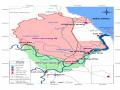 Natural Features, Flood Control and Drainage Dyke System of the Study Area
Surgery is often chosen as segmental resection for small bowel lesions or wedge resection for gastric tumors. During surgery, it is necessary to avoid tumor rupture because it can cause tumor cell dissemination in the peritoneal cavity, increasing the recurrence rate [201]. If the tumor invades neighboring tissues, surgery should be performed en bloc to avoid tumor cell dissemination, with the resection area 1-2 cm from the tumor edge. Lymph node dissection is not necessary except in cases where immediate biopsy shows lymph node invasion because GIST rarely metastasizes through the lymphatics but mainly through the blood, usually through the liver. The 5-year survival rate for all stages of GIST that is completely surgically treated ranges from 40-55% [158] [12] [13].
4.4.2. Nature of emergency surgery:
In the study, there were 44 cases requiring emergency surgery (7.9%) with 3 causes leading to patients requiring emergency surgery: intestinal obstruction, peritonitis due to perforated hollow organ and gastrointestinal bleeding with quite similar rates, respectively 12:17:15 (Figure 3.5). The type of tumor causing these complications requiring emergency surgery was GIST and lymphoma; not found in leiomyomas, rhabdomyosarcomas, melanomas, hemangiomas or malignant lipomas. Specifically:
- 12 cases of intestinal obstruction required emergency surgery, the main cause of obstruction was intussusception, of which 2 cases had intussusception to the point of intestinal necrosis causing peritonitis (1 case was GIST, 1 case was lymphoma), of these 12 cases, the rate of lymphoma accounted for the majority of 67%, GIST only had 4 cases. The location was mainly in the last part of the small intestine (jejunum) and cecum (75%) and only 3 cases were in the jejunum, not in the stomach, duodenum and colon, this is consistent with the common location of lymphoma.
- 17 cases of intestinal perforation causing peritonitis, of which the majority were due to lymphoma (12 cases, accounting for 71%), this is a common complication of lymphoma at OTH. GIST accounted for a lower percentage with 5 cases (29%). The most common location of perforation was in the jejunum (8 cases), ileum (5 cases), cecum (3 cases) and stomach (1 case); not seen in the duodenum and colon.
- 15 cases of XHTH, in contrast to complications of intestinal obstruction and peritonitis, this is the main complication in GIST tumors with 13/15 cases (87%), this is also a common symptom of GIST in OTH with XHTH location including 5 cases in the stomach, 1 case in the duodenum, 6 cases in the jejunum, 2 cases in the ileum and 1 case in the cecum. Thus, XHTH complications occur more in the upper digestive tract than in the lower, but are not found in the large intestine.
Thus, with lymphoma, the common complication requiring emergency surgery is intestinal obstruction due to intussusception and the common location is the ileocecal area, and intestinal perforation causing peritonitis [53] with the same rate in the ileocecal area. With GIST, the complication of XHTH is more common and the location of the lesion in the ileum is higher than in the stomach and jejunum. We did not encounter the above complications in the esophagus and colon.
4.4.3. General results after surgery
Most patients had good results and were discharged from the hospital at a rate of 97.5%, while 15 cases with 14 severe cases were discharged (of which 13 were lymphomas with 4 lesions in the stomach, 4 in the small intestine, 1 GIST) and 1 case died after surgery due to lymphoma, of which 7 cases required emergency surgery (Table 3.18). This shows how severe the complications of lymphoma or the lesions in the late stage of widespread invasion of lymphoma will be.
The average hospital stay was 10.3 days, the longest was 52 days, similar to the result of Nguyen Thanh Khiem 10.5 days [14] and longer than the 9.7 days of Bui Trung Nghia [12]. Notably, there were 76 cases (13.6%) treated for more than 2 weeks (14 days), including 46 GIST cases, 22 lymphoma cases, 2/5 malignant melanoma cases, 2/5 malignant rhabdomyosarcoma cases, 1 malignant hemangioma case and 2/7 malignant lipoma cases, so in terms of the number of cases with long stays, GIST was the least compared to the other types of tumors.
4.4.4. Early complications after surgery
Table 3.19 shows that 543/557 patients (accounting for 97.5%) had favorable postoperative course and were discharged from hospital. The early complication rate was quite low with 43/557 patients (accounting for
7.7%). Complications such as urinary tract infection, surgical site infection or pneumonia are usually mild and completely cured before discharge. There was 1 case of postoperative lymphoma with peritonitis and severe postoperative bleeding, all of which were GIST but the patients were treated well and discharged, 3 cases of digestive fistula were 1 GIST and 2 lymphomas (of which 1 severe postoperative case required hospitalization and 1 emergency surgery due to VFM due to small bowel perforation). It shows that severe postoperative complications occur more frequently in lymphoma, the complication rate in Nguyen Thanh Khiem's study of lymphoma on VFM due to anastomotic rupture was 4.1% and digestive fistula was 2%, there were no bleeding complications [14], severe complications in 84 GIST cases of Bui Trung Nghia were 2 cases of multiple organ failure after surgery accounting for 2.4% [12].
4.4.5. Long-term results
We contacted 460/557 patients (81.9%) in the study with the longest follow-up period of 132 months and the shortest of 9 months, with the following results (Table 3.20):
- 361 patients are alive (78.5%), 99 patients have died (21.5%)
- Longest survival time after surgery 130.9 months
- Average survival time after surgery is: 50.7 ± 31.4 months Table 3.21, long-term results for each type of tumor:
In the only case of malignant rhabdomyosarcoma, an 83-year-old male patient with a tumor in the left colon measuring 15 cm, at the end of the study, he survived 13.7 months after surgery, and the patient received chemotherapy after surgery. This is a very rare tumor in OTH, such as in the esophagus, the average survival time is 1 year from the time of detection [153], in the stomach, the malignancy is very high, the average survival time from the time of detection is only 2.5 months (for both adults and children), when detected, it is often too late, the tumor often metastasizes to the lungs and neck lymph nodes more than other locations such as the liver [154], in the small intestine
and colorectal 5-year overall survival rate was 45%, of the group with lymph node metastasis was 32%, of which the group without lymph node metastasis was 63% [155].
There were 5 cases of malignant leiomyosarcoma with a median survival time of 19.5 months, 4 cases were still alive and 1 case of esophageal tumor died. With tumors ≥ 5 cm, the 5-year survival rate was 27% (O'Riordan et al.), if the tumor is highly malignant, the rate of liver metastasis and recurrence also increases as in the study of 17/21 cases by Chou et al. [36], or another group of authors also recommended that the smaller the tumor size, the lower the mitotic index will give a better prognosis [24]. All 4 cases in the study had tumor sizes from 5-10 cm, 1 case was 2 cm in size; By the end of the study, the longest follow-up case was 5 years, having died 26 months after surgery (56-year-old male patient, operated in 2015 with a large tumor measuring 9x4x3 cm with fat infiltration causing esophageal wall perforation, conventional pathology tended to be Sarcomatoid carcinoma, but when staining HMMD, the results were positive for Vimentin, Desmin and SMA, the conclusion was leiomyosarcoma.), the remaining 4 patients had the longest follow-up of 28.5 months and were still alive.
Of the 7 cases of malignant lipomas, 1 case could not be contacted, 2 cases received chemotherapy after surgery, and these 2 cases are still alive with a post-operative time of 19 and 23 months; 3 patients died, the average post-operative survival time was 29.4 months, of which the shortest was 2 months and the longest was 91.5 months.
The only malignant hemangioma case, the patient had a lot of bleeding due to rectal wall tumor causing necrosis, blood supply from the right internal iliac artery branch, the patient lived for 1 month after surgery, the lesion was very malignant as reported by other authors. According to author Chan, the ability to live for 11 months was only 47% of patients, 20% had local recurrence and 49% had distant metastasis, in cases of large tumors, the older the age, MIB-1 (+), the worse the prognosis [ 109].
According to another group of authors, Lahat et al., the median disease-free survival was 43 months (range 1 to 188 months), the 5-year survival rate was 35-40%, and for patients with metastases, the median survival was 10 months. This prognosis depends on tumor size (>5cm), advanced age, distant metastases, and the patient's physical condition [107].
All 5 cases of malignant melanoma were operated on, no preoperative chemotherapy or radiotherapy, no case required emergency intervention. All patients had no postoperative complications and were discharged in stable condition, without adjuvant chemotherapy, radiotherapy or targeted therapy. Postoperative survival time: we contacted 4/5 patients, the longest lived 117.6 months, the shortest was 3.6 months, the average was 41.6 months. Other authors also stated that [11 3] it is difficult to diagnose at an early stage, the malignancy is very high and the prognosis is very poor, the average survival time is from 6 to 10 months [114], 24 months in the study of Berger AC and the highest was 48.9 months in Morton et al. [115]. A very notable point is that 2 patients with small tumors 2 cm, resected locally through the anus, biopsy around the tumor base no longer had lesions, but the survival time after surgery was very short, 5 and 8 months, while 1 case of tumor in the stomach with duodenum and small intestine survived 19 months and 1 case of tumor in the rectum with metastasis to both lungs lived the longest, 30 months. This result shows the very malignant level of primary melanoma in OTH, and it seems that the prognosis is not related to the size of the tumor as other authors have shown, but rather the location of the tumor, tumors in the upper digestive tract such as the stomach and small intestine have a better survival prognosis after surgery than those in the rectum.
GIST patients, we contacted 326/393 cases, 281 (86.2%) were alive and 45 (13.8%) died with a median survival time of 53.1 months, survival rates of more than 1 year, 3 years and 5 years were 96.9%, 59.8% and 31.9% respectively, higher than the median survival time in the study of author Bui.
Trung Nghia was 41.03 months and 1-year survival was 68.5%, lower than the results of author Do Hung Kien with the average survival time of 188 GIST patients treated with Imatinib was 62.2 months [13] and other authors in the world from 57-75 months [21] [158], the important reason is the very low rate (5.8%) of patients in the study received adjuvant treatment after surgery.
Lymphoma was associated with 117/145 cases, of which 72 cases (61.5%) were alive and 45 cases (38.5%) died with a median survival of 47.2 months, survival rates of more than 1 year, 3 years and 5 years were 74.4%, 48.7% and 29.9%, respectively. There were 64 cases with adjuvant treatment after surgery (56.6%). In the 12-year PRISMA study (2003-2015) with 1658 patients with non-Hodgkin lymphoma in the small intestine and colon, 60.7% combined chemotherapy and surgery, increasing the 5-year survival rate to 43%, Beaton's study (2012) was 26-74%, Lai et al. with tumors in the colon was 47.3%. Prognosis is better in the early stage, cecal location, and B cell type groups [54].
Chart 3.8 (B) between the types of lesions shows that GIST tumors have a higher survival rate after surgery than lymphoma tumors. The number of patients with other types of tumors is small (less than 10 cases), so we did not compare them in this study. There were 87 patients with adjuvant treatment after surgery, mainly lymphoma and GIST tumors. Based on the Kaplan-Meier chart 3.8 (A) of the lymphoma group, the average survival time after surgery was higher than that of the group without adjuvant treatment.
The median survival time in our study was 50.7 months, the 5-year survival rate was 30.2%; compared with adenocarcinoma at different locations of the OT as follows:
- Esophagus: worldwide studies show that the 5-year survival rate for squamous epithelium is 22.8% and for glandular epithelium is 20.2% (2016, Brazil, 549 patients) [210];
- Stomach: Adenocarcinoma in a study (2017) in Japan, data research on 118,367 patients [211] 5-year survival rate
quite high at 71.1%. In 2019, according to the epidemiological report on gastric cancer by authors P. Rawla and A. Barsouk, the 5-year survival rate in the US was 31%, in the UK it was 19% and in Europe it was 26% [212]. In Vietnam, in a study by Dang Van Thoi (2017) on gastric adenocarcinoma, the average survival time after surgery was 26.72 months [213], by author Trinh Hong Son it was 32 months [214] with the ability to survive after 1 year being 73.22%, after 2 years being 65.32%, after 3 years being 56.08%, after 4 years being 52.34%, our results were 90.6%, 69.4%, 55% and 40.7% respectively (Figure 3.6). The average survival time of the gastric sarcoma group of author Nguyen Ngoc Hung is almost the same as our study (48.48 months), the survival rate after 1 year is 73.91%, after 2 years is 62.91% [15].
- In the small intestine, the 5-year survival rate is 34.9% and in the colon it is 51.5% (2016, USA, 2123 cases of small intestine adenocarcinoma and 248862 cases of colon adenocarcinoma) [215].
In Table 3.23 , person-months is the total number of months of follow-up for all patients. The study followed a total of 28,262.53 person-months, with 99 patients dying during the follow-up period, the new mortality rate was 0.003; 95% CI (0.002-0.004).
By microscopic type, there were 20,890.85 person-months of follow-up for GIST, with a new mortality rate of 0.02; 95%CI (0.001–0.003) lower than for lymphoma, with a new mortality rate of 0.006; 95%CI (0.004–0.008).
Among surgical procedures, the group of patients who could undergo wedge resection had a lower new mortality rate than the immediate anastomotic resection and the remaining procedures, with mortality rates of 1/1000 person-month versus 3/1000 person-month and 9/1000 person-month, respectively.
Regarding adjuvant treatment, the group of patients with adjuvant treatment had a mortality rate of 2/1000 person-months, lower than that of the group without adjuvant treatment (3/1000 person-months).