
3 ≤ IRI < 5, however, during the measurement process, there were a few points with IRI > 5 due to the road surface having many potholes, some craters, wheel ruts, etc.
3.3.3. Preliminary survey of IRI index on other routes.
Location: Hanoi – Hai Phong Expressway
Prepare:
Maybe you are interested!
-
 Research on the application of smartphone utility software to evaluate traffic noise and road surface iri index - 15
 -
 Research on carbonization of agricultural by-products of coffee bean hulls and corn cobs by hydrothermal carbonization method, application as adsorbent and catalyst materials - 14
 -
 Research Projects on the Application of Customs in the Civil Field and in the Resolution of Civil Cases in Vietnam
 -
 Research on the application of endoscopic ultrasound in the diagnosis of chronic pancreatitis - 2
 -
 Research on the application of the process of collecting, processing and preserving community umbilical cord blood stem cells - 19
The phone comes pre-installed with RoadLabPro software. Try
electricity
phone using the car mount, mark the start and end points of the measurement.
Measurement results: Figure 3.10, Figure 3.11, Figure 3.12
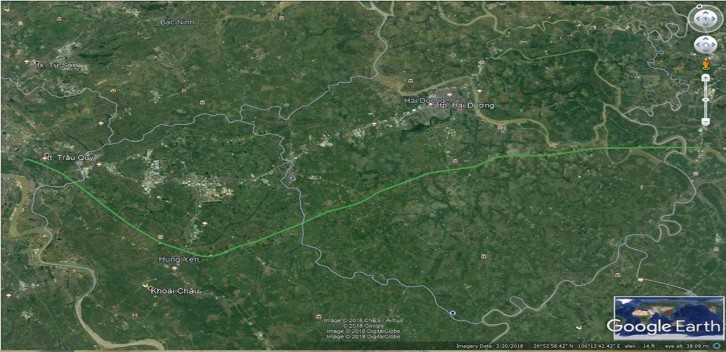
Figure 3.10. IRI index of Hanoi – Hai Phong expressway from Hanoi to Hai Phong
The IRI index on the Hanoi - Hai Phong highway from Hanoi to Hai Phong has an average IRI index of 0.92 (Index measured on RoadLabPro software)
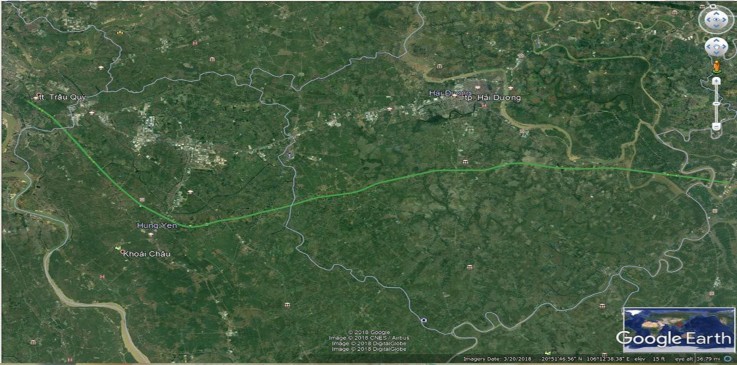
Figure 3.11. IRI index of Hanoi – Hai Phong expressway from Hai Phong to Hanoi
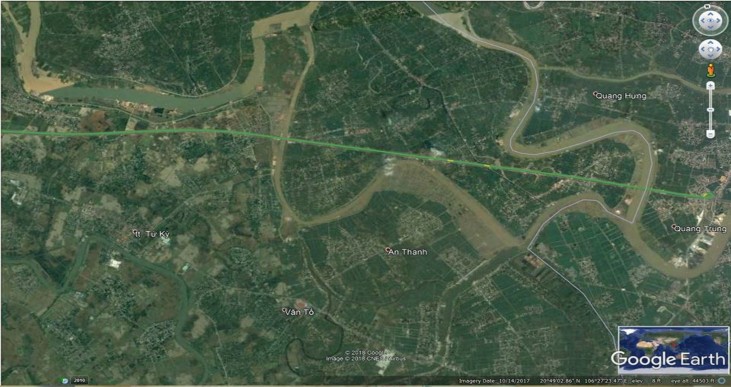
Figure 3.12. IRI index of a road section from Hai Phong to Hanoi
The IRI index on the Hanoi - Hai Phong expressway from Hai Phong to Hanoi has an average IRI index of 1.34 (Index measured on RoadLabPro software)
Comment: Hanoi Hai Phong Expressway is built with a speed level of 120
km/h, asphalt concrete road surface. Therefore, according to TCVN 8865 - 2011 table 3, the requirement for the quality of the road surface flatness according to IRI of the road in operation is IRI < 2. Here, the IRI index measured in both directions is 0.92 and 1.34 respectively, so the Hanoi - Hai Phong expressway meets the requirements set out in the standard.
CONCLUSION AND RECOMMENDATIONS
1. Conclusion
Topic "Research on the application of utility software of smart phones"
“A study to assess traffic noise and road surface IRI” has focused
The study has solved the main contents of the research objectives and drawn some conclusions of scientific and practical significance as follows:
Regarding traffic noise, noise measurements were conducted through software and smartphones at Cau Giay intersection and Nguyen Khanh Toan - Dao Tan intersection. The results showed that the noise did not exceed the standard noise threshold of 75 dB.
At Cau Giay intersection, noise levels on Mondays, Tuesdays, Wednesdays, and Saturdays are significantly higher than on other days of the week, ranging from 70dB to 74dB. On Thursdays and Fridays, noise levels seem to decrease to only about 6468dB, and Sundays are the lowest at 6567dB. Noise levels are highest between 9am and 9:10am and between 5pm and 17:00 and 17:30, and lowest between 3pm and 3pm.
At the Nguyen Khanh Toan – Dao Tan intersection, most of the time periods of the weekdays have a small difference in noise from 66dB – 73dB, only on Friday and Sunday the noise is lower than other days, only from 58dB – 69dB. The noise has the highest value at 7:20 – 7:30 then gradually decreases and then increases again at rush hour from 17:20 – 17:30.
For IRI index:
When measured with the same phone (same position mounted on the vehicle), running at the same time
one velocity, the IRI value measured between different times has no fluctuation
many. Acceptable error.
There is a difference between the measured values of the devices placed at different positions on the vehicle, but it is not large.
There is not much difference in IRI value between the two lanes Nguyen Van Huyen – Cau Giay and Cau Giay – Nguyen Van Huyen.
The IRI value depends a lot on the vehicle speed. Therefore, when measuring IRI, it is necessary to measure at a fixed standard speed.
When using a motorbike, it is impossible to measure the IRI value using software and phones because the IRI measurement results are very large (because the motorbike's shock absorbers are not guaranteed and suitable for measurement) and are very scattered between different measurements.
IRI measurement results for sections on provincial road 334 - Van Don district and Hanoi - Hai Phong expressway show:
On the provincial road
334 – Van Don district overall index
IRI
on the entire provincial road 334 - Van Don district (including the road to the port and the road to the airport) is within the allowable threshold of 3 ≤ IRI < 5, however, during the measurement process, there were a few points with IRI index > 5 due to the road surface having many potholes, some potholes, wheel ruts, etc.
Hanoi - Hai Phong Expressway is built with a speed level of 120 km/h, asphalt concrete road surface. Therefore, according to TCVN 8865 - 2011 table 3, the requirement for the quality of road surface flatness according to IRI of the road in operation is IRI
< 2. Here, the IRI index measured in both directions is 0.92 and 1.34 respectively, so the Hanoi - Hai Phong expressway meets the requirements according to the set standards.
Nowadays, along with the development of society, many factories have sprung up.
rapidly, means of transport also increased significantly, business establishments
Manufacturing and service businesses have also developed equally. Along with that development is the problem of environmental pollution, air pollution, water pollution, and especially pollution.
infected
noise. On the other hand the devices
mobile as
smartphones and tablets today
more and more popular and attached to people. All of these devices support the function of receiving and processing audio signals. From there, we can take advantage of these utilities to build software to measure and determine noise levels in one place with the hope of
hope is possible
replace
for device
specialized to a certain extent
Building a correlation chart between traffic volume and noise in urban traffic areas is very important. On that basis, relevant ministries and branches will issue circulars on noise to regulate noise levels.
noise in areas where people live, work and operate, to reduce
reduce noise pollution
noise, at the same time this is also an opportunity
basis
industries
traffic, construction research, finding measures to reduce noise pollution.
2. Recommendations
Through the research and analysis in the above sections, the thesis would like to propose to the Transport sector to serve the assessment and have solutions to improve road surface flatness and reduce traffic noise pollution.
For traffic noise:
Nowadays, along with the development of society, many factories have sprung up.
rapidly, means of transport also increased significantly, business establishments
Manufacturing and service businesses have also developed equally. Along with that development is the problem of environmental pollution, air pollution, water pollution, and especially pollution.
infected
noise. On the other hand the devices
mobile as
smartphones and tablets today
more and more popular and attached to people. All of these devices support the function of receiving and processing audio signals. From there, we can take advantage of these utilities to build software to measure and determine noise levels in one place with the hope of
hope is possible
replace
for device
specialized to a certain extent
The construction of a correlation chart between traffic volume and noise in urban traffic areas is of great significance. On that basis, relevant ministries and branches will issue circulars on noise to regulate noise levels in areas where people live, work and operate, in order to reduce noise.
reduce noise pollution
noise, at the same time this is also an opportunity
basis
industries
traffic, construction research, finding measures to reduce noise pollution.
The muscles
Authorities consider proposed measures
thesis statement,
On that basis, research, supplement and amend to suit the conditions of each area to both solve traffic congestion and minimize the harmful effects of noise on people's health.
Propose legal regulations to punish vehicles that make excessive noise such as those with large exhausts, air horns, etc.
Prohibit vehicles from honking while driving on the street, especially container trucks, oil tankers, buses, etc.
Solving traffic noise is a difficult problem that countries around the world are struggling with, so through this thesis, we hope to contribute a part of the solution.
strength to
contribute to solving noise pollution
traffic noise
current pain
For road surface flatness:
Traffic is always of great importance, to help traffic be convenient, an indispensable factor is the quality of the road surface. The quality of the road surface is closely related to the smoothness, speed, fuel consumption and machine wear of cars running on the road. Evaluating the quality of the road surface is related to the
degree requirements
flatness of the road surface.
flat high road
help improve high service capacity.
of the path to efficiency
economy will increase
In the world as well as in Vietnam today, there are many methods to assess flatness, from classical methods such as a 3-meter ruler.
meters to modern methods such as flatness assessment through indexes.
degree
crazy
rugged
international
IRI. Each method has
advantages and disadvantages, although
However, to suit the trend as well as practical requirements is to evaluate in a way
fast and accurate
flatness of major roads, from
that of
In order to take timely remedial measures to minimize the decline in road service capacity, the evaluation method through the IRI index is preferred.
The RoadLabPro software installed on smartphones can be considered as a
quick solution with speed
acceptable accuracy to
facial IRI measurement
However, research is needed to evaluate the correlation between this measurement method and traditional measurement methods.
Local leaders, local agencies and specialized transport units need to pay more attention to the flatness of the road surface from the design and construction stages to the road management and exploitation stages.
The Provincial People's Committee and local industry leaders need to determine and evaluate the flatness of the entire network of National Highways and Provincial Roads in the locality.
desk from
that offers solutions to improve the
flat fit
specific case