
The author of the thesis based on the list of accounting staff at enterprises and on the introduction of acquaintances.
Initially, selected enterprises approached the topic through direct telephone conversations or through acquaintances to clarify the objectives, scope of the research, reliability of the information provided, etc. As a result, 98 out of 150 enterprises planned to be surveyed (65.3% of enterprises) agreed to participate in the interview and 07 enterprises agreed to participate in the form of answering the survey questionnaire (accounting for 4.7%). The interviews were conducted in two ways: direct and indirect contact with 01 (one) or 02 (two) experienced accountants in each surveyed unit. Information about the enterprises participating in the survey, the content of the enterprise survey form and the survey results are attached in the appendices at the end of the thesis (Appendix 1: Enterprise survey form; Appendix 2: Summary of enterprise survey results; Appendix 5: List of enterprises participating in the interview; Appendix 6: Summary of results of enterprises participating in the interview; Appendix 7: List of enterprises sending survey forms). The results of the enterprise survey are used by the thesis to demonstrate the reality of the current TKKT system applied in enterprises. Some results are used as a basis for proposing solutions to build and perfect the TKKT system.
The research objective of the topic is to study to complete and build the current business accounting system, so the survey participants also include experts in the fields of finance, accounting and auditing. In total, 58 experts responded out of a total of 100 experts who agreed to participate in the survey. The selection of experts began by phone or email, the author contacted the experts about the survey content. Due to time and work conditions, the experts all agreed to participate through the survey form and most agreed to leave relevant personal information (name, age, place of work, field of activity, ...). Information on the expert survey results is presented in Appendix 3: Expert survey form and Appendix 4: Summary of expert survey results attached at the end of the thesis. The expert survey results are one of the
Maybe you are interested!
-
 Information About Accounting And Accounting System Applied At The Company
 -
 The Impact of Accounting Information System Quality on Operational Performance
 -
 Organization of Accounting System Application at the Company
 -
 Identifying and controlling factors affecting the quality of accounting information in the environment of applying enterprise resource planning system ERP in Vietnamese enterprises - 12
 -
 Brief History of the Formation and Development of Accounting Information System in Vietnam
important basis for the author to propose solutions to build and perfect the accounting system of production and business enterprises in Vietnam.
The survey and interview questions are mainly based on research questions and propositions, which are established for the purpose of investigation and data collection. Direct or indirect interviews are conducted on the basis of open-ended questions to facilitate the interviewees to express their personal opinions or views; at the same time, helping the author to discover new issues during the investigation process. The content of the interview questions mainly revolves around the current status of applying the accounting system, along with the difficulties and advantages, along with the suggestions and recommendations of accountants in the enterprise. Due to sensitive reasons, the interviewees did not allow recording, so the interview results were recorded by the author of the thesis.
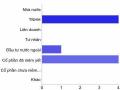
For the questions in the survey, in addition to the questions related to general information about the enterprise (Name and address of the Company; Name and position of the survey respondent in the Company; Location of the Company's operations; Year of establishment of the Company; 5. Current number of employees of the Company; Type of organization and operation of the Company; ...) are information related to the accounting system and financial statements that the company is applying (applying the accounting regime issued under which decision; form of accounting organization; assessment of the quality of the company's current accounting activities; financial statement system used; specific financial statements; advantages and difficulties when applying the current financial statement system; solutions for improvement; recommendations; ...). These are questions designed to answer the research objectives of the thesis; in which, some questions aim to answer the second research objective on analyzing and evaluating the current status of the enterprise's financial statement system. The remaining questions aim to answer the third research objective of proposing basic solutions to improve the accounting system applied in current production and business enterprises in Vietnam to improve the quality of accounting activities and accounting information in production and business enterprises.
The questions are presented logically, ensuring the connection between the interview questions and the research questions and the orientation of the research proposition through the topics summarized from theoretical research and the developed theoretical framework of the topic.
The results of the survey and interviews are used for research purposes only with the permission of the participants and are published in the form of a scientific research work.
Phase 3 of the research process includes tasks such as data analysis and processing; on that basis, draw conclusions about the research content. After the data has been collected, the thesis author proceeds to process it to synthesize, classify, screen, select and summarize the data for use. The process of processing collected data includes tasks such as: data validation, data editing, spreadsheet creation, identification and calculation of data characteristics, data entry into the computer and use of appropriate software to process and analyze data to meet the research objectives. Data collected through online surveys are processed directly using Google Docs software, while data collected directly through interviews or provided by businesses are processed and analyzed using SPSS software and Microsoft Office data processing software (simple statistical analysis of Excel) combined with describing data through absolute numbers, relative numbers combined with graphs or charts. In addition, the author also uses other professional and technical analysis methods such as comparison, contrast, synthesis, analysis and expert methods to judge in accordance with dialectical and historical thinking. The results of data analysis are used to present research results in the following sections of the topic.
6. New contributions of the topic
Based on the analysis and evaluation of the current status of the accounting system applied in production and business enterprises, both in terms of accounting regimes over periods and actual implementation as well as experiences of countries around the world, the thesis has synthesized, analyzed, evaluated and proposed viewpoints as well as main solutions to perfect the system.
The current accounting system applied in production and business enterprises in Vietnam in the short and long term. The issues that the topic mentions have both scientific and practical significance in both the short and long term. Specifically, the thesis has the following main contributions:
- Systematize and clarify basic theoretical issues on accounting and accounting systems applied in enterprises.
- Analyze and objectively evaluate the shortcomings of the current accounting system applied in production and business enterprises in Vietnam.
- Research the impact of subjective and objective factors on the accounting system of production and business enterprises.
- Propose solutions and conditions for implementing solutions to complete and build the current accounting system applicable in production and business enterprises in Vietnam.
7. Structure of the topic
With the title "Research on the accounting system applied in production and business enterprises in Vietnam" , in addition to the introduction, conclusion, list of tables, diagrams, appendixes, list of references, the thesis is divided into 4 chapters:
Chapter 1: Overview of research on the enterprise accounting system; Chapter 2: Theoretical basis of accounting accounts and accounting systems applied in production and business enterprises;
Chapter 3: Research results on the current accounting system applied in production and business enterprises in Vietnam;
Chapter 4: Discussing research results and proposing solutions to improve the current accounting system applied in production and business enterprises in Vietnam.
CHAPTER 1
OVERVIEW OF RESEARCH ON ENTERPRISE ACCOUNTING SYSTEM
In the conditions of a socialist-oriented market economy and the trend of international economic integration with the State's management by law, the State and enterprises are required to innovate and perfect the system of financial management tools, including the accounting system. An enterprise accounting system is a combination of many different components and elements, in which the accounting system can be considered an important component of the enterprise accounting system, having a dominant influence on other components of that accounting system. The accounting system helps accountants in enterprises to classify and systematize information on the status of assets, sources of asset formation and economic and financial activities in enterprises to serve the management of the State, of sectors and of each enterprise. Through the accounting system and recording method, reflecting the arising economic and financial transactions into the accounting systems in the accounting system will help create timely information to prepare financial statements for the enterprise and for the users of financial statements.
Research on the accounting system of production and business enterprises is carried out in most countries in the world. In developed and developing countries, along with the development of the market economy, the accounting system, including the accounting system of production and business enterprises, is built by enterprises themselves on the basis of economic standards. The accounting system of enterprises is regularly researched, supplemented, revised and increasingly improved to meet the requirements of providing information for management. The research to perfect the accounting system of enterprises is carried out in agencies, organizations and production and business enterprises depending on the research, construction to promulgate the accounting system of enterprises of each country.
Historically, TKKT and the TKKT system have been mentioned for a long time in the world. The Italian pioneers in the Renaissance period (from the 14th to the 16th century)
are considered the fathers of modern accounting. They were instrumental in bringing commercial activities and transactions to a new level with a more optimal way of finding profits. They were also the first to use Arabic numerals to record business accounts - a huge step forward from the use of Roman numerals. They kept business records such as capital and debt on a large scale - a step towards double-entry accounting.
Among the Italians of the Renaissance, Luca Pacioli (born c. 1445) was known for his knowledge of culture, painting, mathematics, business, medicine, music, military science, law, foreign languages, etc. Around 1494, Pacioli published the book “Summa de Arithmetica, Geometria, Proportioni et Proportionalita” (Everything About Arithmetic, Geometry and Proportion); which listed and instructed contemporary understandings of mathematics and accounting was only one of the five topics covered. The accounting topic consisted of 36 short chapters titled “De Computis et Scripturis” (“Of Reckonings and Writings”).
The double-entry accounting system was born to help keep and reflect the bullae more systematically, it requires the arising transactions to be recorded twice in the account: once on the debit side and once on the credit side. Thanks to the birth of the double-entry accounting system, the accounting industry has developed remarkably. The double-entry accounting system has become the basic accounting principle. Later, there were other studies such as "How To Keep a Perfect AcCompte Of Debitour and Creditour" by James Peele in 1553, "English System Of Book Keeping" by Edward Jones in 1795. Until now, the basic ideas of double-entry accounting are still valuable and are applied very scientifically in combination with modern calculation means.
There are currently two trends in the world in building a TKKT system. The first trend is that countries build and issue a unified TKKT system applicable to all enterprises in the economy. The second trend is that countries do not build and issue a TKKT system but enterprises build their own TKKT systems applicable to their units with the condition that they must ensure compliance.
Comply with the Law on Accounting, Accounting Standards and relevant regulations issued by the State or competent agencies and organizations.
Vietnam follows the trend of building a unified accounting system applicable to production and business enterprises. Accordingly, each accounting system has its own code, name and is arranged in groups and types for the convenience of tracking information, synthesizing information and coding accounting information. Each accounting system is regulated with the content of reflection, detailed accounting systems, accounting methods for major economic transactions, relationships between accounts in each type, each group and between accounts with each other. According to the Accounting Law (2003), the accounting system includes accounting systems that need to be used. Each accounting unit must use a system of accounting systems (Article 23). The accounting unit must base on the accounting system prescribed by the Ministry of Finance to select the accounting system to apply in the unit and detail the selected accounting systems to serve the management requirements of the unit (Article 24).
Through the synthesis of collected documents and articles, it can be seen that most domestic authors and researchers highly appreciate the advantages of a TKKT system applied to production and business enterprises in many different aspects from collecting, processing to using accounting information. According to them, the construction and operation of the TKKT system applied to production and business enterprises in Vietnam currently still has many unreasonable points, causing difficulties for accounting work in enterprises. According to the current regime, the Ministry of Finance issues a unified enterprise TKKT system, then, based on the characteristics of production and business, the characteristics of scale, and specific characteristics in each industry, each field, and each specific enterprise, the Ministry of Finance continues to build and issue different TKKT systems applied to each type of enterprise and each industry. Therefore, starting from a unified enterprise accounting system issued under Decision No. 15/2006, up to now, in Vietnam there are many different accounting systems and have not increased the initiative, flexibility and self-responsibility of enterprises in building a suitable accounting system to apply to their own enterprises. This existence arises because the current enterprise accounting system stipulates that enterprises must implement
Unify the details of the accounts at all levels. If you want to use other accounts at all levels prescribed by the State, you must have the approval of the Ministry of Finance. This regulation has increased unnecessary administrative procedures.
In Vietnam, the accounting system applied to production and business enterprises has been issued, applied and constantly revised and supplemented to adapt to management requirements and the diverse and innovative development of business activities in the market economy. However, when applied in practice, the accounting system according to current regulations applied to production and business enterprises still reveals weaknesses that need to be overcome and improved in accordance with the practices of other countries in order to better meet the accounting needs of enterprises as well as the management requirements of the State on finance and accounting. There have been many domestic studies on accounting and the accounting system applied in production and business enterprises published, mainly in textbooks of universities such as the Academy of Finance, National Economics University, Ho Chi Minh City University of Economics, University of Commerce, Hanoi Open University, etc. In addition, studies on the accounting system of enterprises have also been published in a number of specialized journals (Accounting Journal, Finance Journal, Development Economics Journal, etc.). One can mention the ministerial-level research topic (Ministry of Finance) " Innovation of the unified accounting system " 56 chaired by Associate Professor, Dr. Vo Dinh Hao and accepted in 1989. However, this topic refers to the unified accounting system in the period of a centrally planned and subsidized economy. Next is the ministerial-level topic (Ministry of Education & Training) "Completing the unified accounting system applied in production and business enterprises in Vietnam" 40 chaired by Prof. Dr. Nguyen Van Cong, accepted in 2003. However, this topic only mentioned the completion of the accounting system before the Ministry of Finance issued the accounting system in the enterprise accounting issued under Decision 15/2006/QD - BTC dated March 20, 2006 24 . In order to complete the accounting system for enterprises applied to current production and business enterprises in accordance with international practices and in accordance with the conditions of Vietnam, it is necessary to put forward reasonable viewpoints and solutions for completion. These viewpoints and solutions must be inherited and absorbed.