
- Official statistics"are statistical data that fully and accurately reflect the results of socio-economic phenomena that have occurred in a specific period of time and space and have been processed, synthesized, assessed and confirmed" (LTK, 2015).
- Preliminary statistics "are statistics that fully reflect the results of socio-economic phenomena that have occurred in a specific period of time and space but have not been confirmed and must be further assessed and reviewed" (LTK, 2015).
- Estimated statistics "are statistics that predict the entire outcome of ongoing socio-economic phenomena, compiled from data from the period that has occurred, updated according to reality and data from the period that will occur, using professional methods for prediction" (LTK, 2015).
Maybe you are interested!
-
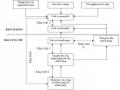
 Overview of Banking Service Quality and Customer Satisfaction
 -
 Evaluating customer satisfaction with savings deposit services at National Citizen Commercial Joint Stock Bank NCB Tan Huong Transaction Office - 3
 -
 Theoretical Basis of Customer Satisfaction and Proposed Research Model
 -
 Testing Factors Affecting Customer Satisfaction With Savings Deposit Services At Dong A Bank
 -
 Assessing customer satisfaction with the quality of medical examination and treatment at Ba Ria General Hospital - 11
- Statistical indicators “Statistical indicators reflect the characteristics of scale, development speed, structure, level of popularity, and proportional relationship of a part or the entire socio-economic phenomenon in specific space and time conditions. Statistical indicators include the name of the indicator and the value of the indicator” (LTK, 2015).
- The statistical indicator system “is a set of statistical indicators reflecting the characteristics of socio-economic phenomena. The statistical indicator system includes the list and content of statistical indicators. The list of statistical indicators includes codes, groups, and names of indicators. The content of statistical indicators includes concepts, calculation methods, main groups, publication periods, data sources of statistical indicators, and agencies responsible for collection and synthesis” (LTK, 2015).

- Statistical report "is a form and instructions for recording forms to collect data and statistical information on specific research subjects according to scientific and unified methods prescribed in the statistical reporting regime in a certain period" (LTK, 2015).
- Statistical reporting regime "is the regulations and instructions issued by competent state agencies on the implementation of a set of statistical reports
are related to each other to synthesize statistical indicators belonging to a statistical indicator system and synthesize other statistical information to serve state management" (LTK, 2015).
- A statistical program “is a document approved by a competent state agency including a system of statistical indicators, a statistical investigation program, a statistical reporting regime and other programs related to statistical activities” (LTK, 2015).
- Statistical investigation " is a form of collecting data and statistical information about specific research subjects according to scientific and unified methods determined in the statistical investigation plan for each investigation" (LTK, 2015).
- The statistical census "is a comprehensive statistical survey to collect data and statistical information of survey subjects nationwide, related to many sectors and levels" (LTK, 2015).
- Sampling survey is a type of incomplete survey, in which people only select a number of units (called sample units) from the whole population for actual investigation, and then, using scientific reasoning methods, draw conclusions and assessments for the whole population. Sampling survey has the following basic advantages:
+ Regarding costs: Due to the small number of survey units, sample surveys save a lot of human resources and costs;
+ About time: Faster work progress can meet the urgency of information that needs to be collected;
+ Regarding accuracy: Due to the small number of investigation units, it is possible to mobilize specialized investigators with adequate conditions for inspection and supervision, so the investigation data will be more accurate, limiting non-sampling errors. With scientific statistical inference methods, through sample research, it is still possible to reach reliable conclusions without having to study the entire population;
+ There are conditions to expand the investigation content, the investigation results reflect many socio-economic aspects, creating favorable conditions for in-depth research of the investigation subjects;
- Sampling surveys cannot completely replace comprehensive surveys for the following reasons:
+ In a complete survey, people collect information on each unit of the whole, so it is possible to study the whole and its parts according to all the characteristics that need to be studied. Therefore, for important sources of statistical information, people still have to conduct a complete survey, that is, organize general censuses.
+ The results of generalization from a survey sample always have a certain representative error, which is not present in a complete survey.
- Statistical survey plan “Each statistical survey must have a statistical survey plan issued together with the statistical survey decision of the competent state agency. The statistical survey plan includes the following main contents: Purpose, survey requirements; Scope, subjects, survey units; Type of survey; Time, duration and survey method; Content, survey form; Classification of statistics used in the survey; Processing procedure and output table of the survey; Survey implementation plan; Survey organization; Funding and material conditions for the survey” (LTK, 2015).
- Statistical investigator (DTV) "is a person recruited and mobilized by the agency or organization conducting statistical investigation to collect information for the statistical investigation" (LTK, 2015).
2.2. Theoretical overview of customer satisfaction when using services
This chapter introduces an overview of relevant theories as a theoretical basis for the research design. This chapter includes: an overview of services, public services, service quality, customer satisfaction and the relationship between service quality and satisfaction, and proposes a research model in the next chapter.
2.2.1. Service Overview
2.2.1.1. Concept of service
Services are a special type of economic goods, intangible and different from tangible goods. Nowadays, service industries occupy an important position in the economy of each country. However, there are still many different views on services. Here are some concepts:
“Services are actions, processes and ways of performing a certain job to create value for customers to satisfy their needs and expectations” (Zeithaml & Bitner, 2000).
“Services are activities or benefits that businesses can contribute to customers to establish, strengthen, and expand long-term relationships and cooperation with customers” (Kotler & Armstrong 2004).
“A service is an activity or series of activities that are more or less intangible in nature, taking place in interactions between customers and service employees and/or physical resources or goods and/or service delivery systems that are provided as solutions to customer problems” (Gronroos, 1990, cited by Paul Lawrence Miner, 1998).
2.2.1.2. Characteristics of the service
The service has the following outstanding features:
Intangibility: Services have no specific shape, so they cannot be seen, tasted, heard, or held when consumed. This characteristic of services causes many difficulties in managing service production and provision activities.
Heterogeneity: Service performance often varies depending on the service provider, time of performance, location, service area, how the service is provided, who provides the service, and who is served. Services
may not be the same between different services even though it may be the same service staff, same service provider or same type of service.
Inseparability: It is difficult to divide the service into two separate stages, the production stage and the use stage, like ordinary physical goods. The characteristic of services is that production and consumption take place simultaneously, production is completed with the completion of customer consumption. Without customers, there is no system to create services, the interaction between the service provider and the service recipient can affect the quality of the service.
Perishability: Services cannot be stored in inventory and then consumed. Therefore, services are products that are used when they are created and are finished immediately after.
In addition to the above characteristics, services also have characteristics such as: no transportation, fluctuating according to demand, requiring a lot of human resources, ...
2.2.2. Overview of public services
2.2.2.1. Definition of public services
Public services have been studied and applied in developed countries since the mid-twentieth century. However, public services are a relatively new field of study in Vietnam. Up to now, there are many different views on public services.
“Public service is an activity for the common good, undertaken by a state or private agency” (According to Le Petit Larousse dictionary, Lasoursse Publishing House, 2009).
According to authors Jean-Philippe Brouant and Jacque Ziller, “Public service is often defined as an activity undertaken by the administrative sector to satisfy the needs of the common good.”
According to administrative researchers, "Public services are the activities of state agencies in implementing state administrative management functions and ensuring the supply of public goods to serve the common essential needs of society."
According to legal scholars, the concept of public services includes all activities to ensure the implementation of human rights and civil rights as prescribed by law for which the state is responsible.
In short, public services can be understood as activities serving essential common interests, basic rights and obligations of organizations, individuals, and citizens, directly undertaken by the State or authorized to other entities to ensure fairness and social stability.
Depending on objective material conditions, economic and social development levels and development goals in different stages, each country can determine different scopes of public service provision.
2.2.2.2. Characteristics of public services
Public services have the following basic characteristics:
- Are social activities that serve the common interests of the entire community.
copper.
- Are activities carried out by state agencies or entities authorized by state agencies.
the country that commissioned the implementation
- To provide public services, state agencies and organizations authorized to provide services must communicate with people when providing services.
- Normally, those who directly use public services do not have to pay. However, there are services for which users still have to pay part or all of the cost. However, for these types of services, the State is responsible for ensuring that the provision is not for profit.
- Every citizen is entitled to a minimum level of public services, as a subject of government service. The amount of public services that each consumer consumes does not depend on the amount of tax he or she pays.
- Unlike conventional services which are understood as service activities that do not create physical products, public services are
The activities of the State apparatus serve the essential needs of society, regardless of whether the products created are in material or non-material form.
- From an economic perspective, public services are activities that provide public goods to the public.
2.2.2.3. Types of public services
- According to the criteria, the supplier is divided into the following three types:
+ Public services directly provided by state agencies: These are basic public services provided by state agencies. For example, security, general education, public health care, social protection, etc.
+ Public services provided by non-governmental organizations and the private sector, including services that the State is responsible for providing, but does not directly perform, but delegates to non-governmental and private organizations to perform, and the State is responsible for urging and supervising.
+ Public services are jointly implemented by state organizations, non-governmental organizations, and private organizations.
- Based on the nature and effects of the services provided, they are divided into the following types:
+ Public administrative services: Are services associated with state management functions to meet people's needs.
+ Public career services: Including activities providing essential social welfare for people such as education, culture, science, health care, sports, insurance, social security, etc.
+ Public services: Activities that provide basic, essential goods and services to people and the community.
2.2.3. Service quality
There are many different definitions of service quality today.
“Service quality is sometimes intangible and difficult to perceive. In other words, service quality is determined based on customers' perceptions related to their individual needs” (Bui and Nguyen, 2004).
“Service quality is the service that meets customers' expectations and satisfies their needs” (According to Edvardsson, Thomsson & Ovretveit, 1994).
“Service quality is the extent to which a service meets the needs and expectations of customers” (According to Lewis & Mitchell, 1990; Asubonteng & ctg, 1996; Wisniewski & Donnelly, 1996).
“Service quality is the gap between customers' expectations of a product or service and their perceptions after using that product or service” (According to Parasurman & ctg, 1985, 1988).
Thus, it can be seen that service quality is what customers feel. Each customer has different perceptions and needs, so their perception of service quality is also different.
Based on the basic characteristics of public services and the above, the quality of public services can be considered as the general attitude of organizations and citizens towards activities serving essential common interests, their basic rights and obligations undertaken by the state or delegated to non-state establishments.
Service products in general, public services in particular, are intangible and difficult to evaluate quality. Service quality is abstract and difficult to grasp due to the specific characteristics of the service. The approach to quality is created during the service delivery process, often occurring in the encounter between customers and communication staff, so service quality is influenced by customer perception of the service and has a relationship with customer satisfaction. Therefore, there are many different approaches to evaluating service quality.