
The Party and State of Vietnam always consider minors, especially those under 16 years old, as immature because they are physically and mentally immature. Therefore, the handling of juvenile offenders must take into account their own characteristics and cannot be considered as the same as the criminal acts of adults. This basic viewpoint and policy has been expressed in the Constitution of the Socialist Republic of Vietnam as well as in the criminal law system. Article 69 of the 1999 Penal Code (amended in 2009) stipulates the principles of handling juvenile offenders, clearly showing the purpose of handling juvenile offenders, which is to educate and help them correct their mistakes, develop healthily and become useful citizens to society.
Based on these guiding ideas, the 1999 Penal Code (amended and supplemented in 2009) stipulates that the principle of handling juvenile offenders will give priority to the application of the specific provisions stipulated in Chapter X - Provisions for juveniles, and may also apply other provisions in the general part of the Code if they do not conflict with the provisions of this chapter. In cases where it is deemed unnecessary to impose a penalty on a juvenile, the Court will give priority to applying one of the judicial measures stipulated in Article 70 of the 1999 Penal Code (amended and supplemented in 2009). Judicial measures are of great significance in the criminal handling of juvenile offenders, demonstrating a high level of education and at the same time demonstrating the humane handling policy of our State. Thus, criminal prosecution and punishment of minors who commit crimes are only applied in necessary cases, and the application of imprisonment should be limited... However, in reality, when trying cases, the Court has not paid much attention to widely applying judicial measures other than imprisonment (education in communes, wards, and towns), but only applies punishments that do not deprive freedom such as non-custodial reform or applying suspended sentences...
Faced with the current situation of juvenile crimes increasing in number and the nature and level of danger of their acts, there are many different opinions on whether to increase penalties, reduce the age of juveniles who must bear criminal responsibility, or promote the synchronous application of preventive measures to prevent juveniles from committing crimes. According to Mr. Dinh Van Que (Judge, Chief Justice of the Criminal Court, Supreme People's Court) at the 3rd session of the 13th National Assembly, "If the law is amended to punish those who commit corruption crimes, this is an urgent requirement, but if the law is amended to have heavier sanctions for juvenile offenders, this is a hasty view ." Thus, it can be seen that in the spirit of the United Nations Convention on the Rights of the Child, children must not be isolated from their families, unless the family has "problems", judicial and educational measures at the commune, ward, and town level need to be given priority to juvenile offenders to ensure the best interests of the children.
However, in the process of applying the law, this judicial measure still has some limitations such as low effectiveness of the measure, loose assignment and monitoring mechanism, and limited scope of application. Based on the above limitations, it is necessary to improve the effectiveness of the application of judicial education measures at communes, wards, and towns for juvenile offenders.
Therefore, studying the provisions of Vietnamese criminal law on judicial education measures at communes, wards and towns for juvenile offenders is very necessary, contributing to improving the effectiveness of the fight against crime. For those reasons, I have chosen the topic: "Judicial education measures at communes, wards and towns for juvenile offenders in Vietnamese criminal law" as the research topic for my Master's thesis in Law.
Maybe you are interested!
-

 General Issues Regarding Punishments and Judicial Measures Applicable to Juvenile Offenders
 -
 Penalties and Judicial Measures Applied to Minors Who Commit Crimes According to the Provisions of the 1999 Penal Code
 -
 Judicial measures - Return of property, repair or compensation for damages under the Penal Code 1999 - 14
 -
 Provisions on Judicial Measures of "Returning Property, Repairing or Compensating for Damages" in the 1999 Penal Code
 -
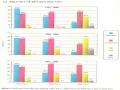 Evaluation of Measures for Managing Organization and Coordination of Educational Forces Inside and Outside the School.
2. Research status of the topic
In recent times, at different levels, there have been a number of scientific works that have indirectly addressed this topic.
Regarding textbooks, monographs, and commentaries, there are the following works: "Specific features of criminal responsibility for juvenile offenders" - Chapter XVIII by Dr. Trinh Quoc Toan in the Vietnamese Criminal Law Textbook (general part) published by the Faculty of Law, Hanoi National University, published in 2001 (Collectively edited by Prof. Dr. Le Cam, Hanoi National University Publishing House). Or "Criminal responsibility for juvenile offenders - Chapter XVI by Dr. Hoang Van Hung in the Vietnamese Criminal Law Textbook published by the People's Public Security Publishing House in 2007 (edited by Prof. Dr. Nguyen Ngoc Hoa). "Application of criminal policy for juvenile offenders" by Master Trinh Dinh The, Hanoi Judicial Publishing House, 2006.
In addition, from a scientific perspective, there are a number of works at the level of master's thesis in law such as: " Penalties and judicial measures applied to minors who commit crimes under the Vietnamese Criminal Law" by Luu Ngoc Canh, Faculty of Law, National University in 2010, "Judicial measures applied to minors who commit crimes under the criminal law" by Nguyen Thi To Nga, Faculty of Law, National University in 2011, "Criminal responsibility of minors who commit crimes in the Vietnamese criminal law " by Tran Van Dung, Hanoi Law University in 2003.
In addition, there are a number of studies published in specialized law journals such as: "Judicial measures in the 1999 Penal Code and the issue of perfecting the Criminal Procedure Code on the order and procedures for applying those measures" by Dr. Pham Hong Hai (Journal of Law No. 5, 2000); "Implementation of judicial measures is not a punishment" by author Ho Sy Son
(State and Law Journal No. 4, 2004); “The role of the family in the implementation of non-deprivation of liberty penalties and judicial measures” by Dr. Tran Quang Tiep (State and Law Journal No. 2, 2004); “The current status of criminal law provisions on judicial measures: Practical application and some proposals” by Dr. Truong Quang Vinh (State and Law Journal No. 2, 2010).
However, currently in the criminal law science of Vietnam, there is still no work specifically mentioning the issue of judicial education measures at communes, wards and towns for juvenile offenders. Therefore, the selection and analysis of the contents and conditions of application of legal provisions on judicial education measures at communes, wards and towns will clearly point out the shortcomings and limitations in the provisions of the law. When researching this topic, in parallel with the analysis of legal provisions on judicial education measures at communes, wards and towns for juveniles, the thesis also studies and analyzes statistical data on the application of this judicial measure in recent times. From there, feasible recommendations are made, moving towards building a criminal policy system for juvenile offenders and solutions to perfect judicial education measures at communes, wards and towns.
3. Research purpose of the thesis
3.1. Research purpose
The thesis researches "Educational judicial measures at communes, wards and towns for juvenile offenders in the Vietnamese Criminal Law" to systematically clarify in theory the basic contents related to the regulations on educational judicial measures at communes, wards and towns for juvenile offenders. At the same time, analyze the development process and the content of the regulations on this judicial measure in the criminal law.
Vietnam as well as assess the practical situation of applying this judicial measure in practice. From there, identify the limitations and problems in theory as well as practice, to propose legislative solutions by providing directions for perfecting judicial education measures at communes, wards and towns for juvenile offenders, as well as providing solutions to improve the effectiveness of applying this judicial measure.
3.2. Research tasks
From the above research purpose, the author of the thesis sets for himself the following main research tasks:
In theory:
+ Clarifying some theoretical issues on judicial measures applied to juvenile offenders such as: concept and characteristics of this measure
+ Overview of the provisions of Vietnamese criminal law on judicial education measures at communes, wards and towns for juvenile offenders from 1945 to present.
+ Distinguish between judicial measures of education at communes, wards and towns and judicial measures of sending to reformatory schools.
+ Distinguish between judicial educational measures at commune, ward and town levels in the Penal Code and in the Law on Handling of Administrative Violations.
+ Analyze the provisions of the 1999 Penal Code (amended in 2009) and documents guiding the implementation of judicial education measures at communes, wards and towns for juvenile offenders.
+ Research the current status of application and difficulties in applying judicial education measures at communes, wards and towns for juvenile offenders in practice.
+ Propose some solutions to improve the law and enhance the effectiveness of applying educational measures at commune, ward and town levels for juvenile offenders when the 2015 Penal Code is passed.
In practice:
+ Research and evaluate the practical application of judicial education measures at communes, wards and towns for juvenile offenders from 2005 to 2015 nationwide.
+ Research and find out the causes of limitations in applying judicial education measures at communes, wards and towns for juvenile offenders, from which to have explanations and propose orientations and solutions to perfect the regulations on this measure in Vietnamese criminal law and improve the effectiveness of application in practice.
4. Scope of research
From the perspective of criminal law, in this thesis I only delve into the basic theoretical issues of judicial education measures at communes, wards and towns for juvenile offenders in Vietnamese criminal law as well as research and solve problems surrounding the application of provisions of this judicial measure in practice, at the same time finding out the causes of the existing problems and limitations to propose solutions to improve positive law and improve the effectiveness of application in practice nationwide.
Regarding time: The thesis studies the practice of applying judicial education measures at communes, wards and towns for juvenile offenders nationwide from 2005 to 2015.
5. Methodology and research methods
To obtain the results presented in the thesis, I used the following methods:
- The methodological basis of the thesis research is the methodology of historical materialism and Marxist dialectical materialism, Ho Chi Minh thought, the viewpoints of our Party and State on building a rule of law state.
- Historical materialist methodology: conduct research based on the formation and development process of regulations on judicial educational measures at communes, wards and towns for juvenile offenders in Vietnamese criminal law through the periods;
- Analysis, comparison and synthesis methods: this is an important method and is mainly used by the author in the process of writing his thesis.
In addition, the topic also honestly uses statistical data from law enforcement agencies, reference books, and specialized journals to clarify scientific knowledge related to the topic.
6. New points and contributions of the thesis
The thesis is a new scientific research work on the theory and practice of applying judicial education measures at communes, wards and towns for juvenile offenders. The basic new points of the thesis are:
+ The thesis analyzes specifically and comprehensively the provisions of criminal law on judicial education measures at communes, wards and towns for juvenile offenders. Analyzes and evaluates in detail the specific characteristics, conditions of application and compares them with a number of other measures.
+ The study points out the main characteristics of the process of formation and development of legal regulations on judicial educational measures at communes, wards and towns for juvenile offenders from 1945 to present;
+ Research and evaluate to clarify the picture of the actual application of judicial education measures in communes, wards and towns for juvenile offenders in the past, the shortcomings and limitations of legal practice and implementation as well as the causes of those shortcomings and limitations. From there, propose solutions and recommendations for perfecting regulations on handling juvenile offenders to strengthen and improve the effectiveness of the work.
The fight against crime as well as the education and rehabilitation of juvenile offenders in our country today.
In addition, the thesis will be a reference, research and study document in training institutions, in the activities of relevant agencies in applying judicial education measures in communes, wards and towns for juvenile offenders. The proposals and recommendations of the thesis will provide scientific arguments, as a basis for amending, supplementing and perfecting the provisions of criminal law on this judicial measure.
7. Structure of the thesis
In addition to the Introduction, Conclusion and References, the content of the thesis includes 3 chapters:
Chapter 1 : Some theoretical issues on judicial education measures at communes, wards and towns for juvenile offenders.
Chapter 2 : Current status of regulations on judicial education measures at communes, wards and towns for juvenile offenders in Vietnam's Criminal Law and practical application.
Chapter 3 : Some recommendations for improving the law and solutions to improve the effectiveness of applying educational measures at communes, wards and towns for juvenile offenders.