
Besides the advantages, business activities of Agribank provincial branch
Quang Tri also encountered many difficulties such as:
- The scale of the local economy is still small, the economic restructuring is slow, still heavily focused on agricultural development, the proportion of trade, services and industry in the economy is still low, the majority of local enterprises are small-scale, low competitiveness, the ability to invest and develop is not strong; social consumption power compared to the general level in the whole country.
- Competition in the banking and financial services sector is increasingly fierce. Although the market size is still limited, there are currently many commercial banks and credit institutions in the area, performing the functions of capital mobilization and lending such as: BIDV, Viettinbank, Sacombank, Vietcombank, MBbank, VPbank, LienVietbank ... banks all have their own strengths, so the competition in capital mobilization, lending, and payment is extremely fierce.
2.1.1.2. The formation and development process of Agribank Quang Tri province branch .
Agribank Quang Tri Branch is a branch of Agribank, established under Decision No. 86/NH-QD dated June 19, 1989 of the General Director of Agribank, with the original name of the Bank for Agriculture and Rural Development of Quang Tri Province. In 1996, the name was changed to the Bank for Agriculture and Rural Development of Vietnam , Quang Tri Province Branch (Agribank Quang Tri Province Branch ), with Head Office located at 01 Le Quy Don, Dong Ha City, Quang Tri Province.
Agribank Quang Tri Province Branch is a type I branch, dependent accounting, has its own balance sheet, is an authorized representative of Agribank, has business autonomy according to decentralization, and is bound by obligations and rights towards Agribank.
Agribank Quang Tri Province Branch has the function of trading in currency, credit, and banking services with the goal of profit according to the decentralization of Agribank in the administrative area of Quang Tri province; performing capital mobilization activities from organizations, individuals, and financial institutions for short, medium, and long-term lending to economic sectors; organizing accounting, business, and distributing business results according to Agribank's regulations.
PLAN
CAPITAL SOURCE
VICE PRESIDENT
BUSINESS
KARMA
KH HSX & INDIVIDUAL
BUDGET ACCOUNTING
VICE PRESIDENT
COMPUTER
SYNTHETIC
MANAGER
SERVICE
MARKETING
VICE PRESIDENT
BUSINESS
FOREIGN EXCHANGE
ORGANIZATION
STAFF
INTERNAL CONTROL TEST
ROOM
TRANSACTION
BRANCH TYPE
II
ROOM
TRANSACTION
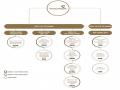
Diagram 2.1 Organizational structure of Agribank Quang Tri Province Branch
(Source: Department of Organization and Personnel)
The organizational structure of Agribank Quang Tri Branch includes a Director, 03 Deputy Directors and 09 functional departments, with 397 staff (structured as in diagram 2.1). The Director is the person who directly leads and operates all business activities of the unit, and is also directly in charge of the Personnel Organization section of the General Department, Internal Control and Inspection Department and directs and operates other departments through three Deputy Directors directly in charge of the remaining departments. With a reasonable organizational model, resources have been maximized, and work and responsibility have been clearly defined in the process of operating the unit's business activities.
2.1.2. Results of some business activities of Agribank Quang Tri branch
2.1.2.1. Capital mobilization activities
With diverse forms of capital mobilization, Agribank Quang Tri Branch has attracted a significant amount of customer deposits, especially deposits with a
high stability in the population. Linking investment expansion with capital mobilization, ensuring a reasonable capital structure; having flexible solutions on interest rate mechanisms, responding promptly to changes in the market in each locality and customer segment on the basis of complying with the direction of the State Bank, Agribank and in accordance with competitive conditions in the locality. For these reasons, the capital of the branch has always grown steadily over the years. According to statistics of the State Bank of Vietnam , Quang Tri Branch, by the end of 2017, the capital mobilization market share in the locality of Agribank Quang Tri Branch accounted for 49.3%, BIDV had a market share of 14.6%, followed by Viettinbank with 11.3%, Sacombank was 9.4% and the rest were from VPbank, MBbank, VCB, LienVietbank.
Table 2.1. Capital mobilization situation of Agribank Quang Tri branch
Target
2014 | 2015 | 2016 | 2016/2014 | |||||
Amount (billion VND) | Proportion (%) | Amount (billion VND) | Proportion (%) | Amount | Proportion (%) | +/- | % | |
Total source of VHĐ | 4,296 | 4,732 | 5.301 | 1,005 | 23 | |||
1. Classification by term | ||||||||
- Non-term deposit | 825 | 19 | 802 | 17 | 848 | 16 | 23 | 0.02 |
- Term deposit under 12 months | 2,550 | 59 | 2,741 | 58 | 2,663 | 50 | 113 | 5 |
- Term loan from 12 months or more | 921 | 22 | 1,189 | 25 | 1,790 | 34 | 869 | 94 |
2. Classification by object | ||||||||
- TG from residents | 3,278 | 76 | 4,178 | 88 | 4,704 | 88 | 1,426 | 44 |
- TG from TC | 1.108 | 24 | 554 | 12 | 597 | 12 | -511 | -54 |
Maybe you are interested!
-

 The Formation and Development Process of Water Transport Joint Stock Company No. 4.
 -
 Overview of the Formation and Development Process of Vietcombank
 -
 The Formation and Development Process of the Tdqt Card Market in Vietnam
 -
 The Process of Formation and Development of Law and State Management by Law for Tourism Activities in the Democratic Republic of Vietnam
 -
 The Formation and Development Process of Vietnam Development and Investment Bank
(Source: Business performance report of Agribank Quang Tri branch )
2.1.2.2. Lending activities.
Due to the specific nature of the Agricultural Bank, lending in the agricultural sector is
agriculture and rural areas as designated by the Government, so the lending network
The bank's lending activities mainly focus on production households and individuals, creating jobs for workers, developing production and business, contributing to stabilizing and developing the local economy. With the goal of improving credit quality, quick procedures, appraisal according to regulations, timely capital response when the project has socio-economic efficiency, the branch has focused on investing capital in the right direction, right target, right economic sector in accordance with the economic development policy of the Party and the State. Bad debt in 2015 was nearly 40 billion VND, accounting for 1.01% of total outstanding debt, by 2016 it was 26 billion VND, accounting for 0.53% of total outstanding debt, the bad debt ratio that Agribank allows is 3%. However, there are still potential risks in credit work with the total amount of restructured debt, debt with the potential to be transferred to another group and high-risk debt handling, increasing the cost of risk provisioning, significantly affecting the branch's financial results.
Table 2.2. Capital usage situation at Agribank Quang Tri branch
Target
2014 | 2015 | 2016 | 2016/2014 | |||||
Amount (billion VND) | Proportion (%) | Amount (billion VND) | Proportion (%) | Amount (billion) copper) | Proportion (%) | +/- | % | |
Total outstanding debt | 3,668 | 3,942 | 4,831 | 1,163 | 24% | |||
Debt structure by loan term | ||||||||
- Short term | 2,086 | 57 | 2,177 | 55 | 2,691 | 55 | 605 | 22.5 |
- Medium, long term | 1,582 | 43 | 1,755 | 45 | 2,140 | 45 | 558 | 26 |
Debt structure by economic sector | ||||||||
- Business | 1,615 | 44 | 1,290 | 32.7 | 1,498 | 31 | -117 | -7.2 |
- Production and Industrial Households | 2,053 | 56 | 2,652 | 67.3 | 3.333 | 69 | 1,280 | 38.4 |
(Source: Business performance report of Agribank Quang Tri province branch)
2.1.2.3. Financial results
In recent years, interest rates have continuously decreased, the gap between input and output interest rates is low, and competition between banks is increasingly fierce, significantly affecting the income fund of Agribank Quang Tri Branch. To achieve the profit target, ensuring income for employees has been set out from the beginning of each
Over the years, the branch has implemented a number of solutions quite synchronously, such as focusing on collecting outstanding interest, collecting debts that have been handled with risks, increasing service revenue, combined with reasonable savings in spending. Therefore, the branch's profits have grown steadily over the years, which is also a condition for the branch to invest in facilities and equipment for business, gradually modernizing banking technology.
Table 2.3. Financial results from 2014-2016 of Agribank Quang Tri Branch
Unit: billion VND
Target
2014 | 2015 | 2016 | |
I. Total income | 689 | 603 | 640 |
1. Revenue from credit activities | 612 | 537 | 571 |
2. Revenue from service activities | 20 | 27 | 34 |
3. Debt collection has handled risks | 42 | 25 | 22 |
3. Other income | 15 | 14 | 13 |
II. Total expenses (excluding salary) | 576 | 478 | 503 |
1. Interest payment | 414 | 335 | 353 |
3. Risk handling reserve | 68 | 45 | 41 |
2. Other expenses | 94 | 96 | 95 |
III. Income fund | 113 | 124 | 136 |
(Source: Summary report of business activities of Agribank Quang Tri branch)
2.2. Current status of operational risk management of Agribank Quang Tri branch
2.2.1 Operational risk situation at Agribank Quang Tri branch
2.2.1.1. Number of errors causing operational risks at Agribank Quang Tri Branch
In fact, in recent years, there have been a number of risky incidents related to the ethics of staff in credit, service and treasury operations. This type of risk appears more and more frequently despite being propagated, disseminated, regularly reminded and periodically warned according to regulations.
Table 2.4. Number of errors occurring at Agribank Quang Tri Branch
by profession over the years from 2014 - 2016
(Unit: number of times)
TT
TYPE OF BUSINESS | 2014 | 2015 | 2016 | |
1 | Capital raising | 107 | 83 | 46 |
2 | Transfer money | 83 | 45 | 25 |
3 | Fund | 34 | 29 | 17 |
4 | Credit | 175 | 122 | 51 |
5 | International Payment | 5 | 0 | 0 |
6 | Foreign exchange trading | 5 | 5 | 2 |
7 | Human Resources | 45 | 17 | 10 |
8 | Document | 357 | 118 | 79 |
9 | ATM | 3 | 1 | 0 |
10 | Finance | 12 | 8 | 7 |
11 | Customer information | 111 | 89 | 67 |
Total | 937 | 517 | 304 |
(Source: Internal control report of Agribank Quang Tri branch)
Regarding errors arising in the process of performing daily operations, there is a tendency to decrease over the years because Agribank Quang Tri Branch has proactively identified, reviewed and corrected errors and mistakes in operations. In addition, it is necessary to take into account that the Branch has standardized its business processes and organizational models towards specialization and centralization. Since 2014, the Branch has also synchronously deployed risk management tools to minimize errors, strengthen remote monitoring, expand the system of reporting unusual transactions, increase reporting frequency, increase automation in error statistics, etc. The total number of errors in 2015 was 517, down 55% compared to 2014, in 2016 it was 304, down 58% compared to 2015. The four operations with the largest number of errors over the years are: capital mobilization, credit, documents and customer information. Although the number of errors in these four operations tends to decrease over the years, they still account for a large proportion of the total number of errors. Capital mobilization operations have the highest number of errors.
In 2016, there were 46 errors, a decrease of 43% (107 errors) compared to 2014. The errors in this business mainly arose due to the transaction staff's incorrect accounting, leading to incorrect interest payments to customers, incorrect calculation of interest calculation days, due date, etc. The number of errors in the credit business in 2016 was 51, a decrease of 29% compared to 2014 (175 errors). These business errors arose from the following departments: lending department, appraisal department. From the lending department: due to incorrect information collection, due to staff ethics. From the appraisal department: staff qualifications, using false information to make decisions, ethics, etc. However, since 2016, after implementing the model of centralizing appraisal, approval and support from branches to Head Office, appraisal and support work has gradually entered a strict control process, gradually limiting the risks that occur.
Document errors are the highest in the group of errors listed. However, there has been a strong change over the years, decreasing from 357 errors in 2014 to 79 errors in 2016. This is because Agribank has gradually applied technology, automation, gradually reduced manual documents, applied strict processes, built new integrated modules on management software, so errors have gradually decreased due to subjective causes. Errors in customer information management are the group of errors that account for a large proportion of the total number of errors. Although this error does not cause immediate losses, it will cause indirect errors that affect other activities, other operations and can lead to impacts on the reputation and brand of the bank. However, this error also tends to decrease over the years, in 2016 it decreased by 60% compared to 2014. This is due to the fact that CN has actively implemented the work of reviewing and periodically controlling the professional department, cross-controlling the departments as well as increasing the level of technology leading to increasingly strict and secure management of the customer information system. Another error, although accounting for a low proportion of the total number of errors, causes great consequences and great damage to each individual and the system when it occurs, is the error related to treasury operations. This error arises due to incorrect spending, overspending, underspending, internal fraud, and ethical risks. However, with the promulgation of strict fund management procedures, monitoring systems, the "4-eye" working principle and the automatic error detection and statistics process, the trend of this error has decreased in a positive direction.
2.2.1.2. Assessment of risk occurrence frequency at Agribank Quang Tri Branch
Agribank Quang Tri Branch uses the operational risk matrix, a table describing the frequency of occurrence and the level of impact of risk signs to evaluate the effectiveness of operational risk management at the branch. This report is conducted at all branches, periodically every 6 months. In 2014, there were 4 operations in red alert status, accounting for 36% of the total number of operations, including mobilization, credit, documents and account information. In 2015, there were 3 operations in red alert status and by 2016, there were only 2 operations in red status. This is a good sign showing that the frequency of risk occurrence and the level of impact of risks are decreasing over the years. This proves that the branch's operational risk management has a positive impact, bringing about encouraging results. The types of operations are strictly controlled, leading to a gradual decrease in the frequency of risk occurrence. However, there are still red alarms, so Agribank Quang Tri Branch still needs to continue to find the cause and solution.
2.2.1.3. Assessment of loss value due to risks occurring at Agribank Quang Tri Branch
Annual loss value is one of the important criteria for assessment.
Operational risk management results.
Table 2.5. Loss value of Agribank Quang Tri branch over the years from 2014-2016
Unit: million VND
Year
Damage value lost | Deduction value | Damage value unrealistic | |||
Self-employed staff compensate | Client refund | Other | |||
2014 | 3,500 | - | 1,200 | 2,300 | |
2015 | 45 | 40 | 5 | ||
2016 | 60 | 18 | 12 | 3 | 27 |
(Source: Internal control report of Agribank Quang Tri branch)
The loss value from 2014 to 2016 has significant changes. In 2014, the biggest incident and related to the ethical issues of the staff was the risk due to the lending staff implementing lax customer management, lending for the wrong purpose, not controlling