
Which type of deposit capital is the least? From there, it shows the appropriate balance between the types of deposit capital sources in the total deposit capital sources of the bank, which areas are oriented for investment or lending, with the corresponding scale, there will also be a plan to build the corresponding deposit capital structure. Changes in the capital structure will affect the lending and investment structure and lead to changes in the profits and risks of banking business activities. Therefore, the trend of changing the structure of deposit capital mobilization must meet the needs of capital use in the future such as short-term, medium-term and long-term loans.
Deposit capital structure can be considered according to different criteria such as term, currency, customer group...
Type i deposit balance
Proportion of type i mobilized =
Cost of capital mobilization
Total VTG balance
Cost of capital mobilization activities includes: Interest costs and non-interest costs.
The cost of capital mobilization greatly affects all types of enterprises in general and the performance of banks in particular. For enterprises, the top goal is always: to minimize costs and maximize revenue, thereby achieving high profits.
Total operating costs from customer deposits
Average operating cost =
Total capital from customer deposits
In order to expand market share and mobilize more and more capital deposits from economic organizations and residents, banks compete with each other in all aspects: technology, product and service quality, location, infrastructure facilities... In which, the important factor that needs to be mentioned is the mobilization interest rate. The mobilization interest rate is an important tool used by banks to attract customers and increase the capital market share in the economy.
Average interest rate
Interest rates are always the top concern of economic entities. Borrowers of banks always want low interest rates. But customers who deposit savings always want high interest rates in addition to safety purposes. The job of the bank is to adjust the interest rate to be reasonable for all parties while still ensuring their own interests. Therefore, banks try to apply all possible measures to find capital sources with the lowest average mobilization cost and use that capital to lend at an acceptable interest rate on the market.
To evaluate the effectiveness of interest expense management and plan competitive interest rates for capital mobilization activities, banks often calculate the average mobilization interest rate:
Average interest cost |
Average total mobilized capital |
Maybe you are interested!
-

 Factors Affecting State Management of Capital Mobilization Activities Through Securities Issuance of Joint Stock Commercial Banks
 -
 Factors Affecting Consumer Lending Activities of Commercial Banks According to Nguyen Van Ha, Vu Ngoc Nhung, Ho Ngoc Can (2000), Borrowing Capital from Banks
 -
 Evaluation of Capital Mobilization Activities of Lien Viet Post Joint Stock Commercial Bank - Hai Phong Branch
 -
 What Are The Main Factors Affecting Capital Mobilization For Human Resource Development Today?
 -
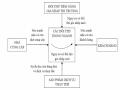 Factors Affecting Bank Marketing Activities

The lower the average mobilization interest rate while still ensuring enough capital for capital needs, the higher the efficiency of capital mobilization. Calculating the average cost for each specific source allows managers to answer the question: Which source is cheaper, how should the mobilization interest rate be applied, and does the income from the increased interest rate offset the cost of the increased source? From there, the bank can decide to choose its capital structure and propose appropriate capital mobilization solutions.
In the case of banks being controlled on maximum interest rates, or to temporarily change the scale of interest expense items during the period, banks can offer nominal interest rates higher or lower than the interest rates of other banks. Or they can also create competitive interest rates by methods such as paying interest in installments during the period or paying interest in advance. Evaluation of efficiency
For these methods, banks often base on NEC (Net effective cost: effective interest rate of each source of money).
Besides the main cost of the bank which is interest, in the process of capital mobilization there are also other costs such as salary costs for mobilization staff, printing costs, advertising service costs, etc. Although this cost does not account for a high proportion, saving will increase the efficiency of capital mobilization of the bank.
1.3 FACTORS AFFECTING CAPITAL MOBILIZATION ACTIVITIES AT COMMERCIAL BANKS
1.3.1 Environmental factors
One of the factors that significantly affects the capital mobilization activities of banks is the group of environmental factors, including: political environment, socio-economic situation inside and outside banks.
- Political and legal environment: the legal system is relatively complete but some related laws have not been issued such as the deposit insurance law and the commercial paper law. Political instability reduces people's confidence in banks, the fear of losing both principal and interest, while banks have not yet guaranteed the capital of their customers. The interests of depositors in banks are guaranteed when the legal environment is favorable, and the state and competent authorities create trust for depositors.
- Economic environment: the economic environment is a major factor affecting the capital mobilization of banks. A stable economic environment is essential for economic growth and especially to attract more and more capital into banks. For Vietnam, the national income per capita is low compared to other countries in the region, leading to a small amount of idle money.
- Social environment: in a healthy society, the demand for consumption and entertainment increases, thereby increasing the demand for goods and services, people tend to deposit more money. When society stagnates, people do not tend to deposit money but also tend to withdraw money from the bank. If inflation appears, lasts for a long time and increases, it will lead to strong fluctuations in commodity prices, causing the opportunity cost of holding money to increase, the number of people going to the bank to withdraw money increases. When there is high inflation, it will lead to incorrect information, prices fluctuate continuously, causing difficulties in decisions related to the structure of consumption and savings and affecting capital mobilization. Therefore, for banks to operate smoothly, the state needs to establish a stable social environment, in line with the development trend of the market economy.
1.3.2 Factors of State policies and laws
Banks operating in a country with a complete and strict legal environment will help banks more easily carry out their capital mobilization work. A healthy legal environment will help banks' business operations become safer, people's rights will be better protected, and access to banks will be easier and safer. On the other hand, banks themselves must also ensure that their operations are within the legal framework, such as clearly defining the responsibilities and powers of banks in keeping depositors' financial information confidential, helping customers have more confidence in banking services.
In general, capital mobilization of banks and capital mobilization of the world in particular are subject to the management and operation of monetary policies issued by the government and the State Bank.
Government income policy: in recent years the government has repeatedly adjusted its wage policy, the basic wage has been adjusted
Adjusting the increase, creating increased income for people, creating stable income for workers, people will have more savings to deposit in the bank.
Interest rate policy: if the central bank sets an interest rate with a fluctuation range suitable to the economic situation, banks will then offer flexible and attractive interest rates to attract more customers.
Saving policy: encourage economic units and population to save to avoid waste, to use idle capital to invest in economic development.
Tax policy: directly affects people's income and savings, thus affecting the amount of money deposited in banks.
Investment policy: the government needs to have policies to encourage investment, expand production and business to create conditions for economic development, people will increase savings for investment, commercial banks will increase capital attraction activities.
1.3.3 Customer factors
A bank that wants to stand firm and operate in the market must increase its capital. The bank's customers are organizations and individuals in society that have a transactional relationship with banks. For banks, customers are the main operating partners through financing investment and consumption needs, and at the same time, through which the bank can provide its other financial services.
We know that capital in the population is formed through sources of income from wages, salaries, income from general production and business, accumulated sources, income from giving, gifts, and inheritance. From there, they deposit money depending on the following factors:
+ Habit psychology
+ Financial resources, customer income
+ Depends on the benefits
Customer psychology
Is a factor that greatly affects the deposit of money in the bank. If customers trust and feel secure depositing money in the bank rather than leaving money at home, attracting capital to the bank is more effective. On the contrary, if customers do not trust the bank, they will preserve their assets in their own safe way such as: hoarding gold, buying land, or strong foreign currencies such as dollars...
We must also mention the habits of customers, do they have the habit of using the bank's services? Is there a policy of paying salaries through the banking system? Is the shopping area paying by card?
Population income factor
The ability of banks to mobilize capital is directly proportional to the income of the population, which means that the higher the income of the population, the more savings deposits. However, the amount of money in the population cannot be determined easily. Therefore, to get people to deposit money in the bank, there must be an appropriate interest rate policy along with the attractiveness of banking services.
Seasonal consumption factors
Seasonal consumption also has a big impact on the situation of mobilizing savings deposits in a certain period of time, but it is often more cyclical. For example, during the Lunar New Year, people spend more, so the amount of savings decreases, and they even withdraw money from savings to spend on Tet shopping.
1.3.4 Factors from banks
All bank managers come to realize that the bank's own factors are the main factors affecting capital mobilization.
- Competitive interest rate policy
People deposit money in banks for many different purposes, but it is clear that if a bank can create a higher interest rate for depositors, it will attract more customers. But that interest rate
must ensure that it is not too high compared to other banks. Because if it is too high, although it means that depositors receive more interest, the number of customers coming to deposit at that bank is higher, but at the same time it also pushes up the lending interest rate, limiting the lending efficiency, making the bank's profitability low. Therefore, when giving a specific mobilization interest rate for each period, the Bank must base it on the economic situation, on the credit policy and the economic development direction of the State. In addition, there are many other forms to attract customers, such as applying different interest payment methods such as paying interest in multiple periods or paying interest in advance, and ladder interest rates.
- Customer policy
Depending on each customer, the bank has different policies and appropriate behaviors. For long-term customers, customers who transact regularly, have large deposit balances, and are trusted by the Bank, the Bank will have a preferential policy on interest rates, loan terms, as well as implementing partner rewards. From there, the Bank will be able to attract customers and quickly increase its capital operations. In order to build the right customer strategy, the Bank needs to understand the motivations and habits of depositors, even each customer group through analyzing customer benefits. Based on customer information, the Bank can develop a system of policies and measures to achieve the desired scale and quality of capital.
- Bank reputation
Reputation is an intangible asset of the bank, also a valuable asset in capital mobilization, when customers will trust the bank, helping the bank to stabilize the volume of mobilized capital, saving mobilization costs (in fact, when a bank has a reputation, they can easily attract capital than other banks even when the deposit interest rate offered by the bank is lower).
When people deposit money in banks, they trust that banks are a safe place to keep their money. However, due to economic fluctuations in the development process, there may be negative fluctuations that affect the operations of banks and affect people's psychology. Therefore, deposit insurance is extremely necessary to protect the interests of customers when depositing money in banks. When customers deposit money in banks, their deposits will be insured in Vietnamese Dong according to State regulations. When the bank encounters risks and is unable to pay, the insurance company will pay the debt to the customer on behalf of the bank. That increases the safety of customers' deposits and also increases the bank's reputation in the hearts of the people.
- Human resources
The banking industry in recent years has grown rapidly in breadth, as demonstrated by the increase in the number of branches and transaction offices across the country. As a result, the number of bank employees has grown dramatically. In addition, in order to make the financial system stronger, bank restructuring and mergers have been taking place as a trend, leading to changes in the personnel structure of banks. In recent times, the human resources have basically met the development of the banking industry, but the quality of human resources is still low. Most medium-sized commercial banks and below lack a team of executives, leaders at the branch and transaction office levels; Professional qualifications, analytical skills, and independent handling of practical problems are not high, etc. Most students after graduating and working at banks still lack skills (attitude, teamwork skills, English proficiency, communication skills) and knowledge (finance, banking), which affects the overall work of the system as well as the capital mobilization work of the branch.