
- Legal treatment: Nourishing the heart and benefiting the qi
- Prescription: Thien Vuong Tam Don
3.3. BLOOD DEFICIENCY: often found in the Heart and Liver
3.3.1. Heart blood deficiency:
Maybe you are interested!
-

 Investment Situation in Non-Credit Services at Saigon Commercial Joint Stock Bank in the Period of 2015-2019
 -
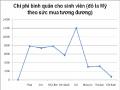 Compare Annual Expenditures for Education Based on Purchasing Power Parity
 -
 Assessing the level of satisfaction of individual customers with savings deposit services at Saigon Commercial Joint Stock Bank SCB - Ninh Kieu Branch - 13
 -
 Comparison of Activity-Based Costing and Traditional Costing
 -
 Applying Project-Based Learning to Organize Study Tours to the Hoa Lu Ancient Capital Cultural Heritage
- Reason:
Due to poor blood production, or heavy blood loss such as women after giving birth
Due to the erratic joy and sadness, the spirit is dissipated, causing blood deficiency, yin deficiency and essence exhaustion.
- Symptom:
Mindfulness, forgetfulness
Anxiety, difficulty sleeping, or being startled
Dizziness
Dull skin
Pale lips and tongue
Weak pulse.
- Treatment: nourish the heart and calm the mind.
- Prescription:
Prescription 1: Quy ty thang (Te sinh phuong)
Prescription 2: Si Wu Tang, modified . Add: Ba Zi Ren, Toan Tao Ren, Poria, and Ophiopogon to nourish blood and calm the mind.
3.3.2. Liver blood deficiency:
- Cause: usually due to women losing a lot of blood after giving birth, or women suffering from diseases such as amenorrhea, menorrhagia causing blood deficiency, blood cannot nourish the liver, causing liver yang disturbance above.
- Symptom:
Dizziness
Headache, tinnitus, pain in the side
Easily startled while sleeping, restless and difficult to fall asleep
Women with irregular menstruation or amenorrhea
Pale skin, pale tongue
Pulse is thin and rapid.
- Treatment: Nourish blood and liver.
- Prescription:
Prescription 1: Modified version of Tu Vuc thang (Cuc phuong): Dang quy, Thuc dia, Ligusticum wallichii, Bach thao.
Analysis: Quy and Thuc to nourish blood and yin; Bach Thuoc to harmonize nutrition; Chuan Xiong to regulate qi and activate blood circulation.
If tinnitus add sample to potential yang
Insomnia, sudden awakening, add Chinese jujube seed, Polygala tenuifolia
Add Saposhnikovia divaricata, Curcuma longifolia, and Cyperus rotundus to relieve pain in the ribs.
- Acupuncture point method: Acupuncture points: Liver du, Spleen du, Heart du, Kidney du, Blood sea, Foot three miles, Sanyin intersection
MUMPS
TARGET
After completing the course, students MUST
1. State the definition and epidemiological factors of mumps.
2. Describe the cause and pathogenesis of mumps according to traditional medicine theory.
3. Diagnose clinical forms of mumps according to traditional medicine.
4. Present the principles of mumps treatment according to modern medicine and traditional medicine.
5. Describe the treatment methods for mumps (medicinal and non-medicinal methods of traditional medicine).
6. Explain the theoretical basis of treating mumps with traditional medicine.
CONTENT
1. GENERAL
1.1. Definition:
Mumps is an acute systemic infectious disease of viral origin, characterized by swelling and pain of the salivary glands, mainly the parotid glands, and sometimes accompanied by gonaditis, meningitis, pancreatitis and some organs.
1.1.2. Epidemiology:
Humans are the only host of the Mumps virus.
Mumps occurs worldwide, and can cause small outbreaks limited to communal living areas such as schools.
Usually occurs in spring, April and May. 80-90% of adults have serological evidence of previous mumps infection. The disease is not contagious and about 25% of patients infected with mumps have no clinical manifestations.
Common in children aged 5-9, rare in children < 2 years old, boys are more affected than girls. The disease is mainly transmitted through infected saliva that is sprayed out when children talk, cough, or sneeze. Mumps virus is rarely isolated in feces. Saliva is capable of transmitting 6 days before the full-blown attack.
Parotid gland swelling and viral secretion from this site for 2 weeks after the parotid swelling episode. Although viral secretion is prolonged, peak infectivity occurs 1-2 days before parotid swelling and recedes rapidly after the gland enlarges.
The disease has the ability to create sustainable and long-lasting immunity, rarely getting sick a second time.
Mumps antibodies can cross the placenta and protect the baby for the first six months of life. Since the introduction of the mumps vaccine, the incidence of the disease has dropped significantly.
2. CAUSES - PATHOGENESIS:
2.1. According to YHHĐ
Mumps is caused by a virus belonging to the Paramyxovirus group, with an average diameter of 120-200nm, containing a closed spiral RNA core inside and surrounded by a lipid and protein shell on the outside. There is only 1 antigenic type.
Mumps virus has two complement-fixing components. There are two types of complement-fixing antigens:
The S antigen originates from the nuclear membrane, is a small, soluble type, is abundant in infected tissues but does not cause infection.
The V antigen is the large type, derived from surface hemaglutinin, present in infected blastocysts.
The virus has the ability to produce interferon, hemolysin, hemagglutinin, and complement-binding antigens.
Mumps virus is easily cultured in human cell culture, monkey kidney cells, and chicken embryos.
The virus enters through the respiratory tract, during the incubation period of 12-25 days, the virus can multiply in the upper respiratory tract and the lymph nodes in the neck, from there the virus is distributed through the bloodstream to other organs, including the meninges, testicles, pancreas, breasts, thyroid, heart, liver, kidneys and cranial nerves. Lymphadenitis in the salivary glands is thought to be secondary to viremia.
Glandular lesions in the disease include: edema and mononuclear cell infiltration in the extravascular interstitium. Necrosis of glandular follicles and ductal epithelial cells of the salivary glands and germ cells along with seminiferous tubule cells.
The disease is rarely fatal unless there are complications.
2.2. According to Oriental Medicine:
According to Oriental medicine: Mumps has clinical manifestations according to Oriental medicine called symptoms of pig head fat, ear infection, and cold sores.
The cause is due to heat toxins, wind heat, and epidemic toxins invading the lungs and defenses through the nose and mouth, affecting the Shaoyang Gallbladder and Yangming Stomach meridians, stagnating in the area below the ears and below the jaw, causing illness.
3. DIAGNOSIS:
3.1. According to YHHĐ:
3.1.1. Clinical: clinical manifestations of mumps include parotitis , genitalitis and other lesions .
3.1.1.1. Inflammation of the salivary glands:
- Incubation period:
Varies from 21-24 days, usually 17-18 days
No obvious clinical symptoms.
- Onset period:
Sudden, sometimes with a prodromal stage with symptoms such as: discomfort, difficulty chewing, difficulty speaking, chills, mild fever, sore throat and pain in the jaw angle. Pain symptoms especially occur when chewing or drinking sour foods; this is an important sign with diagnostic value in atypical cases.
Pain when pressing on 3 Rillet-Barthez points: mastoid process, temporomandibular joint, lower angle of mandible.
Then the parotid gland gradually enlarges and becomes painful. In many cases, swelling of the parotid gland is the first symptom of the disease.
- Full development period:
Typically during this period, the parotid gland swells, 70% of cases have symptoms of pain on one side then gradually spreads to the other side; the gland gradually enlarges from 1-3 days and peaks after a week, then slowly shrinks.
The parotid gland swells from the area in front of the ear, mastoid bone, spreading to the jaw bone causing the mandibular groove to disappear, spreading upwards to the subzygomatic arch, the swollen gland can push the earlobe up and out. The skin over the gland is often red and not hot, pressing on it feels elastic, distinguishing between red and hot skin in bacterial parotiditis.
In severe cases, the submandibular and submental glands swell, sometimes spreading to the anterior chest area causing presternal edema. In this case, it is difficult to distinguish mumps from acute lymphadenitis.
Some cases of uvular edema require emergency tracheostomy.
Throat examination: stenon tube opening is red and swollen, sometimes with pseudomembrane.
Lymph node examination: lymph nodes in front of the ear and jaw angle may also be large and painful in some cases.
- Recovery period: after one week, the parotid gland gradually shrinks, the pain is reduced, the symptoms of difficulty swallowing gradually decrease and the disease gradually heals.
3.1.1.2. Lesions outside the salivary glands
- Central nervous system damage
Appears 3-10 days after parotitis, but central nervous system lesions in mumps can occur two to three weeks before parotitis.
About 60% of mumps patients have clinical symptoms of increased lymphocytes in the cerebrospinal fluid. 10% of cases will have symptoms of meningitis: stiff neck, headache, drowsiness... Protein in the cerebrospinal fluid increases moderately and glucose tends to be normal although about
Low cerebrospinal fluid glucose levels are present in 10% of patients. Meningitis is uncommon, although it is responsible for the majority of CNS sequelae, including behavioral disturbances, headaches, seizures, deafness (usually unilateral), and visual disturbances.
Cerebral aqueduct stenosis and hydrocephalus are considered rare sequelae of mumps encephalitis.
Mumps can also be recognized as a mild case of poliomyelitis, the diagnosis is confirmed by virus isolation or serological testing.
Mumps rarely causes transverse myelitis, cerebellar ataxia or Guillain-Barre syndrome.
Mumps meningitis without clinical signs of encephalitis is usually considered benign.
Cranial nerve damage: Unilateral or bilateral deafness, irreversible because there is no damage to the hearing system, occurring 2-15 days after parotitis.
- Orchitis and epididymitis
About 20-35% of cases in males with mumps after puberty have complications of orchitis. Testicular lesions usually appear 7-10 days after parotitis, although they can occur before or at the same time as parotitis.
Bilateral orchitis occurs in 3-17% of cases
Orchitis is signaled by discomfort in walking and chills, headache, nausea and vomiting. Chills and high fever of 39-41 0 C, swollen and acutely painful testicles, and palpable epididymis. Sometimes there is only epididymitis without orchitis.
Swelling, pain, and tenderness usually last 3-7 days and gradually subside. Fever usually subsides along with the disappearance of swelling. Sometimes the temperature drops in episodes.
Orchitis due to mumps is accompanied by gradual testicular atrophy in half of the cases. Even with bilateral orchitis, infertility is uncommon because it does not cause obvious testicular atrophy. If bilateral testicular atrophy occurs after mumps, infertility and abnormal sperm count are common. Plasma testosterone levels are suppressed in acute orchitis and return to normal upon recovery.
Pulmonary embolism has also been reported in mumps orchitis. It is a consequence of thrombosis of the prostatic veins and pelvic plexus often associated with orchitis.
- Acute pancreatitis:
Mild and asymptomatic pancreatitis is common, but severe acute pancreatitis can cause shock or pseudocyst formation, which can be mistaken for gastrointestinal syndrome. In mumps patients, this complication is suspected when the patient has a high fever of 39-40 0 C, abdominal pain and reaction, and vomiting that can lead to circulatory collapse.
Progression: acute pancreatitis is usually benign, some cases lead to the formation of pancreatic pseudocysts.
Diagnosis of acute pancreatitis is often difficult because increased blood amylase occurs in 90% of patients with or without pancreatic damage in mumps. Some cases of acute pancreatitis develop into diabetes or chronic pancreatitis.
- Oophoritis: with clinical symptoms: fever, persistent pain in the lower abdomen (accounting for 7% of post-pubescent girls), often more difficult to detect than orchitis in men, the rate of infertility due to ovarian inflammation is very rare.
- Mumps myocarditis: Rarely severe, occurring from day 5-19 after parotitis.
The disease is relatively mild and rarely fatal.
Functional TC: precordial pain, fatigue, bradycardia. Irregular electrocardiogram.
- Subacute thyroiditis: Mumps thyroiditis occurs one week after parotitis and usually produces thyroid cell antibodies.
- Ocular manifestations: lacrimal gland inflammation, optic neuritis, keratitis, uveitis, conjunctivitis, retinitis, central vein occlusion; only transiently affects vision, recovering after 10-20 days.
- Liver damage: mild liver dysfunction, jaundice and clinical signs of liver damage are rare.
- Laryngitis and interstitial pneumonia: often associated with mumps, especially in children. Manifestations include high fever, cough, sometimes accompanied by difficulty breathing.
- Polyarthritis: rare but notable in mumps, often occurs in women 20-30 years old, appears 1-2 weeks after parotitis, fully recovers after 1-6 weeks, it is not clear whether it is caused by the virus traveling through the blood to the joints or by a hypersensitivity reaction.
- Hemorrhagic glomerulonephritis: occurs 10-14 days after parotitis without Streptococcus infection, frequency and origin are unknown.
- Deafness: usually unilateral, rarely bilateral, often nerve deafness. Hearing loss can be permanent or transient.
3.1.2. Definitive diagnosis: based on the following 3 factors:
3.1.2.1.Epidemiological factors:
- Never been sick
- Had contact with a patient with mumps 2-3 weeks before.
3.1.2.2. Clinical:
- Difficulty chewing, difficulty speaking, chills, mild fever, sore throat and pain in the jaw angle.
- Pain when pressing on 3 Rillet-Barthez points: mastoid process, temporomandibular joint, lower angle of mandible, swollen parotid gland.
- Throat examination: stenon duct orifice is red and swollen, sometimes with pseudomembrane.
- Lymph node examination: lymph nodes in front of the ear and jaw angle may also be large and painful in some cases.
3.1.2.3. Testing:
- Blood formula: normal white blood cells, increased lymphocytes in uncomplicated cases:
- In mumps orchitis: leukocytosis
- In encephalitis, meningitis: normal white blood cells
- Erythrocyte sedimentation rate: normal, increased when there is testicular or pancreatic damage
- Amylase in masu increases in parotitis, pancreatitis and meningoencephalitis.
- Blood lipase increases only in pancreatitis
- Blood glucose increases and urine glucose may also be positive.
- Cerebrospinal fluid: cells from 0 - 2,000 cells/mm 3 , mostly lymphocytes; polymorphonuclear cells mainly increase in the early stage of mumps meningitis.
- Hematuria: transient and abnormal kidney function: loss of maximum urine concentration ability, reduced purification ability... this symptom can be completely reversible.
- Serological and virological tests:
Virus isolation in clinical specimens
Immunofluorescence method
Serological method
Find neutralizing antibodies
ELISA test
Complement fixation method
Antibodies to antigens
3.1.3. Differential diagnosis
- Parotitis:
Due to other viruses such as parainfluenza, influenza, coxsackie...
Bacteria: purulent parotitis is often caused by Staphyloccocus, found in bedridden patients, patients with serious illnesses such as uncontrolled diabetes, stroke, uremic syndrome, surgery...
Clinical: swollen, red, painful, tense glands and pus may flow from Stenon's foramen
Test: increased white blood cells, increased percentage of polymorphonuclear leukocytes
- Salivary duct obstruction: due to stones detected by palpation and Stenon duct contrast imaging
- Drug reaction: swelling of the parotid gland, salivary gland, often due to intravenous contrast, mercury, diagnosis requires careful history taking.
- Hidden lymphadenitis in front of the ear caused by streptococcus, diphtheria.
- Orchitis: due to tuberculosis, leptospirosis, melioidosis, relapsing fever, testicular torsion (surgical emergency)...
3.2. According to Oriental Medicine:
Depending on clinical manifestations, the disease has the following stages:
- Mild symptoms: patient has no fever or low fever, painful swelling in the ear and cheek area; the area below the ear is painful and gradually swells. Thin white tongue coating, floating pulse. The disease resolves itself after a few days.
- Severe symptoms: high fever, difficulty opening mouth, difficulty swallowing, headache, swollen and painful cheeks, thirst, yellow urine, yellow tongue coating, floating and rapid pulse. Recovery time usually lasts more than 10 days.
4. TREATMENT:
4.1. According to YHHĐ:
- Treatment is mainly symptomatic, there is no specific treatment.
- Patients with parotitis should receive good oral care, pain relief, and a light diet.
- Bed rest when the patient has a fever and prolonged physical activity does not affect the development of orchitis or other complications.
- Acute epididymitis and orchitis cause severe pain: reduce pressure by surgery on the testicles, block the spermatic cord with local anesthesia. Corticosteroids are effective in reducing fever, edema, testicular pain and discomfort. Prednisone: 60mg on the first day. Gradually reduce the dose over 7-10 days.
- Thyroiditis caused by mumps can heal naturally but it is best to use corticosteroids.
4.1.1. Inflammation of the salivary glands:
- Dental care
- Light diet
- Lie down and rest, apply warm compresses to the parotid gland area.
- Antipyretics and pain relievers such as paracetamol
- Isolate to prevent spread.
- Treatment is mainly symptomatic, there is no specific treatment.
- Patients with parotitis should receive good oral care, pain relief, and a light diet.
- Bed rest when the patient has a fever and prolonged physical activity does not affect the development of orchitis or other complications.
- Acute epididymitis and orchitis cause severe pain: reduce pressure by surgery on the testicles, block the spermatic cord with local anesthesia. Corticosteroids are effective in reducing fever, edema, testicular pain and discomfort. Prednisone: 60mg on the first day. Gradually reduce the dose over 7-10 days.
- Thyroiditis due to mumps can heal naturally but it is best to use corticosteroids. Salivary gland inflammation:
- Dental care
- Light diet
- Lie down and rest, apply warm compresses to the parotid gland area.
- Antipyretics and pain relievers such as paracetamol
- Isolate to avoid spreading. Orchitis:
- Wear underwear to lift the testicles, reduce tension and relieve pain