
humanities | - Social evils related to tourism |
- Current status of local historical and cultural relics | |
- Number of beggars/total local population | |
- Percentage of currency depreciation during peak tourist season | |
- The degree of commercialization of traditional cultural activities (festivals, funerals, weddings, customs, practices...) is determined through exchanges with the experts |
Maybe you are interested!
-
 Identify Rating Levels and Rating Scales
zt2i3t4l5ee
zt2a3gstourism,quan lan,quang ninh,ecology,ecotourism,minh chau,van don,geography,geographical basis,tourism development,science
zt2a3ge
zc2o3n4t5e6n7ts
of the islanders. Therefore, this indicator will be divided into two sub-indicators:
a1. Natural tourism attractiveness a2. Cultural tourism attractiveness
b. Tourist capacity
The two island communes in Quan Lan have different capacities to receive tourists. Minh Chau Commune is home to many standard hotels and resorts, attracting high-income domestic and international tourists. Meanwhile, Quan Lan Commune has many motels mainly built and operated by local people, so the scale and quality are not high, and will be suitable for ordinary tourists such as students.
c. Time of exploitation of Quan Lan Island Commune:
Quan Lan tourism is seasonal due to weather and climate conditions and festivals only take place on certain days of the year, specifically in spring. In Quan Lan commune, the period from April to June and from September to November is considered the best time to visit Quan Lan because the cultural tourism activities are mainly associated with festivals taking place during this time.
Minh Chau island commune:
Tourism exploitation time is all year round, because this is a place with a number of tourist attractions with diverse ecosystems such as Bai Tu Long National Park Research Center, Tram forest, Turtle Laying Beach, so besides coming to the beach for tourism and vacation in the summer, Minh Chau will attract research groups to come for tourism combined with research at other times of the year.
d. Sustainability
The sustainability of ecotourism sites in Quan Lan and Minh Chau communes depends on the sensitivity of the ecosystems to climate changes.
landscape. In general, these tourist destinations have a fairly high level of sustainability, because they are natural ecosystems, planned and protected. However, if a large number of tourists gather at certain times, it can exceed the carrying capacity and affect the sustainability of the environment (polluted beaches, damaged trees, animals moving away from their habitats, etc.), then the sustainability of the above ecosystems (natural ecosystems, human ecosystems) will also be affected and become less sustainable.
e. Location and accessibility
Both island communes have ports to take tourists to visit from Van Don wharf:
- Quan Lan – Van Don traffic route:
Phuc Thinh – Viet Anh high-speed boat and Quang Minh high-speed boat, depart at 8am and 2pm from Van Don to Quan Lan, and at 7am and 1pm from Quan Lan to Van Don. There are also wooden boats departing at 7am and 1pm.
- Van Don - Minh Chau traffic route:
Chung Huong high-speed train, Minh Chau train, morning 7:30 and afternoon 13:30 from Van Don to Minh Chau, morning 6:30 and afternoon 13:00 from Minh Chau to Van Don.
f. Infrastructure
Despite receiving investment attention, the issue of infrastructure and technical facilities for tourism on Quan Lan Island is still an issue that needs to be resolved because it has a direct impact on the implementation of ecotourism activities. The minimum conditions for serving tourists such as accommodation, electricity, water, communication, especially medical services, and security work need to be given top priority. Ecotourism spots in Minh Chau commune are assessed to have better infrastructure and technical facilities for tourism because there are quite complete and synchronous conditions for serving tourists, meeting many needs of domestic and foreign tourists.
3.2.1.4. Determine assessment levels and assessment scales
Corresponding to the levels of each criterion, the index is the score of those levels in the order of 4, 3, 2, 1 decreasing according to the standard of each level: very attractive (4), attractive (3), average (2), less attractive (1).
3.2.1.5. Determining the coefficients of the criteria
For the assessment of DLST in the two communes of Quan Lan and Minh Chau islands, the students added evaluation coefficients to show the importance of the criteria and indicators as follows:
Coefficient 3 with criteria: Attractiveness, Exploitation time. These are the 2 most important criteria for attracting tourists to tourism in general and eco-tourism in particular, so they have the highest coefficient.
Coefficient 2 with criteria: Capacity, Infrastructure, Location and accessibility . Because the assessment area is an island commune of Van Don district, the above criteria are selected by the author with appropriate coefficients at the average level.
Coefficient 1 with criteria: Sustainability. Quan Lan has natural and human-made ecotourism sites, with high biodiversity and little impact from local human factors. Most of the ecotourism sites are still wild, so they are highly sustainable.
3.2.1.6. Results of DLST assessment on Quan Lan island
a. Assessment of the potential for natural tourism development
For Minh Chau commune:
+ Natural tourism attractiveness is determined to be very attractive (4 points) and the most important coefficient (coefficient 3), so the score of the Attractiveness criterion is 4 x 3 = 12.
+ Capacity is determined as average (2 points) and the coefficient is quite important (coefficient 2), then the score of Capacity criterion is 2 x 2 = 4.
+ Exploitation time is long (4 points), the most important coefficient (coefficient 3) so the score of the Exploitation time criterion is 4 x 3 = 12.
+ Sustainability is determined as sustainable (4 points), the important coefficient is the average coefficient (coefficient 1), so the score of the Sustainability criterion is 4 x 1 = 4 points
+ Location and accessibility are determined to be quite favorable (2 points), the coefficient is quite important (coefficient 2), the criterion score is 2 x 2 = 4 points.
+ Infrastructure is assessed as good (3 points), the coefficient is quite important (coefficient 2), then the score of the Infrastructure criterion is 3 x 2 = 6 points.
The total score for evaluating DLST in Minh Chau commune according to 6 evaluation criteria is determined as: 12 + 4 + 12 + 4 + 4 + 6 = 42 points
Similar assessment for Quan Lan commune, we have the following table:
Table 3.3: Assessment of the potential for natural ecotourism development in Quan Lan and Minh Chau communes
Attractiveness of self-tourismof course
Capacity
Mining time
Sustainability
Location and accessibility
Infrastructure
Result
Point
DarkMulti
Point
DarkMulti
Point
DarkMulti
Point
DarkMulti
Point
DarkMulti
Point
DarkMulti
CommuneMinh Chau
12
12
4
8
12
12
4
4
4
8
6
8
42/52
Quan CommuneLan
6
12
6
8
9
12
4
4
4
8
4
8
33/52
b. Assessment of the potential for humanistic tourism development
For Quan Lan commune:
+ The attractiveness of human tourism is determined to be very attractive (4 points) and the most important coefficient (coefficient 3), so the score of the Attractiveness criterion is 4 x 3 = 12.
+ Capacity is determined to be large (3 points) and the coefficient is quite important (coefficient 2), then the score of the Capacity criterion is 3 x 2 = 6.
+ Mining time is average (3 points), the most important coefficient (coefficient 3) so the score of the Mining time criterion is 3 x 3 = 9.
+ Sustainability is determined as sustainable (4 points), the important coefficient is the average coefficient (coefficient 1), so the score of the Sustainability criterion is 4 x 1 = 4 points.
+ Location and accessibility are determined to be quite favorable (2 points), the coefficient is quite important (coefficient 2), the criterion score is 2 x 2 = 4 points.
+ Infrastructure is rated as average (2 points), the coefficient is quite important (coefficient 2), then the score of the Infrastructure criterion is 2 x 2 = 4 points.
The total score for evaluating DLST in Quan Lan commune according to 6 evaluation criteria is determined as: 12 + 6 + 6 + 4 + 4 + 4 = 36 points.
Similar assessment with Minh Chau commune we have the following table:
Table 3.4: Assessment of the potential for developing humanistic eco-tourism in Quan Lan and Minh Chau communes
Attractiveness of human tourismliterature
Capacity
Mining time
Sustainability
Location and accessibility
Infrastructure
Result
Point
DarkMulti
Point
DarkMulti
Point
DarkMulti
Point
DarkMulti
Point
DarkMulti
Point
DarkMulti
Quan CommuneLan
12
12
6
8
9
12
4
4
4
8
4
8
39/52
Minh CommuneChau
6
12
4
8
12
12
4
4
4
8
6
8
36/52
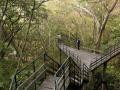
Basically, both Minh Chau and Quan Lan localities have quite favorable conditions for developing ecotourism. However, Quan Lan commune has more advantages to develop ecotourism in a humanistic direction, because this is an area with many famous historical relics such as Quan Lan Communal House, Quan Lan Pagoda, Temple worshiping the hero Tran Khanh Du, ... along with local festivals held annually such as the wind praying ceremony (March 15), Quan Lan festival (June 10-19); due to its location near the port and long exploitation time, the beaches in Quan Lan commune (especially Quan Lan beach) are no longer hygienic and clean to ensure the needs of tourists coming to relax and swim; this is also an area with many beautiful landscapes such as Got Beo wind pass, Ong Phong head, Voi Voi cave, but the ability to access these places is still very limited (dirt hill road, lots of gravel and rocks), especially during rainy and windy times; In addition, other natural resources such as mangrove forests and sea worms have not been really exploited for tourism purposes and ecotourism development. On the contrary, Minh Chau commune has more advantages in developing ecotourism in the direction of natural tourism, this is an area with diverse ecosystems such as at Rua De Beach, Bai Tu Long National Park Conservation Center...; Minh Chau beach is highly appreciated for its natural beauty and cleanliness, ranked in the top ten most beautiful beaches in Vietnam; Minh Chau commune is also home to Tram forest with a large area and a purity of up to 90%, suitable for building bridges through the forest (a very effective type of natural ecotourism currently applied by many countries) for tourists to sightsee, as well as for the purpose of studying and researching.
Figure 3.1: Thenmala Forest Bridge (India) Source: https://www.thenmalaecotourism.com/(August 21, 2019)
3.2.2. Using SWOT matrix to evaluate Quan Lan island tourism
General assessment of current tourism activities of Quan Lan island is shown through the following SWOT matrix:
Table 3.5: SWOT matrix evaluating tourism activities on Quan Lan island
Internal agent
Strengths- There is a lot of potential for tourism development, especially natural ecotourism and humanistic ecotourism.- The unskilled labor force is relatively abundant.- resource environmentunpolluted, still
Weaknesses- Poorly developed infrastructure, especially traffic routes to tourist destinations on the island.- The team of professional staff is still weak.- Tourism products in general
quite wild, originalintact
general and DLST in particularalone is monotonous.
External agents
Opportunity- Tourism is a key industry in the socio-economic development strategy of the province and Van Don economic zone.- Quan Lan was selected as a pilot area for eco-tourism development within the framework of the green growth project between Quang Ninh province and the Japanese organization JICA.- The flow of tourists and especially ecotourism in the world tends toincreasing
Challenge- Weather and climate change abnormally.- Competition in tourism products is increasingly fierce, especially with other localities in the province such as Ha Long, Mong Cai...- Awareness of tourists, especially domestic tourists, about ecotourism and nature conservation is not high.
Through summary analysis using SWOT matrix we see that:
To exploit strengths and take advantage of opportunities, it is necessary to:
- Diversify products and service types (build more tourism routes aimed at specific needs of tourists: experiential tourism immersed in nature, spiritual cultural tourism...)
- Effective exploitation of resources and differentiated products (natural resources and human resources)
div.maincontent .p { color: black; font-family:"Times New Roman", serif; font-style: normal; font-weight: normal; text-decoration: none; font-size: 14pt; margin:0pt; } div.maincontent p { color: black; font-family:"Times New Roman", serif; font-style: normal; font-weight: normal; text-decoration: none; font-size: 14pt; margin:0pt; } div.maincontent .s1 { color: black; font-family:"Times New Roman", serif; font-style: normal; font-weight: normal; text-decoration: none; font-size: 13pt; } div.maincontent .s2 { color: black; font-family:"Times New Roman", serif; font-style: normal; font-weight: normal; text-decoration: none; font-size: 13pt; } div.maincontent .s3 { color: #0D0D0D; font-family:"Times New Roman", serif; font-style: normal; font-weight: bold; text-decoration: none; font-size: 14pt; } div.maincontent .s4 { color: black; font-family:"Times New Roman", serif; font-style: italic; font-weight: normal; text-decoration: none; font-size: 14pt; } div.maincontent .s5 { color: black; font-family:"Times New Roman", serif; font-style: italic; font-weight: bold; text-decoration: none; font-size: 14pt; } div.maincontent .s6 { color: black; font-family:"Times New Roman", serif; font-style: italic; font-weight: normal; text-decoration: none; font-size: 14pt; vertical-align: -3pt; } div.maincontent .s7 { color: black; font-family:"Times New Roman", serif; font-style: italic; font-weight: normal; text-decoration: none; font-size: 14pt; vertical-align: -2pt; } div.maincontent .s8 { color: black; font-family:"Times New Roman", serif; font-style: italic; font-weight: normal; text-decoration: none; font-size: 14pt; vertical-align: -1pt; } div.maincontent .s9 { color: black; font-family:"Times New Roman", serif; font-style: normal; font-weight: normal; text-decoration: none; font-size: 14pt; } div.maincontent .s10 { color: black; font-family:"Times New Roman", serif; font-style: normal; font-weight: bold; text-decoration: none; font-size: 14pt; } div.maincontent .s11 { color: black; font-family:"Times New Roman", serif; font-style: normal; font-weight: normal; text-decoration: none; font-size: 14pt; } div.maincontent .s12 { color: black; font-family:Symbol, serif; font-style: normal; font-weight: normal; text-decoration: none; font-size: 14pt; } div.maincontent .s13 { color: black; font-family:Wingdings; font-style: normal; font-weight: normal; text-decoration: none; font-size: 14pt; } div.maincontent .s14 { color: black; font-family:"Times New Roman", serif; font-style: normal; font-weight: normal; text-decoration: none; font-size: 9pt; vertical-align: 5pt; } div.maincontent .s15 { color: black; font-family:"Times New Roman", serif; font-style: normal; font-weight: normal; text-decoration: none; font-size: 9pt; vertical-align: 5pt; } div.maincontent .s16 { color: black; font-family:Cambria, serif; font-style: italic; font-weight: normal; text-decoration: none; font-size: 14pt; } div.maincontent .s17 { color: #080808; font-family:"Times New Roman", serif; font-style: normal; font-weight: bold; text-decoration: none; font-size: 14pt; } div.maincontent .s18 { color: #080808; font-family:"Times New Roman", serif; font-style: normal; font-weight: normal; text-decoration: none; font-size: 14pt; } div.maincontent .s19 { color: black; font-family:"Times New Roman", serif; font-style: normal; font-weight: normal; text-decoration: none; font-size: 11pt; } div.maincontent .s20 { color: black; font-family:"Times New Roman", serif; font-style: normal; font-weight: normal; text-decoration: none; font-size: 10pt; } div.maincontent .s21 { color: black; font-family:"Times New Roman", serif; font-style: normal; font-weight: bold; text-decoration: none; font-size: 11pt; } div.maincontent .s22 { color: black; font-family:"Times New Roman", serif; font-style: normal; font-weight: normal; text-decoration: none; font-size: 11pt; } div.maincontent .s23 { color: black; font-family:"Times New Roman", serif; font-style: italic; font-weight: normal; text-decoration: none; font-size: 14pt; } div.maincontent .s24 { color: #212121; font-family:"Times New Roman", serif; font-style: normal; font-weight: normal; tex
Identify Rating Levels and Rating Scales
zt2i3t4l5ee
zt2a3gstourism,quan lan,quang ninh,ecology,ecotourism,minh chau,van don,geography,geographical basis,tourism development,science
zt2a3ge
zc2o3n4t5e6n7ts
of the islanders. Therefore, this indicator will be divided into two sub-indicators:
a1. Natural tourism attractiveness a2. Cultural tourism attractiveness
b. Tourist capacity
The two island communes in Quan Lan have different capacities to receive tourists. Minh Chau Commune is home to many standard hotels and resorts, attracting high-income domestic and international tourists. Meanwhile, Quan Lan Commune has many motels mainly built and operated by local people, so the scale and quality are not high, and will be suitable for ordinary tourists such as students.
c. Time of exploitation of Quan Lan Island Commune:
Quan Lan tourism is seasonal due to weather and climate conditions and festivals only take place on certain days of the year, specifically in spring. In Quan Lan commune, the period from April to June and from September to November is considered the best time to visit Quan Lan because the cultural tourism activities are mainly associated with festivals taking place during this time.
Minh Chau island commune:
Tourism exploitation time is all year round, because this is a place with a number of tourist attractions with diverse ecosystems such as Bai Tu Long National Park Research Center, Tram forest, Turtle Laying Beach, so besides coming to the beach for tourism and vacation in the summer, Minh Chau will attract research groups to come for tourism combined with research at other times of the year.
d. Sustainability
The sustainability of ecotourism sites in Quan Lan and Minh Chau communes depends on the sensitivity of the ecosystems to climate changes.
landscape. In general, these tourist destinations have a fairly high level of sustainability, because they are natural ecosystems, planned and protected. However, if a large number of tourists gather at certain times, it can exceed the carrying capacity and affect the sustainability of the environment (polluted beaches, damaged trees, animals moving away from their habitats, etc.), then the sustainability of the above ecosystems (natural ecosystems, human ecosystems) will also be affected and become less sustainable.
e. Location and accessibility
Both island communes have ports to take tourists to visit from Van Don wharf:
- Quan Lan – Van Don traffic route:
Phuc Thinh – Viet Anh high-speed boat and Quang Minh high-speed boat, depart at 8am and 2pm from Van Don to Quan Lan, and at 7am and 1pm from Quan Lan to Van Don. There are also wooden boats departing at 7am and 1pm.
- Van Don - Minh Chau traffic route:
Chung Huong high-speed train, Minh Chau train, morning 7:30 and afternoon 13:30 from Van Don to Minh Chau, morning 6:30 and afternoon 13:00 from Minh Chau to Van Don.
f. Infrastructure
Despite receiving investment attention, the issue of infrastructure and technical facilities for tourism on Quan Lan Island is still an issue that needs to be resolved because it has a direct impact on the implementation of ecotourism activities. The minimum conditions for serving tourists such as accommodation, electricity, water, communication, especially medical services, and security work need to be given top priority. Ecotourism spots in Minh Chau commune are assessed to have better infrastructure and technical facilities for tourism because there are quite complete and synchronous conditions for serving tourists, meeting many needs of domestic and foreign tourists.
3.2.1.4. Determine assessment levels and assessment scales
Corresponding to the levels of each criterion, the index is the score of those levels in the order of 4, 3, 2, 1 decreasing according to the standard of each level: very attractive (4), attractive (3), average (2), less attractive (1).
3.2.1.5. Determining the coefficients of the criteria
For the assessment of DLST in the two communes of Quan Lan and Minh Chau islands, the students added evaluation coefficients to show the importance of the criteria and indicators as follows:
Coefficient 3 with criteria: Attractiveness, Exploitation time. These are the 2 most important criteria for attracting tourists to tourism in general and eco-tourism in particular, so they have the highest coefficient.
Coefficient 2 with criteria: Capacity, Infrastructure, Location and accessibility . Because the assessment area is an island commune of Van Don district, the above criteria are selected by the author with appropriate coefficients at the average level.
Coefficient 1 with criteria: Sustainability. Quan Lan has natural and human-made ecotourism sites, with high biodiversity and little impact from local human factors. Most of the ecotourism sites are still wild, so they are highly sustainable.
3.2.1.6. Results of DLST assessment on Quan Lan island
a. Assessment of the potential for natural tourism development
For Minh Chau commune:
+ Natural tourism attractiveness is determined to be very attractive (4 points) and the most important coefficient (coefficient 3), so the score of the Attractiveness criterion is 4 x 3 = 12.
+ Capacity is determined as average (2 points) and the coefficient is quite important (coefficient 2), then the score of Capacity criterion is 2 x 2 = 4.
+ Exploitation time is long (4 points), the most important coefficient (coefficient 3) so the score of the Exploitation time criterion is 4 x 3 = 12.
+ Sustainability is determined as sustainable (4 points), the important coefficient is the average coefficient (coefficient 1), so the score of the Sustainability criterion is 4 x 1 = 4 points
+ Location and accessibility are determined to be quite favorable (2 points), the coefficient is quite important (coefficient 2), the criterion score is 2 x 2 = 4 points.
+ Infrastructure is assessed as good (3 points), the coefficient is quite important (coefficient 2), then the score of the Infrastructure criterion is 3 x 2 = 6 points.
The total score for evaluating DLST in Minh Chau commune according to 6 evaluation criteria is determined as: 12 + 4 + 12 + 4 + 4 + 6 = 42 points
Similar assessment for Quan Lan commune, we have the following table:
Table 3.3: Assessment of the potential for natural ecotourism development in Quan Lan and Minh Chau communes
Attractiveness of self-tourismof course
Capacity
Mining time
Sustainability
Location and accessibility
Infrastructure
Result
Point
DarkMulti
Point
DarkMulti
Point
DarkMulti
Point
DarkMulti
Point
DarkMulti
Point
DarkMulti
CommuneMinh Chau
12
12
4
8
12
12
4
4
4
8
6
8
42/52
Quan CommuneLan
6
12
6
8
9
12
4
4
4
8
4
8
33/52
b. Assessment of the potential for humanistic tourism development
For Quan Lan commune:
+ The attractiveness of human tourism is determined to be very attractive (4 points) and the most important coefficient (coefficient 3), so the score of the Attractiveness criterion is 4 x 3 = 12.
+ Capacity is determined to be large (3 points) and the coefficient is quite important (coefficient 2), then the score of the Capacity criterion is 3 x 2 = 6.
+ Mining time is average (3 points), the most important coefficient (coefficient 3) so the score of the Mining time criterion is 3 x 3 = 9.
+ Sustainability is determined as sustainable (4 points), the important coefficient is the average coefficient (coefficient 1), so the score of the Sustainability criterion is 4 x 1 = 4 points.
+ Location and accessibility are determined to be quite favorable (2 points), the coefficient is quite important (coefficient 2), the criterion score is 2 x 2 = 4 points.
+ Infrastructure is rated as average (2 points), the coefficient is quite important (coefficient 2), then the score of the Infrastructure criterion is 2 x 2 = 4 points.
The total score for evaluating DLST in Quan Lan commune according to 6 evaluation criteria is determined as: 12 + 6 + 6 + 4 + 4 + 4 = 36 points.
Similar assessment with Minh Chau commune we have the following table:
Table 3.4: Assessment of the potential for developing humanistic eco-tourism in Quan Lan and Minh Chau communes
Attractiveness of human tourismliterature
Capacity
Mining time
Sustainability
Location and accessibility
Infrastructure
Result
Point
DarkMulti
Point
DarkMulti
Point
DarkMulti
Point
DarkMulti
Point
DarkMulti
Point
DarkMulti
Quan CommuneLan
12
12
6
8
9
12
4
4
4
8
4
8
39/52
Minh CommuneChau
6
12
4
8
12
12
4
4
4
8
6
8
36/52
Basically, both Minh Chau and Quan Lan localities have quite favorable conditions for developing ecotourism. However, Quan Lan commune has more advantages to develop ecotourism in a humanistic direction, because this is an area with many famous historical relics such as Quan Lan Communal House, Quan Lan Pagoda, Temple worshiping the hero Tran Khanh Du, ... along with local festivals held annually such as the wind praying ceremony (March 15), Quan Lan festival (June 10-19); due to its location near the port and long exploitation time, the beaches in Quan Lan commune (especially Quan Lan beach) are no longer hygienic and clean to ensure the needs of tourists coming to relax and swim; this is also an area with many beautiful landscapes such as Got Beo wind pass, Ong Phong head, Voi Voi cave, but the ability to access these places is still very limited (dirt hill road, lots of gravel and rocks), especially during rainy and windy times; In addition, other natural resources such as mangrove forests and sea worms have not been really exploited for tourism purposes and ecotourism development. On the contrary, Minh Chau commune has more advantages in developing ecotourism in the direction of natural tourism, this is an area with diverse ecosystems such as at Rua De Beach, Bai Tu Long National Park Conservation Center...; Minh Chau beach is highly appreciated for its natural beauty and cleanliness, ranked in the top ten most beautiful beaches in Vietnam; Minh Chau commune is also home to Tram forest with a large area and a purity of up to 90%, suitable for building bridges through the forest (a very effective type of natural ecotourism currently applied by many countries) for tourists to sightsee, as well as for the purpose of studying and researching.
Figure 3.1: Thenmala Forest Bridge (India) Source: https://www.thenmalaecotourism.com/(August 21, 2019)
3.2.2. Using SWOT matrix to evaluate Quan Lan island tourism
General assessment of current tourism activities of Quan Lan island is shown through the following SWOT matrix:
Table 3.5: SWOT matrix evaluating tourism activities on Quan Lan island
Internal agent
Strengths- There is a lot of potential for tourism development, especially natural ecotourism and humanistic ecotourism.- The unskilled labor force is relatively abundant.- resource environmentunpolluted, still
Weaknesses- Poorly developed infrastructure, especially traffic routes to tourist destinations on the island.- The team of professional staff is still weak.- Tourism products in general
quite wild, originalintact
general and DLST in particularalone is monotonous.
External agents
Opportunity- Tourism is a key industry in the socio-economic development strategy of the province and Van Don economic zone.- Quan Lan was selected as a pilot area for eco-tourism development within the framework of the green growth project between Quang Ninh province and the Japanese organization JICA.- The flow of tourists and especially ecotourism in the world tends toincreasing
Challenge- Weather and climate change abnormally.- Competition in tourism products is increasingly fierce, especially with other localities in the province such as Ha Long, Mong Cai...- Awareness of tourists, especially domestic tourists, about ecotourism and nature conservation is not high.
Through summary analysis using SWOT matrix we see that:
To exploit strengths and take advantage of opportunities, it is necessary to:
- Diversify products and service types (build more tourism routes aimed at specific needs of tourists: experiential tourism immersed in nature, spiritual cultural tourism...)
- Effective exploitation of resources and differentiated products (natural resources and human resources)
div.maincontent .p { color: black; font-family:"Times New Roman", serif; font-style: normal; font-weight: normal; text-decoration: none; font-size: 14pt; margin:0pt; } div.maincontent p { color: black; font-family:"Times New Roman", serif; font-style: normal; font-weight: normal; text-decoration: none; font-size: 14pt; margin:0pt; } div.maincontent .s1 { color: black; font-family:"Times New Roman", serif; font-style: normal; font-weight: normal; text-decoration: none; font-size: 13pt; } div.maincontent .s2 { color: black; font-family:"Times New Roman", serif; font-style: normal; font-weight: normal; text-decoration: none; font-size: 13pt; } div.maincontent .s3 { color: #0D0D0D; font-family:"Times New Roman", serif; font-style: normal; font-weight: bold; text-decoration: none; font-size: 14pt; } div.maincontent .s4 { color: black; font-family:"Times New Roman", serif; font-style: italic; font-weight: normal; text-decoration: none; font-size: 14pt; } div.maincontent .s5 { color: black; font-family:"Times New Roman", serif; font-style: italic; font-weight: bold; text-decoration: none; font-size: 14pt; } div.maincontent .s6 { color: black; font-family:"Times New Roman", serif; font-style: italic; font-weight: normal; text-decoration: none; font-size: 14pt; vertical-align: -3pt; } div.maincontent .s7 { color: black; font-family:"Times New Roman", serif; font-style: italic; font-weight: normal; text-decoration: none; font-size: 14pt; vertical-align: -2pt; } div.maincontent .s8 { color: black; font-family:"Times New Roman", serif; font-style: italic; font-weight: normal; text-decoration: none; font-size: 14pt; vertical-align: -1pt; } div.maincontent .s9 { color: black; font-family:"Times New Roman", serif; font-style: normal; font-weight: normal; text-decoration: none; font-size: 14pt; } div.maincontent .s10 { color: black; font-family:"Times New Roman", serif; font-style: normal; font-weight: bold; text-decoration: none; font-size: 14pt; } div.maincontent .s11 { color: black; font-family:"Times New Roman", serif; font-style: normal; font-weight: normal; text-decoration: none; font-size: 14pt; } div.maincontent .s12 { color: black; font-family:Symbol, serif; font-style: normal; font-weight: normal; text-decoration: none; font-size: 14pt; } div.maincontent .s13 { color: black; font-family:Wingdings; font-style: normal; font-weight: normal; text-decoration: none; font-size: 14pt; } div.maincontent .s14 { color: black; font-family:"Times New Roman", serif; font-style: normal; font-weight: normal; text-decoration: none; font-size: 9pt; vertical-align: 5pt; } div.maincontent .s15 { color: black; font-family:"Times New Roman", serif; font-style: normal; font-weight: normal; text-decoration: none; font-size: 9pt; vertical-align: 5pt; } div.maincontent .s16 { color: black; font-family:Cambria, serif; font-style: italic; font-weight: normal; text-decoration: none; font-size: 14pt; } div.maincontent .s17 { color: #080808; font-family:"Times New Roman", serif; font-style: normal; font-weight: bold; text-decoration: none; font-size: 14pt; } div.maincontent .s18 { color: #080808; font-family:"Times New Roman", serif; font-style: normal; font-weight: normal; text-decoration: none; font-size: 14pt; } div.maincontent .s19 { color: black; font-family:"Times New Roman", serif; font-style: normal; font-weight: normal; text-decoration: none; font-size: 11pt; } div.maincontent .s20 { color: black; font-family:"Times New Roman", serif; font-style: normal; font-weight: normal; text-decoration: none; font-size: 10pt; } div.maincontent .s21 { color: black; font-family:"Times New Roman", serif; font-style: normal; font-weight: bold; text-decoration: none; font-size: 11pt; } div.maincontent .s22 { color: black; font-family:"Times New Roman", serif; font-style: normal; font-weight: normal; text-decoration: none; font-size: 11pt; } div.maincontent .s23 { color: black; font-family:"Times New Roman", serif; font-style: italic; font-weight: normal; text-decoration: none; font-size: 14pt; } div.maincontent .s24 { color: #212121; font-family:"Times New Roman", serif; font-style: normal; font-weight: normal; tex -
 Research on potential, current situation and proposed solutions for sustainable tourism development in Van Long Wetland Nature Reserve, Ninh Binh province - 13
 -
 Criteria for Assessing the Sustainability of Tourism Activities
 -
 Bai Dinh Pagoda - Ninh Binh's tourism potential - 8
 -
 Regional connectivity in sustainable tourism development in Quang Binh province - 2
Source Manning EW1996
2.3.2 Criteria for evaluating sustainable tourism development of the topic Economic criteria
Sustainable tourism development ensures continuous and long-term growth of tourism economic indicators (Tourist indicators, infrastructure indicators, tourism's contribution to local GRDP growth, investment activities in tourism, etc.) According to current assessment trends, it is usually less than 10 years. However, it depends on the development level of each country, each region, with plain areas and mountainous areas being different.
- Number of tourists : This is the most important criterion in assessing the sustainability of tourism development, the tourist index determines a series of subsequent indexes, in state management it is the increase or decrease of accompanying tools, for businesses it is the investment in tourism products, services, etc. Assess the development of domestic and international visitors based on the absolute number of visitors when coming to a region or a locality. The next indexes are the indexes of the number of guests staying, the number of visitors participating in tourism types, the number of returning visitors, products and services that tourists often use... Based on the sub-indexes, combined with other important indexes, there are adjustments to the objects of management work.
- Value of tourism contribution to local GRDP : The value of local gross product is an important indicator, through the continuous development of GRDP over a certain period of time. Tourism activities all have economic significance, all aim at the most important is the income of the tourism industry contributing to the locality and the country. The continuous growth of tourists of a locality
or a country, including the areas that tourists pay in that area including (food, transportation, entertainment, singing, etc.). In addition, there are many industries: Post office, health care, transportation, construction, insurance, agriculture, etc. The proportion of the tourism industry increasing steadily over a certain period of time is also one of the criteria for assessing economic sustainability.
- Tourism technical infrastructure system : Infrastructure can be very broad, including many areas involved in exploiting tourism resource potential, including roads, bridges, etc., only considered within the scope of the typical infrastructure system serving the tourism industry including (Accommodation facilities, restaurants, entertainment areas, means of transport, tourist areas, etc.). The increase in quality and quantity of technical infrastructure reflects the level of meeting the needs of tourists as well as ensuring sustainable development. To evaluate technical infrastructure, there are the following basic criteria:
+ Evaluation of investment in tourism technical infrastructure network: Quantity, quality, scale, modernity of equipment, etc.
+Economic efficiency assessment: This criterion is assessed on the capacity of use and the ability to recover capital from the use of that technical facility.
Good infrastructure system, high affordability of tourists, helping to increase revenue is one of the economic factors contributing to sustainable tourism development.
- Employment in the tourism industry: To evaluate tourism human resources, based on the number of tourists when traveling, how many direct and indirect jobs are created. For every 1 direct worker, there are 2.2 indirect workers, to evaluate the quantity and quality of labor, and the ability to meet the needs of tourists. [43].
- Level of local goods consumption: Evaluated through local consumption activities of trade and services annually. Based on total retail sales of goods, consumption activities of goods, food, fuel, etc. in the area, compared over the years.
Tourism service price index : Is the basis for evaluating local service prices, from which reasonable adjustments can be made to prevent bad phenomena and
Vietnam is currently facing fierce competition with regional countries such as Thailand, Malaysia and Cambodia in promoting key products such as marine tourism, cultural tourism, and natural resource-based tourism. Normally, the tourism service price index is announced monthly/yearly.
*Environmental criteria
Exploiting environmental resources to meet current needs without affecting the future, a question arises: how many resources will the future need? With this goal, exploiting tourism resources must on the one hand promote the strengths of the resources, on the other hand, there must be activities in the work of preserving and embellishing the resources, the criteria to be evaluated include the following criteria:
- Number (ratio) of tourist areas and spots invested in conservation and restoration : Tourist areas and spots are the core of tourism development, in which tourism resources play a central role. The goal of sustainable development is to preserve and protect resources. During the exploitation process, the more diverse and unique the resources are, the more effective the exploitation will be. Therefore, the number of tourism resources is one of the important criteria to assess the sustainability of environmental resources. According to UNWTO, if the ratio of resources/total of the locality exceeds 50%, tourism activities are considered sustainable.
- Number (ratio) of planned tourist areas and destinations : Planning from a sustainable perspective is tourism development in which the exploitation of tourism resources (including natural and human resources) is concerned with conservation and restoration, ensuring current benefits and effective exploitation of the present and proposing solutions that bring economic efficiency, limiting the negative impacts of tourism activities in the present and the future. Thus, the number of planned/overall tourist destinations is a criterion for assessing the sustainability of tourist areas and regions.
- Density of local tourist attractions : Is the number of ranked relics within a certain scope, including national and local relics, based on the number of tourist attraction density, assessment of construction potential, planning, reasonable tourist routes, ability to maximize the efficiency of tourism resources and human resources.
- The level of contribution from tourism income to the conservation, development and protection of environmental resources : Revenue from tourism activities is deducted, depending on each locality, based on the total, the deduction level has its own regulations. From this source of revenue, the tourism industry contributes to the local income and the locality deducts from that source of revenue to maintain, restore and upgrade resources. The level of contribution to the protection and restoration of resources depends on the contribution ratio to the revenue. The higher this ratio, the higher the contribution, ensuring enough funding for sustainable conservation of resources.
- Level of degradation of tourist landscape: The level of pollution of the landscape depends on a number of factors, biodiversity loss of the tourist area, natural area, forest area, conservation area narrowing/increasing, the environment in the tourist area is guaranteed hygiene and food safety criteria, water sources, etc. Determined by the criteria: Very sustainable, tourist spots in the total number of tourist landscapes are destroyed, still retain cultural traditions, have protection measures, create unique attractions, exist for 10-50 years, quite sustainable 1-2 components are changed, high self-recovery ability, have good protection measures, exist for 10-30 years, average level 1-4 tourist landscapes are changed, destroyed with the help of humans, exist firmly for 10-30 years.
- The level of consumption of rare animal products: Diversity of rare animals helps the tourist landscape and ecosystem to form a vibrant and unique tourist area and cluster. Unsustainable tourism development narrows the habitat of flora and fauna, hunting rare animals to serve the needs of tourists. To determine the level of consumption of rare animals through the number of rare animals according to the Red Book of Vietnam, increasing and decreasing each year in the tourist area.
Social criteria
- The development of the small and medium enterprise system : Tourism development is part of the general development of the socio-economy. The development of tourism activities means solving the need for jobs, increasing income for local people, etc., attracting human resources, intelligence and financial resources of that locality. In addition, the small and medium enterprise system also shows the adaptability and dynamism of enterprises to changes in the market, the number of products and services provided on the market.
market, increasing the amount of goods. The number of businesses is one of the criteria for assessing sustainable tourism.
- The level of satisfaction and cooperation of the local community with tourism activities : It can be said that they are the owners of that place, with the factors of hospitality, customs, cultural exchange, behavior of tourists with local people, ... one of the cultural factors that make the tourism product unique. They are also greatly affected by sustainable development activities, so the level of satisfaction of local people is a criterion for evaluating tourism sustainability:
+ Community participation in planning and implementation in the area.
+ Participation and supervision of local communities in the implementation of local tourism projects.
+ Community participation in investing and developing tourism infrastructure and tourism products in the area.
- Level of safety and security in tourist areas and destinations : Loss of safety and security in tourism does not happen often, but its consequences are very serious. Insecurity in tourism can appear due to loss of confidence in the safety and attractiveness of tourist destinations. The perception of safety of tourists is an important factor, deciding the sustainable development and continued growth of the local tourism industry. Therefore, managing safety and security in tourism is to maintain trust and restore trust of tourists. Do not let unsafe situations affect tourism activities.
- The level of commercialization of local traditional culture : Traditional culture is the material and spiritual values accumulated and preserved throughout the entire historical development process of those ethnic groups. In sustainable tourism development, traditional culture contributes to product diversity, giving tourists a multi-dimensional perspective on people and tourist destinations. The basis for determining the level of cultural commercialization is the market size, the level of tourism development does not exceed the threshold of changing traditional culture, reducing cultural values. That is, the number of cultural activities participating in tourism is determined on the basis of physical and social capacity.
- The emergence of epidemics and social evils related to tourism in the locality: Attractive tourist destinations usually have many types of visitors from many different regions, who can bring infectious diseases from their locality or the localities they pass through. The consequences of infectious diseases not only affect the tourism industry but also all other industries. In fact, dengue fever, H5N1, Zika virus, diphtheria, etc. destroy the tourism industry very quickly and recovery takes a long time and is costly. Therefore, the important requirement for sustainable tourism development is to avoid infectious disease incidents. Localities have effective disease prevention and isolation plans. In case an epidemic is detected, there is an immediate solution to prevent it from spreading widely.
Social evils: Number of social evils attracting tourists, drugs, prostitution, etc. at surveyed and evaluated tourist destinations.
Table 2.6 Thesis tourism sustainability assessment table
Economic criteria
Number of tourists | |
- Value of tourism contribution to local GRDP | |
- Technical infrastructure system for tourism | |
- Jobs in the tourism industry | |
- Level of local goods usage | |
-Tourism service price index | |
Environmental criteria | - Number (ratio) of tourist areas and spots invested in conservation and restoration |
- Number (ratio) of planned tourist areas and spots | |
- Density of local tourist attractions | |
- The level of contribution from tourism income to conservation, development and protection of environmental resources | |
- The level of degradation of tourist landscape | |
- Level of consumption of rare animal products | |
Social criteria | - Development of small and medium enterprises system |
- Level of satisfaction and cooperation of local communities with tourism activities | |
- Security level of tourist areas and spots | |
- The level of commercialization of local traditional culture | |
- The emergence of diseases and social evils related to tourism in the locality |
General NCS
2.4 Experience in sustainable tourism development of some localities at home and abroad, lessons learned for Ninh Binh province
2.4.1 World experience
Experience of Bali Indonesia
Is a country located between Southeast Asia and Oceania. Indonesia consists of
13,487 islands and with a population of about 237 million people, ranking fourth in the world in terms of population. Indonesia is the country with the largest Muslim population in the world, a founding member of ASEAN and a member of the G-20 major economies. The Indonesian economy is the 16th largest in the world by nominal GDP and 15th by purchasing power parity. Bali is an island of Indonesia, a place where sustainable tourism development is considered successful. Before tourism development, this place was an underdeveloped area, both in terms of traditional culture. Thanks to macro and micro policies, the coordination of tourism service businesses, and local communities, this place has become a famous eco-tourism area. On the government side, sustainable opportunities and criteria for sustainable assessment have been identified. These are the opportunities:
Opportunities for: Cultural environment, natural environment, living environment and tourism promotion activities.
Sustainability assessment criteria: Ecosystem, efficiency, equity, cultural identity, community, balance and development.
For local authorities, providing guidance to businesses on planning tourist destinations, products, markets, etc., supporting businesses in terms of infrastructure, land, promotion policies, etc. Businesses, tourism businesses, and local community organizations have proactively developed planning content and plans for the tourist areas they manage based on unified criteria:
- Assess the richness of existing natural and human tourism resources.
- Indigenous traditional culture (combined cultural elements).
- Provide socio-economic benefits to help develop local community life during operation.
- Pollution threats when exploiting tourism resources.
- Investing in infrastructure linked to tourism planning areas.
The planning takes the criteria of harmony between nature and the environment combined with other industries, such as in construction, the green area accounts for 45% of the total area, tourist areas, hotels, resorts are at least 30m apart, etc. For management at a tourist destination, this place applies the establishment of management boards with the participation of the local community such as in Alas Kedaton - a tourist destination in Bali managed by DESA ADAT (village community). It can be seen that sustainable tourism development in Bali still has a lot to do to harmoniously develop economic, social, and environmental factors, and to develop sustainable tourism, the main task is the government in harmony with the local community, but to do this, it is necessary to bring real benefits to them.
Experience of Yunnan Province
Yunnan is a province of China with a mostly mountainous terrain (accounting for 80% of the area) known as the "kingdom of plants" with great ecological and tourism value. Therefore, Yunnan has many famous tourist destinations, including cultural ones such as Dali, Lijiang, Shilin, Yulongxue, etc. It is a province with a concentration of ethnic minorities such as Naxi, Thai, Lizu, Dulong, etc., creating many unique ethnic cultural features that attract the curiosity of tourists. With the potential and strengths of natural resources and awareness of socio-economic and environmental efficiency, the local government of Yunnan has identified four pillar economic sectors of Yunnan: Tobacco production, biological products, mining and tourism. Sustainable development of tourism with strict management of subjects using management tools and coordination between sectors and localities, mainly the following:
- Tourism development according to planning
- Developing sustainable tourism
- Tourism infrastructure is invested in accordance with the environment and requirements of tourism activities.
- Focus on environmental protection.
- Training tourism human resources to adapt to development requirements.