
Tenth, many provisions of the Civil Code have not really guaranteed women's rights to exercise their freedom of business, freedom of contract and related property rights. The 2005 Civil Code has recognized but not specified the provisions on the rights of individuals to be equally protected by law in terms of personal and property rights, not subject to illegal interference by other individuals and legal entities, in exercising rights, restoring rights when violated and protecting rights, especially the rights of all owners, regardless of form of ownership or economic sector, are recognized and protected equally by law.
The above limitations and shortcomings have significantly affected the effectiveness and efficiency of the Civil Code in particular and civil law in general in implementing gender equality; they have not really created a favorable legal environment for the country's socio-economic development as well as for the recognition, respect, protection and guarantee of people's civil rights, including the right to gender equality.
2.5.2. Limitations and inadequacies of the law on gender equality in the field of marriage and family
It can be seen that since the Law on Marriage and Family 2000, the Law on Marriage and Family 2014, and the Law on Gender Equality were enacted, the issue of gender equality in the family has achieved remarkable achievements. However, besides the above results, the previous and current Law on Marriage and Family of our country still has some shortcomings related to gender equality in this field, specifically:
Firstly, some regulations related to gender equality are still formal, not substantial or not feasible. In the practice of marriage and family, for objective or subjective reasons, in many families, one side of the wife or husband, especially the wife, becomes the weaker one, they do not have
Maybe you are interested!
-
 Inadequacies and Limitations of the Law on Land Dispute Resolution
 -
 Improving the law on gender equality in the civil, marriage and family fields - Theoretical and practical issues - 1
 -
 Achievements and Limitations of Law Enforcement Activities in Resolving Land Complaints in Hanoi City
 -
 Some Limitations Still Exist in the Practical Implementation of the Social Insurance Law in Ha Giang Province and the Causes
 -
 Principle of Gender Equality in Labor Law:
The right to participate in decisions or to be passive in participating in family relations, especially property relations. The principle of equality between husband and wife becomes a formality in these cases. According to the Summary Report on the Implementation of the Law on Marriage and Family in 2000 of the Central Committee of the Vietnam Women's Union, the right to decide on family affairs between husband and wife depends on the type of work. The diversity of decision-making in the family reflects the diversity of the head of the family. The wife often decides on small daily tasks related to assets of small value. The husband often decides on large tasks related to assets of large value. In urban areas, the decision-making role of women in the family is more progressive than in rural and mountainous areas. In addition, the mechanism to ensure the implementation of women's right to be named in ownership documents is still low. Article 27 of the 2000 Law on Marriage and Family stipulates: "In the case of property jointly owned by husband and wife that the law requires to be registered for ownership, the ownership certificate must include the names of both husband and wife" . This provision has ensured gender equality in ownership in form, however, because it is not really suitable for the practice of ownership registration in Vietnam, it is not very feasible. In many cases, ownership papers for houses and land use rights that are joint assets are still listed in the name of one person (usually the male in the family), other assets are almost impossible to implement, leading to many difficulties in recognizing and protecting the rights of people whose names are not on the ownership certificate or the certificate of land use rights. This stems from the nature of the patriarchal marriage system in traditional Vietnamese society (except for some ethnic groups with matriarchal marriage systems). Holding large assets in the family partly explains why the husband has a voice and
higher decision-making power than the wife in important family matters.
The current Law on Marriage and Family (2014) stipulates that the property of a married couple that is required by law to be registered for ownership and usage rights must have the names of both spouses on the certificate of ownership and usage rights. This is not entirely reasonable in practice because the law has not separated the property of the household from the common property of the couple, leading to the fact that in practice, if we consider the origin of the property, this provision is too narrow, only ensuring equal rights for the two main subjects in the family, the husband and wife, not ensuring equal rights for other subjects in the family or the rights and legitimate interests of the couple are affected due to disputes with other family members, especially land use rights because most of the land area is assigned the right to use based on the criteria of the number of people in the household including children. In the property relationship between family members, although the land is allocated stably and permanently, due to the lack of specific regulations on the rights of family members to use the land, when the daughter in the family reaches adulthood and gets married and moves to another locality, her land rights are not guaranteed, especially in cases of divorce and having to return to the family. To ensure the rights of male and female members to exercise their rights to the area allocated to them according to the provisions of law when they no longer live with the family, the law needs to have more specific and detailed regulations on this issue, such as the regulation that the Land Use Right Certificate is issued in the form of a book similar to a household registration book, in which the names of all family members who are entitled to the land use rights are recorded.
A survey by the Institute of Legal Science - Ministry of Justice shows that the majority of agencies, organizations and individuals with authority in law enforcement evaluate
There are many difficulties in enforcing laws related to the common property of spouses and the property of households [61].
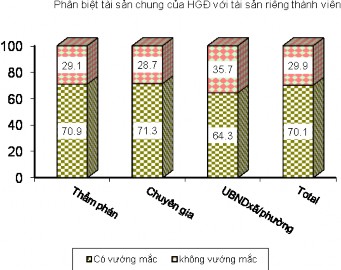
Figure 2.1 Survey results on awareness of common assets of households and private assets of members (unit %)
The Civil Court - Supreme People's Court at the Conference on the implementation of the Court sector's work in 2010 pointed out the practical problem that there were cases where the husband's family transferred the land use rights and house ownership rights to another person without the opinion of the wife and children. This contract was not confirmed by the competent authority or the contract was established at the land administration agency but later the parties had a dispute, leading to the case becoming very complicated, affecting the rights and legitimate interests of the parties, especially the women and children.
In reality, the issue of common and separate property only arises when a marriage is at risk of breaking up, and is not of much concern to most couples when the marriage is still good. Therefore, in addition to specific and transparent regulations on ownership in marriage and family, the law also needs to synchronously implement various solutions to adapt and ensure the feasibility of these regulations with the living conditions of the family.
According to natural logic, a married couple will establish a family, for the family to exist and develop, there must be certain material conditions. Those conditions can be to meet the basic needs of the family (food, clothing, housing, education, medical treatment, etc.) or to meet the needs of personal development, participation in social activities and economic development to enrich themselves, their families and society. The law must create a legal corridor to meet these material conditions of the family, in which meeting the basic needs of the family is a basic and mandatory obligation of all couples. However, the current law does not clearly and specifically regulate this issue.
When building a family, everyone wants lasting, sustainable happiness. If for some reason a couple has to divorce, then determining living conditions in this way will ensure the rights of not only the husband and wife but also their children in the spirit of sharing and supporting so that the parties can continue to have a good life after the marriage no longer exists. Because the physiological age of women is shorter than that of men and the psychological changes after having children only occur in women, reality has proven that, regardless of whether the marriage is short or long, when divorcing, the disadvantage is often tilted towards women, especially those who have children and are granted custody by the court. The ability and opportunity for women to remarry after divorce is much lower than that of men. Women who remarry encounter difficulties in life, leading to many consequences for themselves and their children (especially daughters) mainly and more than men. Also due to age and social environmental factors, the opportunity for women to have children with their new husbands after divorce is in many cases non-existent... All these aspects show that, if the first marriage fails, the woman can be divided half or a part of the family's assets from the living conditions of the family, the starting point of which is only supported by one side of the husband's family or the assets made by the husband alone (which should be considered separate property) is only a part.
compensate for the youth that women can never regain. In the opposite case, where the property belongs to the family or the wife herself, there should be reasonable regulations that pay more attention to the rights of the children. This regulation does not discriminate against men but is completely consistent with the principle of protecting the rights of women as mothers as defined in CEDAW and the basic principles of gender equality in the Law on Gender Equality.
In fact, some courts have received requests for compensation for women's youth after divorce but are confused because they do not know how to handle it. If the revised Law on Marriage and Family focuses on regulating the issue of family living conditions, it will be a legal basis for the Court to protect the interests of women and children in the best way, and these regulations will also be a legal basis to change the community's awareness in a more humane way of behaving between people before, during and after marriage, eliminating the behavior of "loving each other, loving each other's whole path, hating each other, hating each other's entire family" of divorced couples, the actual consequences of which are mainly on innocent children.
Second, some gender-sensitive relationships related to marriage and family have not yet been specifically regulated by the 2000 Law on Marriage and Family and the 2014 Law on Marriage and Family. The issue of cohabitation, living together as husband and wife without registering for marriage is now quite common, no longer a special case in life. The 2000 Law on Marriage and Family does not specifically regulate the settlement of consequences of men and women living together as husband and wife without registering for marriage, so gender issues have almost not been considered in these relationships, especially for women and children. This has been regulated in Article 14 of the 2014 Law on Marriage and Family, however, the 2014 Law only focuses on the issue.
children and property issues without paying attention to other issues, especially gender issues. Living together in a peaceful life is fine, but when a breakdown occurs, women are often the ones who suffer the most socially. Therefore, there must be regulations to protect women's rights in this case, such as the right to request compensation for mental loss as a result of living together.
Third , some provisions of the Law on Marriage and Family have not yet ensured consistency and unity with related laws on gender equality, prevention and control of domestic violence, and protection of children's rights, specifically: The new Law only stipulates that husband and wife are equal in family relations, while the Law on Gender Equality, in addition to stipulating that husband and wife are equal in the family, also stipulates equality in other social relations; The Law has not yet covered all acts of domestic violence that have been stipulated in the Law on Prevention and Control of Domestic Violence; The Law has not yet provided unified provisions on the term "family member", leading to difficulties in law enforcement regarding the identification and prosecution of the subjects of acts of domestic violence. This issue has also been gradually resolved in the 2014 Law on Marriage and Family as stipulated in Article 17: “Husband and wife are equal to each other, have equal rights and obligations in all aspects of the family, in exercising the rights and obligations of citizens as stipulated in the Constitution, this Law and other relevant laws” . However, there are opinions that more specific regulations are still needed because these are issues with broad and complex content. ....
Third, there are still some shortcomings in ensuring gender equality in the field of marriage and family. For example, the issue of the head of the family (household) is a practical issue that has been raised for a long time but has not been thoroughly resolved in the law. In fact, the current law on marriage and family does not
There are provisions on the head of the household, only stipulating the principle that "husband and wife are equal to each other, have equal rights and obligations" and "authorize each other to establish, perform and terminate transactions that, according to the provisions of law, must have the consent of both husband and wife" . The law does not have specific provisions on the principle of the participation of husband and wife or one spouse in transactions with a third party. The legal ambiguity leads to the fact that the determination of the role of husband and wife in performing civil transactions is often influenced by customs and traditional psychology in the family, in which the man is mostly identified as the pillar of the family, becoming the de facto head of the household, even in cases where the household registration book clearly states that the wife is the head of the household. This reality entails many consequences that are disadvantageous to both parties, but usually the woman. This inadequacy partly stems from the fact that the provisions of the Law on Marriage and Family are not in harmony, uniformity and conformity with other legal provisions on civil status, credit, and civil transactions, and at the same time, the provisions of the law do not specify equality between husband and wife in exercising rights and obligations in relationships other than marriage and family.
Another practical issue affecting gender equality in the field of marriage and family is the implementation of family functions. Current laws on marriage and family do not address this issue, but only have regulations on the personal status and property of spouses expressed in the form of rights and responsibilities. Although these regulations are numerous, they are not clear, so when applied in practice, due to the influence and influence of prejudiced thoughts about the roles, positions and responsibilities of women and men, there are many different ways of assessing and reasoning about the same event or phenomenon that occurs, which has lost the true humanistic meaning of the relevant regulations, not ensuring the principle of " husband and wife are equal to each other, have equal rights and obligations in all aspects of the family ".