
LIST OF ABBREVIATIONS
BOT: Build-Operation-Transfer (Build-Operate-Transfer) DLST: eco-tourism
DTSQ: biosphere reserve
Mekong Delta: Mekong Delta
IUCN : international union for conservation of nature and natural resources
Maybe you are interested!
-
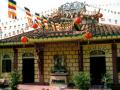
 Developing tourism in Ca Mau province in a sustainable direction - 16
 -
 Factors affecting tourists' satisfaction with tourism service quality in Ca Mau province - 2
 -
 Public investment from the State budget in developing tourist areas in Ca Mau province - 1
 -
 Conditions for Tourism Development in Ca Mau Province
 -
 Communicating tourism development policies in Ca Mau press Survey of Ca Mau newspapers, Ca Mau Radio and Television Station in 2019 - 2
Economic and social: economic and social
NCPT: research and development PCCR: forest fire prevention PTBV: sustainable development TNDL: tourism resources
TNDLTN: natural tourism resources VQG: national park
WCED : World Commission on Environment and Development - World Commission on Environment and Development
WTTC : The World Travel and Tourism council - World Tourism Council WTO : World Trade Organization - World Tourism Organization
INTRODUCTION
1. Reason for choosing the topic
Nowadays, human life has gone beyond the constraints of survival needs, towards the needs of enjoyment and development. The economy develops, people's income increases. Therefore, after a period of work and study, people need to restore their physical strength and relax their mind to improve work efficiency. Therefore, tourism activities are increasingly becoming an indispensable need in social life. For our country, the Party and State have identified " tourism as an important comprehensive economic sector with profound cultural content, interdisciplinary, inter-regional and highly socialized " (Tourism Ordinance, 1999) and set the goal of " developing tourism to truly become a spearhead economic sector " (Resolution of the 9th National Party Congress, 2001) and " tourism development is an important strategic direction in the socio-economic development path to contribute to the industrialization and modernization of the country " (Directive 46/CT-TW of the Secretariat of the 7th Party Central Committee, 1994).
During 40 years of formation and development, Vietnam tourism has made encouraging progress and has now become an economic sector with a worthy position in the national economy. However, the exploitation of resources for tourism development, in addition to positive impacts, has gradually revealed negative impacts: unintentionally contributing to the degradation of resource quality, pollution of the ecological environment, threatening the existence of endemic natural ecosystems, and changing human living habits. Sustainable tourism development is the only solution to overcome environmental pollution, limit the possibility of resource degradation, and maintain biodiversity. In the context of strong tourism development in the whole country, Ca Mau tourism has transformed and developed along with that sustainable trend.
Ca Mau has long been known as a land favored by nature and has passed down many legends about the time of land reclamation and expansion by our ancestors. Ca Mau is currently located in the key economic zone of the Mekong Delta (including Can Tho - An Giang - Kien Giang - Ca Mau). The province is gradually investing and exploiting these natural, historical and socio-economic potentials to serve the tourism industry. However, Ca Mau tourism in recent times has not been exploited to its full potential, besides the achievements, there are still many limitations and some signs of unsustainability. Faced with the above situation, I decided to choose the topic "Developing tourism in Ca Mau province in a sustainable direction".
2. Research status related to the topic
In the world : Tourism is currently considered one of the most interested economic sectors. Therefore, tourism activities are of interest to many experts, scientists and managers. However, it was not until the 80s of the 20th century that the concept of "sustainable development" appeared and in the early 90s the concept of "sustainable tourism" was mentioned.
In Vietnam : Research on tourism was only mentioned in the 90s with a number of research works: "Organization of Vietnam's tourism territory", "Tourism and tourism business". As for "sustainable tourism" is a relatively new concept, there have been a number of research works on tourism in terms of sustainability such as: "Sustainable tourism", "Ecotourism - theoretical and practical issues of development in Vietnam", "Handbook on sustainable tourism development".
Topics related to tourism in Ca Mau include : "Research on the development of ecotourism in Ca Mau province" and a number of other research works on tourism in Ca Mau that have outlined in depth a specific aspect of tourism in Ca Mau. However, the authors have not systematically researched and developed a methodology for tourism development in Ca Mau province, especially have not clearly oriented the development of tourism in Ca Mau in the future. From the current development status of tourism in Ca Mau, the research on the topic " Developing tourism in Ca Mau province in a sustainable direction" is based on a survey, assessment and proposal of appropriate solutions to promote tourism development in Ca Mau. Research and clarify theoretical and practical issues on the development of tourism in the province, thereby orienting the tourism industry to take the most effective steps. Research on sustainable development applied to a province has received very little attention. Most of the works mainly focus on researching “ Ecotourism - a type of tourism that is environmentally friendly and sustainable ”. Therefore, there is a need for more in-depth research topics for sustainable tourism in each province.
3. Research objectives and tasks
3.1 Objectives
Applying theoretical and practical foundations of sustainable tourism development in the world and Vietnam to research on tourism development in Ca Mau and providing orientations for sustainable development.
3.2 Mission
+ Overview of some theoretical and practical issues on sustainable tourism in the world and Vietnam applied to the reality of tourism development in Ca Mau province.
+ Collect, synthesize, and compile documents, materials, and data related to the topic.
+ Analyze the potential and current status of tourism development in Ca Mau province from the perspective of sustainable development.
+ Based on the theory of sustainable tourism development, the strategic orientations for socio-economic development of the country and Ca Mau province, propose some solutions to develop tourism in Ca Mau province in a sustainable direction.
4. Limitation of research content and scope
+ Content: The thesis focuses on studying the overview of theoretical bases for sustainable tourism development. Analyzing the potential, current status and proposing some solutions to develop Ca Mau tourism in a sustainable direction.
+ Space: Limited within the territory of Ca Mau province in relation to neighboring areas.
+ Time: The thesis conducts in-depth research on tourism activities in Ca Mau province in the period 2000 - 2012 as a basis for making orientations.
5. Research perspectives and methods
5.1 Research perspectives
5.1.1 System perspective
The tourism territorial system is made up of many subsystems that are different in nature, but have a close relationship with each other. The system perspective helps us to grasp and control the activities of each subsystem in particular and the entire tourism system in general. The tourism territorial system is a complex open system consisting of many components that are closely related to each other. This is a special form of mixed geosystem, with all components: natural, economic, social and subject to many basic laws. Therefore, the system perspective is always pervasive in thesis research.
5.1.2 Territorial synthesis perspective
The objects of geographical research cannot be separated from a specific territory with its own characteristics. The tourist territory is organized as a spatially linked system of tourist objects and on the basis of resources and services for tourism. Important
This point is applied to the thesis through analyzing the potentials and multi-faceted impacts on the sustainable development of Ca Mau tourism.
5.1.3 Sustainable ecological perspective
Sustainable tourism development must go hand in hand with ecological environment protection, which is very important. The goal of sustainable tourism is to protect resources and the environment, enhance the conservation of natural resources, and enhance human resources to ensure sustainable development in the future. Applying this viewpoint, the territorial integrity of the ecosystem is respected, in which the impacts of tourism on the carrying capacity of the ecosystem need to be taken into account, ensuring tourism development on the basis of the environment is preserved effectively and sustainably. From there, the sustainable ecological viewpoint is thoroughly considered as a key viewpoint in the research of the thesis.
5.1.4 Historical perspective - perspective
All things and phenomena have the movement and change according to the natural law. Study the past to have correct assessments in the present, analyze the origin, development and have the basis to make forecasts about the development trend in the future. Apply this viewpoint to analyze the main stages of the process of formation and development of the tourism system, subsystems as well as the development trend of the territorial system.
5.2 Research methods
During the research process, the thesis used different methods, complementing and supporting each other to create conditions to complete the thesis with a scientific basis.
5.2.1 Statistical, analytical and synthesis methods
The documents and data used in the thesis are exploited from many different sources: national and central archives, documents of agencies in Ca Mau province; of the Department of Culture - Sports - Tourism of Ca Mau; Center for Trade, Tourism and Investment Promotion of Ca Mau province. The statistical documents are updated, supplemented, and selected to suit the content to be researched.
5.2.2 Map and chart method
It is a specific method of geographical research in general and tourism geography in particular. This method is used throughout the process of learning, surveying, and researching. Some contents are more concise, easier to compare, and clearer thanks to the support of maps and charts.
5.2.3 Field method
This is a traditional method of geography, widely used in tourism geography to accumulate practical documents on the formation, development and characteristics of the organization of tourism territory. In the research process, this method is always considered important to have a realistic view of the characteristics of the research territory. This method is also implemented in combination with the sociological investigation method.
5.2.4 Sociological investigation methods
This method is considered an important method in modern scientific research. In tourism research, the information collected through surveys helps researchers synthesize opinions and diverse perspectives from tourists, residents, and managers in an objective way that cannot be obtained through one person's observation. Together with the field method, this method is important in analyzing real phenomena.
6. New contributions of the thesis
Overview of some theoretical and practical issues on sustainable tourism development in the world and Vietnam, as a premise for research on tourism development in Ca Mau province. Analysis of the potential and current status of tourism development in Ca Mau province.
Proposing some solutions for sustainable tourism development in Ca Mau province.
CHAPTER 1: THEORETICAL AND PRACTICAL BASIS OF TOURISM DEVELOPMENT AND SUSTAINABLE TOURISM
1.1. Concepts and related contents
calendar
1.1.1. Concept of tourism
Over time, through different eras, there are different concepts about tourism.
In the Stone Age, people “traveled” for survival, to avoid hunger, cold, and fear. By the time of the Roman Empire, horseback travel had become commonplace.
for the entertainment of the ruling classes. The advent of the train in the 19th century created the impetus for the development of transportation, and at the same time created conditions for tourism to develop further. Then came the presence of ships, cars, airplanes, etc., making tourism increasingly closer to people.
In 1925, the International Association of Travel Agencies was founded in the Netherlands, marking a turning point in the change and development of tourism concepts. First, tourism was understood as the travel of individuals or groups of people, leaving their place of residence for a short period of time, to surrounding areas for rest, entertainment or medical treatment.
In 1985, II Pirogionic introduced the concept: " Tourism is a form of leisure time activity of people related to temporary travel and stay outside their usual place of residence for the purpose of rest, medical treatment, physical and mental development, improvement of cognitive, cultural or sports levels accompanied by the consumption of natural, economic and cultural values". [11]
In Vietnam, according to the Tourism Law issued in June 2005, effective from January 1, 2006, " tourism is an activity related to human trips outside their regular place of residence to meet the needs of sightseeing, learning, entertainment, and relaxation within a certain period of time".
The World Trade Organization (WTO) defines “ Tourism in the sense of action, is defined as an activity of traveling for leisure, recreation and the organization of services around this activity. A tourist is a person who travels a minimum distance of 80 km for more than 24 hours from his place of residence for leisure, recreation purposes ”.
1.1.2. Tourism products
According to Article 4, Chapter I, Vietnam Tourism Law 2005 (issued on June 14, 2005), tourism products are a set of necessary services to satisfy the needs of tourists during a trip.
Tourism products can be classified into two types based on customer consumption characteristics as follows: Complete tourism products and individual tourism products.
For individual tourism products, the following product groups can be distinguished: Specific tourism products; Essential tourism products and complementary tourism products.
1.1.3. Types of tourism
1.1.3.1. Concept of tourism types
According to author Truong Sy Quy, tourism types can be defined as follows: "Tourism types are understood as a set of tourism products with similar characteristics, either because they satisfy similar travel needs and motivations, or are sold to the same group of customers, or because they have the same distribution method, the same organization, or are classified according to a certain selling price".
1.1.3.2. Types of tourism
Types of tourism are classified as follows:
- According to the territorial scope of the tour: International travel, domestic travel
- According to the needs in performing tourism activities: Resort and entertainment tourism; Sports tourism; Medical tourism; Tourism for cultural purposes; Ecotourism; Religious tourism; Tourism to visit relatives and hometown; Business tourism; Business tourism; Transit tourism.
In addition, it is also classified according to: By tourist objects; By form of trip organization; By means of transport used during the trip; By type of accommodation; By travel time; By geographical location of the destination.
1.1.4. Tourism market
The tourism market is part of the general market, a category of production and circulation of tourism goods and services, reflecting the entire exchange relationship between buyers and sellers, between supply and demand and all economic and technical relationships and information associated with tourism.
that relationship in the tourism sector.