
Strengthen the leadership and direction role in the construction of rural roads at all levels in developing annual programs and plans.
Ensure planned, harmonious, reasonable development of rural transport and integration with the national transport system.
Combining investment in construction, renovation and upgrading with synchronous implementation of management, exploitation and maintenance of rural roads.
Implement decentralization of management in construction investment; renovation, upgrading and maintenance of rural roads.
2.1.4.3 Decentralization of management of rural traffic works system
Maybe you are interested!
-

 Solutions to improve the quality of asset and liability management at Vietnam Bank for Agriculture and Rural Development - 19
 -
 Current Status of Credit Risk Management at Vietnam Bank for Agriculture and Rural Development
 -
 Improving the effectiveness of credit risk management at the Bank for Agriculture and Rural Development - Hanoi Branch - 2
 -
 Credit risk management of Vietnam Bank for Agriculture and Rural Development - 10
 -
 Credit risk management of Vietnam Bank for Agriculture and Rural Development - 31
Management organization system and decentralization of management of the rural traffic system: According to the Road Traffic Law issued by the National Assembly on November 13, 2008 and Decree No. 11/2010/NDCP dated February 24, 2010 of the Government on management and protection of road traffic infrastructure, the management of the rural traffic system (including district roads and commune roads) is determined by the People's Committee at the level of
Provincial regulations; authority to classify and adjust the rural road system
(district roads, commune roads) are decided by the Chairman of the District People's Committee after being approved by the Chairman of the Provincial People's Committee; thus, according to current regulations, the rural transport system is managed by the Provincial People's Committee.
The levels involved in managing the GTNT system in practice include 4 levels
after:
Objective includes:
+ Intermediate level
Department: Department
GTVT (General Department of Roads)
Vietnam, Department
Inland waterways).
+ Provincial level: Provincial People's Committee (Department of Transport).
Subjective includes:
+ District level: District People's Committee (District Department of Industry and Trade). The Department of Industry and Trade is assigned to assist the District People's Committee in managing rural traffic in the District.
+ Commune level: Commune People's Committee.
Content of managing rural roads at all levels:
Central level : Ministry of Transport (Directorate of Roads of Vietnam, Inland Waterways Administration) is responsible for state management of the rural transport system including strategy development, policy planning , development of technical standards, legal documents, technical guidance on management, construction and maintenance of the rural transport system.
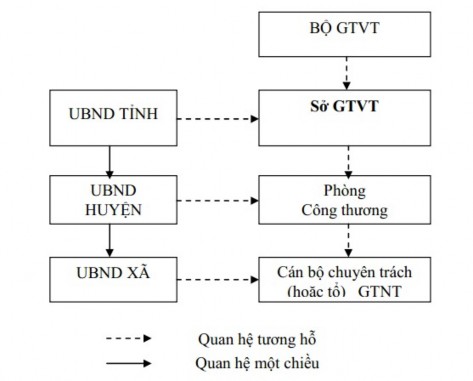
Figure 2.1: Organizational chart of rural traffic management at all levels
The Ministry of Planning and Investment, the Ministry of Finance, and the Ministry of Construction are responsible for planning, developing criteria and standards for rural construction planning, allocating capital sources to localities to invest in developing rural infrastructure, including rural transport, developing policies and management mechanisms for rural transport construction investment, promulgating a system of norms and unit prices, and management mechanisms for the local rural transport construction management board, as well as guiding construction investment and bidding regulations for implementation by all levels, sectors, and localities.
Provincial level : Department of Transport is the agency directly managed by the Provincial People's Committee.
management of GTNT system.
local traffic system, development planning
District level: District People's Committee is the agency
system management
road system
District and commune roads. Currently, the district level has participated as the investor, implementing the management of investment projects in construction, renovation and upgrading of rural roads in the area according to the provisions of the construction law.
Implement management of rural roads in the area according to approved planning, investment and construction are carried out according to annual plans.
Manage the construction and maintenance of district and commune roads, provide technical support to communes; manage data on rural traffic system.
Manage, supervise and monitor road exploitation: correctly assess road conditions, organize damage repair, ensure smooth and safe traffic.
Organize and guide the protection of traffic safety: limit load, control speed, manage types of vehicles operating on rural roads, and safety sign systems.
Commune level : The Commune People's Committee is responsible for managing, maintaining and exploiting the commune road system. Organize and mobilize people 's contributions to participate in the construction and maintenance of commune roads.
Implement management of rural roads in the area according to approved planning, investment and construction are carried out according to annual plans.
Manage the construction and maintenance of commune roads, manage data on rural traffic system in the commune.
Manage, supervise and monitor road exploitation: correctly assess road conditions, organize damage repair, ensure smooth and safe traffic.
Organize and guide the protection of traffic safety: limit load, control speed, manage vehicle types operating on roads managed by the commune and the safety sign system.
Inadequacies in rural traffic management organization
There is no unified and reasonable model of organization for managing GTNT.
in both
country, especially district and commune levels.
In addition to investment
develop
GTNT comes from many different sources and is managed by many different investors (Ministry of Agriculture and Rural Development, Planning and Investment, Construction, Ethnic Minorities Committee, etc.), so construction control according to the general standards and regulations of the transport sector is not strict, thus limiting the exploitation of the project later.
The capacity for management and technical expertise in rural transport is still weak. At the macro level: At the Ministry of Transport, there is a local transport team with only 2 officers specializing in monitoring rural transport, making it very difficult to monitor and manage the entire large rural transport system of the country. The Directorate for Roads of Vietnam and the Vietnam Inland Waterways Administration mainly only manage the national road and waterway system; there is no close management of the local road and waterway system. The capacity of district-level officers in rural transport management is lacking in quantity and weak in quality. Technical training for commune-level officers is very limited, the level of understanding of both rural transport management and expertise is low, they hold multiple positions and are unstable, and work on a term basis.
Many legal documents on construction investment are not really in harmony with international practices, constantly changing, while the capacity of project management officers is limited. Therefore, the coordination between the central and local levels is not tight, lacking a clear responsibility regime in direction and implementation.
The information system is lacking, scattered and unreliable. The regular reporting and statistics regime from the grassroots to the management levels is not implemented in accordance with regulations. Information sharing between agencies and organizations is still very difficult and limited, so the management of the GTNT system is not effective.
Rural transport development has not been closely combined with irrigation, economic clusters, residential clusters, settlement and national security. When designing and constructing rural roads, the number and load of vehicles have not been taken into account, so roads are quickly damaged. Regulations and technical standards in the design and construction process have not been supplemented and gradually completed to suit the new situation.
2.1.4.4 Management, exploitation and maintenance of rural roads
Rural road management and maintenance is a task.
very important work for the purpose of road management (construction system)
road)
in the period
exploit (operate to
road to ensure normal operation
usually according to its function; maintenance to maintain the technical standards of the road in operation). In particular, the need for capital for the maintenance of rural roads has also increased. However, this work has not received due attention. As a result, many roads, including newly restored sections, have been damaged and degraded rapidly.
Management and exploitation of rural roads has a broad scope, including many different management tasks such as: (1) Management of rural traffic planning; (2) Archiving and managing the exploitation of completion records of rural road works after new construction, upgrading, renovation, periodic repair, and unscheduled repair; (3) Establishing management records of rural road works (including: documents extracted from completion records, site clearance compensation records,
file
landmark
world,...); (4) Organization
management and protection function
project
road traffic…
These contents require close coordination within a system, in order to promote the highest efficiency in serving socio-economic development, ensuring harmony of community interests. The management system is regulated.
Unification from the central to local levels, especially district and commune levels, is the level directly managing and implementing rural transport development.
The management, exploitation and maintenance of rural roads is equally important to the construction, renovation and upgrading work, contributing to improving investment efficiency.
Operation management must be carried out immediately after the project is completed and put into use. Maintenance costs will increase gradually from low to high according to the life and volume of exploitation of the road.
Road maintenance is divided into many types according to the volume of work, the development of maintenance plans is carried out annually, determined from statistics on maintenance volume (District road maintenance: the capital source for district road maintenance is mainly determined from the local budget of the province and district; Maintenance of commune roads and village roads; Commune roads use the annual commune budget with partial support from the province and district; At the same time, commune roads, village roads and hamlets are determined to have the main source from mobilizing contributions from the people, because in reality these roads are mainly used by local people).
In reality, our country is currently applying a management structure according to the career model, which is a centralized management model according to a plan, operating in the form of career capital managed by the State.
Road maintenance is expensive in rural areas and any effort should be focused on a carefully chosen core network, relying as much as possible on local resources. Governance is tied to those who are involved in the selection of routes in the first place, as those who have no say will be reluctant to contribute.
Maintenance is a key element that involves both technical, financial and institutional aspects. Problems often arise because of funding for
Maintenance and responsibilities for each level of government regarding what needs to be done are often not carefully considered, with the designation of who is responsible for what, and the necessary budget and funding sources.
Because rural roads are designed to accommodate medium and light motor vehicles and rudimentary vehicles, the road surface is designed to be simple and uses locally available materials, making this type of road susceptible to deterioration. There are many reasons for the deterioration of rural roads.
Rural roads are often dirt roads, or the roadbed is not well treated, so it is very easy to get muddy and subside due to rainwater, floodwater, ditches flowing next to the road or across the road, capillary groundwater from below or both sides causing damage to the road. In addition, there are other causes such as: environmental impacts (wet, dry weather conditions, rain, sun, floods...); loads on the road surface (people and vehicles on the road, especially overloaded vehicles); other factors (fallen trees, rolling rocks, landslides, natural disasters...); human factors (using the road surface, road shoulders, drainage ditches to pile up local materials and agricultural products, obstructing drainage, damaging the structure of the road surface and ditches, people are not aware of using roads for other purposes).
The types of damage and incidents that rural roads often encounter are potholes, small subsidence of the roadside, undulating road surface, landslide of the roadside... Maintenance of rural roads is a very necessary job. Maintenance is essentially to restore the road to good condition, to ensure the ability of the road to be open to traffic.
line, keep
for line
in service
Good. Maintenance includes:
maintenance of unpaved roads, maintenance of the surface layer of paved roads, regular maintenance and periodic renewal of stone pavement or surface layer. In fact, the current rural traffic routes are extremely
important in the socio-economic development of rural areas. Regular upgrading and maintenance is a necessary task. It can be said that maintenance does not require much money, the technique is not complicated but requires carefulness and meticulousness. Up to now, maintenance
Maintenance is not taken seriously and in fact maintenance is not done properly.
Regular maintenance means ensuring that the road is in good service on an ongoing basis. Maintenance aims to:
Reduce the level of damage and prolong the service life of the road, if
If roads are not maintained, their useful life will be shortened.
child use
Failure to maintain reasonable operating costs and travel time for road users; if the road is not maintained, operating costs will be higher and travel time will be longer. As a result, people will spend more money when traveling on the road to ensure safer travel for road users.
Ensures greater safety for road users. In common incidents, especially on dirt roads and roads
aggregate, crushed stone and brick road
Potholes are a common type of damage.
most variable
The reason is that the road surface structure is weak, heavy trucks travel a lot, causing the road surface to sink, after a while it will be washed away, water will accumulate and destroy the structure of the surface, creating deep holes. If these potholes are not maintained and patched in time, they will become wider and wider, possibly destroying the road surface structure if it rains for a long time.
There are many types of damage and incidents that need maintenance such as: mowing grass, clearing trees, existing drainage ditches, minor repairs to drainage ditches, clearing drainage structures, clearing existing bridges, minor repairs to roadbed slopes, repairing curbs and pavements. However, in reality, maintenance has not really received attention. Current status of the work