
3.2.1.3. Ivermectin
- Properties : white liquid. Trade name: hanmectin. Biomectin
- Effect:
+ Absorption: Well soluble in lipids. Absorption through the digestive tract: 95% - monogastric; 25-35% - bigastric
+Subcutaneous injection (SC) is absorbed more slowly than digestion .
Maybe you are interested!
-
 Factors Affecting the Results of Cord Blood Stem Cell Transplantation for the Treatment of Hematological Diseases
 -
 Research on treatment of rotator cuff tears using modified Mason-Allen tendon endoscopic suturing technique and creating micro-damage at the attachment area - 2
 -
 Research on the treatment of seafood wastewater by electrocoagulation method combined with USBF - 19 tank
 -
 Results in Increased Knowledge and Skills in Self-Monitoring Blood Pressure
 -
 Evaluation of the effectiveness of selective tibial nerve resection in the treatment of lower limb muscle spasticity sequelae - 19
+ Distribution: Distributed to many tissues, except cerebrospinal fluid (except Collie dogs). Oxidized in the liver, excreted through the kidneys and digestive tract.
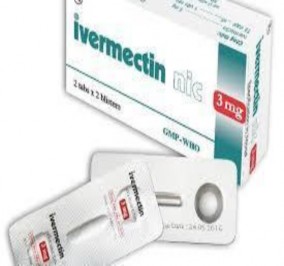
Photo 28: Ivermectin
- Application:
+ Roundworms: adult and immature worms Digestive tract: cattle, pigs, dogs and poultry Lungs and heart: cattle and dogs
+Ectoparasites
Ticks: cattle and dogs. Scabies: dogs.
Mites: poultry
Flukes, tapeworms and protozoans Little or no effect
-Toxicity:
+High safety index: for pregnant cattle
+Contraindications:
Dogs < 6 weeks old and Collie breed
Dairy cow (residue in milk)
3.2.1.4. Praziquantel
- Properties : Colorless, odorless, soluble in organic solvents.
- Effects : Absorbed quickly, almost completely from the digestive tract. Distributed to many organs (including the brain). Metabolism: rapidly inactivated in the liver. Excreted in the urine.
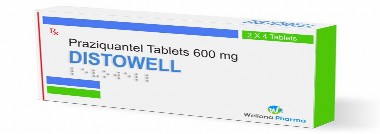
Photo 29: Praziquantel drug
- Mechanism of action:
+ Absorbed quickly by worms => increased permeability of cell membrane => loss of intracellular Ca => worms stiffen and become paralyzed.
+ Formation of blisters on the skin of adult worms => rupture and decompose.
- Treatment applications :
+ Adult tapeworms and larvae.
+ Some flukes (pork intestinal fluke - Fasciolopsis buski).
+ No effect on roundworms => combined with anti-roundworm drugs in treatment.
+ Low toxicity
+ Can be used for pregnant animals.
3.2.2. Drugs for treating blood parasites
3.2.2.1. Berenil
- Properties : soluble in water, the solution dissolved in water can be kept at room temperature for 5 days and at cooler temperatures for 14 days. The mixed medicine should be kept in a tightly closed bottle and kept in a cool place, away from light.
- Effect:
+ Has the effect of killing blood parasites of the types of flagellates and pyroptosis (Trypanosome and Picoplasma) and also has the effect of Theleria in ruminants and horses and does not cause drug-resistant strains. The drug exists in the tissue for 20 days and exerts its effect of killing parasites and remains in the milk of ruminants for 3 days.
-Dosage and uses:
+ General dose: 0.5ml/10kgP
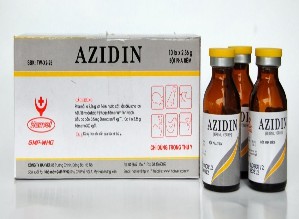
Photo 30: Azidine medicine
Used to treat pinworms and pinworms in cattle and horses.
*Attention:
+ Do not use medicine for dogs and camels
+ The drug can be used for both young and old livestock.
+ Do not use more than total dose of 9g/child
3.2.2.2. Naganil-Naganol
- Properties : white powder, soluble in water, salt solution and alkaline solutions. Because the powder is light, when dissolved in water, the powder will float on top and dissolve very slowly. When completely dissolved, it creates a transparent solution of light yellow or pink color.
- Effect:
+ used to kill all types of disease-causing parasites. The drug is highly effective when combined with other drugs to treat blood parasites. The drug diffuses throughout the body through the blood and is not blocked by the meningeal barrier. The drug remains in the blood for a long time and is excreted slowly through the kidneys.
-Uses and dosage:
+ Used to treat cercariae for species: cattle, horses, goats, dogs. When injecting subcutaneously or intramuscularly, injecting 10% solution is best. Do not inject the drug into the vein because it can cause systemic reactions. The drug can be mixed with distilled water, the mixed drug solution should only be used within 5 hours.
+ Dosage:
Buffalo, cow: 10-20mg/kgP for 2 months of prevention. When injecting, divide the dose into small doses and inject at different sites.
Horses, donkeys: 10mg/kgP. If newly infected, inject only 1 dose, if reinfected, repeat injection 3-4 times, 1 week apart.
3.2.2.3. Trypanosoma
- Ingredient:
Each vial contains: Chlorhydrat chlorur isometamidium 125mg
-Uses:
+ Trypanosoma has a lasting effect of 2-4 months in preventing and treating ciliated disease.
+ Is the strongest trypanosome killer against T.evansi; T.vlvax; Tcongolense; T.brucei in cattle, goats, sheep, camels, donkeys, horses and dogs.
-Use
1 bottle mixed with 6 or 12ml distilled water.
- Deep intramuscular injection: Do not inject more than 15ml at one site.
- Intravenous injection: slow (inject very slowly)
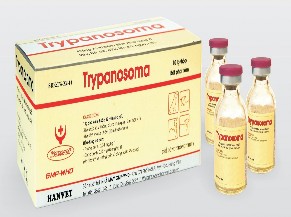
Photo 31: Trypanosoma medicine
Basic dosage:
- Disease prevention: 0.5-1 mg/kg body weight.
-Treatment: 0.25 - 0.5 mg/kg body weight.
*Deep intramuscular injection for cattle: Treatment dose 0.25-0.5mg/kg body weight.
*Buffalo deep intramuscular injection: 1mg/kg body weight.
*Horse: 0.5mg/kg body weight.
*Dogs by deep intramuscular injection: 1mg/kg body weight.
Disease prevention practice:
- In moderately infected areas: 2-4 treatments at a dose of 0.5 mg/kg TT per year.
- Heavily infected areas: 4-5 treatments with a dose of 0.5 mg/kg BW or 2-4 treatments with a dose of 1 mg/kg BW per year.
3.2.3. Drugs for treating skin parasites
3.2.3.1. Hantox spray
- Properties : white solution, easily soluble in water.
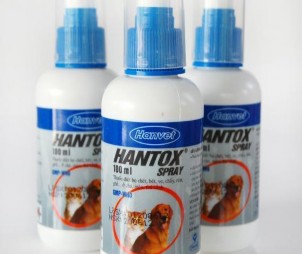
- Effect:
+ Hantox-Spray has a long-lasting effect, killing most types of external parasites in pets, livestock, and poultry: Fleas, ticks, mites, lice, lice, mites, hair mites, scabies, flies, mosquitoes....
+ The drug works directly or through the digestive tract, paralyzing and killing parasites and parasite eggs.
Parasites. Photo 32: Hantox spray
- How to use:
Average spray: Dogs: 10-12 sprays/kg BW; cats: 5-6 sprays/kg BW, used to kill flies in the treatment of eyeworm disease in horses
+ Shake the spray bottle well before spraying.
+ Hold the bottle upright, spray against the fur at a distance of 20-30 cm, use gloves to rub all over the animal's body, especially the head area.
+Spray the entire body of the animal until it is absorbed evenly, especially in areas where parasites reside, including the head, ears and 4 legs.
+ Do not bathe pets 48 hours before and after spraying.
- Usage schedule
- Fleas, ticks, mites: Spray twice 15 days apart and depending on the level of infection.
-Lice: spray once and it will be gone.
- Flies, mosquitoes, ants, cockroaches: spray regularly
- Scabies: Treat twice, 10 days apart. Prevention: 6 months
* Note: + For external use only on livestock. Do not eat, drink or smoke when spraying.
+ Wash feet and hands thoroughly with hot water and soap after spraying.
+ Safe for pregnant animals.
3.2.3.2. Boric acid
- Properties : 3%, 20% solution
- Effects and usage:
+ Boric Acid has mild antibiotic properties against fungal or bacterial infections .
+ 3% solution used to wash wounds, eyes and mucous membranes. Boric acid for eyes is used as an eyewash to clean or rinse the eyes. Treatment of eyeworms in horses.
+ 20% fine powder and 20% ointment used to reduce inflammation, protect skin and mucous membranes.
Note: Boric Acid is incompatible with tannin.
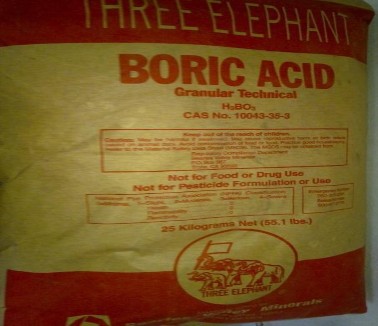
Photo 33: Boric acid
Questions and exercises
1. Describe the effects and applications of disinfectants?
2. What are the effects of drugs to treat gastrointestinal parasites?
3. Describe the applications of drugs to treat blood parasites?
Practical part
Lesson 3. Identify and determine the components of antiparasitic drugs studied and researched?
Lesson 4. Identify and determine the components of antiparasitic drugs that have been studied and researched?
Requirements for assessment of learning outcomes
Assessment of learning outcomes (periodic scores) is based on the form of testing each student on the names and ingredients of disinfectants and antiparasitic drugs used for livestock.
Memorize
Each type of disinfectant and antiparasitic drug must have its effects and usage clearly defined.
Chapter 4 : DIGESTIVE TREATMENTS AND TONIC
Chapter code: C04
Introduce
Disinfectants and antiparasitics are commonly used drugs to disinfect, sterilize barns and treat parasites in livestock. Determining the properties, pharmacological effects and applying them to practical treatment for each disease in disease prevention and treatment for livestock contributes to improving livestock farming efficiency.
Target
- Describe the properties and effects of drugs that act on the digestive tract.
- Determine the application and dosage of each drug
Main content
4.1. Medicine for horse colic
4.1.1. Oral medication
4.1.1.1. Magnesium sulfate
4.1.1.2. Paraffin
4.1.1.3. Pharmalox
4.1.2. Injections
4.1.2.1. Pilocarpine
4.1.2.2. Novocaine 1%
4.1.2.3. Diclofenac 2.5%
4.1.2.4. Azidine
4.2. Supplements
4.2.1. Vitamin B1
4.2.2. Vitamin C
4.2.3. B. complex
4.2.4. Injection of ADE
4.2.5. Iron-containing blood tonics
4.2.5.1. The role of iron in the body of livestock
4.2.5.2. Fer-dextran B12
4.2.6. Hanlacvet
4.2.7. Sodium chloride 0.9%